

2018 CPEO Proposes New Rules for China's Health Industry: Navigating the 'No-Man's Land' of Industrial Leapfrogging
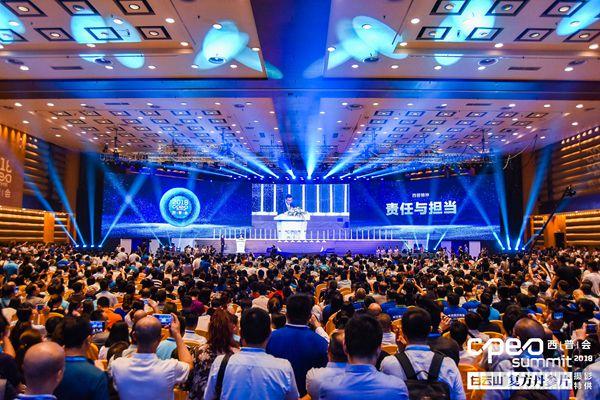
On August 12, the 2018 Westpu Conference, hosted by Sinohealth Information, grandly opened in Boao, Hainan.
Themed “Crossing the ‘No Man’s Land’: Division of Labor and Connectivity in Industrial Leapfrogging,” the conference featured a four-day main forum that brought together more than 5,000 attendees, including government officials, healthcare reform experts, pharmaceutical and medical device industry entrepreneurs, decision-makers from health management and commercial insurance institutions, and investors from the securities and investment sectors, to jointly explore the challenges and opportunities for the next stage of development in the broader health industry.
As a deep-cooperation media partner of the 2018 West China Pharmaceutical Conference, VCBeat (WeChat ID: vcbeat) attended the entire event and provided detailed coverage.
"The Iron Pass Stretches Far, Yet Now We Stride Anew from the Start"
Over the past year, technological innovation, model innovation, policy innovation, and investment innovation in the industry have advanced in tandem:
Scientists are joining the entrepreneurial wave, R&D of novel biologics continues to accelerate, large-molecule drugs have become a focal point of industry attention, and consistency evaluation remains a key concern for industry stakeholders;
Medical consortium models have gained nationwide momentum in China. Telemedicine and greater physician practice autonomy are being further encouraged by policy, continuously reshaping medical practices. Amid new national health insurance regulations and pharmaceutical cost-containment measures, the outflow of prescriptions and prescription drugs from hospitals has become a focal point of industry discussion, with implementation pathways already explored in certain regions.
The long-debated online sales of prescription drugs will also be liberalized in the near future;
Alibaba and JD.com have each launched new retail models, piloting them in pharmacies;
Capital continues to favor retail pharmacies, maintaining high valuations for several listed companies while some investment firms actively pursue pharmacy mergers and acquisitions. Internet giants have also recently joined the wave of investments and M&A in brick-and-mortar pharmacies.
This year also marks a year of institutional reform: the National Health Commission and the State Administration for Market Regulation were successively inaugurated, and the newly established National Healthcare Security Administration was formed.
It can be said that innovations in policy, technology, business models, and investment are emerging in rapid succession. While new market entrants celebrate the opportunities to penetrate this previously high-barrier yet highly attractive industry, incumbent players are feeling unprecedented pressure.
Of course, whether new entrants or incumbents, all face a completely new industrial environment that lacks both vertical historical references and horizontal benchmarks for comparison.
Therefore, Wu Han, Chairman of the Conference and President of Sinohealth Information, referred to this industrial environment as a “no-man’s land.” “No-man’s land” denotes an entirely new industrial landscape that lacks both vertical historical references and horizontal benchmarks for comparison.
Traversing the no-man’s-land is a test of our physical strength, wisdom, and willpower. From the call to “Confront the Business Revolution” at the 2014 West China Pharmaceutical Conference (Xipu Hui) to our firsthand experiences today, we have been continuously exploring ways to embrace the new industrial ecosystem.
At this historical juncture, clearly identifying the direction of industrial evolution, defining strategies for dimensional upgrading, and mastering the pace of transformation to take our first steps more effectively are concerns shared by the entire industry and constitute the central mission of this year’s Xipu Conference. Navigating uncharted territory requires physical endurance and wisdom, but above all, it demands clear direction. Wu Han proposed three perspectives on the transformation of the big health industry.
Digital Technological Advancements Drive the Leap Forward of the Health Industry
**Transition**, a term in quantum mechanics. When an electron in a lower-energy orbital absorbs a certain amount of energy, it jumps to a higher-energy orbital and reestablishes order; this process is known as transition.
Since humanity entered the digital age, particularly with the accelerated development of global interconnectedness, the pace of technological iteration and adoption has reached unprecedented levels. The synergistic energy generated by these two factors has driven the leapfrog development of various industries, including today’s health industry.
Wu Han stated that this process involves complex, multidimensional changes fraught with uncertainty. The underlying business logic established in the industrial era will be fundamentally transformed, replaced by a new trajectory centered on data as the core resource and digital technology as the core capability. This is precisely why new entities imbued with a “digital DNA” can deliver a “dimensionality-reduction attack” against incumbent industry players.
The industry needs to reposition itself and elevate its capabilities to adapt to the new order.
Wu Han pointed out that for enterprises, elevating their strategic positioning within a new ecosystem is key to finding relative certainty amidst uncertainty. The core of positioning lies in determining who receives what value, with the fundamental methodologies being cost leadership, differentiation, and focus. However, in the era of the global internet, characterized by highly coordinated resources and division of labor, strategic positioning requires a new dimension: we must situate ourselves within a networked environment to clarify whether we are product suppliers, platform builders, or ecosystem developers. This clarity is essential for defining development paths, identifying true partners and competitors, and discerning genuine customers and their needs.
Next is the elevation of capabilities, marking a leap from the linear environment of the industrial age to the networked world of the digital age. Decision-making chains are shorter and more timely than ever before. Business entities must possess the multidimensional, precise decision-making capacity to handle a geometric increase in complexity, thereby responding to rapid and diverse changes. Meanwhile, enterprises are required to have more flexible connectivity capabilities, enabling instant connections with various stakeholders to collaboratively share resources. This adaptability is essential to navigate the new ecosystem characterized by refined division of labor, blurred boundaries, and direct, diversified interactions.
Therefore, integrating diverse internal and external data to form effective data flows that support precise decision-making, while establishing a flexible and open connectivity system to efficiently interface with a networked division-of-labor environment and meet consumers’ higher-level comprehensive needs, represents a critical dimensional upgrade in capabilities for adapting to the new ecosystem—since this constitutes both the fundamental survival capability for enterprises in the new environment and the essential capacity to navigate an increasingly uncertain world.
Shift Mindsets, Drive Systemic Change, and Keep Pace with the Rhythm of Change
As Wu Han stated, echoing Bill Gates, we consistently overestimate the changes that will occur in the next one to two years, while underestimating the transformations that will unfold over the next decade. What is currently taking place in the health industry is not a phased or incidental shift, but a fundamental and systemic revolution. Mere adjustments to profit models or fragmented innovations are insufficient to adapt to this new environment. Instead, what is required is a response to the leapfrog changes anticipated in the industry over the coming decade, employing entirely new business logic to reconstruct the methodological framework for value creation.