

Healthy.io's Dip.io Secures FDA's First Class II Clearance for Smartphone Camera-Based Urinalysis Tool, Pioneering Clinical-Grade 'Medical Selfie'
Recently, VCBeat (WeChat ID: vcbeat) learned that the U.S. Food and Drug Administration (FDA) has issued its first Class II clearance for a smartphone-based urinalysis tool. The approved product is Dip.io, a urinalysis kit from Israeli digital health company Healthy.io. It enables clinical-grade urine testing using a smartphone camera and has been dubbed the “medical selfie device” by industry observers.
A search on VCBeat revealed that, in fact,The FDA has previously approved multiple mobile digital health products, but the Dip.io toolkit marks the first time the agency has granted Class II clearance for a solution relying solely on existing smartphone cameras. The significance of this milestone for digital health is self-evident.
The Dip.io Urine Test Kit consists of a dipstick, urine analysis test strips, and a mobile app, enabling users to complete urine tests at home in three steps with clinical-grade accuracy.
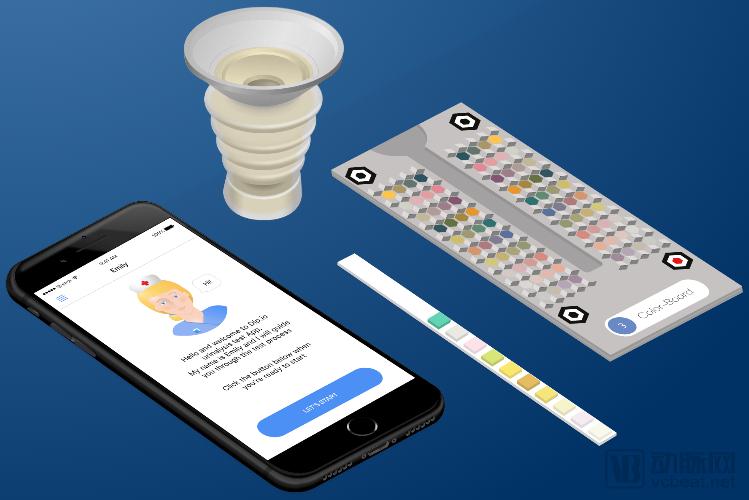
Dip.io Toolkit. Image from the Healthy.io official website
Step 1: Immerse the urine analysis test strip in the urine;
Step 2: Remove the test strip after it changes color, and compare its color with the oil dipstick;
Step 3: Open the mobile app and take photos of the urine analysis test strip undergoing color comparison and the dipstick.
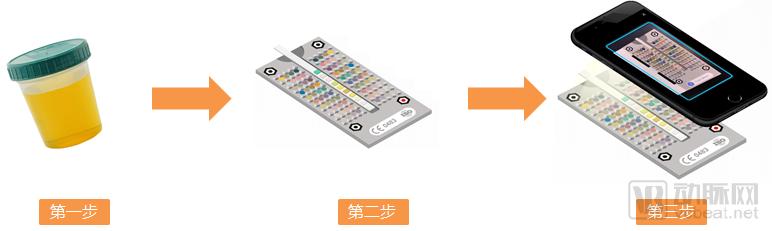
Subsequently, the mobile app employs artificial intelligence (AI) algorithms to analyze urinary markers such as protein, glucose, and blood, thereby assessing the patient’s risk of various infections, chronic diseases, or pregnancy-related complications.
Compared with similar diagnostic products, Dip.io’s greatest strengths lie in its user-friendliness and diagnostic accuracy, thanks to the computer vision algorithms and unique calibration methods employed by Healthy.io. Typically, the wide variety of smartphone models and complex, variable lighting conditions make it extremely difficult for apps to achieve accurate readings from urine dipsticks. With improvements driven by AI algorithms, Dip.io’s reading mechanism has significantly enhanced the usability of smartphone camera-based diagnostic tools. Furthermore, Healthy.io’s designers have seamlessly integrated the Dip.io kit into clinical workflows. After the app guides users through the urine test step by step, it automatically sends the test results to the patient’s electronic medical record, facilitating clinical follow-up by physicians.
In April this year, a study initiated by the National Kidney Foundation (NKF) and Geisinger on Healthy.io’s improvement of patient adherence showed that, compared with standard care, patient adherence significantly increased after the implementation of Healthy.io. It is reported that the full details of the study will be released later this year.
Urinalysis serves a vast population, with millions of patients suffering from chronic conditions such as kidney disease, diabetes, and hypertension, as well as pregnant women, queuing up at laboratories daily for testing—a process that is both time-consuming and labor-intensive. Notably, patients with kidney disease account for approximately 10% of the global population. Traditional urinalysis must be conducted in laboratory settings under the supervision of professional physicians, which to some extent limits the accessibility of urine-based chronic disease management for reaching potential patients.
According to statistics, the United States spends up to $1 trillion annually on inefficient healthcare. Many technology companies are currently attempting to reverse inefficiencies in healthcare delivery through innovative approaches, with Healthy.io being one of them. “We are witnessing the largest transformation of economic value in history,” said Yonatan Adir, Founder and CEO of Healthy.io. “We are honored that Dip.io has successfully met the rigorous standards of FDA Class II testing, and we will continue to pursue our mission of pioneering the era of medical self-testing.” Adir believes that this move by the FDA reflects a substantial shift in the regulatory philosophy for digital health.
In fact, Dip.io was approved for commercialization in Europe and Israel as early as 2016.In the UK, Healthy.io was selected as a key technology for the NHS Innovation Accelerator and is available for sale across the country through the G-Cloud procurement framework. This June, Salford Royal NHS Foundation Trust launched the NHS’s first “Virtual Kidney Clinic” using Healthy.io, improving patient convenience and reducing costs.
Healthy.io predicts that the global user base for its Dip.io home urine test kits will reach 100,000 by the end of 2018, with the FDA’s first approval helping Healthy.io attract more users.
In recent years, chronic disease management has become a popular application area for “Internet + hardware,” with smartphones serving as a key vehicle for tech innovation companies to disrupt health management approaches. Previously, VCBeat has reported multiple times on the applications of smartphones in healthcare. According to the author’s statistics, the healthcare areas currently involving smartphones include diagnosis of specific conditions such as certain cancers, respiratory diseases, and neonatal jaundice, as well as gene sequencing, fertility assistance, and retinal imaging.
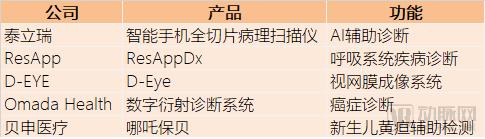
Data source: VCBeat database
After reviewing the landscape, VCBeat identified two distinct characteristics of smartphone-based medical applications prior to Dip.io’s approval.
First, the level of commercialization is low, with many applications still confined to the laboratory. Tools such as AI-powered smartphone-based dermatological diagnosis, gene sequencing, and sperm motility testing have not yet achieved commercial application;
Second, with a primary focus on auxiliary functions, smartphone-based medical applications often struggle to independently deliver precise medical diagnoses. Products such as ResAppDx, D-Eye, and Nezha Baobei operate under the premise that large-scale professional medical equipment plays the dominant role.
Therefore, the approval of Dip.io as a standalone diagnostic tool has opened up new possibilities for smartphone-based medical applications.
Further Reading:
D-Eye Raises $1.6 Million in Funding, Specializing in Smartphone-Based Retinal Imaging Systems
Nezha Baobei App Surpasses 400,000 Users; AI Technology Assists in Diagnosing Neonatal Jaundice