

China Cardiac MRI Innovation Development Alliance Officially Launched to Advance Third-Party CMR Imaging Centers
Independent diagnostic imaging centers in developed countries and regions have a nearly 30-year history of development. In the United States, there are more than 6,800 imaging centers, which perform 40% of all imaging examinations nationwide. The largest imaging center employs over 400 radiology specialists, provides services to 3,000 hospitals, and generates 20,000 imaging diagnostic reports daily.
The Chinese government has consistently maintained a supportive stance toward third-party imaging centers, introducing a series of policies to bolster their development. However, these reforms are still ongoing; further policy support and structural changes are needed to advance medical standards. Having previously learned from foreign tiered diagnosis and treatment systems, we can once again look overseas, adopting best practices while discarding the less effective ones, to study the management and operational models of independent diagnostic imaging centers abroad.
Against the backdrop of policy support and technological influx, Xin Ying International Medical Imaging Center, in collaboration with Fuwai Hospital of the National Center for Cardiovascular Diseases, hosted the 2018 Fuwai Cardiovascular Magnetic Resonance Roundtable Forum. The forum focused on drawing lessons from the mature development models and experiences of overseas third-party imaging centers, exploring how to integrate China’s national conditions with cloud technology to drive innovative development of cardiovascular magnetic resonance (CMR) techniques, establish a CMR innovation model with Chinese characteristics, and unite leading domestic and international experts in the field of CMR to found the China Cardiac Magnetic Resonance Development Alliance.
The conference specially invited Professor Sanjay Prasad from the CMR Centre at the Royal Brompton Hospital in the UK, Professor Masahiro Terashima from the CVIC Heart Image International Medical Imaging Center in Japan, Professor Zhao Shihua, Director of the CMR Center at Fuwai Hospital, Chinese Academy of Medical Sciences; Director Zhang Zhaoqi from Beijing Anzhen Hospital; Director Zhu Ming from Shanghai Children’s Hospital; Directors Liu Shiyuan and Liu Hui from Shanghai Changzheng Hospital and Guangdong Provincial People’s Hospital, respectively; Director Guo Youmin from the Affiliated Hospital of Xi’an Jiaotong University; Director Xia Liming from Wuhan Tongji Hospital; Director Lu Minjie from Beijing Fuwai Hospital; and Deputy Director Jiang Meng from Shanghai Renji Hospital, among other experts in cardiac imaging, to jointly discuss the future prospects of third-party imaging centers. The following is VCBeat’s (WeChat ID: vcbeat) on-site report of the conference.
The conference commenced with an opening address by Professor Zhao Shihua, titled “Development Prospects of CMR Technology Based on Third-Party Imaging Centers.” Starting with third-party imaging centers in the United States, Professor Zhao discussed the significant role these institutions play in the U.S. healthcare system. He noted that, amid China’s concurrent economic and policy advancements, the state encourages the chain-based and group-oriented operation of independent third-party medical imaging centers, as patients increasingly seek hospitals that provide superior medical services. At this juncture, third-party imaging institutions should seize the window of opportunity for rapid development and capitalize on the timing to solidify their foundations.
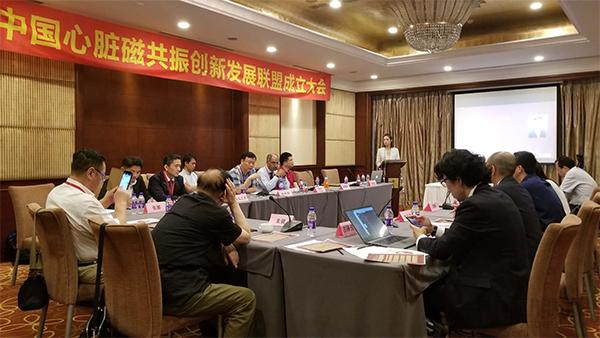
Subsequently, Professor Masahiro Terashima shared the successful experiences of third-party CMR imaging centers in Japan. He began by discussing the staffing structure of Japanese hospitals, elaborated on the operational models of third-party imaging centers in Japan and the arrangement of subsequent treatment processes, and examined the role and operational workflows of independent CMR imaging centers in patient care. Professor Terashima believes that the success of CMR in Japan stems from CVIC’s mature technology and the extensive experience of its physicians. Furthermore, CVIC is capable of implementing this Japanese model in China to provide Chinese patients with an improved healthcare experience.
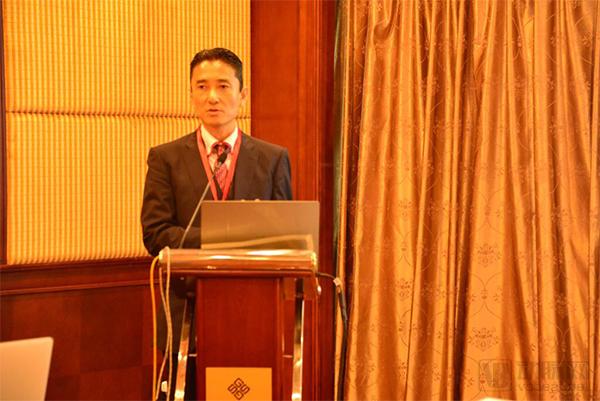 Professor Masahiro Terashima, CVIC Heart Image International Medical Imaging Center, Japan
Li Dongying, CEO of CVIC China, provided an overview of CVIC’s current development in China. CVIC (Cardiovascular Imaging Center), the largest CMR center in Japan, was established in Tokyo in 2009 and serves 280 authoritative medical institutions, including the University of Tokyo Hospital, Keio University Hospital, and the Cardiovascular Institute. In October 2017, CVIC officially entered the Chinese market and has since established specialized cardiac imaging centers in Hangzhou and Guangzhou, with a focus on cardiovascular imaging. CVIC China aims to provide more agile and professional clinical support through continuous efforts, ultimately achieving true precision medicine.
Following the presentations, the experts individually outlined the current status and challenges of cardiovascular magnetic resonance (CMR) implementation at their respective hospitals or centers, and shared their perspectives on the future development of third-party CMR imaging centers.
Director Guo Youmin believes that third-party CMR imaging centers should prioritize profitability as their primary performance metric. As CVIC is a non-state-owned enterprise, it must rely on profits to sustain operations and ensure the long-term viability of its third-party imaging centers. On the other hand, these centers must establish a comprehensive and standardized examination system with consistent data sources to normalize and streamline processes, thereby maintaining smooth information channels and seamless system interoperability.
Director Xia Liming shared his insights on this issue, highlighting the environmental differences between China and Japan: “Third-party imaging centers are still in their infancy in China, presenting a significant opportunity. However, we must squarely face the disparities between the two countries. Japanese residents have higher incomes, which supports higher service fees. In contrast, it is difficult for China to adopt Japan’s pricing standards; therefore, imaging centers in China need to serve a larger patient volume to achieve profitability.”
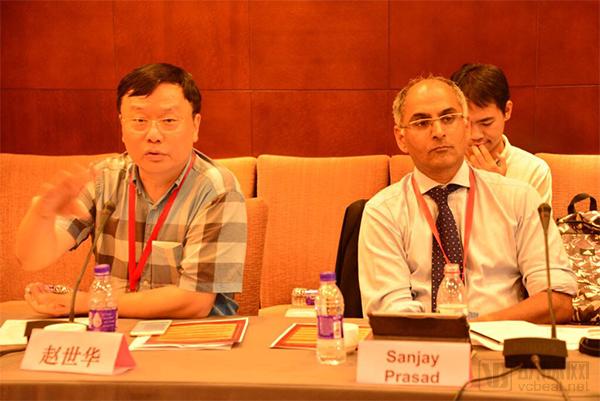
Professor Zhao Shihua, Director of the CMR Center at Fuwai Hospital, Chinese Academy of Medical Sciences, and Professor Sanjay Prasad, from the CMR Centre at the Royal Brompton Hospital, UK
Regarding the prospects of third-party imaging centers, Professor Zhao Shihua believes that the critical step at present is to strengthen promotion, enabling more patients to understand and accept these facilities. Only with a solid foundation of public awareness can third-party imaging centers achieve rapid development. Although many challenges exist, it is entirely worthwhile for CVIC to make the attempt.
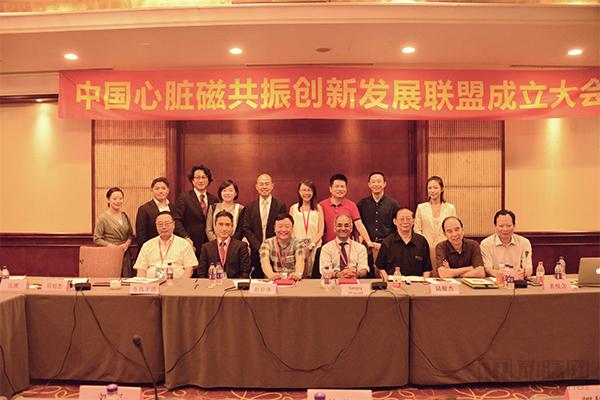
At the conclusion of the conference, Dr. Zhao Shihua, Director of Fuwai Hospital and Conference Chair; Professor Masahiro Terashima, Chairman of CVIC International Medical Imaging Center (Japan) and Co-Chair; and Dr. Sanjay Prasad from the Royal Brompton Hospital (UK), Co-Chair, together with numerous domestic experts, jointly announced the official establishment of the China Cardiac Magnetic Resonance Innovation Development Alliance.
In the future, this alliance will unite cardiovascular specialists and imaging experts from around the world to jointly advance the treatment and cure of cardiovascular diseases. Meanwhile, the organizer, CVIC Japan, brings nine years of accumulated experience, while CVIC China’s two imaging centers have been successfully operating over the past year. With the alliance now established, the fusion of cultures and the interplay of technologies are poised to drive new breakthroughs. We look forward to seeing the results.