

Xinyi International Files IPO Prospectus: Connecting 5,700 Hospitals Through Its Internet Medical Platform
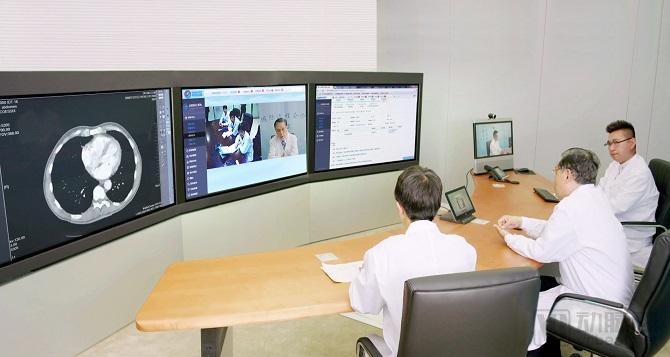
Image provided by: SENYINT
Internet healthcare is a policy-driven industry. At present, the most prominent direction is the digital transformation of physical hospitals supported by informatization. For enterprises, as long as they align with the overarching industry trend, their business models will not deviate significantly.
In April this year, following the release of the “Opinions on Promoting the Development of ‘Internet + Healthcare’” by the General Office of the State Council, VCBeat held a conversation with Tai Congyue, CEO of SENYINT. During that discussion, he revealed SENYINT’s latest strategic formula: Smart Healthcare = (Technology + Operations + Specialties) × (Ecosystem + Data) = Healthcare Empowerment. Three months later, in a follow-up dialogue with Mr. Tai, VCBeat gained deeper insights into the opportunities underlying remote healthcare empowerment.
Not Just a Pure Medical IT Vendor
SENYINT’s transformation began in 2014, when it became either a pure-play medical IT company or a healthcare services provider; Tai Congyue ultimately chose the latter.
Medical IT companies tend to have a relatively narrow delivery mindset, but Tai Congyue believes that SENYINT’s DNA is fundamentally different from that of other companies. A significant proportion of SENYINT’s employees come from medical and pharmaceutical backgrounds, enabling them to possess a deeper understanding of healthcare. SENYINT is more inclined to leverage its IT foundation to extend and integrate across various operational levels within hospitals.
The competition among hospital information technology products is fierce. For SENYINT, which only entered the market after 2010, sustaining its competitive edge has been a significant challenge, making it imperative to establish clear corporate differentiation.
Following his research, Tai Congyue discovered that telemedicine is not only a technological tool but also a means of human connection. However, relying solely on IT technology will never enable telemedicine to deliver superior services to customers. To truly excel in telemedicine, improvements in mechanisms, integration of resources, and robust operational support systems are essential. “IT serves management philosophy rather than replacing it. There were misconceptions in past informatization systems,” said Tai Congyue.
Transformation does not mean severing one’s arm to survive, nor does it entail completely abandoning previous IT operations. SENYINT has found that while ensuring effective inter-hospital collaboration, it is equally important to guarantee interoperability and technical integration within hospital systems.
SENYINT’s empowerment in disciplines, resources, and operations—where hospitals serve as the primary entities for both disciplines and resources—does not imply that its core competitiveness has shifted entirely to a single dimension such as resources. The relationship among technology, disciplines, resources, and services is such that IT technology acts as an index, linking all other elements together.
Whether it is assisting hospitals in developing their specialties and providing services, or aggregating hospital resources onto the platform, all are achieved through technology. The technological dimension is more foundational than the other aspects. Only in this way can SENYINT’s competitive barriers become more robust.
“If we abandon our technology, we will become a platform without roots and inevitably depend on other medical IT companies. Only by focusing on both technology and services—walking on two legs—can SENYINT ensure an equal footing in its collaborations with other IT companies, as all parties have a clear understanding of the business,” said Tai Congyue.
Operational Empowerment: Making Telemedicine Truly Usable
It is highly challenging to ensure that hospitals truly adopt telemedicine platforms, whether in B2B or B2C models. First, pricing structures must provide strong incentives for physicians at both tertiary and primary care institutions. Second, robust quality control measures are essential, yet they must not be overly burdensome. In its operational practice, SENYINT has continuously refined these aspects to facilitate seamless communication within medical consortia and between hospitals at different tiers.
In the past, the Medical Affairs Department or External Liaison Department of tertiary hospitals were reluctant to lower their status and proactively communicate with secondary hospitals. When secondary hospitals sought to contact tertiary hospitals to conduct telemedicine services, the coordination by the External Liaison Department often took a considerable amount of time.
Some hospital directors once envisioned establishing an independent Medical Alliance Operations Management Department to coordinate all related business activities. However, after piloting this approach, they found that although an additional department was created, overall efficiency actually declined. Therefore, in addition to helping upper- and lower-tier hospitals integrate their business systems at the system level, SENYINT plays a more critical role at the operational level, effectively serving as the external liaison office for the Medical Alliance.
Medical consortiums lack sufficient personnel for operational management, and specialized tasks are best handled by professionals. More importantly, given the current imbalance in medical resource distribution, tertiary hospitals must devote more time and energy to professional diagnostic and treatment services. SENYINT’s operational services not only undertake time-consuming and labor-intensive tasks but also handle the planning, negotiation, and coordination of medical consortiums, serving as a steward for these alliances.
The effectiveness of telemedicine is reflected in concrete data, including the number of remote training sessions and advanced studies conducted for lower-tier hospitals, the types of patients they are willing to refer to higher-tier hospitals, and the volume of remote consultations.
To meet the construction needs of telemedicine in hospitals, SENYINT has deployed professional business personnel in both upper-tier and lower-tier hospitals to provide services throughout every stage of the telemedicine process. Their daily responsibilities not only involve analyzing hospital requirements and communicating with specialists, but also assisting in reviewing medical records and participating in the entire consultation workflow. To control labor costs, SENYINT typically dispatches teams to conduct inspections on a provincial or municipal basis. Generally, for newly partnered hospitals, SENYINT staff will be stationed on-site for one to three months to thoroughly train the hospital’s medical personnel before departing.
Resource Empowerment: Enabling 5,700 Hospitals to Thrive Together on the Platform
In 2017, the number of outpatient visits at hospitals in China reached 7.7 billion, with nearly 37% to 40% of patients seeking care at Grade A tertiary hospitals. However, according to the official website of the National Health Commission, there were only 705 such hospitals in the country.
Hundreds of thousands of primary care hospitals and township health centers rarely see patients. Although there is substantial inelastic demand on the demand side, the crux of addressing healthcare issues lies not with demand but with supply. The supply side is not lacking in resources; rather, the problem stems from their uneven distribution. Mobilizing these resources to achieve more equitable allocation and enabling healthcare capabilities to permeate down to the grassroots level represent new market opportunities.
Over the past eight years, SENYINT has connected more than 5,700 hospitals, including over 50 national-level Grade A tertiary hospitals and dozens of leading specialized hospitals.
During hospital project tenders, the technical solutions offered by domestic telemedicine companies are largely similar. What hospitals truly prioritize are, first, the volume of operational traffic they can generate for the hospital; second, the number of hospitals they can help connect with; and third, their in-depth capability in co-building medical specialties.
This is particularly crucial for many municipal-level hospitals, which, beyond the system connectivity and operational services provided by SENYINT, place greater emphasis on the ability to seamlessly integrate with several or even dozens of national Grade 3A tertiary hospitals in a one-stop manner. By choosing to collaborate with SENYINT, these hospitals gain the opportunity to establish telemedicine partnerships with the aforementioned institutions.
Similarly, for tertiary hospitals—whether national-level or provincial-level Class A institutions—the goal is to extend their medical capabilities downward and attract more high-quality patients from lower-tier hospitals through a siphon effect. While traditional approaches involved individual hospitals negotiating partnerships one by one, adopting the SENYINT platform enables access to open resources from over 5,700 hospitals within a very short period.
Empowering Disciplines: Providing Advanced Training Opportunities for Physicians at Lower-Tier Hospitals
According to Tai Congyue, “SENYINT’s medical services are divided into two categories: one is general medical services, which encompass the areas of clinical practice, education, and research. For lower-tier hospitals, this is the weakest link.” Therefore, SENYINT provides bundled research and development services tailored to lower-tier hospitals, including integrated packages for medical education and scientific research.
Typically, many hospitals allocate a certain amount of funding for scientific research and education each year to support physicians in pursuing advanced training at higher-level medical institutions. SENYINT’s blended online-and-offline educational training programs hold a distinct advantage over educational agencies that merely sell continuing medical education (CME) credits. This is because such instruction is grounded in the real-world context of remote diagnosis and treatment, thereby delivering greater value to physicians.
Clinical medical services are discipline-based, and thus will ultimately align with disciplinary domains.
In this context, collaboration between hospitals ultimately evolves into cooperation among individual departments. The depth of such inter-departmental collaboration varies; SENYINT selects hospitals with deeper collaborative ties to provide services such as teaching rounds, conference discussions, and medical record consultations.
Leveraging Internet healthcare platforms to open an online green channel for the pharmaceutical industry
Over the past five years, after navigating the product and platform stages, SENYINT has begun to build an ecosystem. “Once the network is established, it needs to be adopted by more users. A road is meaningless if no cars are driving on it,” said Tai Congyue.
Therefore, SENYINT has begun collaborating with pharmaceutical companies, insurance providers, and pharmaceutical logistics distributors to jointly build an ecosystem centered around hospital services.
SENYINT’s internet-based telemedicine platform seamlessly integrates real-world patient cases, not only effectively enhancing the diagnostic and treatment capabilities of consulting physicians to better serve primary-care patients, but also disseminating pharmacological knowledge to help consultants correctly understand medication use and prescribing practices, thereby ensuring the consistent application of clinical medication guidelines.
Unlike some live-streaming platforms in the healthcare industry and pure online education platforms, SENYINT’s telemedicine platform provides genuine clinical diagnosis, treatment, and consultations.
After analyzing the patient’s condition, experts will evaluate the treatment regimen already administered and then propose a new therapeutic plan. This plan often involves pharmacological interventions, including dosage adjustments and the introduction of new drug classes and combinations, which constitutes a critical aspect for pharmaceutical companies.
Furthermore, telemedicine platforms hold significant value for pharmaceutical manufacturers in conducting retrospective clinical data studies and real-world studies.
Certainly, the value of hospitals to patients extends beyond diagnosis and treatment to include rehabilitation. To achieve a comprehensive closed-loop system, hospitals must rely not only on medications and surgery but also on rehabilitation services. Therefore, after SENYINT assists hospital physicians in completing diagnosis and treatment, it further integrates services from pharmaceutical companies and insurance providers, making the care process smoother and more complete. This closed loop also encompasses the value contributed by pharmaceutical logistics and distribution providers, pharmaceutical manufacturers, and commercial insurance companies. What SENYINT provides is akin to an online green channel.
Internet Healthcare Begins to Enter a Semi-Marketized State
Internet healthcare encompasses D2C and D2D connectivity. As a core application within internet hospitals, telemedicine has gradually become a standard component of digital transformation for hospitals in China.
The “Opinions on Promoting the Development of ‘Internet + Healthcare’” issued by the State Council stipulates that medical institutions are permitted to establish internet hospitals, which may be adopted as their secondary name. Furthermore, it encourages leading medical institutions within medical consortia to leverage technologies such as artificial intelligence to provide remote consultation, remote electrocardiogram (ECG) diagnosis, and remote imaging diagnosis services to primary care facilities, thereby facilitating real-time access, mutual recognition, and sharing of examination and test results among member institutions.
Under the guidance of policy, SENYINT provides services to hospitals through remote service packages. These packages typically include a specified number of remote consultations, educational training sessions, and image interpretation services, allowing hospitals to select options based on their actual patient volume, bed capacity, and other relevant factors.
For a new telemedicine project, SENYINT sets a three-month trial operation period to establish operational standards and define target objectives. If these targets are met, the hospital typically purchases SENYINT’s telemedicine service package.
Currently, telemedicine pricing adopts a filing system rather than an approval-based one. Therefore, for a hospital to launch telemedicine services, it only needs to file the determined prices with the local Health and Family Planning Commission and the Development and Reform Commission, after which it can implement services according to the filed pricing. In other words, telemedicine within internet healthcare has entered a semi-marketized mechanism. In this regard, SENYINT is also actively participating in discussions on the formulation of telemedicine pricing and revenue distribution models for hospitals.
With a reasonable profit distribution mechanism, execution becomes second nature.
Interview Notes
In the hands of SENYINT’s operations team are eight supplementary manuals and one master manual. Stacked together, they are roughly as thick as a dictionary. These manuals embody SENYINT’s five-year accumulation of expertise in telemedicine. Leveraging this foundation, SENYINT’s operations team has developed its own unique standardized service system. At the core of these manuals lies the essential formula: “Technology + Operations + Clinical Specialties.”