

GeneDx Oncology Secures RMB 75 Million Series A Funding to Pioneer Immuno-Oncology Diagnostics with Niche Cancers as Entry Point
When RenDong Medical CEO Jin Ge received a call from VCBeat, she had just finished a morning of meetings and was preparing to quickly have lunch at a café. Over the past six months, she has been traveling to various clinical societies and pharmaceutical summits across the country. Through collaborations with leading experts in the field, RenDong Medical has accumulated extensive clinical data. On another front, she has been frequently engaging with investors. “The capital winter is truly upon us; fundraising has become so difficult,” she lamented.
Yet even in this so-called “capital winter,” Jin Ge and her company, Rendong Medicine, managed to find a discerning investor and secure a respectable round of financing. On August 1, 2018, Rendong Medicine announced the completion of its RMB 75 million Series A financing, led by Alliances Healthcare Capital with participation from Shiyu Capital, and with Haoyue Capital serving as the exclusive financial advisor.
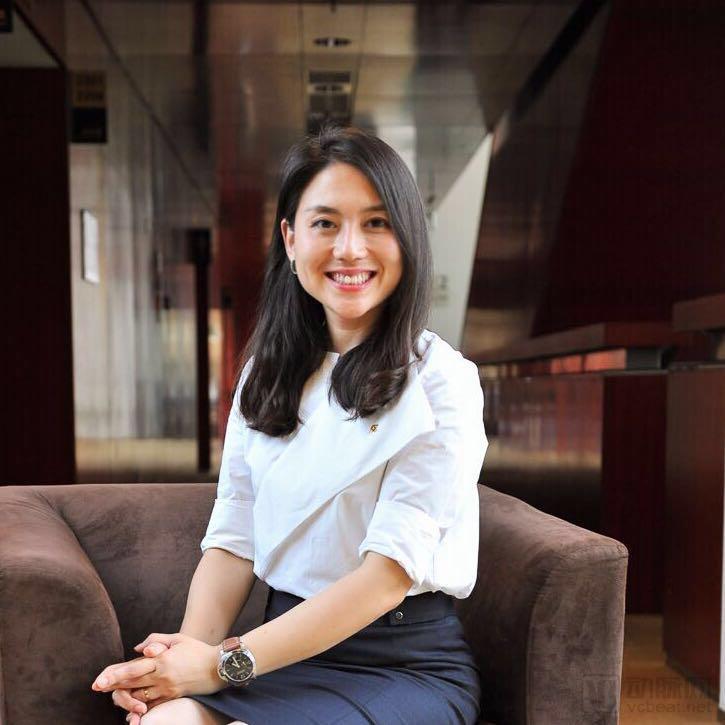
Jin Ge, CEO of Rendong Medicine
“In the field of sequencing, we started relatively late. Investors believe in us, and one reason may be that we have been sufficiently focused in our choice of track,” Jin Ge told VCBeat.
From Zhonghong Kenuo to Yuheng Genetics, and now to Rendong Medicine, this beautiful female entrepreneur born in the 1980s can be described as a highly successful founder in the healthcare sector.
Although not a scientist by training, Jin Ge managed to recruit a team of researchers to join her entrepreneurial venture. The Chief Scientist at Rendong Medicine hails from the University of Pittsburgh, while most other core team members come from top industry companies such as Illumina, Life Technologies, and BGI.
“Everyone else has a research background except me,” Jin Ge joked. She believes that, compared with other companies, such a team actually has more character. As a serial entrepreneur, she is relatively experienced in marketing and resource integration, and has a keener ear for market trends. They rarely conduct basic research; instead, they devote more effort to translating technology into products to meet the needs of end-users in clinical settings.
“This is a young and passionate team,” said Cao Jian, Partner and General Manager at Shiyu Capital.
The team at Rendong Medical is quite young, consisting mostly of individuals born in the 1980s. “However, we operate with high efficiency and have a more diverse background,” Jin Ge told VCBeat. She expressed her hope that such a team would have no weaknesses and continuously build on its strengths amid competition.
Unlike larger industry players such as Burning Rock Biotech and Geneseeq, RenDong Medicine has not opted for a broad rollout across multiple cancer types and business segments. Instead, this young team has focused exclusively on the immunotherapy sector, aiming to provide integrated diagnostic and therapeutic services related to immunology, starting from companion diagnostics.
“We are focusing exclusively on the field of cancer immunotherapy, starting with rare cancers to build a cancer database model tailored specifically for the Chinese population,” she stated.
Throughout the history of pharmaceutical development, no drug has garnered global acclaim quite like PD-1/PD-L1 inhibitors. Never before have so many companies flocked to focus on a single target. From Bristol Myers Squibb to AstraZeneca, and further to China’s innovative pharmaceutical enterprises, billions of dollars in R&D investment have been poured into this class of drugs worldwide.
“Given the substantial investments already made, stakeholders are certainly not going to give up easily; instead, they will only continue to expand the scale of this market,” Jin Ge revealed to VCBeat.
Currently, the two most popular immunotherapies—PD-1/PD-L1 inhibitors and personalized cell therapy—both rely on companion diagnostics, regardless of which treatment regimen is used.
In China, Bristol Myers Squibb’s Opdivo was approved for market launch less than a month before Merck’s Keytruda also received approval in the country, while Innovent Biologics’ PD-1 inhibitor has entered the final stage of regulatory review. This rapid approval process reflects the regulatory authorities’ supportive stance toward this therapeutic approach. Coupled with future support from the medical insurance and reimbursement systems, cancer immunotherapy is poised to account for a significant portion of oncology market expenditures in the years to come.
As Dr. Chen Lianyong, CEO and Founding Managing Partner of Rutong Yucheng, stated, “Significant breakthroughs continue to be made in first-line therapies. In China, two imported drugs, Opdivo and Keytruda, have been approved successively, while dozens of other drugs are undergoing clinical trials at various stages. The vast market for precision immuno-oncology diagnosis and treatment is poised for rapid growth. In the future, cancer immunotherapy is expected to become the gold standard for cancer treatment.”
“Genetic testing, as a companion diagnostic technology, represents a sufficiently large market.” Jin Ge is also firmly convinced that the era of tumor immunotherapy has arrived.
In terms of cancer type selection, RenDong Medicine did not opt for high-incidence cancers such as liver cancer, lung cancer, or breast cancer. Instead, it started with rare cancers like head and neck cancer, carving out its own unique path.
Rendong Medical is the earliest company in China to develop companion diagnostics for head and neck cancer, and it is currently the leading player in this field. Jin Ge introduced to VCBeat that they covered 80% of hospitals across China capable of treating head and neck cancer within eight months.
“This is an advantage of targeting rare cancers. There may be only a dozen or so hospitals across China that specialize in this area, and after attending just a few academic conferences, we can access the majority of relevant resources,” explained Jin Ge. With the support of clinical experts, they can then refine their product, thereby differentiating it from competitors.
“Another critical factor is access to patient resources,” she continued. Taking a rare cancer subtype as an example, there are only approximately 2,000–3,000 new cases annually across China, placing it at a prevalence level comparable to rare diseases. The majority of these patients are treated at a single hospital in Shanghai. Through collaboration with the oncology department of this hospital, Rendong Medicine has secured access to a substantial pool of such patients.
The accumulation of known data and the exploration of unknown data are both of significant importance to cancer diagnosis and treatment. “If pharmaceutical companies intend to develop PD-1 combination therapies in the future, our data should be the most comprehensive,” she stated. She revealed to VCBeat that after achieving product commercialization for one cancer type, the company will continue to explore other oncology products. “We will tackle each cancer type individually, eventually covering prevalent cancers such as lung cancer and breast cancer, but we will focus solely on the immunotherapy aspect,” she added.
This brings to mind the PD-1 development journeys of Bristol Myers Squibb and Merck. Both pharmaceutical companies started with small cancer indications such as B-cell melanoma and Hodgkin’s lymphoma. These niche indications facilitated their drug approvals. Moreover, the cross-indication use of PD-1 inhibitors has gained clinical acceptance, and their promotion often involves cross-departmental prescribing.
In the field of "rare cancers," RenDong Medicine has prioritized head and neck cancers, urological tumors, and hepatobiliary tumors as its focus areas, exploring comprehensive precision diagnosis and treatment management solutions for several rare cancer types.
Taking the urinary system as an example, the company has launched China’s first testing panel specifically designed for prostate cancer medication guidance, drug resistance assessment, and genetic risk prediction, enabling precise molecular subtyping to guide prostate cancer treatment. For bladder cancer, its DNA repair gene testing panel predicts response to immunotherapy. Additionally, its 620-gene panel, which assesses tumor mutational burden (TMB), microsatellite instability (MSI), and targetable genes, provides comprehensive precision diagnosis and treatment solutions for various urologic cancers.
“Our strategies share similarities, in that we start with rare cancers and tackle them one by one,” she said.
In 2017, Jin Ge and his team acquired a medical laboratory and established Rendong Holdings.
“When choosing a name, we deliberately avoided adding terms like ‘Genetics’ or ‘Technology,’ because our aim extends beyond mere testing; we strive to provide end-users with a comprehensive, integrated suite of diagnostic and therapeutic services,” stated Jin Ge. She believes that cancer cannot be addressed by a single approach and that the future will undoubtedly usher in an era of combination immunotherapy for oncology.
“Although drugs have just been launched in China, the market for standalone PD-1/PD-L1 inhibitors is already saturated. Apart from a few leading companies, most new pharmaceutical firms will no longer pursue separate regulatory submissions for PD-1/PD-L1 products. ‘The costs are substantial, and future market entry is uncertain,’ she explained to VCBeat.”
For many companies, combination immunotherapy represents a new opportunity, with numerous highly valued firms both domestically and internationally initiating drug development efforts centered on this approach. Notably, CStone Pharmaceuticals completed a $260 million Series B financing round in May 2018, setting a record for the largest single Series B funding in China’s biopharmaceutical sector. For these companies, the selection of biomarkers is of critical importance.
Jin Ge’s team once shared office space with a pharmaceutical company. Even with a former principal investigator from Novartis leading the group, there were limited options for biomarkers at that time. In contrast, global pharmaceutical giants such as Roche and AstraZeneca have consolidated diverse scientific experts—including researchers in physics, chemistry, and bioinformatics—within shared R&D centers, facilitating robust interdisciplinary communication. Currently, Chinese innovative pharmaceutical companies are relatively small in scale and have corresponding needs for data accumulation.
“Therefore, we believe that in addition to the clinical patient side, we should also establish a presence in the drug R&D sector,” said Jin Ge. “Our core team includes members from BGI and Illumina who have previously served foreign pharmaceutical companies, bringing substantial experience to the table.”
Jin Ge believes that, as in all industries, the healthcare sector always involves parties with willingness to pay and those who actually foot the bill. Under China’s unique healthcare system, both scientific research and product sales are inseparable from the involvement of physicians and hospitals. “This is crucial for improving both the sales and product systems,” she argues. On the other hand, companion diagnostics centered on pharmaceutical manufacturers, as well as biomarker screening for new drug development, should also be considered critical components.
Jin Ge believes that viewing these merely as IVD products offers little prospect. Instead, Rendong Medicine aims to establish an integrated solution spanning diagnosis to treatment, centered on the needs of end-stage clinical patients.
“We focus on the single dimension of tumor immunotherapy, gradually covering every cancer type to provide integrated testing solutions for clinical practice. This process will also involve many product improvements,” she said. “Merely selling test kits holds little significance.”
In addition to NGS, they have also established other technological platforms such as single-cell sequencing, aiming to reconstruct the true nature of cancer from multiple omics perspectives.
In addition to testing, Rendong Medicine is also building platforms for hospitals to manage patient data, follow-ups, and phenotypic data. Jin Ge believes that, in the long run, the core of healthcare over the next 20 years will undoubtedly be digital, with these data encompassing omics, phenotypes, treatment efficacy, and more.
“We have accumulated some experience in several cancer types, and it now appears that these approaches are viable,” she said.
Interestingly, both investors in this round—Tonghe Yucheng and Shiyu Capital—are technology-focused investment firms. In particular, Tonghe Yucheng, an investment firm operating parallel USD and RMB funds, has invested heavily in technology-driven companies overseas. In the testing segment, the firm has limited exposure in China, with only two publicly disclosed portfolio companies: Benchmark Medical, founded by Dr. Fan Jianbing, and Rendong Medicine.
Compared with other technology-driven companies, Rendon Medicine’s marketing DNA cleverly complements theirs. “As one of the few in China
“Some sales terminal companies can introduce the world’s best technologies and platforms in the field of immunology to facilitate product translation and implementation in China,” said Jin Ge.
It is understood that the proceeds from Rendong Medicine’s latest financing round will be primarily allocated to the construction of its Hangzhou medical laboratory and GMP-compliant manufacturing facility, research and development of new products, market expansion, and brand incubation.
Rendong Medical’s project has been established in Hangzhou Medicine Port Town, with a total construction area of approximately 6,000 square meters. It is primarily dedicated to building a large-scale industrial base for the precision immuno-oncology therapy value chain, encompassing four key components: investment operations, a medical laboratory, an R&D and production center for diagnostic reagents, and medical product sales. Upon completion, the facility will serve as Rendong’s national headquarters and its global hub for the R&D and manufacturing of diagnostic kits for precision immuno-oncology, while also acting as the primary support infrastructure for Rendong’s nationwide precision immuno-oncology diagnosis and treatment initiatives.
“At present, we are primarily focused on companion diagnostics for tumor immunology, and we will gradually move toward integrated diagnosis and therapy in the future,” said Jin Ge.