

Airdoc and Vision China Showcase AI-Assisted Human-Machine Collaboration in Retinal Image Analysis, Empowering Primary Care and Endocrinology
According to official data from the National Health Commission, the value of China's ophthalmology market was RMB 46.1 billion in 2012, which was updated to RMB 82.7 billion in 2016. Experts predict that the size of the domestic ophthalmology market will rise to RMB 159 billion in 2021.
Although the market is vast, doctors are often overwhelmed due to limited energy and capacity. The high demands and large volume of ophthalmic diagnoses have become a bottleneck restricting development. Emerging AI technologies can significantly improve their work efficiency, particularly in primary eye care screening, where AI can substantially reduce the burden of image interpretation for physicians.
Meeting physicians’ needs and alleviating their workload have been the driving goals of Vision China and many other enterprises. After five years of enduring hardships and reaping rewards, Vision China has accompanied Chinese ophthalmologists through five years of trials and growth, and its diligent efforts have finally come to fruition. At the Vision China 2018 Conference, Vision China partnered with Airdoc to present an inaugural feast of artificial intelligence at this year’s closing ceremony, showcasing remarkable achievements while outlining new prospects for the future of ophthalmologists.
This time, human-machine teams did not stand on opposite sides of the competition; instead, they competed against non-AI-assisted physicians in a collaborative manner. One side consisted of a team of five expert physicians, while the other comprised five young physicians without specialization in fundus diseases, augmented by an AI system. Meanwhile, hundreds of physicians in the audience were randomly assigned to either the Expert Team or the AI Team, participating jointly in the competition.
This event adopted a live, real-time quiz format with no standard answers. Artificial intelligence and physicians answered questions simultaneously, and the two teams were scored by the commenting expert, Professor Tang.
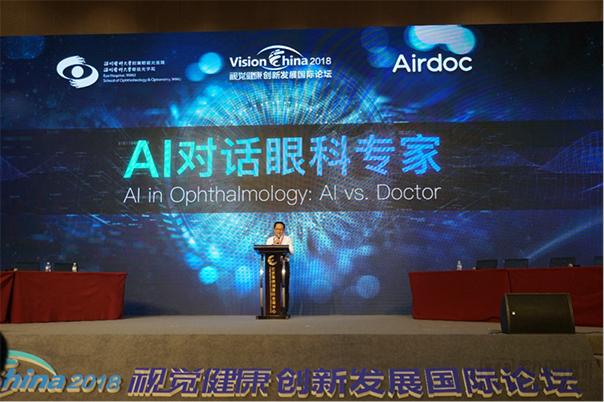
Powerful Lineup, Neck and Neck
The event judges include Professor Qu Jia, Chair of the Vision China Conference and affiliated with the Eye Hospital of Wenzhou Medical University; Professor Tang Shibo from Aier Eye Hospital Group; Professor Liu Jiang, an AI expert at the Ningbo Cixi Institute of Biomedical Engineering, Chinese Academy of Sciences; Professor Liu Tieying from the Massachusetts Department of Public Health in the United States; and Professor Jin Xi, a senior expert of the Smart Healthcare Professional Committee of the Chinese Association for Artificial Intelligence.
The Pro Side’s Independent Image Interpretation Team was led by Professor Zhao Mingwei from Peking University People’s Hospital. The four team members were Zhao Xiaojuan from Beijing Aerospace General Hospital, Xu Zequan from Kangming Eye Hospital Group, Zhang Zheng from Beijing Meiermu Dinghui Hospital, and Yuan Zhe from the First Affiliated Hospital of China Medical University.
The opposing team, supported by AI, is led by Professor Chen Feng from Wenzhou Medical University. The team members are Wei Yahui from Peking University First Hospital, Zhao Jie from Beijing Meiermu Eye Hospital, Sun Mingming from the Affiliated Zhongshan Hospital of Dalian University, and Teng Da from the Chinese PLA General Hospital.
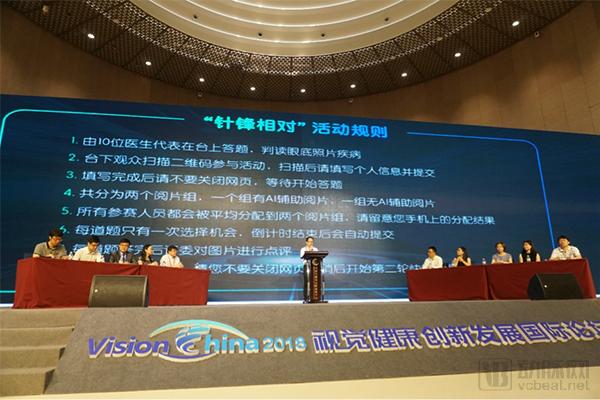
Human-Machine Collaboration: Empowering Physicians to Set Sail
Guided by moderator Fang Yiming, over a thousand ophthalmologists embarked on the first head-to-head segment—completing ten fundus image interpretation questions within 30 minutes. The images used in the competition covered common fundus diseases, and there were no standard answers. After both teams completed the questions, expert commentators provided their critiques, and Professor Tang Shibo ultimately scored the two teams based on their overall performance.
After the ten contestants took the stage, the AI team quickly found its rhythm, providing a detailed description of the pathological features shown in the images and scoring the first point. Subsequently, led by Professor Zhao Mingwei, the expert team rapidly regained momentum, leveling the score with equally precise analysis. As the match remained tied, the younger members of the AI team grew increasingly accustomed to the AI assistance. On the ninth question, they demonstrated remarkable consensus, with all members from both teams selecting "Stage II Diabetic Retinopathy." For the tenth question, both sides again provided identical answers. Ultimately, after the first round, the medical expert team secured 7 points. The AI-assisted young doctors, still lacking in clinical experience, lost the first round by a narrow margin.
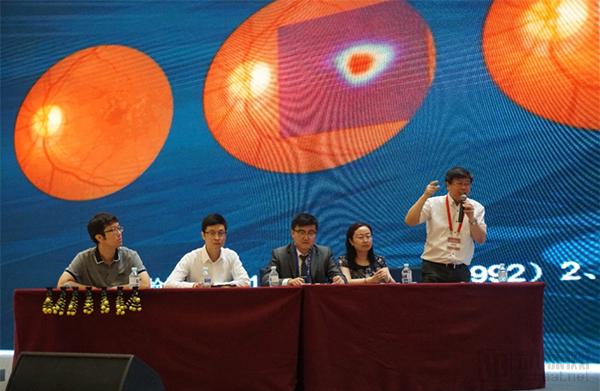
The Expert Team Wins the First Round
Regarding the competition results, team leaders Professor Zhao Mingwei and Professor Chen Feng each shared their perspectives on artificial intelligence. As an expert representative, Professor Zhao Mingwei affirmed the value of AI, while Professor Chen Feng noted that AI can rapidly provide auxiliary recommendations, offering substantial assistance to non-retina specialists.
After intense competition in the first round, the contest quickly moved into the second round, titled “Chasing the Wind and Lightning.” In this stage, the winner was the physician who correctly identified and staged the fundus images showing diabetic retinopathy from a set of 30 retinal photographs in the shortest time.
As the competition commenced, hundreds of physicians both on and off stage began answering questions at a rapid pace, filling the entire venue with an intense competitive atmosphere.
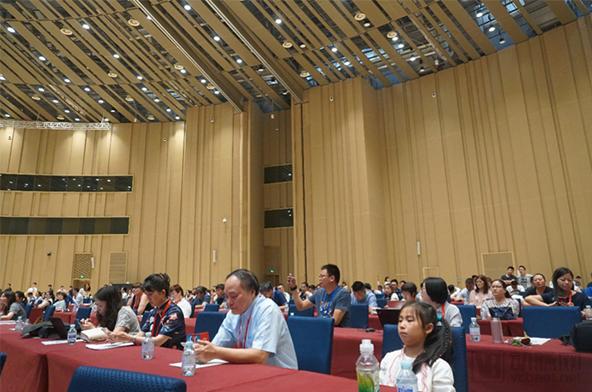
Physicians in the Audience Answer Questions
AI, with its inherent advantage in speed, excelled in this segment. Despite the AI team members’ lack of experience, they completed the interpretation of 30 medical images in just three minutes with the assistance of AI, achieving an accuracy rate of 91% and easily securing victory in the competition.
Although artificial intelligence assisted young physicians in securing victory in this round, in clinical practice, fundus examination is only one of the factors used to assess diabetic retinopathy; physicians still require other criteria and medical history for reference. At this stage, while AI may appear somewhat nascent, it is filled with promise, much like spring foliage. Naturally, this growth process necessitates continuous support from physicians.
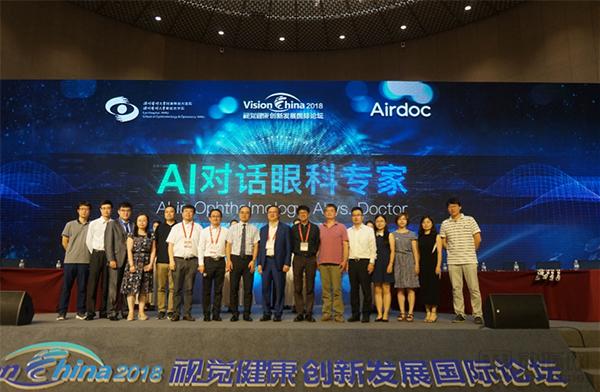
The conference judges present awards to the physicians on stage.
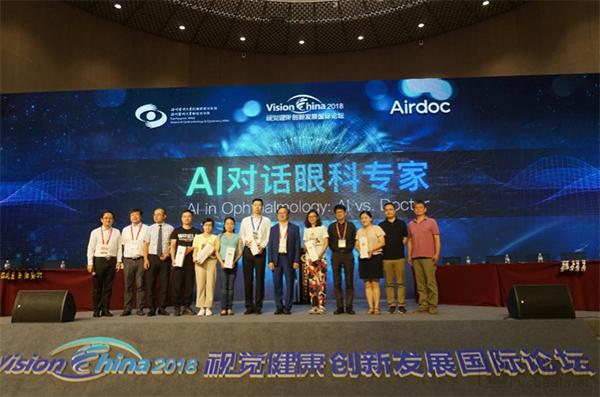
The conference judges present awards to the winning physicians in the audience.
"The eyes are not only the window to the soul but also a barometer of overall health."
With over 100 million diabetes patients in China, diabetic retinopathy is the most common complication of diabetes. Clinical guidelines mandate fundus photography for diabetic patients. However, endocrinologists do not typically assess diabetic retinopathy and generally require consultation with ophthalmologists. Due to the relatively slow development of ophthalmology services, the majority of diabetic patients currently lack regular monitoring of their fundus health.
When diabetic retinopathy progresses to its advanced stage, it can cause recurrent vitreous hemorrhage and even lead to retinal detachment, ultimately resulting in blindness. At this point, treatment becomes extremely difficult, and the window for effective intervention may be completely lost. Advanced diabetic retinopathy is irreversible.
The emergence of artificial intelligence (AI) can effectively help address this current situation. This human-AI collaboration demonstrates that non-ophthalmologists, with the assistance of AI, can rapidly and accurately interpret and stage diabetic retinopathy. It is reported that Airdoc is the AI algorithm service partner for the Standardized Metabolic Disease Management Center (MMC), and its chronic disease identification algorithms have been widely applied in endocrinology departments.
Professor Qu Jia stated:China has a limited number of medical experts. While artificial intelligence can help young physicians develop image interpretation skills, it is ultimately human clinicians who play the decisive role.We should embrace new developments with open minds. Just as digital photography replaced film, artificial intelligence—devoid of emotion and immune to fatigue—can now serve us effectively.
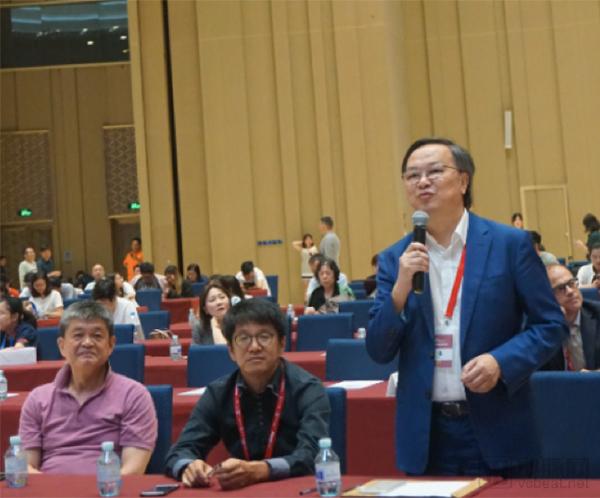
Professor Qu Jia Shares His Views on AI
There is a significant imbalance in the allocation of medical resources across regions and hospitals in China. Reducing and eliminating these disparities is a key objective for the government, society, relevant institutions, and healthcare reform. The rapid development of artificial intelligence technology provides a powerful tool to achieve this goal.
In the current healthcare landscape, physicians’ authority in making final diagnostic and treatment decisions remains unshakable and will not be altered by the emergence of one or two new technologies. The purpose of this human-AI collaboration initiative is to enhance awareness of artificial intelligence (AI), with the adversarial mode specifically designed to demonstrate the practicality of integrating AI into primary care institutions. By fostering a sense of familiarity and comfort with AI among physicians, this initiative exemplifies the organic integration of human clinicians and artificial intelligence.
According to reporters from VCBeat, the AI algorithm in question was provided by Airdoc, a leading artificial intelligence enterprise in the medical field. Developed based on millions of retinal images, this algorithm for identifying chronic diseases can accurately detect various systemic chronic conditions and common fundus disorders. It effectively improves physicians’ diagnostic efficiency and helps enhance the quality of medical services among primary care physicians in remote areas and healthcare institutions with limited ophthalmic resources. Currently, Airdoc has been implemented in numerous medical institutions across China, as well as in out-of-hospital settings such as Baodao Optical.
StarBong Health, a new retail empowerment platform company, has introduced Airdoc’s devices into its partner pharmacies. “Pharmacies are the closest touchpoint to consumers, allowing them to experience convenient screening on-site without needing to visit a hospital,” Wang Hao, CEO of StarBong Health Technology, told Health界 (Jiankangjie). Patients identified through screening who require specialized care are referred to professional hospitals, while those with routine needs are converted into customers directly at the pharmacy. Furthermore, patients who receive treatment at hospitals can continue their subsequent medication and therapy at pharmacies, thereby creating a closed-loop ecosystem.
Professor Wei Ruili from Shanghai Changzheng Hospital stated, “With the Airdoc system, we can extend the expertise of our specialist physicians and our diagnostic capabilities across China. In other words, medical images can be transmitted to the cloud from any location for auxiliary analysis to obtain accurate recommendations, enabling patients to receive early prevention guidance and analytical support at any time.”
In this human-AI collaboration initiative, Airdoc has demonstrated the professional growth of young physicians empowered by AI assistance. If primary care physicians across the board were to receive similar AI support, it would undoubtedly drive significant innovation in primary healthcare services. In the future, AI is poised to play an increasingly vital role in balancing medical resources, alleviating the workload of frontline clinicians, and enhancing the clinical competencies of both primary care and early-career physicians.