

Paiye Medical Showcases AI-Powered Automatic Delineation System for Nasopharyngeal Carcinoma Radiotherapy Target Volumes at the 9th National Nasopharyngeal Carcinoma Conference
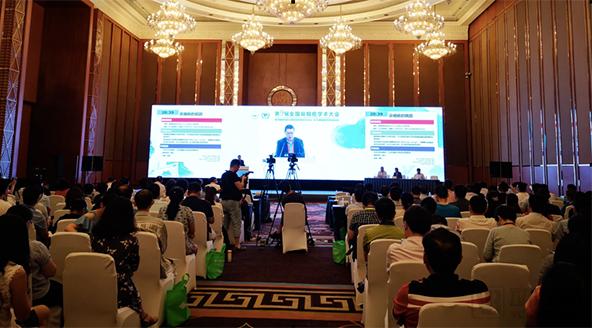
The 9th National Academic Conference on Nasopharyngeal Carcinoma Was Held in Chengdu, Sichuan
From June 29 to July 1, 2018, the 9th National Academic Conference on Nasopharyngeal Carcinoma opened in Chengdu, Sichuan Province. The conference was hosted by the Nasopharyngeal Cancer Professional Committee of the China Anti-Cancer Association and the Sichuan Anti-Cancer Association, and organized by the University of Electronic Science and Technology of China Affiliated Cancer Hospital & Sichuan Cancer Hospital and the Nasopharyngeal Cancer Professional Committee of the Sichuan Anti-Cancer Association. More than 600 experts and scholars from provinces, municipalities, autonomous regions, Hong Kong, Macao, Taiwan, and Europe attended the academic conference, engaging in in-depth discussions on hot topics such as clinical staging, standardized treatment, and radiation physics in the diagnosis and treatment of nasopharyngeal carcinoma. Baishi Medical showcased its automatic delineation system for clinical target volumes in radiotherapy for nasopharyngeal carcinoma, along with other key AI technologies and products. Below is the report brought to you by VCBeat (WeChat Official Account: vcbeat).
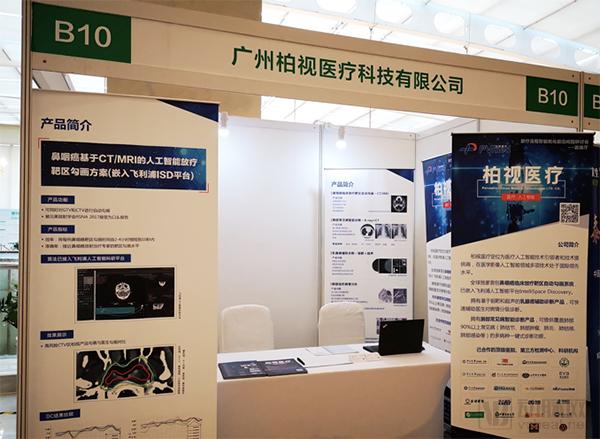
National Nasopharyngeal Carcinoma Conference - Baishi Medical Booth
During the conference, Bayes Medical spearheaded the “Symposium on Frontier Issues in Intelligent Optimization of Radiotherapy Workflows,” inviting over 40 top experts in the field of nasopharyngeal carcinoma radiotherapy from major cancer hospitals. Professor Hu Chaosu, Chairman of the Nasopharyngeal Carcinoma Professional Committee of the China Anti-Cancer Association; Professor Lang Jinyi, Chairman-Elect and affiliated with the Cancer Hospital of University of Electronic Science and Technology of China (Sichuan Cancer Hospital); most other standing committee members and committee members in attendance; Dr. Lu Yao, Chairman of Bayes Medical; Dr. Xu Chenyang, Chief Scientific Advisor; and Dr. Huang Haibin, Vice President, among others, participated in the meeting. The attendees engaged in discussions focused on current workflows in nasopharyngeal carcinoma radiotherapy and frontier issues such as artificial intelligence-driven optimization.
Lu Yao, Chairman of Bosh Medical, provided a brief overview of the company. Bosh Medical has developed the world’s first automated delineation system for clinical radiotherapy target volumes in nasopharyngeal carcinoma, which has been integrated into the Philips artificial intelligence platform. The company also offers breast cancer auxiliary diagnostic products based on mammography and ultrasound, enabling rapid assistance to physicians in graded diagnosis of disease severity. Additionally, it provides an intelligent diagnostic solution for common pulmonary conditions, offering one-click diagnostic capabilities for over 90% of prevalent lung diseases, including pulmonary nodules, lung tumors, pneumonia, pulmonary tuberculosis, and lung infections. Lu Yao expressed his hope that this symposium would facilitate exchanges and discussions with frontline clinical oncologists and experts, thereby laying a solid foundation for further optimization of artificial intelligence applications.
Experts from major cancer hospitals across China offered relevant opinions and suggestions centered on the conference theme, drawing upon their practical experience. They unanimously expressed optimism about the clinical application prospects of artificial intelligence (AI), noting that AI holds significant potential to assist in radiotherapy for nasopharyngeal carcinoma (NPC)—a field characterized by high workloads—thereby alleviating the burden on clinicians. They believe that with continuous data accumulation and model optimization, AI will achieve further advancements in clinical applications. However, they also pointed out that achieving fully intelligent radiotherapy remains highly challenging, particularly in its application to lung cancer, liver cancer, and breast cancer. Integrating NPC radiotherapy workflows optimally with AI is a long-term endeavor requiring substantial future efforts. Clinicians must collaborate closely with AI experts to further promote the application of AI in NPC radiotherapy through joint database construction, big data analytics, and other initiatives.
At the conclusion of the meeting, Xu Chenyang and Lu Yao delivered concluding remarks respectively. They emphasized that efforts to optimize artificial intelligence (AI) applications in nasopharyngeal carcinoma require industry-wide consensus and data sharing across dimensions such as datasets, parameters, and workflows. Furthermore, it is essential to foster exchanges and discussions through various channels to provide insights and recommendations for enhancing the application of AI in nasopharyngeal carcinoma radiotherapy. Although current progress indicates that implementing AI in this field faces significant challenges and proceeds at a slow pace, sustained efforts are necessary. Continuous refinement and optimization are crucial to making tangible contributions to the clinical application of radiotherapy for nasopharyngeal carcinoma.

Scan the QR code to follow Bosh Medical's official public account