

TraceLink Files IPO Prospectus: A Decade of Pharmaceutical Traceability to Combat Counterfeit Drugs
TraceLink
Drug Traceability SaaS Platform
At present, the issue of counterfeit drugs in the pharmaceutical market cannot be underestimated. In a 2015 report, the World Health Organization stated that one in ten medicines circulating globally is counterfeit, resulting in hundreds of thousands of deaths annually and causing nearly $75 billion in losses to the industry.
In 2013, following the enactment of the U.S. Drug Supply Chain Security Act (DSCSA), pharmaceutical companies across the entire supply chain were required to enhance drug tracking and document the full journey from manufacturer to patient. The legislation mandates a 10-year traceability period for unit-level drugs, thereby creating investment opportunities in the services and equipment needed for industry compliance. Counterfeit drug monitoring and pharmaceutical traceability became TraceLink’s entry point, and the company now serves more than 450 life sciences companies worldwide.
What does TraceLink primarily do?
TraceLink was founded in 2009. Its core business is to block the trade channels of counterfeit drugs through a drug tracking SaaS platform, attempting to identify all fake prescription drugs. According to VCBeat (WeChat ID: vcbeat), the company’s Life Sciences Cloud software can help manufacturers, distributors, and dispensers track medications within their supply chains and comply with country-specific traceability requirements.
TraceLink assigns a unique serial number to each pharmaceutical product, enabling the identification and verification of suspicious medications, with data fed back into integrated systems. Furthermore, by leveraging information such as dates, inventory levels, and logistics, it provides visibility into drug distribution channels, thereby offering decision support to pharmaceutical manufacturers.
Currently, TraceLink’s tracking network covers nearly 300,000 partners, primarily in the United States and European Union markets. For customers such as hospitals and pharmacies, TraceLink’s medication management software supports interactive features. Pharmacists or physicians can communicate with pharmaceutical manufacturers regarding specific drug information, thereby optimizing the treatment process. The serial numbers of dispensed medications are linked to patient information, facilitating recalls or patient tracking in the event of drug-related issues.
In June 2018, TraceLink announced that it had secured $60 million in Series D financing. The round involved 18 investors, including Goldman Sachs Group, FirstMark Capital, Volition Capital, and F-Prime Capital, which had previously led its Series C financing.

Following this round, TraceLink’s total funding reached $140 million, and the company is preparing for an initial public offering (IPO). Not long ago, it also announced its quarterly revenue and customer growth rates. In the first quarter of 2018, the company’s revenue increased by 69% year-over-year, with revenue in the Asia-Pacific region growing by 386%, EMEA revenue by 270%, and India revenue by 159%.
In May 2018, TraceLink signed a strategic cooperation agreement with Beijing iCreate Technology Co., Ltd. The two parties agreed to engage in in-depth collaboration in the Asia-Pacific Greater China region in the fields of digital pharmaceutical supply chains and global compliance management. They plan to create a comprehensive, one-stop solution for pharmaceutical safety and digital supply chains, spanning Level 1 to Level 5, by leveraging their combined strengths. This initiative aims to provide advanced services aligned with international industry norms and standards to qualified Chinese pharmaceutical enterprises.
Shabbir Dahod, President and Chief Executive Officer of TraceLink, stated, “Thousands of companies in the pharmaceutical supply chain need to know how to sell drugs while complying with time-bound regulations. TraceLink aims to provide these companies with solutions that are both regulatory-compliant and revenue-enhancing, helping them deliver medications to patients safely.”
Building on Technology and Expertise to Develop End-to-End Supply Chain Services

Shabbir Dahod, President and CEO of TraceLink
“At TraceLink, we combine decades of innovative technology with supply chain business processes to build cloud-based network applications,” said Dahod. “We firmly believe this will significantly enhance supply chain management and operations in the life sciences industry.”
As President and CEO of TraceLink, Shabbir Dahod is also a co-founder and board member of the company. In the early stages of founding the company, he aimed to establish an enterprise that leverages scientific and technological innovations to optimize business management for life sciences companies. In collaboration with global trade partners, the company plans to enhance the global pharmaceutical supply chain, encompassing the entire process from manufacturing and packaging to distribution and dispensing.
For over a decade, Dahod has been dedicated to researching and ensuring the integrity of pharmaceutical supply chains, with the ultimate goal of safeguarding the interests of patients worldwide. As a forward-thinking leader, Dahod recognized early on the critical role that product traceability technologies play in optimizing life sciences supply chains and their profound impact on saving lives.
In the early 21st century, while collaborating with the MIT Auto-ID Laboratory, Dahod learned that counterfeit drugs were rampant across the United States, posing a serious threat to the lives of unsuspecting patients. Since then, he has devoted himself to research on the Internet of Things (IoT), aiming to migrate the entire pharmaceutical supply chain onto digital cloud platforms.
In May 2003, he founded SupplyScape, positioning it as a leader in computer markets and multimedia authoring technologies. Dahod stated that nearly 100 companies were already using SupplyScape’s solutions at the time, with the company focusing on addressing product safety and regulatory challenges stemming from a lack of supply chain visibility.
By leveraging SupplyScape’s innovative technology, the drug footprint is managed and presented digitally, ensuring that medications safely travel from manufacturers to patients, with all intermediate steps seamlessly completed.
In the years before the DSCSA became law, Dahod launched TraceLink, introducing the concept of a life sciences cloud. This cloud-based software, hosted on Amazon Web Services, has become the world’s largest track-and-trace supply chain system.
Additionally, early in his career, Dahod worked with Microsoft co-founder Paul Allen at Asymetrix. Paul Allen, an American business magnate, investor, and philanthropist, co-founded Microsoft with Bill Gates. As of February 2018, he was ranked as the 43rd richest person in the world, with an estimated net worth of $25 billion.
During his collaboration with Allen, Dahod developed numerous emerging web product technologies, including early initiatives in e-commerce, natural language query, online sports, digital media, and Java development tools. Subsequently, Dahod served as a senior executive at the Allen Group and later assumed a senior leadership role at Microsoft. He championed the adoption of emerging XML standards and internet communication tools, leading his team in knowledge management-related learning and development.
Why Use TraceLink’s Life Sciences Cloud?
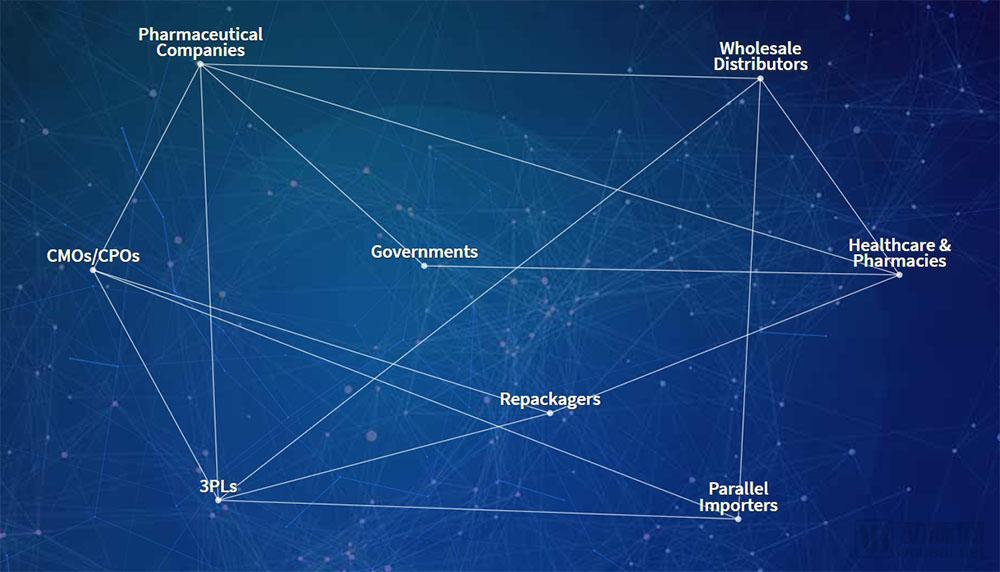
As a company specializing in cloud software for the life sciences sector, TraceLink not only provides drug traceability services to enterprises but also encourages them to engage in data exchange with their partners. Dahod stated that every company joining the TraceLink network can connect with dozens or even hundreds of other companies through its cloud platform. This not only accelerates collaboration efficiency among companies but also significantly reduces costs.
Regarding the concept of the cloud, Dahod stated, “We can spin up 100 servers to execute a task, and once the task is completed, those 100 servers can simply disappear. This is a powerful capability that can be leveraged on a global scale to address the limitations of computing resources.”
Building on the use of TraceLink’s cloud software, Dahod emphasized that virtual solutions involve massive data storage volumes. Cloud storage is highly advantageous for supply chain applications, as it not only enables the storage of trillions of items across the supply chain but also allows for real-time processing of these items, thereby enhancing flexibility and meeting corporate requirements.
Benefits of Data Serialization
Serialization has opened up new frontiers in data complexity. Today, pharmaceutical products in the supply chain must be represented as data, enabling targeted delivery at the right time, via the right route, and to the right location. TraceLink’s cloud-based software reduces the labor and costs associated with establishing point-to-point working connections.
Furthermore, serialization involves many different data formats, and the lack of a standard format increases the complexity of product traceability and data exchange. TraceLink’s cloud software ensures that data is sent to partners in the most convenient and straightforward format, with EPCIS (Electronic Product Code Information Services) being a commonly used format.
EPCIS was initially applied to electronic tags and serves as a standard for the Internet of Things (IoT) and automated data collection. In September 2015, EPCIS officially became an ISO standard. It is defined as a business data standard that enables the capture and sharing of visible data information among different applications, achieving end-to-end visibility of physical and virtual objects throughout business processes. Its applications include use in trade items, returnable assets, pallets, digital music downloads, e-books, and coupons.
Flexible Exchange of Data Information
TraceLink’s cloud software features a unique network architecture that enables rapid configuration for trade discovery and data exchange. Since October 2014, the TraceLink network has encompassed more than 270,000 supply chain endpoints. According to VCBeat (WeChat ID: vcbeat), this has saved the industry billions of dollars in point-to-point integration costs.
Furthermore, the company commits to providing the following services and support:
- Instantly and unrestrictedly communicate with over 270,000 trading partners through a single data connection to TraceLink cloud software.
- Promptly understand and adopt new national policies to swiftly enter the global trade market.
- Streamline data integration by adhering to partners’ preferred file formats, file sizes, naming conventions, and transmission sequences, thereby enabling efficient information exchange.
- Rapidly deploy new software synchronized with corporate business operations to support large-scale data serialization and transaction processing, in response to the needs and development of trading partners.
- Ready-to-use integration with third-party systems (ERP, WMS, LMS, edge, and government systems), simplifying configuration and ensuring accurate loading of provider-specific mapping information.
- Leveraging a proprietary cloud architecture, automatic data replication across multiple data centers is enabled to maximize the utilization of required computational capacity.
- Obtain supply chain operational information to achieve real-time visibility. When necessary, execute drug recalls, drug verification, and clarify product distribution pathways.
Automated Validation Compliant with GxP Requirements
GxP refers to the various stages of pharmaceutical quality assurance and their associated regulatory requirements throughout the product lifecycle. It encompasses GLP/GRP (preclinical stage: chemistry, pharmaceutics, and toxicology), GCP (clinical phases I, II, and III), GMP/GCP (manufacturing/phase IV clinical trials), GMP (commercial production), GSP (distributors), and GUP (hospitals/consumers).
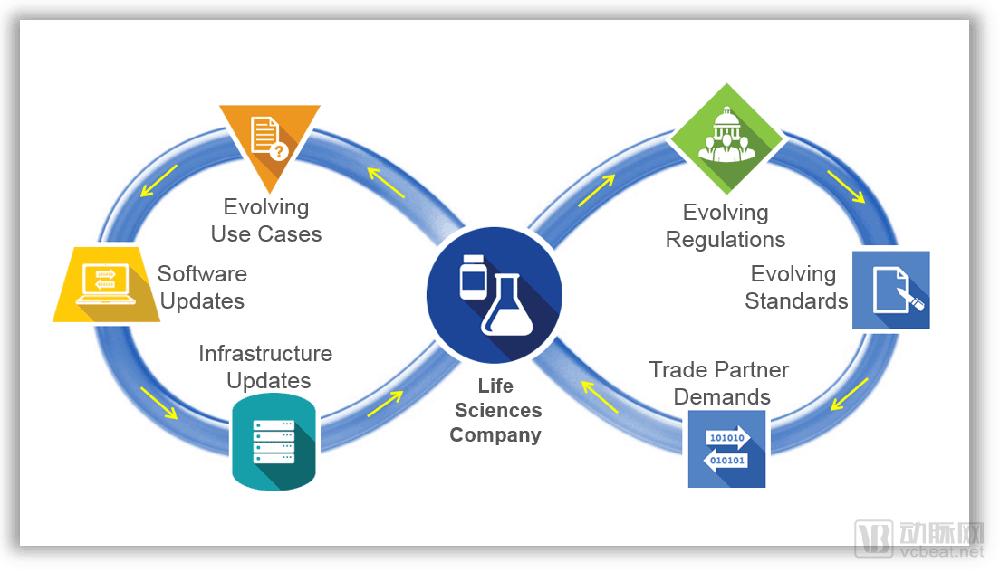
Traditionally, validation has required a manual process managed over weeks with specialized expertise. This poses a significant challenge for companies of all sizes in the industry, which are constrained by new regulations and evolving conditions. TraceLink’s solution keeps corporate systems up to date and compliant with GxP standards aligned with industry best practices. In this context, both enterprises and their trading partners can run and use the same version of communication software, thereby improving work efficiency.
Comparison Between TraceLink and LK Pharmacopoeia
The Likang Pharmacopoeia includes 6,500 entries of Western medicines, Chinese patent medicines, and traditional Chinese medicine formulas. Categorized by medical specialty, it enables rapid drug lookup and supports full-text search. It also provides information on common drug indications, dosages, and side effects. With a concise selection of entries, it serves as a general, non-specialist drug reference guide and is an essential electronic resource for healthcare professionals.
Compared with TraceLink, Likang Pharmacopoeia is more commonly used for drug inquiries. It offers limited drug information, requires manual version updates, and can only be used after the software is downloaded and installed.