

TongCe Medical Releases 2018 Interim Report: Revenue Hits RMB 685 Million, Orthodontics Grows Over 50% YoY, Full-Scale Rollout of Dandelion Expansion Plan Underway
VCBeat (WeChat ID: vcbeat) has learned that on the evening of August 1, Topchoice Medical (600763) released its 2018 semi-annual report. During the reporting period, the company’s medical service operational area reached 108,000 square meters, with 1,490 dental chairs installed. The number of outpatient visits totaled 879,000. The company achieved operating revenue of RMB 685 million, a year-on-year increase of 34.91%; net profit attributable to shareholders of the listed company amounted to RMB 134 million, up 52.68% year on year; and net profit attributable to shareholders after deducting non-recurring gains and losses was RMB 132 million, representing a year-on-year increase of 51.57%.
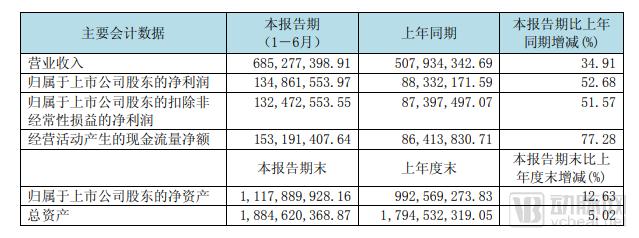
Key Financial Data of the Company
Topchoice Medical is a main-board listed company primarily engaged in dental and assisted reproductive medical services. Its dental medical services mainly include implants, orthodontics, and prosthodontics, while its assisted reproductive services primarily cover the diagnosis and treatment of infertility and assisted reproductive technologies (IVF). Since transitioning to the healthcare sector in 2006, the company has established 30 specialized hospitals and medical outlets of varying sizes.
The company’s successful expansion and steady growth in recent years have continuously validated the “Regional General Hospital + Branch Hospitals” development model. Under this model, the regional general hospital platform supports physicians’ clinical skills and academic standing, while building brand influence within the region. Serving as the general hospital’s “moat,” branch hospitals can rapidly extend this brand influence, optimize healthcare resource allocation, and enhance patient access to care, thereby accumulating a customer base and capturing market share in a relatively short period.
Benchmarking against HCA, the Company summarizes its internal experience while learning from the management models of leading medical institutions both domestically and internationally, studying and adopting their problem-solving approaches. It adheres to the “Regional General Hospital + Branch Hospitals” model, aiming for each regional specialized hospital group to become the largest and most advanced hospital in its local area.
For over a decade, Hangzhou Stomatological Hospital Group has engaged in extensive exploration. It currently operates three central hospitals—Pinghai Road, Chengxi, and Ningbo—with each developing more than two branch hospitals.
This “regional general hospital + branch hospitals” model maximally mitigates the management and expansion risks arising from the unique artisanal nature of dental care, enabling regional dental hospital groups to operate as a viable business model. The development approach based on “regional general hospital + branch hospitals,” along with the replicable model of regional hospital groupization, will constitute the company’s primary strategic direction going forward.
During the reporting period, the simultaneous growth in both volume and price of medical services drove high growth in both revenue and net profit. The proportion of revenue contributed by branch hospitals further increased, orthodontics business grew by more than 50% year-on-year, assisted reproductive technology (ART) services continued to expand rapidly, and ophthalmology services are under accelerated preparation. The following are some phased achievements made in the first half of the year:
Steadily adhering to the “regional general hospital + branch hospitals” development model, with steady performance growth
Currently, the initial results of the dental hospital group have become evident. Over the next five years, Hangkou Group aims to achieve comprehensive coverage across Zhejiang Province, establishing an industry position and academic influence commensurate with its scale.
The Company continues to adhere to the “Regional General Hospital + Branch Hospitals” development model and a group-based replication strategy, fostering multiple regional dental hospital groups such as Hangkou Group. It remains committed to expanding in regions with abundant medical resources and a solid foundation for patient education. Through its dental fund, the Company is establishing tertiary dental hospitals in Wuhan, Chongqing, Xi’an, Shanghai, Chengdu, and Beijing. Leveraging the talent, technological, and resource advantages of the Hangzhou Medical College Cunji School of Stomatology, jointly established by the Group and Hangzhou Medical College, the Company will prioritize the development of the Binjiang Branch of Hangzhou Dental Hospital in Hangzhou’s Binjiang District, which will serve as the Affiliated Stomatological Hospital of Hangzhou Medical College.
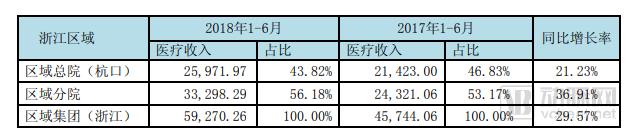
The regional general hospital accounts for 43.82% of the total revenue of the regional group.
In the first half of 2018, dental medical service revenue in the Zhejiang region amounted to RMB 592.7026 million, of which the regional general hospital generated medical revenue of RMB 259.7197 million, representing a year-on-year increase of 21.23%. The regional general hospital accounted for 43.82% of the total revenue of the regional group, a decrease of 3.01 percentage points. Branch hospitals generated medical revenue of RMB 332.9829 million, a year-on-year increase of 36.91%, accounting for 56.18% of the group's total revenue, an increase of 3.01 percentage points compared to the same period in 2017. The revenue contribution ratio of regional branch hospitals has steadily increased.

Zhejiang Regional General Hospital: 312,200 outpatient dental visits
In the first half of 2018, dental outpatient clinics in the Zhejiang region recorded 747,400 visits. Of these, the regional main hospital accounted for 312,200 visits, representing a year-on-year increase of 10.24%, while regional branch hospitals accounted for 435,200 visits, representing a year-on-year increase of 17.18%. The growth rate of outpatient visits at regional branch hospitals exceeded that of the regional main hospital, demonstrating a sustained upward trend.

Orthodontic medical services increased by 50.52% year-on-year
In the first half of 2018, the Company’s orthodontic medical services generated RMB 122.4753 million, a year-on-year increase of 50.52%; dental implant medical services amounted to RMB 108.5927 million, up 29.05% year on year; and pediatric medical services reached RMB 96.5001 million, representing a 35.17% year-on-year growth.
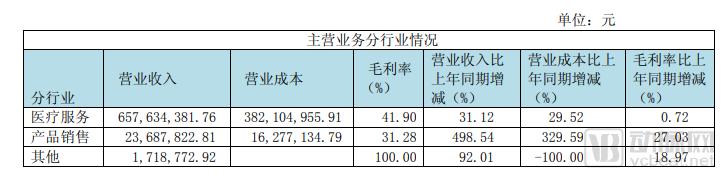 Gross Profit Margin: 41.90%
The Company’s medical service operating revenue amounted to RMB 657,634,381.76, with operating costs of RMB 382,104,955.91, resulting in a gross profit margin of 41.90%, representing an increase of 0.72 percentage points compared to the same period last year. Operating revenue within Zhejiang Province was RMB 618,109,222.94, a year-on-year increase of 33.70%, while operating revenue outside Zhejiang Province was RMB 64,931,754.55, a year-on-year increase of 47.26%.
Focus on Building the “Tongce Physician Group”
A hospital group is, first and foremost, a physician group. World-renowned hospital groups such as Mayo Clinic and Cleveland Clinic are all physician-led organizations. The company’s ongoing effort to build a physician group reflects a core philosophy: physicians, as the primary productive force of a hospital, are the main providers of patient care.
Leveraging the Cunji Medical Center of the University of Chinese Academy of Sciences, the Company has established the Topcare Doctor Group, centered on renowned physicians across various specialties. This initiative optimizes the allocation of medical personnel at all levels, maximizes the pivotal role of high-caliber physicians in collaborative care, encourages broad participation from grassroots healthcare professionals, and comprehensively leverages the professional expertise of doctors at every tier.
Through 3–5 years of dedicated effort, we aim to first establish the largest, strongest, and most cohesive physician group in Zhejiang Province—one that leads China’s dental community and truly realizes shared benefits—by integrating the province’s top dental professionals to become Zhejiang’s largest dental physician group.
Hangkou Group has adopted the limited partnership structure to establish its Physician Group, defining the organizational and management framework as follows: The executive partner of the Physician Group’s investment plan is responsible for investment functions and the daily management of investment-related matters; the Physician Committee of the Physician Group is tasked with forming medical teams for Hangkou’s newly established branch hospitals and providing medical services; under the Physician Committee, a Physician Group Office has been established, which reports to the Physician Committee and is primarily responsible for implementing the Committee’s decisions, handling the daily operations of the Physician Group, and managing other related affairs.
By adopting the model of “independent accounting, autonomous operation, and sole responsibility for profits and losses,” physician groups are committed to becoming a high-quality platform for physicians’ multi-site practice, truly achieving resource integration, openness and inclusiveness, and shared benefits and win-win outcomes.
Continuously Promote the CM Team-Based Care Model
Fully implement the CM team patient intake model. This model, benchmarked against the Mayo Clinic in the United States, centers all operations on customer needs to make services tangibly perceptible to clients, thereby driving authentic marketing outcomes.
The Mayo Clinic concentrates its finest medical resources on patient diagnosis, with diagnostic reports serving as its most effective advertisement. In the team-based care model, specialists primarily focus on making diagnoses, designing treatment plans, and participating in key aspects of therapeutic intervention.
The team model at the Chengxi Branch of Hangzhou Stomatological Hospital has only partially adopted and practiced the Mayo Clinic model, yet its revenue per dental chair and overall income have repeatedly hit record highs.
Considerations for the CM Team-Based Diagnosis and Treatment Model:
1. The team assembles physicians with diverse specialties, allowing each to leverage their expertise to create value;
2. Multidisciplinary collaboration within the team raises physicians' professional ceilings, enabling experts to treat more patients;
3. No referrals are needed; specialists from various departments collaborate to address patient issues, resulting in a superior customer experience;
4. Implementing a team-based model will enhance both medical quality control and physicians’ professional competence;
5. The team-based model is superior to the conventional preceptorship model in training young physicians.
Mayo Clinic’s impact on the entire healthcare system lies in its absence of traditional departments. So-called departments exist solely for internal learning and management purposes. Physicians operate under a primary-care-physician responsibility model, forming dynamic teams based on patient needs to collaboratively address patient issues. Maintaining a “patient-centered” approach is the global direction for healthcare development. Physicians with strong clinical capacity are key targets for cultivation. Those who frequently delegate tasks to other physicians and drive collective professional growth are the future partners. Once a team matures, it can further expand into additional teams through natural fission.
Comprehensively Advance the Dandelion Initiative
In June 2018, the company officially launched the Dandelion Plan, an entrepreneurial initiative by Hangkou Group to invest in and establish branches of Hangzhou Stomatological Hospital. This program was implemented in various counties, county-level cities, and districts across Zhejiang Province (excluding the main urban areas of Hangzhou and Ningbo), in collaboration with reputable local dentists.
Comprehensively advancing the "Dandelion Project" is the most critical task for Hangkou Group over the next three to five years. After eleven years of development, Hangzhou Stomatological Hospital has established a solid foundation in Zhejiang Province and has now reached the harvest season.
The Dandelion Initiative is dedicated to resource integration and collaborative win-win outcomes. Over the next three to five years, the company will adhere to the principle of “quality over quantity,” prioritizing excellence and refusing to compromise on standards. It will rigorously select local physician partner teams, collaborating with professional dentists who boast high visibility, a solid industry reputation, the ability to build a core team of dental specialists, the competence to ensure medical technical excellence and quality control, and access to local resources.
Jointly funded by Hangkou Group, the physician group, and plan participants, Hangkou Group provides support in branding, management, talent, technology, and capital for the newly established branch hospital. Core team members of the plan participants hold shares under their real names and are responsible for assembling the core medical team of the branch hospital and maintaining local resources. The company will provide subsequent financial support to the new branch hospital, and the stomatology physician group within the Topchoice system will provide medical technical support to the branch hospital.
Uphold the Platform Strategy: Scale Effects Drive Down Costs
Topchoice Medical adheres to a platform-based strategy. The main hospital and its branches, akin to atoms within a molecular structure, establish their own bonding patterns and spatial arrangements in accordance with established principles. Through collaborative operations, internal marketization, and organic branching, the medical enterprise functions as a self-organizing system. This approach significantly enhances replicability and operational efficiency while reducing management costs. Each specialty engages in self-learning and autonomous growth, enabling the company to evolve into an ecosystem encompassing multiple specialties, including dentistry, ophthalmology, and IVF.
During the reporting period, the Company adopted a volume-based procurement strategy for its major medical equipment, such as dental comprehensive treatment units, leveraging purchase volume to secure favorable pricing.
Through competitive negotiations with major suppliers, shortlisted brands and models were determined. In particular, the procurement cost for major equipment in newly built hospitals was reduced by 10%.
Regarding consumables, the company is gradually establishing a virtual supply chain headquarters responsible for catalog platforms and information management. It sets minimum standards for consumable management and implements cost-effectiveness management, while delegating specific procurement tasks to regional dental groups to achieve transparency and institutionalization in consumables management.
In the first half of this year, Hangkou Group took the lead in implementing a pilot program for medical consumables procurement, achieving an overall cost reduction of more than 3% through centralized negotiations. Hospital groups and suppliers conduct direct transactions via a platform, selecting partners based on supplier evaluations to optimize the supply chain systems of each hospital group. The company’s supply chain management will transition from a centralized group procurement model to a blockchain-based distributed ledger system, enabling intelligent sharing.
Actively Promote Single-Disease Strategies
On one hand, benchmarking against Kaiser Permanente in the United States, we are exploring an HMO model that integrates healthcare delivery with payment and services. Simultaneously, in response to the national rollout of healthcare payment reforms shifting from fee-for-service to diagnosis-related group (DRG) payments, we have established dedicated business units for single-disease management. By productizing dental care services, we not only provide patients with standardized medical products featuring transparent pricing and predictable outcomes but also expand beyond traditional marketing channels by integrating online social e-commerce, location-based service (LBS) platforms, key accounts, and insurance channels into a comprehensive marketing strategy.
On the other hand, to further promote sustainable development, build a tiered team of professional talents, and ensure the improvement of clinical diagnosis and treatment standards as well as clinical benefits, a Disciplinary Professional Committee was established, comprising seven specialized groups: Implantology, Periodontology, Orthodontics, Prosthodontics, Oral Surgery, Endodontics, and Pediatric Dentistry.
The professional committee has developed specialized medical technical standards for more than 20 disease categories, providing a basis for ensuring patient safety, improving healthcare quality and clinical proficiency, and promoting the standardization and normalization of medical practice.
Integrated Development of Medical Care, Education, and Research to Enhance Industry Influence
Adopting the U.S. model of hospitals affiliated with medical schools, we prioritize education and actively promote scientific research. The company implements a collegiate system in disciplinary development and hospital management.
Each regional hospital group determines its key specialty areas based on actual conditions, encouraging every hospital to strive for a leading advantage in at least one field. In terms of management, case study methods from business schools are adopted, replacing centralized, purely top-down, and crude management with mutual learning and benchmarking among hospitals.
In the first half of 2018, the teaching and research activities at the hospitals under the company’s umbrella continued to advance. Hospitals within the group published more than 10 academic papers in various journals, and won a total of 28 awards in implantology competitions and case contests, including those held at the 2018 BITC International Forum on Dental Implants and the 2018 International Symposium on Oral Reconstruction, thereby steadily enhancing their influence within the industry.
The hospitals affiliated with the company organized medical experts and key personnel to participate in various domestic and international academic exchange conferences, as well as training programs conducted by the company’s Dental Academy and individual hospitals, for a total of 355 sessions in the first half of the year.
The company’s medical institutions conducted a total of 1,056 free-clinic events focused on social welfare themes, including campus practice base lectures on “Caring for Adolescent Growth,” the Zero Cavities in Children Initiative, and periodontal health care for middle-aged and elderly community residents. These clinics served 203,700 individuals. Additionally, 588 oral health education sessions were held, reaching nearly 80,000 people, thereby achieving significant social impact and enhancing brand promotion.
Improve the Construction of Medical Quality Management Standards in Hospitals and Enhance the Level of Medical Quality Control
In the first half of 2018, Topchoice Medical further improved its medical management system, promoted refined hospital management, steadily enhanced the quality of medical services, and established professional disciplinary committees, comprising seven specialist groups: Implantology, Periodontology, Orthodontics, Prosthodontics, Oral Surgery, Endodontics, and Pediatric Dentistry.
The specialized academic groups were officially established on July 4, 2018, with defined responsibilities including the formulation of detailed clinical pathways, supervision and management of medical quality, development of professional talent pipelines, enhancement of academic exchanges, and evaluation and introduction of new materials and technologies.
In the first half of 2018, the Medical Committee and Service Committee of Topchoice Medical completed the revision of the "2018 Topchoice Medical Dental Division Medical Quality Control Management Standards and Evaluation Guidelines" and formulated the "2018 Topchoice Medical Dental Division Customer Service Management Standards and Evaluation Guidelines." In accordance with the annual work plan, inspections were conducted at various dental hospitals under Topchoice Medical. A total of 16 supervisory inspections and 55 guidance and training sessions were organized, covering 18 hospital campuses. Compared with the previous year, the level of medical quality control in each hospital improved.
In the second half of 2018, the Medical Committee and the Service Committee will revise existing manuals, including the Hospital Infection Control Standards Manual and the Hospital Service Standards Manual, in accordance with the new standards. Meanwhile, comprehensive inspections and assessments will be conducted across all affiliated dental hospitals. External experts and other personnel will be invited to participate in these inspections, providing recommendations on medical quality control and service aspects for the subsidiary dental hospitals.
609 Completed IVF Treatment Cycles
In the first half of 2018, Kunming Borneo Reproductive Center continuously deepened the paired assistance and collaborative development mechanism between medical institutions in Kunming and hospitals in Yunnan’s prefectures and cities, adhering to the principles of “ensuring basic services, strengthening primary care, and establishing robust mechanisms.” Meanwhile, the center expanded its influence by organizing various activities, including academic conferences on assisted reproductive technology and large-scale public welfare fertility assistance programs.
From January to June 2018, the total number of outpatient visits was 28,137, representing a 27% increase compared to 22,206 visits during the same period last year; the number of completed cycles reached 609 cases, a year-on-year increase of 59.4% from 382 cases in the same period of the previous year.
The overall success rate of IVF treatment remains at a high level. According to 2017 data, the single-cycle success rate across all age groups was 55%, with a cumulative pregnancy rate exceeding 65%. For patients under 37 years of age with at least one high-quality blastocyst, the success rate was 70.5%.
To ensure the effective implementation of targeted assistance and to expand a broader medical platform, six expert workstations have been established, aiming to provide high-quality and accessible medical services to patients in Yunnan’s prefectures and border regions.
Equity Investment in Ophthalmic Medical Services to Propel the Company’s Leapfrog Development
As part of its strategic exploration for long-term development, the company began to enter the ophthalmic medical sector. In 2017, the company acquired a 20% equity stake in an ophthalmic hospital investment company. By leveraging collaborations between its controlling shareholder and Zhejiang University, the Second Affiliated Hospital of Zhejiang University School of Medicine, and its Eye Center, the company aims to fully utilize high-quality resources in the ophthalmic medical services industry and strive to cultivate new growth drivers.
Currently, the Zhejiang University Eye Hospital, a 50,000-square-meter facility located at No. 1 West Lake Avenue and funded by an eye hospital investment company, is under construction.
Related Materials: Understanding Topchoice Medical's Semi-Annual Financial Report in One Chart