

New Entrant in China's DTP Pharmacy Market: Spero Network Leverages Oncology Big Data for Innovative Patient-Centric Services

Medbanks
Medical Health Management Platform
Under the broader context of separating medical services from pharmaceutical sales, the drug retail industry is increasingly exhibiting specialized characteristics, providing professional capabilities for guaranteed drug supply and high-quality pharmaceutical care services to meet the demand for out-of-hospital prescription dispensing.
The concept of DTP (Direct-to-Patient) pharmacies has been gaining traction in China for many years. Stakeholders involved in this sector include pharmaceutical manufacturers, pharmaceutical distributors, retail pharmacy chains, and “Internet + Healthcare” enterprises. Each leverages its own strengths, resulting in varied business models.
Medbanks Network, a company deeply rooted in oncology big data, began its layout of DTP pharmacies last year and announced that it will cover 30 provinces across China and open more than 70 stores within this year.
Coming from the medical technology services sector, what new strategies is Medbanks Network employing in its DTP pharmacy layout? VCBeat (WeChat: vcbeat) interviewed Mou Jian, General Manager of Medbanks Pharmacy under Medbanks Network, who explained why Medbanks Network entered this field and outlined its systematic approach to DTP pharmacies.
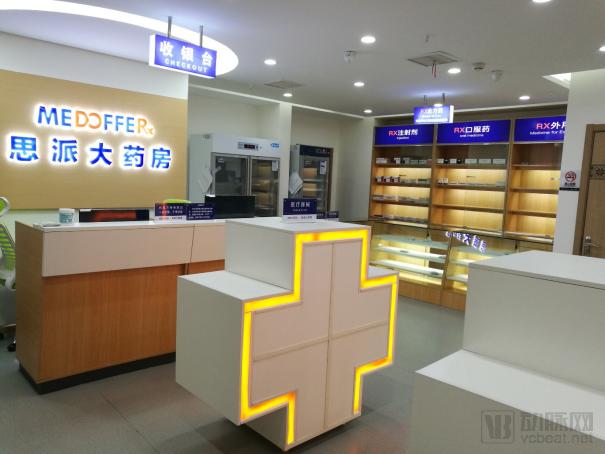
Medbanks Pharmacy, image provided by the company
“China’s oncology data platform with the greatest scientific and commercial value”—this is how Medbanks Network Technology defines itself. Founded in 2014, the company began by providing services to physicians in oncology departments and has gradually built a product portfolio encompassing clinical care, scientific research, pharmaceutical enterprises, and insurance services.
Medbanks Network Technology is benchmarked against Flatiron Health, which also started with oncology big data services. Flatiron Health is a market leader in electronic health record (EHR) software and real-world evidence management in the field of oncology. In February this year, pharmaceutical giant Roche acquired Flatiron Health at an overall valuation of $2.1 billion, highlighting the enormous value of oncology big data to the industry.
Medbanks Network’s core business modules include clinical trial site management, real-world studies, a curated network of oncology experts, and specialty pharmacies. Its business logic is aligned with the demand for oncology services, spanning front-end pharmaceutical R&D services, mid-stage tools for oncologist patient follow-up, and specialty pharmacy and pharmaceutical care services directed at patients.
By covering the entire spectrum of oncology services across the early, middle, and late stages, Medbanks Network has acquired the most comprehensive and continuous oncology data, providing robust data support for cancer research and drug development. Particularly in the realm of real-world studies, it has accumulated end-to-end data spanning from patient diagnosis and treatment to subsequent medication adherence, thereby more accurately reflecting the treatment landscape for cancer patients and facilitating research based on real-world data.
DTP pharmacies serve as a critical link between in-hospital and out-of-hospital patient services. By providing oncology medications and pharmaceutical care through DTP pharmacies, healthcare providers can capture out-of-hospital patient data, thereby bridging the previous divide between in-hospital and out-of-hospital data. In other words, Medbanks Network Technology’s DTP pharmacies are closely integrated with its core business, enabling enhanced services for patients and physicians while facilitating more comprehensive data accumulation.
Mou Jian, General Manager of Medbanks Pharmacy, has years of experience in the oncology drug sector. Previously, he was responsible for professional market sales of oncology drugs at multinational pharmaceutical companies such as Roche and Bayer, where he led market development for core blockbuster products including Nexavar, MabThera, and Herceptin. He joined Medbanks Network Technology in April 2015 to spearhead the expansion of its DTP (Direct-to-Patient) pharmacy business.
As a senior expert in the field of new specialty drugs, Mou Jian has witnessed the development of China’s DTP pharmacy market. He told VCBeat that the concept of DTP pharmacies gradually gained traction around 2011–2012, with many companies beginning to establish their presence in this sector.
He analyzed that the rise of DTP pharmacies began primarily for two reasons. First, prior to stricter regulatory oversight, marketing practices for new specialty drugs were not heavily regulated, allowing pharmaceutical companies to interact directly with patients. Following the shift in regulatory approach, an intermediary became necessary to connect companies and patients, a role that DTP pharmacies are well-positioned to fulfill.
Second, the implementation of the separation between prescribing and dispensing, coupled with an increasingly competitive landscape in the pharmaceutical retail industry, has driven differentiated competition among pharmaceutical retailers, marking the emergence of DTP (Direct-to-Patient) pharmacies that provide specialized and novel drug services.
Market performance has indeed borne this out: CR Healthcare’s new DTP pharmacies, Shanghai Pharma’s Shanghai Zhongxie, and other players that currently hold leading positions in the DTP pharmacy market all entered the sector around 2011 and achieved rapid growth.
For instance, Shanghai Pharmaceuticals began laying the groundwork for its DTP (Direct-to-Patient) pharmacy business in 2010. Leveraging its resources in distribution and retail, the company has built a DTP pharmacy network that started in Shanghai and now covers most of East China. Meanwhile, it has also utilized its cold-chain logistics capabilities to extend the coverage radius of its pharmacies and enhance their reach.
In November 2017, Shanghai Pharmaceuticals acquired Cardinal Health’s China business for over RMB 3 billion. The integration of Cardinal Health China’s DTP pharmacies further solidified Shanghai Pharmaceuticals’ position as the operator of the largest DTP service network for new and specialty drugs in China.
From the current market landscape of DTP (Direct-to-Patient) pharmacies, there are roughly four types of players: pharmaceutical manufacturers, pharmaceutical distributors, pharmaceutical retailers, and internet-plus-healthcare companies. Representative enterprises include Renhe Pharmaceutical, Shanghai Pharma, Sinopharm, Yifeng Pharmacy, 111.com, and Jianke.
Of course, pharmaceutical distribution and retail enterprises—such as China Resources Pharmaceutical, Shanghai Pharmaceuticals, and Guoda Drugstore—still hold a dominant position in the market. This is because these companies maintain strong connections with hospitals and pharmaceutical manufacturers, enabling rapid conversion of opportunities.
For instance, after Guoda Pharmacy partnered with Roche in 2014 and leveraged Roche’s substantial market presence in anti-tumor monoclonal antibody drugs, its Direct-to-Patient (DTP) business revenue exceeded RMB 1 billion in 2016, accounting for over 10% of its total business. With 16 DTP pharmacies in operation, each store generated nearly RMB 100 million in revenue—tens of times higher than that of conventional pharmacies.
The key elements of DTP pharmacies are medicines, prescriptions, channels, and payment, which respectively represent the capability to provide innovative and specialty drugs, the ability to secure physician prescriptions, the coverage of retail and logistics distribution networks, and patients’ willingness to pay. On top of these key elements, Mou Jian believes that professional service capability should also be included, with DTP pharmacies centering on this professional service capability.
He stated that professional service capabilities are crucial to the DTP pharmacy business model. DTP pharmacies do more than simply provide new and specialized medications to a specific patient group; they establish direct connections among physicians, patients, and pharmaceutical companies. After physicians issue prescriptions, ongoing feedback on medication use is required, and pharmaceutical companies need to track market performance of their products. Both of these needs rely on DTP pharmacy operators capable of delivering professional services.
Therefore, Medbanks Pharmacy places particular emphasis on delivering professional services. From the outset of its strategic layout, it partnered with KPMG to develop professional service standards for DTP (Direct-to-Patient) pharmacies. In implementation, the company ensures the replication of standardized processes, applying uniform services to every detail and executing them efficiently to guarantee brand consistency.
Specifically, Medbanks Pharmacy will focus on services by providing physicians with continuous patient follow-up, ensuring the supply of new and specialty drugs along with pharmaceutical care services for patients, and delivering market feedback to pharmaceutical companies, thereby establishing its core competitiveness.
Medbanks Pharmacy began its strategic deployment in April 2017, undertaking initial tasks such as standard setting, market research, service process standardization, site selection, and supply chain partnerships. Its first flagship store commenced operations in July 2017. As of this June, Medbanks Pharmacy has expanded to cover major cities across China, operating more than ten stores.
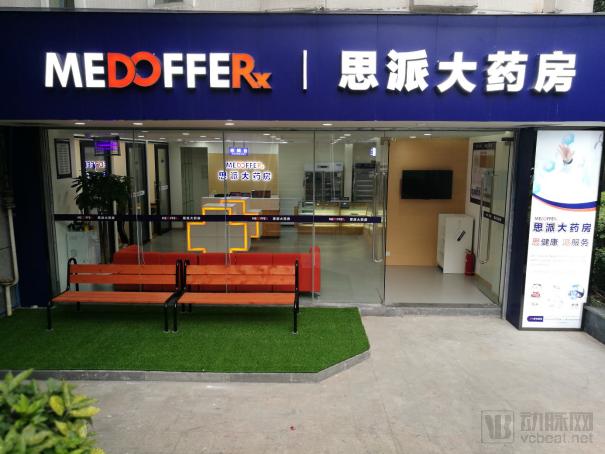
Mou Jian told VCBeat that Medbanks Pharmacy plans to cover 30 provinces and expand its store count to 70 by the end of this year. In terms of expansion strategy, Medbanks Pharmacy will adopt methods such as self-built stores and partnerships, primarily selecting locations near hospitals or in densely populated residential areas.
This scale will secure a significant position for Medbanks Pharmacy within China’s DTP pharmacy sector. For comparison, CR Medical Insurance New Pharmacy operates 88 stores, Shanghai Zhongxie has 70, and Guoda Pharmacy has 40, indicating that Medbanks Pharmacy aims to establish a strong industry presence.
Mou Jian believes that with the continuous advancement of the separation between medical services and pharmaceutical sales, hospital drug supply will undergo socialization. By around 2020, the volume of prescriptions filled outside hospitals will be substantial. In the long term, specialized pharmacies and DTP (Direct-to-Patient) pharmacies will develop rapidly, possessing the capabilities and conditions to handle outsourced prescription dispensing.
Of course, from the perspective of market landscape, although there are early-mover enterprises, the market is far from saturated. By delivering excellent services and ensuring superior quality, new entrants still have substantial opportunities to explore.