

Global Hair Restoration Pioneer Dr. William R. Rassman and the FUT/FUE Technologies: Powering the Future of the Hair Transplant Industry
The development of the hair transplant industry is inseparable from technological advancement, in which outstanding physicians and experts play a pivotal role.
Dr. William R. Rassman is a highly renowned hair transplant expert in the international community today, hailed as the “Father of Global Hair Transplantation.” Together with another hair transplant specialist, Dr. Robert M. Bernstein, he pioneered the currently most mainstream international hair transplantation techniques—FUE (Follicular Unit Extraction) and FUT (Follicular Unit Transplantation)—both of which hold epoch-making significance in the history of hair restoration. This information was compiled by VCBeat (WeChat ID: vcbeat).
Dr. Rassman received his M.D. from the Medical College of Virginia in 1966. He subsequently completed a surgical internship at the University of Minnesota, served as a general surgery resident at Cornell Medical Center and Dartmouth-Hitchcock Medical Center, and became board-certified by the American Board of Surgery in 1976.
In 1991, Dr. Rassman founded the New Hair Institute (NHI), dedicating himself to research in hair transplantation and rapidly emerging as a global leader in the field of hair restoration technology.
With continuous technological innovation and equipment invention, Dr. Rassman has been breaking the record for the number of hair transplants performed in a single surgery. In 1994, he became the first doctor internationally to complete 2,000, 3,000, and 4,000 transplant units in a single procedure, while other doctors only performed hundreds of such procedures.
In 2004, the International Society of Hair Restoration Surgery awarded him the “Golden Follicle Award” for his outstanding achievements in the field of hair transplantation technology.
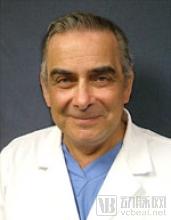
Dr. William R. Rassman
In 1995, Dr. Rassman and Dr. Bernstein jointly pioneered a new generation of hair transplantation technology—FUT(Follicular Unit Transplantation), using FU (Follicular Unit) as the basic unit for follicle separation and implantation.
Main Procedures of the FUT Technique:
1. After administering local anesthesia to the scalp, surgically harvest skin and subcutaneous tissue containing hair follicles from the donor area of the scalp (typically the occipital region), in the form of 6- to 10-inch strips;
2. Under a microscope, isolate the hair follicles required for transplantation by dividing the harvested scalp tissue into 500 to 2,000 small grafts, each containing one or several hairs;
3. After nuclear energy nutrition, the extracted hair follicles are then transplanted to the balding areas of the patient's scalp. Both procedures—extracting the hair follicles and suturing the flap site, as well as transplantation—result in minor surgical wounds. The donor scalp that has been "stripped" may leave scars after wound healing.
Compared with previous technologies, the FUT technique has the following significant advantages:
1. Follicular unit separation and implantation are performed strictly in accordance with the natural condition of follicular units, with each follicular unit containing only 1–4 hairs;
2. Microscopic separation of hair follicles can reduce follicular damage by 30–50% compared to traditional naked-eye dissection, thereby preserving the patient’s precious follicular resources;
3. With this technique, the survival rate of transplanted hair follicles exceeds 95%, significantly higher than that of traditional hair transplantation methods. A single procedure can transplant up to 3,000–4,000 follicular units, resulting in greater hair density in the recipient area and a more natural-looking outcome.
In 2001, Dr. Rassman introduced a groundbreaking hair transplantation technique—FUE(Follicular Unit Extraction) allows for the direct extraction of follicular units (FUs) from the patient’s donor area, rather than first harvesting a strip of skin and dissecting it prior to transplantation as in the FUT technique. This approach reduces trauma to the hair follicles and avoids linear scarring in the donor area postoperatively. As this technology continues to mature, hair transplantation is increasingly becoming a “minimally invasive” procedure that does not require surgical incisions.
Key Steps in the FUE Technique:
1. Based on the patient’s medical history, scalp characteristics, and pattern of hair loss, as well as their desired outcomes from hair transplantation, the attending physician will assess the hair density in the donor area at the occipital region and determine the number of hair follicles to be transplanted using the FUE technique for each patient;
2. Specialized precision instruments are used throughout the surgical procedure: a biopsy needle is employed to create a small incision around the follicle to be transplanted, followed by the extraction of individual follicular units from the donor area using fine surgical forceps; in some cases, specialized needles are required to dissect the follicular fibers from the subcutaneous tissue. The scalp heals spontaneously after extraction, eliminating the need for suture removal. Furthermore, follicular units can be harvested from multiple areas rather than a single site, ensuring that hair density in the donor region remains unaffected.
3. Place the extracted hair follicles in a culture medium to enhance their survival rate, then perform individual unit implantation according to normal hair growth density.
Dr. Rassman stated, “FUE is suitable for individuals who require long-term transplantation of small amounts of hair, those who must shave their heads for professional reasons (such as models), patients with a history of poor wound healing or prior scarring, and those whose scalp scarring can be improved through hair transplantation.”
“However, not all patients with hair loss are suitable for the FUE technique, such as those with extensive hair loss. This is because the number of hair follicles that can be harvested in each session is limited, and overly dense extraction can result in an unnatural appearance in the donor area.”
“FUE demands a high level of technical expertise. This procedure should not be performed by anyone lacking proper training. Such training must include patient assessment to determine the suitability of the FUE technique, for example, performing a biopsy of the donor area to characterize hair follicles and assess the difficulty of extraction.”
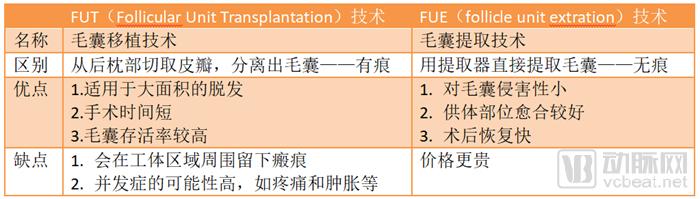 Comparison of Two Major Technologies
As with any surgery, hair transplantation carries certain risks,Some Adverse Reactions Are Common in Hair Transplant Patients. Such as severe hemorrhage, infection, scalp and facial swelling, crusting, hair thinning, pruritus, and the growth of unnatural patchy new hair.
Facial swelling is common and may persist for several days after surgery. The swelling typically begins at the scalp, gradually extending to the forehead and face, and subsides within approximately one week. As new hair starts to grow, some individuals may develop folliculitis, which can be alleviated with antibiotics.
Patients may also experience shedding of their original hair in areas where new hair is growing, a condition known as “shock loss.” However, this is typically not permanent, and the hair will regrow over time.
To prevent infection, alleviate discomfort, and ensure optimal outcomes,Post-operative Care for Hair Transplantation Requires High Standards, such as elevating the head during sleep, avoiding strenuous exercise, applying cold compresses to reduce swelling, and regularly taking medications for insomnia and pain.
The scalp may become highly sensitive following surgery, and patients are required to keep bandages wrapped around the scalp for at least one to two days. Postoperative medications, such as hypnotics, analgesics, antibiotics for infection prophylaxis, anti-inflammatory agents for hemostasis, cortisone, minoxidil (Rogaine), and medications for treating hiccups and pruritus, often entail certain side effects.
Recovery time depends on the type of hair transplant and the area treated; patients undergoing FUE (Follicular Unit Extraction) typically recover faster. Most individuals can return to work within 2 to 5 days post-surgery. If sutures are used, they will be removed within 10 days. Within 2–3 weeks after the procedure, the transplanted hair may begin to shed, which is normal during the first few months. Most people see 60% new hair growth within 6–9 months.
The aforementioned adverse reactions, along with the ongoing need for postoperative care, can lead to aversion or resistance toward hair transplantation among patients with hair loss. High surgical costs are a major factor constraining the global hair transplant market and represent a current disadvantage in this field.
Hair transplantation, a minimally invasive surgical procedure that gained popularity in the United States in the 1950s, remains the most effective treatment for hair loss; however, it is an expensive intervention both in terms of treatment costs and recovery.
Cost of Hair TransplantationThe variation is significant and depends on many factors, but it generally ranges from $4,000 to $15,000. Factors influencing the cost include: the number of hair grafts transplanted, the choice of hair transplantation technique, the duration of the surgery, and the selection of the attending physician.
Furthermore, it is important to note that most insurance companies classify hair transplantation as a cosmetic procedure; therefore, many insurance plans do not cover the cost of the surgery. However, some hospitals or clinics offer payment options, allowing patients with hair loss to pay for the procedure in installments. In addition to the cost of the hair transplant itself, there may be recovery-related expenses, such as out-of-pocket costs for follow-up medications including antibiotics, anti-inflammatory drugs, and analgesics.
For some individuals, the cost of hair transplantation is prohibitively high, and non-surgical approaches can serve as alternatives to surgical hair restoration for treating hair loss. The American Academy of Dermatology lists severalThe Most Common Alternatives to Hair Transplant Surgery:
1. Minoxidil (Rogaine): An over-the-counter medication suitable for both men and women;
2. Finasteride (Propecia): For use by male patients only; this medication can promote hair regrowth or alleviate hair loss;
3. Estrogen: Women experiencing hair loss may take estrogen-based medications;
4. Cortisone: Both topical and injectable cortisone can accelerate hair growth in certain patients;
5. Laser Therapy: Low-level laser therapy can be used to treat hereditary hair loss and alopecia areata.
According to a survey released by the International Society of Hair Restoration Surgery (ISHRS) in September 2017, the hair transplant market is at a critical juncture. In 2016, a total of 635,189 hair transplant procedures were performed worldwide, including 195,284 in Asia, 149,400 in the Middle East, and 133,136 in the United States. Overall, the number of hair transplant procedures globally increased by 60% from 2014 to 2016.
In 2016, there were a total of 597,181 surgical patients (a 67% increase from 2014) and 1,241,764 non-surgical patients (a 78% increase).
It is estimated that the global hair transplant market grew from $2.5 billion in 2014 to $4.1 billion in 2016. This represents a 64% increase in market size compared to 2014. AndThe global hair transplant services market is expected to achieve a CAGR (Compound Annual Growth Rate) of approximately 20% from 2018 to 2023.
Other noteworthy trends and facts from the ISHRS survey include:
1. In 2016, more than half of global male and female surgical patients were aged 30–49 years, accounting for 59.7% and 59.0%, respectively;
2. The proportion of males undergoing surgical hair transplantation (85.7%) was higher than that of females (14.3%);
3. The Middle East region saw the largest increase in hair transplant procedures, with a 163% rise compared to 2014.
The Asia-Pacific region is projected to register the highest CAGR. Celebrity influence, media impact, growing awareness, heightened focus on personal appearance, peer pressure, social pressure, urbanization, high income levels, and increasing word-of-mouth referrals are potential drivers of the hair transplant market in the Asia-Pacific region. Currently, North America holds the largest market share, followed by Europe and the Asia-Pacific region.
Regarding the development of hair transplantation technology in China, Dr. William R. Rassman, known as the “Father of Global Hair Transplantation,” pointed out that although China’s hair transplantation technology has been developing since 2007—a span of 11 years—the country has advanced rapidly in this field. Currently, the quality of Chinese hair transplantation techniques is on par with those in the United States, leading him to be highly optimistic about the Chinese market.
Over the past six years, Dr. Rassman and his team have in practiceCombining FUT Technology with SMP (Scalp MicroPigmentation)Rise to the challenge and strive to break through the limitations of existing technologies. SMP, or Scalp Micropigmentation, is a minimally invasive cosmetic technique that deposits micro-pigments into the dermal layer of the scalp skin. By tattooing highly dense dot patterns onto the scalp, it alters the color and appearance of the scalp, making the patient’s hair appear denser.
Dr. Rassman stated, “In most traditional hair transplant procedures, if hair loss continues or greater density is desired, secondary or even tertiary surgeries may be required to achieve the expected results. Moreover, FUT (Follicular Unit Transplantation) is not suitable for extensive or diffuse hair loss. When SMP (Scalp Micropigmentation) is used as an alternative to a second hair transplant surgery, it can reduce the number of surgical interventions, lower the cost of hair loss treatment, and achieve the desired therapeutic outcomes.”
“For extensive or diffuse hair loss, there are currently no effective medical or surgical treatments (including hair transplantation). For healthcare institutions, learning Scalp Micropigmentation (SMP) technology presents an opportunity to tap into this high-potential market, as SMP is easier to master compared to hair transplantation techniques. Physicians can leverage this to expand their service offerings and provide hair loss patients with superior non-surgical treatment options.”
With the widespread adoption of FUE and SMP, physicians can now address the majority of hair loss cases, and these technologies are likely to become the standardized products and protocols for hair loss treatment.
Hair transplant companies seeking media coverage may add our reporter on WeChat at any time.
Image Sources and References:
1.https://www.webmd.com/skin-problems-and-treatments/hair-loss/men-hair-loss-17/hair-transplants
2.https://www.mordorintelligence.com/industry-reports/hair-restoration-services-market
3.https://www.ncbi.nlm.nih.gov/pmc/articles/PMC5732651/