Eggshell Weekly 20180805: State Council's New Policy to End 'Medicine-Sustained Hospitals' and Promote 'Triple Healthcare Reform' Reshapes Industry Landscape
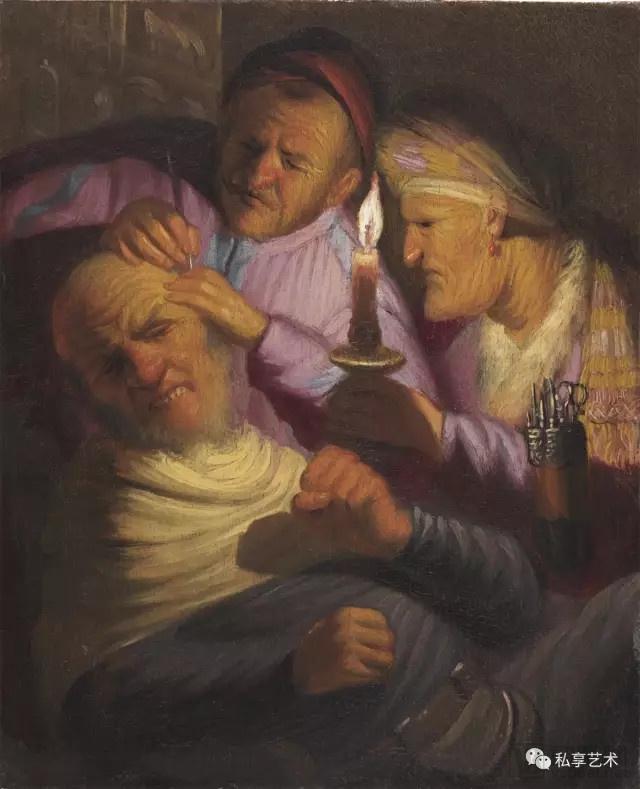
Work | "Stone Surgery (A Fable of Touch)"
Author |Rembrandt van Rijn (Dutch, 1606–1669)
Visual History of Healthcare | Issue 20180805
Rembrandt van Rijn created five paintings themed around the “Five Senses,” including *The Stone Operation*(A Fable of Touch)"Three Musicians"(Auditory Fable)》 and "The Unconscious Patient"(The Fable of Smell)” However, due to various reasons,The work exploring the fifth sense, “Fables of Taste,” has gone missing. In the previous issue, we presented “The Patient Who Lost Consciousness”(An Allegory of Smell)》, this issue will present "Stone Surgery (A Fable of Touch)."
The painting depicts the sense of touch through “stone surgery”—a form of trepanation used to treat mental illness, based on the then-prevailing belief that madness was caused by “stones of insanity” growing in the brain, which needed to be surgically removed.
On August 3, the State Council released the “Guiding Opinions on Reforming and Improving the Comprehensive Regulatory System for the Healthcare Industry.”
The Opinions propose optimizing market access for healthcare service elements and accelerating the reform of the administrative approval system; strengthening supervision over the quality and safety of medical services, and strictly implementing core systems for quality and safety management; enhancing operational oversight of healthcare institutions and strictly enforcing classified management requirements for medical institutions; strengthening supervision of public health services to improve service levels; intensifying oversight of healthcare practitioners and seriously investigating and punishing illegal and non-compliant activities; reinforcing supervision of industry order and establishing sound mechanisms for joint prevention and control; and strengthening regulation of the health industry by establishing inclusive, prudent, and effective regulatory mechanisms, thereby achieving rule-of-law-based, standardized, and routine comprehensive supervision of the healthcare sector.
The issuance of this document will fundamentally reshape the sales model across the entire pharmaceutical industry, completely reversing the previous “drug-revenue-dependent healthcare” model, and ushering in a new era of profound transformation.
The second cohort of the Future Healthcare Academy’s “New Healthcare Transformation: Innovators’ Evolution Camp” is about to launch, with a primary focus on digital innovation in hospitals. We will invite innovative hospital presidents to join the program’s mentor team and also engage more hospital presidents, directors of information departments, and startup companies in collaborative learning and exchange.
Rather than blocking, guiding is more effective; extending prescriptions beyond hospitals is an inevitable trend. The application of electronic prescriptions can standardize rational drug use among pharmaceutical retail enterprises, facilitate prescription refills and medication purchases for patients—especially those with chronic diseases—and promote the separation of prescribing from dispensing. Meanwhile, the widespread adoption of electronic prescriptions will bring substantial customer traffic to pharmaceutical retail enterprises, driving incremental growth in prescription drug sales.
VCBeat’s analysis suggests that the alliance between medical big data companies and state-owned capital is no accident, but an inevitable move as the industry reaches a certain stage of development.
VCBeat interviewed relevant executives from eight companies, including DXY Internet Hospital, Chunyu Doctor Internet Hospital, Little Apple Internet Hospital, and 7LeKang Internet Hospital, aiming to reconstruct the pathway for building an internet hospital based on their development experiences.
According to a 2017 assessment, the cost of bringing a drug to market is as high as $3 billion, with R&D timelines spanning at least five years. Typically, only one out of every ten drug candidates developed by pharmaceutical companies successfully reaches the market. This high-cost, low-success-rate investment landscape hinders new drug development and raises the barriers to entry. Whether AI can disrupt new drug R&D remains uncertain, as the few successes to date are insufficient to establish a clear trend. However, one year is too short a timeframe to judge; a bright future still requires patience from all stakeholders.
Keywords: Pharmaceuticals
Yixintang Semi-Annual Report: Achieves Total Operating Revenue of Nearly RMB 4.3 Billion
On the afternoon of July 30, Yunnan Hongxiang Yixintang Pharmaceutical (Group) Co., Ltd. released its 2018 Semi-Annual Performance Flash Report: total operating revenue for 2018 reached RMB 4,291.7001 million, a year-on-year increase of 17.53%; net profit attributable to shareholders of the listed company amounted to RMB 292.4573 million, representing a 35.30% increase compared to the same period last year.
Changsheng Biotechnology Halts All Production; All Accounts Frozen
On July 31, Changsheng Bio-technology issued an announcement stating that, in addition to the mandated suspension of production for its DTP (diphtheria-tetanus-pertussis) combination vaccine and freeze-dried human rabies vaccine, the company has decided to voluntarily halt production of all other products. During the suspension, the relevant production workshops will conduct self-inspections and self-corrections to implement comprehensive and thorough rectification measures.
Ascletis Pharma Submits China’s First Marketing Application for an Original, All-Oral HCV Cure Regimen
Ascletis Pharma Announces on August 1 that It Has Submitted to the National Medical Products Administration (NMPA) the Marketing Application for China’s First Homegrown, All-Oral Cure for Hepatitis C, with Feedback Expected Within Five Working Days. The Regimen, Comprising Ravidasvir (RDV, ASC16) in Combination with Ganowe® (Danoprevir, DNV), Achieves a 12-Week Cure Rate of Up to 99%. Ravidasvir is the Second Class 1 Innovative Anti-Hepatitis C Drug Independently Developed by Ascletis Pharma. It Has Received Support Under the “Major New Drug Creation” Project of the National Science and Technology Major Project during the 13th Five-Year Plan Period, and Its Clinical Trial Application Was Included in the Priority Review Program by the NMPA.
Kangmei Expands Its Footprint: Two More Grade-A Tertiary Hospitals Acquired
On August 2, Kangmei Pharmaceutical issued the “Announcement on Signing the Medical Investment Cooperation Agreement,” joining hands with Tongliao State-owned Capital Investment and Operation Co., Ltd. to jointly establish Kangmei (Tongliao) Hospital Investment Co., Ltd. Kangmei contributed RMB 1.3 billion in cash for a 67% equity stake, while Tongliao State-owned Capital Investment Co., Ltd. made in-kind contributions for a 33% equity stake.
Keywords: Forbes
Seven Pharmaceutical Entrepreneurs Named to Forbes Philanthropy List
Forbes recently released the 2018 China Philanthropy List, featuring 100 entrepreneurs with total cash donations reaching RMB 17.31 billion. Among them, seven entrepreneurs from the pharmaceutical and healthcare industry made the list, including Cao Yulin of Zhenxigu, Liao Jieyuan of WeDoctor, the Ye Chenghai family of Salubris, Hu Baifan of NHU, Zhang Xin of Shenzhen New Elements Health Management Co., Ltd., Ouyang Jingbo of Zhongheng Group, and Jiang Rensheng of Zhifei Biological Products.
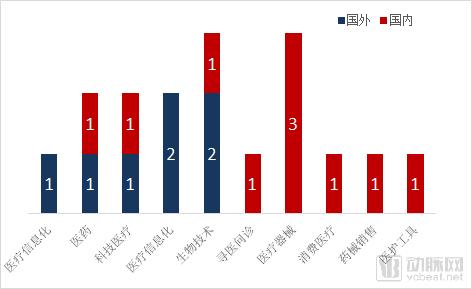
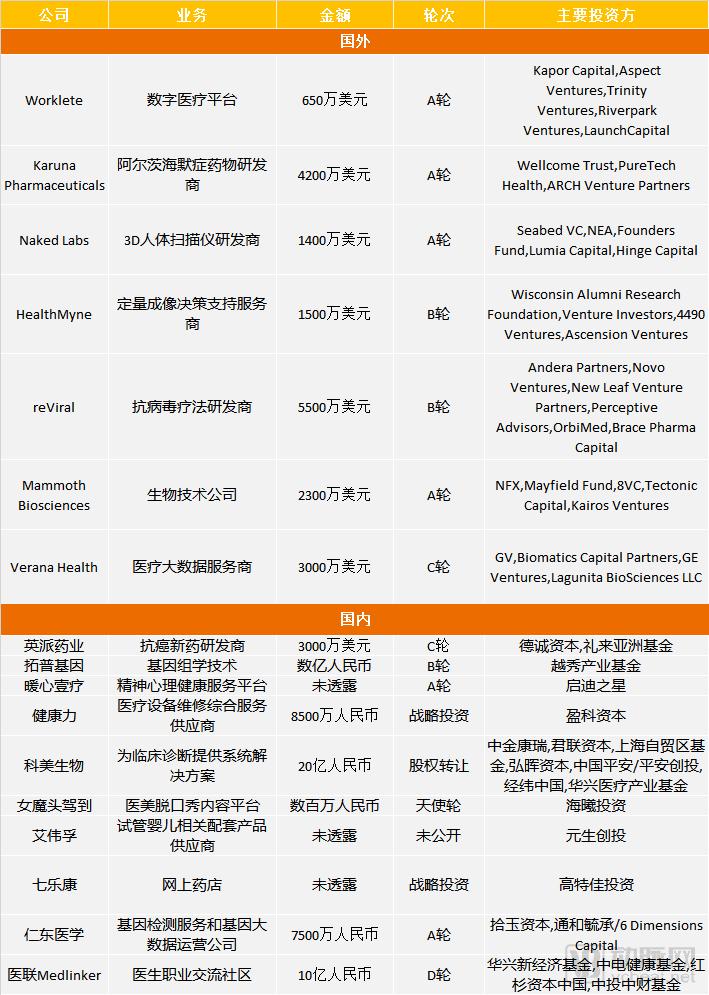
This Week, 17 Financing Deals Occurred in the Medical Sector Both in China and Abroad。
Listed Company | Dynamic Typing | Corporate News |
Donghua Software | Collaboration | Donghua Software announced on July 26 that its wholly-owned subsidiary has signed a strategic framework cooperation agreement with Tencent Cloud and Jointown Pharmaceutical Group, reaching a partnership in the areas of an information-sharing platform for hospital prescription outflow and pharmaceutical distribution solutions. |
Ping An Good Doctor | Collaboration | On August 1, Ping An Good Doctor, a healthcare ecosystem platform, announced that its “One-Minute Consultation + One-Hour Medication Delivery” service has expanded to more than 80 major cities across China, including Beijing, Shanghai, Guangzhou, and Shenzhen. The platform collaborates with over 10,000 partner pharmacies, featuring well-known national chain pharmacy brands such as Yifeng Pharmacy, Neptune Star, Laobaixing Pharmacy, and Guoda Drugstore. |
Topchoice Medical | Self-built | On the evening of August 1, Topchoice Medical (600763) released its 2018 semi-annual report. During the reporting period, the company’s medical service operating area reached 108,000 square meters, with 1,490 dental chairs installed and 879,000 outpatient visits recorded. The company achieved operating revenue of RMB 685 million, a year-on-year increase of 34.91%. Net profit attributable to shareholders of the listed company amounted to RMB 134 million, up 52.68% year on year; net profit attributable to shareholders after deducting non-recurring gains and losses was RMB 132 million, representing a year-on-year increase of 51.57%. |
Ascletis Pharma | Self-built | On August 1, Ascletis Pharma officially listed on the Hong Kong Stock Exchange, with an IPO price of HK$14 per share and a market capitalization of approximately HK$16 billion, becoming the first pre-revenue biotechnology company to list on the Hong Kong stock market. |
Defu Capital, Huang Jingou
Technology, brand, and dimensionality—we believe these three elements form a stable triangle, serving as the three criteria by which we assess the quality of a hospital or an investment target.
However, these three factors alone are insufficient; one more element is required: whether we believe the enterprise has a “soul.” This soul refers to the people within the hospital, including its founder and founding team. Our judgment does not prioritize academic status as the primary criterion; instead, we focus more on whether the investment target can place patients’ interests first and prioritize mission over profit. While social capital inevitably seeks financial returns, we firmly believe that only with compassionate medical ethics can hospitals be well-managed. With high-quality hospitals and effective operations, financial benefits will naturally follow. The return cycle should not put the cart before the horse.
Beyond medical benevolence, it is crucial to assess whether the founders possess a spirit of contract and are willing to abide by the agreements signed with industrial investors. We sometimes observe that medical teams have become spoiled, having grown accustomed to various unspoken rules. In such an environment, entrepreneurial teams that uphold contractual integrity are highly favored by us. (Source: Health界)

Activity Name | Location | Date | Ticket Price |
【Siyu Salon】Patent Mining and Layout in the Medical Device Field | Beijing | 2018-8-9 | \ |
Entering the Capital Community: Breaking Through the Financing Challenges of Biopharmaceutical Companies | Chengdu | 2018-8-10 | \ |
2018 The First Southwest Summit on Primary Healthcare Services | Chengdu | 2018-8-18 | \ |
New Models of Internet Marketing in Medical Aesthetics | Wuhan | 2018-8-27 | ¥298.0 |
South China (China)-Israel Healthcare Matchmaking Conference | Guangzhou | 2018-8-28 | \ |
Nobel Laureates’ China Tour | Hangzhou Medicine Port: The 5th Nobel Prize Winners’ Medical Summit & Innovation and Entrepreneurship Competition | Hangzhou | 2018-9-12 | \ |
Beijing Health and Medical Big Data Forum | Beijing | 2018-9-15 | From ¥400.0 |
2018 The 3rd Global Precision Medicine (China) Summit | Shanghai | 2018-12-8 | From ¥480.0 |
PET Imaging Can Determine Synaptic Loss in Alzheimer's Disease
On July 16, a small study published in JAMA Neurology indicated that PET imaging can directly measure synaptic loss in Alzheimer’s disease (AD). Synapses are the hubs of neural transmission and processing, characterized by a dense matrix of receptors, channels, and functional proteins.
Researchers found that hippocampal SV2A-specific binding was significantly reduced in participants with AD compared to normal controls (P = 0.005). The reduction remained significant after correcting for atrophy (P = 0.02). A correlation was observed between hippocampal SV2A-specific binding and a composite episodic memory assessment across the entire sample (P = 0.01). This approach, which provides a direct measure of synaptic density, holds promise as a biomarker in AD and for assessing outcomes following disease-modifying therapies.
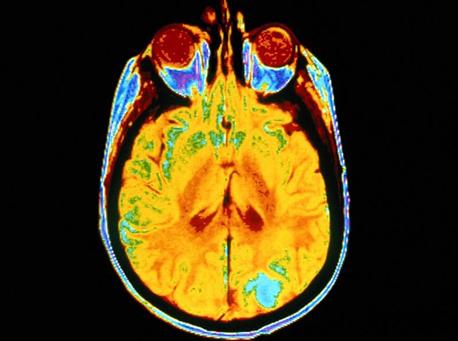
Source: www.physiciansbriefing.com
Case Western Reserve University Helps Smokers Quit by Developing Apps and Sensors
Researchers at Case Western Reserve University in the United States are exploring a wearable sensor technology to help people quit smoking by developing an automated alert system.
It is understood that the sensor detects movements associated with the arm and body during smoking. The application automatically sends video messages lasting 20 to 120 seconds to smokers, emphasizing health benefits, with the ultimate goal of capturing their attention. Researchers stated that this mobile alert system is the first application to integrate an online mindfulness training platform with a personalized smoking cessation plan.

Source: /www.healthcareitnews.com
Naked Labs’ Smart Body-Scanning Mirror Secures $14 Million in Funding
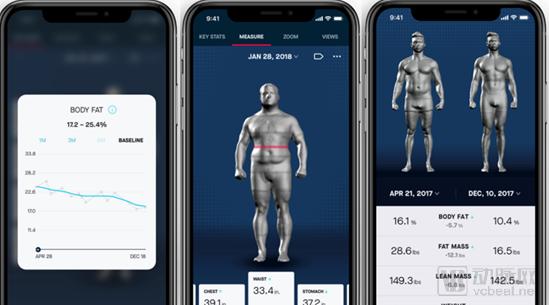
Naked Labs, a San Francisco-based fitness company specializing in applications for rotating scale technology and smart body-scanning mirrors, raised $14 million in a funding round led by Founders Fund. The company has begun shipping its products to pre-order customers and plans to launch them widely in the fourth quarter.
Naked 3D Fitness Tracker is a Wi-Fi-enabled mirror with built-in infrared sensors that can communicate and connect with a rotating scale. When users step onto the scale (which simultaneously activates the mirror), the scale rotates them 360 degrees for a body scan. The tracker measures users’ body fat percentage and weight, and scans their bodies using Intel RealSense technology.
Source: www.mobihealthnews.com
Gene Therapy for Rare Diseases
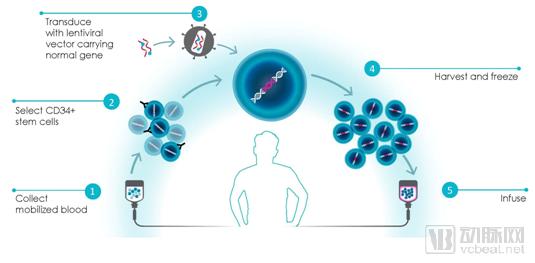
Professor Anthony Chan of McMaster Children’s Hospital stated that many rare diseases are monogenic, which facilitates the application of gene therapy to develop therapeutic solutions for patients. Currently, lentiviruses and adeno-associated viruses (AAV) are viable vectors for gene therapy. Lentiviruses can be used for ex vivo gene therapy, including transplantation following hematopoietic stem cell engineering, whereas AAVs can be directly employed for in vivo corrective gene therapy.
Source: www.genengnews.com
Deloitte: Exploring the “Last Mile” of Healthy Aging and Outlook on Trends in Integrated Medical and Elderly Care in China
The report points out that after nearly a decade of exploration, the business models of the private elderly care industry have gradually become clearer. However, institutional elderly care products are trending toward “real estate-ization,” while home- and community-based elderly care products are trending toward “domestic service-ization.” A common issue in both cases is the lack of medical attributes, making it difficult to meet the daily living needs of semi-disabled and disabled elderly individuals. Zheng Qun, Managing Partner of Deloitte China’s Healthcare Industry, stated, “The problems brought about by ‘real estate-ized’ and ‘domestic service-ized’ elderly care are not limited to the absence of medical attributes; they also result in a lack of product independence. Therefore, a key focus for the future will be to uncover and explore diverse models and products that integrate medical and elderly care services, thereby avoiding homogeneous competition.”
Accenture: 2018 Digital Health Technology Trends
The report shows that technology has become so deeply embedded in our lives that the boundary between commercial and personal spheres is more blurred than ever before. Healthcare institutions are increasingly harnessing the power of smart technologies to deliver personalized, efficient, and informed care. However, with such innovation comes responsibility. To enable people to fully benefit from digital healthcare services, healthcare providers and health plans must prioritize trust and accountability.
Health News & Tencent: 2018 Research Report on Trends in WeChat Applications for Improving Medical Services
The report points out that medical institutions’ use of WeChat to enable online appointment registration, report inquiries, and mobile payments has become a “killer app” for optimizing healthcare delivery processes, with the potential to significantly drive the upgrading of healthcare consumption demand.
The Report analyzes and studies 2,057 data points from 362 cities currently covered by WeChat applications, along with ten representative application cases. It mines, organizes, and analyzes the relevant data, conducting multi-dimensional research on WeChat coverage, user activity, and WeChat-enabled medical insurance payments. The study focuses on the progress made by WeChat applications in improving medical services (specifically non-clinical services), highlighting phased achievements in bridging information asymmetry and enhancing service quality.
For more content, please visit the VCBeat knowledge base!