

Artificial Intelligence and Machine Learning Are Transforming Drug Discovery: Applications in Drug Safety and Personalized Therapy
Technology has brought boundless wealth to the pharmaceutical industry, fostering its remarkable prosperity.
From drug design to clinical trials, artificial intelligence (AI) is driving breakthroughs across all stages of drug development. With the aid of deep learning, machines have begun to mimic the activity of neurons in the human brain, creating an artificial “nervous system.” We apply AI methodologies in extensive pharmaceutical R&D trials to reduce costs and accelerate data availability.
We also leverage AI to help us analyze large volumes of data derived from imaging studies and biomarker research on pathological samples, thereby ensuring the proper use of medications. In our clinical trials, AI enables continuous monitoring of safety data from participants, alerting scientists to potential safety signals that require attention. In this regard, VCBeat (WeChat ID: vcbeat) has translated a research report from AstraZeneca.

Predicted Compound Bioactivity Space and Target Interactions
Michael Kossenjans, head of AstraZeneca’s iLAB, stated, “I felt the energy and enthusiasm during the DMTA Hackweek. We worked day and night to prepare for it. While building an automated DMTA platform within a single week seemed nearly impossible, we achieved it. This marks our first step in exploring new laboratory automation technologies and machine learning, with much more work still ahead.”
Through machine learning, our state-of-the-art drug discovery robots and other automated equipment can adjust their operations and respond to incoming data, enabling us to work faster and more efficiently.
AI-driven automation is helping us address complex challenges in chemistry by accelerating the compound synthesis cycle—namely, Design–Make–Test–Analyze (DMTA)—to facilitate rapid and objective decision-making.
The DMTA platform we have launched is merely the first step in leveraging novel laboratory automation technologies and machine learning to accelerate the construction and testing of drug-related research. It will be used to continuously improve therapy-related compounds. For a typical project, hundreds of DMTA cycles are required to identify compounds that meet candidate drug criteria. When these cycles are performed manually, they can take weeks; our goal is to reduce the time from compound design to receipt of test data from 4–6 weeks to no more than 5 days.
In 2017, we hosted the DMTA “Hackweek.” Scientists from various research sites collaborated with our internal experts to build the first “DMTA machine” model by leveraging their scientific knowledge and technical expertise. Working continuously for five days in Gothenburg’s innovation lab, they fundamentally transformed our approach to drug discovery. Embodying the “hacker” spirit, the team overcame numerous challenges by integrating hardware and software accumulated over more than two decades, ultimately creating a machine prototype capable of completing the entire DMTA cycle of a research project within two hours.
“A journey of a thousand miles begins with a single step.” Through this simple model system, we are developing machine learning to optimize the efficacy of new compounds, predict diverse synthetic routes, and advance automation, thereby enabling the synthesis of more complex molecules and the generation of larger datasets for screening.
Establishing the three-dimensional chemical structure of potential new drugs is a critical step in drug development, as the size and shape of a drug are paramount. These factors influence numerous properties, including interactions with biological systems and the aggregation patterns of molecules required to formulate the drug.
However, just as a skydiver requires multiple attempts to locate the deepest valley, we must repeatedly evaluate all possible molecular shapes to identify the low-energy conformations necessary for drug optimization.
The emerging field of quantum computing holds promise for helping us address this challenge. Quantum computers can simultaneously explore all possible compound structures and, based on appropriate criteria, converge on the most probable structures in a single operation.
By adjusting the criteria, a series of high-quality solutions can be identified. Currently, quantum computing is limited by the volume of information it can process; therefore, we still need to employ existing exact methods on classical computers to conduct post-hoc evaluation and analysis of the solutions provided. Future applications of machine learning are expected to propel quantum computing into its next phase. Our current approach appears to enable us to capture the most relevant solutions, thereby assisting in the selection of optimal chemical structures.
In our research, we also leverage AI to enhance the efficiency of existing processes and transform data into knowledge. We are using AI to reliably predict the outcomes of routine assays, such as human plasma protein binding (hPPB) tests, thereby empowering our scientists to dedicate more time to addressing challenges that will provide AstraZeneca with a greater competitive advantage.
hPPB testing, developed within the fields of drug safety and metabolism, helps us understand how potential drug molecules are distributed in patients. We are collaborating with world-leading organizations to leverage state-of-the-art AI research for outcome prediction.
We are currently evaluating the applications of AI in safety screening, protein generation, image analysis, and CRISPR gene editing. In the future, we aim to leverage AI to revolutionize the data collection process in our drug development and transform this data into knowledge.
In 2017, the development of the virtual screening tool FastVS demonstrated the potential for machine-driven efficiency gains. Developed in collaboration with OpenEye Scientific Software, this novel “Google-like” web-based tool reduced the time required to search and screen entries across large molecular databases from hours to seconds, thereby optimizing the drug discovery process.
In a science-driven environment, the ability to rapidly identify and learn from signals and patterns within data is key to building knowledge and shaping the future direction of scientific development. To achieve this, we need to collect and integrate diverse big data sets in an accessible format.
In the past, the assessment of integrated gene expression, protein, and single-organ metabolic data was constrained by our limited computational capabilities for data analysis. This marks the first time that AI can process big data, analyzing all endpoints and their spatial relationships.
We are employing mass spectrometry imaging (MSI) to spatially map the cellular localization of molecules in biological samples and tissue sections, such as those used for pathological assessment. These comprehensive spatial data effectively link the tissue microenvironment with drug localization, efficacy, and safety. However, existing data mining methods impose high demands on computational systems, limiting our analysis to small, individual datasets. To address this challenge, we have developed novel computational algorithms capable of accurately and efficiently segmenting large-scale MSI data, thereby enhancing our ability to analyze multiple endpoints, as recently highlighted in our publication in Analytical Chemistry.
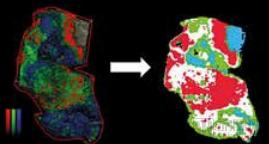
Investigation of Drug Distribution and Metabolism in Mouse Tumor Models Using a Graph Theory-Based MSI Data Clustering Algorithm
This enhances our ability to precisely quantify molecular changes in specific regions of tissues and organs, providing data for increasingly complex spatial relationships. Researchers in the fields of drug safety and metabolism work closely with external experts in computer science and pathology, forming an integral part of the overall study.
Looking ahead, we plan to integrate deep learning algorithms with image analysis to accelerate the evaluation of animal models of chronic kidney disease, thereby providing more reliable data for downstream multispectral image analysis. This will enhance the speed, credibility, and reproducibility of quantitative data analysis and enable the detection of biological relationships and their outcomes through comprehensive multimodal image mining. In 2017, our scientists collaborated with the team at Cancer Research UK (CRUK) to propose tomographic mapping of tumors, employing a Google Maps-style approach to investigate cancer-related information. This has the potential to propel pathology—one of the most traditional disciplines in medicine—into the 21st century.
An increasing number of tissue biomarkers are being used to match patients with the right medications. However, current techniques involve manual annotation of images by pathologists, a process that is subjective, time-consuming, and complex. We leverage AI to address this challenge and have developed a novel deep learning algorithm that utilizes digital pathology to automatically identify tissue biomarkers.
In a proof-of-concept study involving tumor samples from 71 patients, we found that AI can automatically label human epidermal growth factor receptor 2 (HER2), a biomarker for breast cancer. The algorithm can also identify samples at risk of misdiagnosis, demonstrating its ability to make tissue biomarker analysis faster, simpler, and more accurate.
In 2017, we presented these findings at two leading international scientific conferences and published them in Scientific Reports.
We will continue to leverage cutting-edge scientific and technological advancements by collaborating with leading academic institutions to conduct similar research. By integrating cloud computing with the latest graphics processing unit (GPU) hardware, we aim to transform the automated analysis of digital pathology images into a high-throughput process and incorporate AI algorithms into the development of diagnostic tests. Our goal is to harness AI to influence patient treatment, ensuring that targeted therapies are delivered to the patients who need them most.
In our early clinical trials, the AI-based decision support system Watcher continuously monitored incoming safety data and alerted scientists to safety signals requiring attention.
Watcher is an innovative AI alert system that helps doctors and scientists embed clinical decision rules into logic during clinical trials. A five-year collaboration among AstraZeneca, the University of Manchester’s Cancer Research UK Manchester Institute, the Centre for Cancer Biomarker Sciences, and The Christie NHS Foundation Trust constitutes a key component of our iDecide research project. The digital Experimental Cancer Medicine Team (digitalECMT) at CRUK Manchester Institute leads the iDecide project, developing new approaches through direct engagement with patients to enable better clinical trial decisions that more rapidly and directly benefit patients.
Watcher also employs another iDecide tool, REACT 4, which consolidates and visualizes safety, efficacy, and biomarker data from Phase I and Phase II clinical trials. It is currently being used in more than 140 studies at AstraZeneca. While REACT 4 can provide on-demand clinical insights depending on the system in use, Watcher’s continuous monitoring can detect signals and issue timely notifications when they arise.
In the future, we plan to enhance and expand Watcher’s current capabilities by integrating clinical rules and machine learning. These advancements will enable its deployment in patients’ homes alongside point-of-care devices, allowing patients to further engage in self-monitoring while participating in clinical trials.
Original article link:
https://www.astrazeneca.com/content/dam/az/PDF/2018/Pages%2046-49.pdf