

Yuanma Gene Files IPO Prospectus: From Saving One Life to Serving 100,000 Patients in Three Years
“How far are we from curing cancer?” James Watson, seated across the table, is already 90 years old yet still demonstrates keen interest in precision oncology. This May, he met with Tian Geng once again, reiterating his earnest wish: “I hope that China can develop cancer therapies affordable to everyone.”
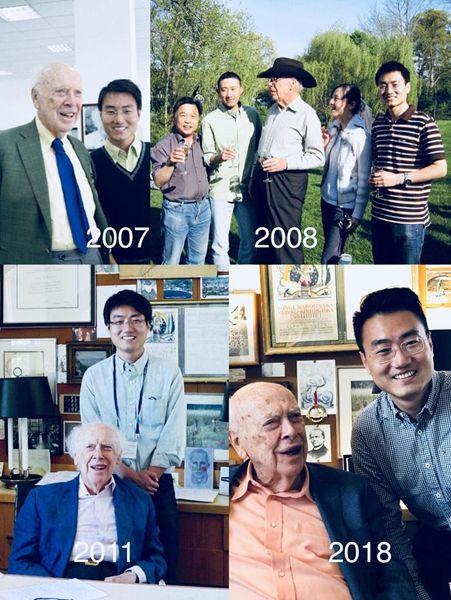
Photos of James Watson and Tian Geng from multiple exchanges (Image source: Yuan Code Genomics)
James Watson, known as the “Father of DNA,” discovered the double-helix structure of DNA in the 1950s and was awarded the Nobel Prize for this achievement. Fifty years later, gene technologies developed on the basis of DNA research have become the darlings of the era. In particular, the application of gene technology in precision medicine has given humanity hope for conquering cancer.
Hope has gradually become a reality. In 2014, Tian Geng saved the life of a patient with advanced lung cancer using his self-developed genetic testing technology. At that moment of “witnessing a miracle,” Tian Geng resolutely decided to step out of the laboratory and leverage his technology to help more patients outrun death. By the end of that year, Yuanma Gene, co-founded by Tian Geng and his partners, was established in Beijing.
Three years later, Genetron Health’s precision medicine services had expanded to cover more than 100 hospitals, serving nearly 100,000 patients. This impressive track record earned the low-profile Genetron Health the favor of renowned healthcare investor Feng Tang. After just three meetings, CITIC Capital decided to lead Genetron Health’s Series B financing round.
The day the investment from CITIC Capital was finalized coincided with Tian Geng’s 37th birthday. Counting from his participation in SARS virus gene sequencing at BGI Genomics during the SARS outbreak, he has been dedicated to this field for 15 years. Now, with more leverage in hand, Tian Geng and Yuanma Gene are poised to make greater strides in the fight against cancer.
Initially, Tian Geng nearly “missed” Feng Tang.
At the end of 2016, during the science carnival held in conjunction with the International Conference on Genomics, Academician Yang Huanming, Chief Scientist of BGI Group, the event organizer, recommended Tian Geng to Feng Tang, a special guest at the time. However, Tian Geng missed the meeting with Feng Tang as he had to attend an important negotiation on short notice.
Nevertheless, the two established a connection from that point on. “In subsequent meetings, our conversations ranged from poetry and literature to life philosophy, and finally to precision medicine.” Tian Geng, a self-described “literary youth” with a passion for popular science writing, discovered that he shared much common ground with Feng Tang. Most importantly, the two reached a consensus on Yuanma’s business model and future development path, leading to an immediate agreement to collaborate.
Yang Huanming, the shared mentor of Feng Tang and Tian Geng, also played an indispensable role in facilitating their collaboration. While working at Peking Union Medical College, Yang taught Feng Tang and later served as Tian Geng’s doctoral supervisor. The period spent studying under Yang proved pivotal to Tian Geng’s subsequent professional development.
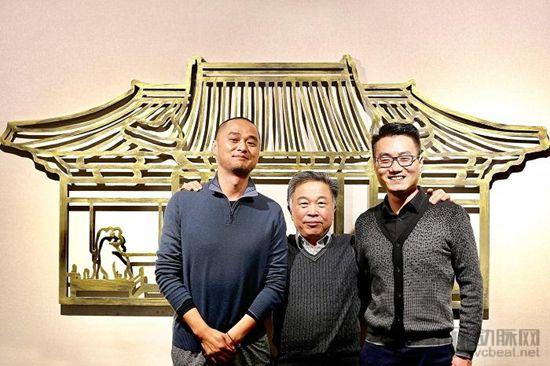
Feng Tang (left) and Tian Geng with their teacher Yang Huanming (center) (Image from Yuanma Gene)
The opportunity arose from the SARS outbreak that swept across China.
During the final stage of his undergraduate studies, coinciding with the SARS outbreak, Tian Geng, who was completing his graduation internship at BGI, had the opportunity to participate in the decoding of the SARS virus genome. He witnessed the entire process—from sequencing and decoding the SARS virus that caused widespread social panic, to developing diagnostic reagents, and finally to BGI distributing hundreds of thousands of vaccines to the public free of charge, which helped curb the spread of the epidemic.
From the moment it obtained the viral DNA, BGI sequenced the genome of the SARS virus within just over ten hours and developed a SARS diagnostic kit within 96 hours, donating 300,000 test kits to the National Command for the Prevention and Control of Atypical Pneumonia. This “96-hour” experience opened up Tian Geng’s new understanding of gene sequencing.
After graduation, Tian Geng joined BGI. Leveraging his exceptional learning ability, he rapidly mastered new knowledge and saw his professional skills improve dramatically in a short period. Inherently diligent and resilient, Tian Geng soon embarked on a new challenge: pursuing graduate studies in genomics while working, under the supervision of Academician Yang Huanming, a renowned expert in genomics.
Yang Huanming is one of the founders of BGI Group and was already highly renowned in the United States at that time. In 1997, Yang Huanming secured a 1% share of the Human Genome Project for the Chinese team almost entirely through his personal connections and reputation.
In 2003, the Human Genome Project was completed after 13 years of effort, with a total investment of $4.2 billion. However, gene technology was still in its earliest stages at that time. Subsequent developments have shown that this field would undergo tremendous changes, and the choice of direction would determine future growth potential. Such profound transformations tested the young Tian Geng.
When Tian Geng first began his doctoral studies, gene chips were generating significant hype and yielding a succession of scientific achievements. Many doctoral candidates from the same period adopted similar research approaches, leveraging gene chip technology to conduct genomic studies. However, after completing several rounds of experiments, he discovered that gene chips had substantial limitations and their future prospects were not promising.
In 2005, next-generation sequencing (NGS) technology emerged. Unlike its later dominance in the field, the industry at that time was largely pessimistic about this nascent technology. However, Tian Geng recognized the advantages of NGS, such as data digitization and high accuracy, and thus chose it as the focus of his doctoral research.
The choice of his doctoral research topic essentially meant that Tian Geng had staked his entire future career on the technological trajectory of next-generation sequencing (NGS). History has proven that his judgment at the time was quite prescient. A decade later, NGS technology reduced the cost of gene sequencing from $100 million to $1,000.
During Tian Geng’s doctoral studies, BGI finally moved past its early struggles for survival and entered a phase of rapid growth.
Thanks to its outstanding performance in the Human Genome Project and during the SARS outbreak, BGI Genomics garnered attention and recognition from senior government officials. At that time, the Chinese Academy of Sciences (CAS) jointly established the Beijing Institute of Genomics with BGI, and the state allocated 90 official staff positions to BGI. Yang Huanming and Wang Jian even enjoyed benefits equivalent to those of bureau-level cadres.
However, after a series of upheavals, BGI decided to relocate to Shenzhen in 2007. It was essentially a decision to start from scratch; Tian Geng resolutely chose to move south and became BGI’s employee number 007.
Just like the slightly legendary number 007, Tian Geng delivered stunning performances during his five years at BGI.
In 2009, BGI launched a project to perform HLA bone marrow typing for 100,000 individuals. At that time, traditional sequencing methods were costly and time-consuming; using them would have meant virtually zero profit. Tian Geng’s earlier research in next-generation sequencing (NGS) played a crucial role at this juncture.
Tian Geng led his team to develop the world’s first commercial HLA typing system based on next-generation sequencing (NGS) technology within three months, meeting the needs of bone marrow matching. Furthermore, as the new method eliminates the need for manual interpretation, it significantly enhances accuracy, reduces costs by two-thirds, and improves efficiency, generating tens of millions in profit for the company within the same year.
These achievements stem not only from his keen eye for identifying promising technologies, but also from his ability to translate them into practical applications.
In 2011, microarray technology remained the mainstream approach for genetic screening. However, its high cost and lengthy turnaround time made it unsuitable for widespread clinical adoption. Once again, Tian Geng’s team completed the entire process—from project initiation and research and development to clinical application—within just a few months. They launched a citywide newborn deafness gene screening program based on genetic testing technology in Tianjin, completing tests on 50,000 newborns within the year. The program identified dozens of infants with congenital deafness, thereby addressing the risk of missed diagnoses associated with traditional hearing screening methods.
This project is not only China’s first large-scale hereditary screening initiative based on next-generation sequencing (NGS), but also generates annual output value of tens of millions of yuan for the company.
During his brief years working and pursuing his Ph.D. at BGI, Tian Geng, then in his twenties, filed more than 10 domestic and international patents, completed doctoral research projects including the “Yanhuang No. 1,” the first whole-genome sequence map of an Asian individual, and led and participated in major international collaborative initiatives such as the “Giant Panda Genome Sequencing Project” and the “1000 Genomes Project,” as well as multiple national “863” and “973” programs. While completing his academic studies, he advanced from a technician and deputy R&D supervisor to General Manager of the North China Region and Legal Representative/General Manager of BGI Tianjin.
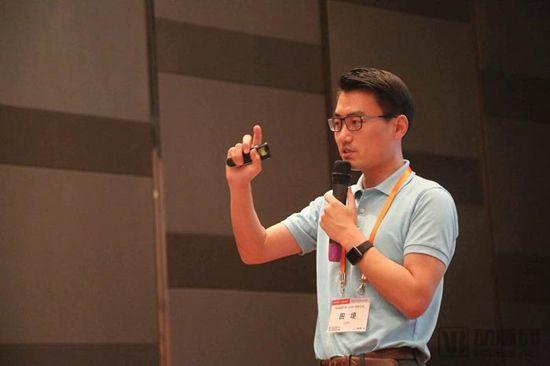
Image from Yuanma Gene
Tian Geng stated that BGI Group provided him with substantial room for professional growth during its reconstruction phase. This not only facilitated more rapid and extensive accumulation of expertise in his technical field but, more notably, afforded him the opportunity to manage research projects from a corporate development perspective. At that time, Tian Geng had not yet considered entrepreneurship; however, his performance at BGI Group attracted the attention of two prominent scholars in Beijing.
In the second decade of the 21st century, precision medicine based on genetic technology began to attract increasing global attention. The concept of “precision medicine” already emerged in the United States in 2011. In 2015, U.S. President Barack Obama proposed the Precision Medicine Initiative, sparking a worldwide surge of interest in precision medicine.
Around the same period, China’s top scientists had already recognized the vast potential of genetic technology applications and began implementing them.
In 2012, at the invitation of Professor Shi Yigong, then Dean of the School of Life Sciences at Tsinghua University, Tian Geng joined the Tsinghua University School of Medicine to oversee the establishment of its sequencing platform. His performance during this period lived up to expectations.
During the establishment of the sequencing platform, Tian Geng led his team in completing multiple research projects. One representative project focused on the “Microbial Components of Smog in Beijing,” which not only analyzed the microbial composition and sources of smog pollutants but also provided significant reference value for smog control and governance.
During the same period, Tian Geng was also invited by Academician Zhao Yupei, President of Peking Union Medical College Hospital, to assist in the establishment of the hospital’s Translational Medicine Center.
At that time, Tian Geng had assumed he would continue along the academic path, conducting research steadily at a university. Little did he expect a sudden change of course, leading him to make a different choice. In his own words, “Sometimes, life-altering decisions are made in just a second.”
One day in 2014, Tian Geng received a phone call from a close friend. The friend said that his teacher was in the late stage of lung cancer and, due to his advanced age, the hospital had adopted a very conservative treatment approach, which essentially amounted to a death sentence for the elderly man. The friend sought his help: “I heard you are conducting research on detecting tumor genes through peripheral blood testing. Could you use your technology to provide some assistance to my teacher? Even a glimmer of hope would be appreciated.”
Hearing his friend’s earnest plea, Tian Geng was hesitant. At the time, the technology was still confined to the laboratory stage and remained some distance from clinical application. However, unwilling to see his friend’s sole hope dashed, he and his team rapidly designed a personalized testing protocol.
Fortunately, testing identified a rare genetic mutation that served as a basis for targeted therapy. Guided by the test results, the physicians established a new treatment regimen. Following treatment, the 72-year-old professor, who had initially been given only weeks to live, experienced a 90% reduction in tumor size, successfully extending his life and improving his quality of life.
In that fleeting moment, Tian Geng witnessed how technological advances can sometimes outpace the Grim Reaper. He realized the need to step out of the laboratory and translate research findings into industrial applications, thereby benefiting a broader population in need. In late 2014, Tian Geng and his partners established “Geneseeq” in Beijing, aiming to help more patients through the team’s dedicated efforts.
However, entrepreneurship cannot rely solely on passion. This is especially true for technologies like genetic testing, which were still in a very early stage at the time, with an immature market. Identifying genuine needs and delivering matching products poses a severe test for startups. Tian Geng’s hybrid background—spanning enterprises, academic institutions, and medical organizations—has proven advantageous, as he clearly understands the current landscape and pain points of this field.
During the process of assisting Peking Union Medical College Hospital in establishing its Translational Medicine Center, Tian Geng identified a contradiction between substantial clinical demands and the hospital’s limited clinical testing resources, as well as a shortage of specialized personnel in this field within Chinese hospitals.
Based on his practical work experience in hospitals, Tian Geng believes that there are many constraints to implementing precision medicine projects in hospitals at the current stage. This system requires the integration of multiple capabilities and is not something that can be achieved simply by hiring a few technical staff or purchasing some equipment. Tian Geng envisions providing hospitals with a non-outsourced, “one-stop” service that they can operate independently, thereby helping them address their immediate challenges.
After the establishment of Yuanma Gene, Tian Geng began to put this vision into practice. He and his team pioneered a business model involving the co-establishment of precision medicine testing centers with hospitals. This approach not only provided hospitals with a comprehensive suite of solutions to help them rapidly and systematically address insufficient support for precision medicine, but also mitigated medical risks associated with practices such as outsourcing test samples.
Practice has proven that Tian Geng’s insights struck at the core challenges faced by hospitals. Within three years of founding Yuanma Genomics, their products rapidly gained recognition among hospitals, covering more than 100 institutions and serving nearly 100,000 patients. After securing investment from CITIC Capital, Yuanma Genomics emerged as a leader in the precision medicine industry. This outstanding performance has once again earned Tian Geng a broader platform, and his future endeavors remain highly anticipated.