

Headspace Files for IPO: Scaling Mindfulness Across 190 Countries with 30M Users and $75M+ in Funding
As we recognize that the brain is arguably the most complex entity in the known universe, a hundred-billion-dollar market spanning from physical to mental health awaits exploration.
Amid the mental health needs of 250 million people, VCBeat has recently launched a special series on the Mental Health Industry, covering enterprises and markets, both domestically and overseas, where challenges and opportunities coexist. IWe will conduct a comprehensive scan of this field.If you are in this industry, you are welcome to communicate with the author at any time; for media coverage inquiries, please contact VCBeat directly.
——“When was the last time you sat at a desk and did nothing but think?”
“Mindfulness,” translated into Chinese as “Zhengnian” (mindfulness), has become increasingly relevant as mobile phones are dubbed the body’s “new organ.” The ensuing information anxiety has reached a point where individuals require psychological support after being separated from their phones for just 20 minutes.
According to a report by Q Daily, in early 2018, Google sponsored the Wisdom 2.0 conference, the largest mindfulness forum in the United States. More than 3,000 attendees from the technology, investment, and arts sectors gathered in San Francisco, paying ticket prices ranging from $325 to $750 to participate in discussions on a grand theme: mindful living in the digital age.
In fact, Google began offering its Search Inside Yourself (SIY) mindfulness leadership program internally as early as 2007. By 2012, SIY had spun off into an independent nonprofit organization, providing in-house mindfulness-based stress reduction training to major corporations such as American Express, Ford, and LinkedIn. A two-day workshop for 50 participants was priced at up to $35,000.
Following yoga, another concept derived from religion—mindfulness training—is gradually gaining popularity worldwide.
In addition to offline mindfulness training, mobile phones have also become a primary platform for mindfulness apps. As a result, app companies such as Headspace, which offer mindfulness and meditation training courses, have emerged and are attracting investor attention.
As mindfulness gains popularity, numerous meditation apps have emerged on the App Store. It is widely believed in the industry that Headspace stands out in terms of both user base and investment potential. What are their strategies for user retention, and how has the company developed to date?VCBeat (WeChat: vcbeat)An Analysis of This New Content Format in the Field of Mental Health.
Mental Health Practices Derived from Buddhism
Headspace founder Andy Puddicombe, a sports science graduate with a deep interest in Buddhism, traveled to Nepal, India, Myanmar, Thailand, Australia, and Russia to study meditation. A decade later, he was formally ordained as a Tibetan Buddhist monk and practiced in a monastery. After completing his monastic training in 2004, he joined the Moscow State Circus for brief training before returning to London. There, he earned a degree in circus arts at the London Academy of Music and Dramatic Art while developing the early plans for what would become Headspace, committing himself to teaching “mindfulness” to the public.
Headspace was founded after Andy Puddicombe met his co-founder and CEO, Rich Pierson, who was then under immense pressure due to business challenges. Amidst depression, mindfulness helped him alleviate stress and restore his mental and physical well-being. In 2010, the two partnered to establish Headspace, with the aim of making meditation accessible to more people in need of psychological support.
Founded in 2010, Headspace initially operated as a company hosting in-person meditation sessions. However, participants expressed a desire to take what they had learned home and practice “mindfulness” in their daily lives. In response, Andy Puddicombe and Rich Pierson assembled a technical team and launched the Headspace app in 2012, making meditation more accessible and allowing users to begin their practice anytime, anywhere, free from spatial and temporal constraints.
“The free version of Headspace is like aspirin, while the subscription content is like vitamins”
As startups and large corporations increasingly prioritize mental health, many celebrities and entrepreneurs have begun starting their day with meditation. Through meditation, they tame the mind and transcend material desires. Simple meditation practices help individuals bid farewell to negative emotions and regain control over their lives.
Headspace, founded in 2010 and headquartered in Santa Monica, California, with offices in San Francisco and London, has developed a user-downloadable app for accessing guided meditation and stress-reduction exercises.
Headspace is an award-winning digital health platform that offers guided meditation sessions and mindfulness training. With hundreds of hours of content available within the app, it is recognized as one of the most comprehensive courses for meditation and mindfulness.
To date, Headspace has completed its Series B financing, raising over $75 million from investment firms such as Spectrum Equity and Chernin Group.
Beyond investment firms and corporate groups, meditation and mindfulness practices have also gained popularity among celebrities, helping startups secure funding from “star” investors. Its investor roster includes notable figures such as Ryan Seacrest, Jessica Alba, and Jared Leto.
Headspace’s content includes animated guides, articles, and videos for meditation. In terms of its pricing mechanism, the platform adopts a freemium business model, i.e., “free first, pay later.” Its app offers many well-designed free features for users, including complimentary mindfulness courses that guide users through basic meditation techniques, helping them get started quickly.
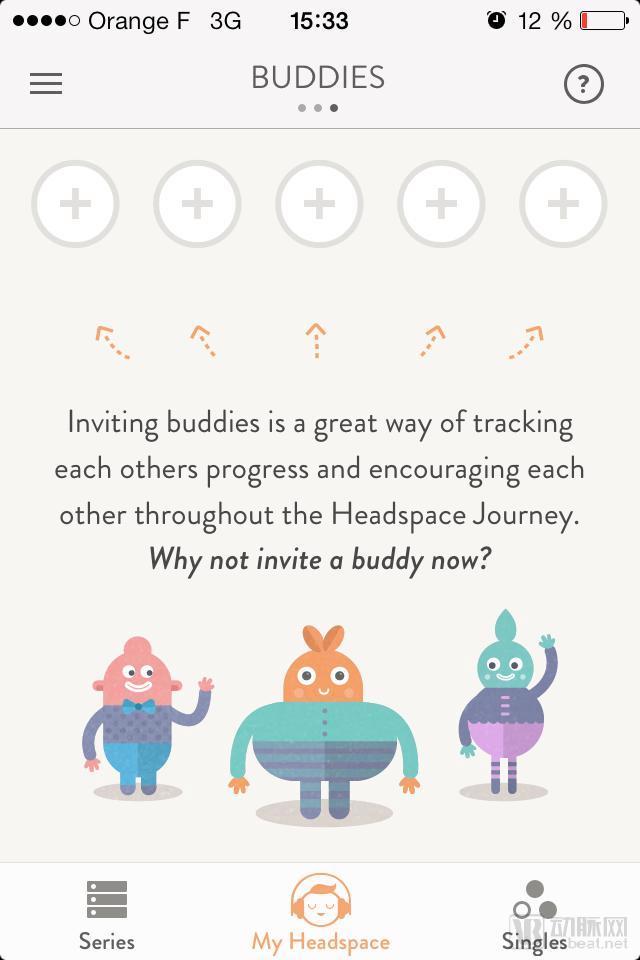
During the user's meditation training, the first ten sessions are offered free of charge and cover fundamental meditation concepts. Once users have established a consistent practice routine, they can purchase a membership to access specialized subscription content, such as courses on emotion management, stress reduction and relaxation, and deep sleep. The annual membership is priced at $96 per year.
Interestingly, Headspace developers have openly stated that the basic free version of Headspace is like aspirin, offering a quick fix when you’re feeling unwell, while the subscription content is akin to vitamins, improving your well-being through daily integration into your life. Through Headspace’s content and guidance, mindfulness has gradually become a lifestyle for its users, helping them relax, alleviate anxiety, and enhance focus.
Unlike mere religious belief, neuroscience has demonstrated the benefits of this practice for the brain. Meditation is no longer a mystical tradition, but rather a method recommended by scientists, physicians, and therapists.
30 million users across 190 countries, with athletes and corporate employers as key clients
According to data provided by Headspace, the platform has reached 190 countries worldwide and boasts over 30 million users. In 2017, among young users (aged 12–25) accessing Headspace, 60% were female, while only 38% were male. Of the 30 million users, merely 17% were young adults aged 18–25. This indicates that middle-aged individuals constitute the majority of Headspace’s user base—a demographic characterized by bearing the heaviest burden of both life and work-related stress.
In addition to serving registered users, Headspace provides in-flight meditation channels for eight airlines and has recently launched a relaxation “Pods” initiative, featuring street-side pods approximately the size of telephone booths.
Research by the UK’s medical and health advisory services sector shows that the number of small businesses seeking mental health counseling has doubled over the past five years, while the annual cost of sickness-related absenteeism across the UK has reached £29 billion.
It is in this context that Headspace has become part of the benefits packages offered by corporate employers to their employees. Currently, Headspace has established partnerships with companies such as Apple, Amazon, Google, and Nike.
Some of Headspace’s Corporate Partners (Source: Headspace Official Website)
In addition, athletes have also become one of Headspace’s mainstream user groups. In March 2018, the National Basketball Association (NBA) announced a strategic partnership with the meditation app Headspace.
The multi-year partnership between the app and the U.S. basketball giant also encompasses the Women’s National Basketball Association (WNBA), the NBA G League, and its esports competition, the NBA 2K League.
According to a report by The Wall Street Journal, as part of the agreement, all NBA players can use the Headspace app free of charge.
The NBA and Headspace will jointly develop mental training content aimed at better preparing athletes for this summer’s competitions. Headspace will also host events across the NBA, such as the league’s Player Health Program and mindfulness training for team staff. League and team personnel will have access to Headspace’s library of meditation content, utilizing various course packages to enhance their mindfulness skills.
NBA Commissioner Adam Silver said, “The focus of athletic training has often been limited to physical conditioning, but as top-tier athletes at all levels increasingly recognize, mental health is also a key determinant of success.”
Beyond profit-making activities, Headspace’s vision is to “improve the health and happiness of the world,” and as part of this commitment, it collaborates with charities, foundations, and non-governmental organizations around the globe.
On June 22, 2017, the Dream Foundation announced a partnership with Headspace. The Dream Foundation is the only organization providing palliative care to adults with terminal illnesses. Together, they launched the Get Some / Give Some™ program, through which Headspace donated 13,000 annual subscriptions to its app for patients and their families, nurses, physicians, caregivers, social workers, as well as staff and volunteers of the Dream Foundation.
Individuals served by the Dream Foundation will benefit from Headspace’s specialized packages, which utilize mindfulness-based courses to address issues such as pain management, cancer, depression, stress, anxiety, and sleep disturbances, while also providing supportive resources for their families and caregivers.
Establishing the Subsidiary Headspace Health to Introduce Meditation into Disease Treatment
As the user base for Headspace as a lifestyle platform continues to expand, the company has introduced an innovative concept: developing meditation programs tailored to treat specific medical conditions, which can be prescribed by physicians to patients much like prescription medications.
In June 2018, Headspace announced the establishment of its digital health subsidiary, Headspace Health. The new company aims to develop the world’s first FDA-approved prescription meditation therapy for chronic diseases, with the prescription meditation app expected to launch in 2020. Currently, this tool is undergoing clinical trials.
“Headspace Health’s creation is the most significant step in medical history toward bringing mindfulness to scale,” said Rich Pierson, co-founder and CEO of Headspace, in a June statement.
Currently, much of the research on meditation focuses on its overall impact on health, while few studies examine its therapeutic effects on specific diseases. Research has shown that sitting meditation and mindfulness can have significant positive effects on both physical and mental health, including mood regulation, improved attention, and even lowered blood pressure.
Headspace’s prescription program will further advance research into the benefits of meditation and leverage modern high-tech solutions to bring this ancient wisdom into the lives of more people.
Jones Bell, Chief Science Officer at Headspace, stated, “We know that meditation can help improve quality of life. What we aim to do is go a step further and demonstrate that meditation can also ameliorate disease states and their primary symptoms.”
Currently, Headspace’s research team is collaborating with multiple government and academic institutions, including the UK’s National Health Service (NHS) and the University of California in the United States, to conduct in-depth studies on the therapeutic effects of meditation for various diseases.
A nearly $1 billion revenue industry, with virtually no presence in China
According to IBISWorld research, the meditation and mindfulness industry generated nearly $1 billion in revenue in 2015, distinguishing itself from the alternative healthcare sector.
The forms of mindfulness enterprises include applications (such as Headspace, Aura Health, and Calm) and emerging wearable devices (such as the Muse headband, which measures brain activity during meditation and is priced at $299). Nearly a thousand mindfulness apps have emerged and gained popularity in the market, with the vast majority located overseas.
According to an upcoming survey by Fidelity Investments and the National Business Group on Health, 22% of employers nationwide will offer mindfulness training to employees in 2016—with large-group sessions typically priced between $500 and $10,000—and this percentage is expected to double in 2017.
In terms of capital attention, the mindfulness industry has also demonstrated significant momentum. In 2017, investors backed more than 20 startups developing apps and tools designed to promote mindfulness, happiness, and other desirable psychological states. According to Crunchbase data, these companies have raised over $150 million to date, with the vast majority of funding going to startups based in California. The largest round among them was secured by Headspace, the company featured in this article, which closed a $35 million Series B financing in June 2017.
By the end of 2017, Happify, a developer of digital tools and programs, had raised more than $25 million; Grokker, an online provider of yoga, meditation, and fitness classes, completed a $22 million financing round. In addition, Calm, another meditation course provider, closed a $27 million financing round in June 2018.
In China, the mental health market is still in its early stages of consumer education, with standard psychological counseling services yet to achieve widespread adoption. The mindfulness meditation sector features only a few platforms, including Lezhi, Easy Meditation, VR Meditation, and Now Mindfulness Meditation. Among these, only Lezhi has completed an angel round of financing amounting to RMB 8 million, indicating that companies in this space remain at a very early stage of development.
Mental Health + Case Series: Related Links
Selected Reports on the Mental Health Industry:
[AI + Mental Health] Widespread Anxiety: AI-Driven Cognitive Behavioral Therapy Can Help