

Can 'Internet + Medical Waste' Achieve 100% Disposal Rate in China's 2-Million-Ton Annual Medical Waste Market?
The healthcare industry is developing rapidly, accompanied by a significant increase in medical waste.
According to statistics from the World Health Organization (WHO), developed countries generate approximately 0.5 kg of medical waste per bed per day, whereas developing countries can generate between 0.5 and 2.5 kg per bed per day. The United States produces a total of approximately 2.6 million tons of medical waste annually, while India generates up to 500 tons of medical waste daily.
The growing volume of medical waste worldwide poses serious public health and environmental challenges. However, despite being classified as “waste,” medical waste remains “profitable.” Behind these significant challenges lies a broad growth prospect for the medical waste treatment and management industry.
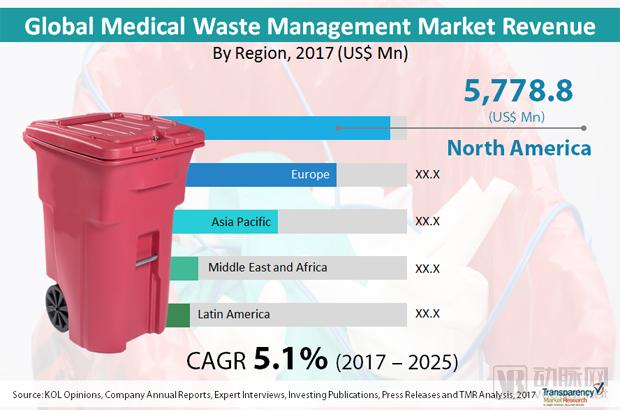
Transparency Market Research (TMR)’s latest report shows that the global medical waste management market exceeded $10 billion in 2016, and is projected to surpass $22.3 billion by 2025, based on a compound annual growth rate (CAGR) of 5.1%.
China's Medical Waste Market Size to Surpass RMB 10 Billion
In China, with improvements in people's quality of life and medical technology, the number of major surgical procedures has increased, leading to a rapid rise in the variety and volume of single-use medical supplies. Consequently, the generation of medical waste in China has shown a steady upward trend.
Medical waste originates from a wide variety of sources, making it difficult to accurately and rigorously quantify its generation. Based on the number of hospital beds, bed occupancy rates, and the average daily medical waste generated per bed, Qianzhan Industry Research estimates that China’s total medical waste output in 2018 may have exceeded 2.0601 million tons, with the medical waste market size reaching RMB 7.69 billion. The market size for medical waste treatment is projected to reach RMB 10.737 billion by 2023, with the volume of medical waste reaching 2.4956 million tons.
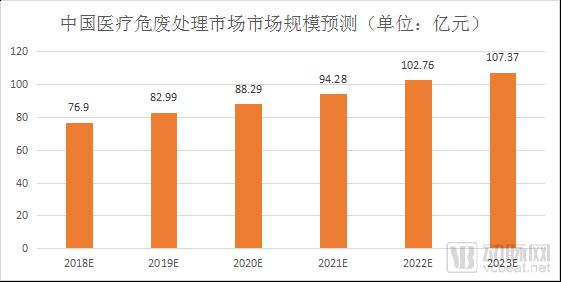
Data source: Qianzhan Industry Research; compiled by VCBeat
According to the data from the “2017 Annual Report on the Prevention and Control of Environmental Pollution by Solid Waste in Large and Medium-Sized Cities Nationwide” released by the Ministry of Environmental Protection, in 2016, the amount of medical waste generated in 214 large and medium-sized cities was 721,000 tons, with 720,000 tons treated; the medical waste treatment rate in most cities reached 100%.
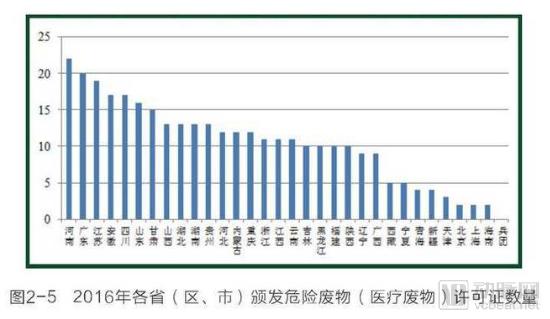
The top three provinces in medical waste generation are: Guangdong, Jiangsu, and Zhejiang.
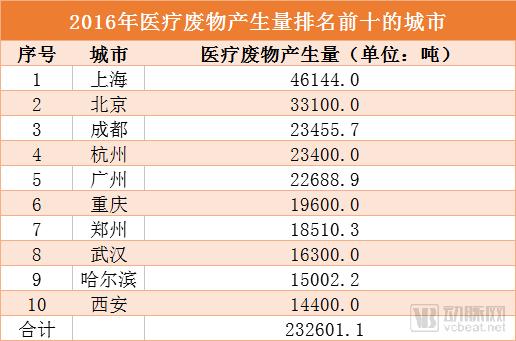
Among the 214 large and medium-sized cities, the top 10 cities generated a total of 233,000 metric tons of medical waste, accounting for 32.3% of the total amount generated by all cities that disclosed data. Shanghai had the highest generation volume at 46,144.0 metric tons, followed by Beijing, Chengdu, Hangzhou, and Guangzhou, with generation volumes of 33,100.0 metric tons, 23,455.7 metric tons, 23,400.0 metric tons, and 22,688.9 metric tons, respectively.
As of 2016, a total of 322 hazardous waste operation permits were issued across all provinces (autonomous regions and municipalities) in China for the disposal of medical waste (305 permits were for facilities dedicated solely to medical waste disposal, and 27 were for facilities handling both hazardous waste and medical waste).In 2016, the actual operating scale of licensed medical waste treatment facilities in China was 830,000 metric tons.
Currently, the potential of China’s medical waste treatment market continues to rise, with some environmental protection companies having entered this sector. However, the current reality is that the overall market concentration in the medical waste treatment industry remains low, corporate activity is sluggish, and clear industry leaders have yet to emerge.
The Development of the Medical Waste Industry Is Constrained by Technology and Regulation
The volume of medical waste generated has increased significantly, further intensifying the pressure on its disposal. For the large quantities of medical waste currently produced, the most commonly adopted methods—particularly in developing countries—are small-scale incineration or sanitary landfilling.
However, the World Health Organization’s 2004 policy document and the Stockholm Convention emphasize the need to consider risks associated with medical waste incineration, including particulate matter, heavy metals, acidic gases, carbon monoxide, pathogens, and dioxins, as well as water source contamination issues that may arise from landfilling. In fact, many industrialized countries are gradually phasing out medical waste incinerators and exploring technologies that do not produce any dioxins. Countries such as the United States, Ireland, Portugal, Canada, and Germany have completely closed or suspended their medical waste incineration facilities.
Currently, China continues to rely on the single disposal model centered on centralized incineration, which was introduced in 2003. However, establishing a centralized hazardous waste disposal center faces significant challenges, including difficulties in site selection, substantial capital investment, and lengthy approval and construction periods. These obstacles have discouraged many enterprises dedicated to hazardous waste management. Therefore, it is clearly unrealistic to expect the centralized disposal industry to resolve the backlog of medical waste in the short term, particularly in remote urban and rural areas.
It is foreseeable that the volume of medical waste will continue to grow rapidly each year. If the industry persists with the traditional, singular approach of centralized incineration rather than exploring new, more diversified and flexible models, the capacity utilization rate in the medical waste disposal sector will inevitably rise, exacerbating a series of problems associated with medical waste management.
In addition to the backward level of medical waste treatment technology, China's medical waste management and disposal have significant safety loopholes due to inadequate policies and regulations and lax supervision. This has led to chaotic phenomena such as selling waste to informal recyclers, indiscriminate dumping, and mixing with municipal solid waste, even fostering numerous "black-market profit chains."
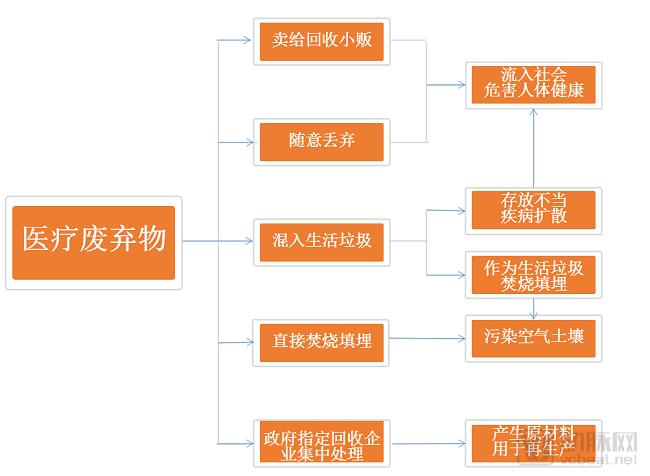
Current Status of Medical Waste Recycling and Disposal in China
The primary reason lies in lax regulation and a failure to control the source. Medical waste undergoes a long cycle from generation to centralized disposal, involving multiple intermediate stages, including departmental segregation, packaging, temporary storage, intra-hospital transport, centralized storage, off-site transport, and final disposal. There is a lack of coordination between healthcare institutions and waste collection/removal entities (mostly cleaning or property management companies), leading to neglect of full-process oversight from source to end-point. Consequently, individuals are inevitably driven by profit to illegally hoard and resell medical waste.
Strengthen Industry Standards and Introduce Alternative Technologies
Thus, in the face of environmental pollution and the illegal resale of medical waste caused by inadequate regulatory oversight and outdated disposal technologies,To address the issue at its root,We can only rely on more robust and stringent new policies, as well as more convenient and advanced new technologies.
As early as 2003, China promulgated the "Regulations on the Management of Medical Waste," requiring all localities to implement a system of designated personnel responsibility, enforce strict supervision over the entire process of collection, storage, transportation, and disposal, establish centralized disposal centers for the incineration of medical waste, and strictly prohibit any entity or individual from trading in or processing medical waste.
As of October 8, 2012, the Ministry of Environmental Protection issued the “Notice on Printing and Distributing the ‘12th Five-Year Plan’ for Pollution Prevention and Control of Hazardous Wastes,” which explicitly encouraged the adoption of non-incineration technological routes for the disposal of medical waste.
In September 2017, eight ministries and commissions, including the National Health and Family Planning Commission, the Publicity Department of the Communist Party of China Central Committee, and the National Development and Reform Commission, jointly issued the Notice on Promoting the Management of Household Waste Sorting in Medical Institutions. The notice explicitly stated that by the end of 2020, all medical institutions shall implement household waste sorting management, ensuring accurate classification, disposal, and temporary storage, and coordinate with various waste recycling entities for classified transportation and treatment.
In the future, the state should accelerate the formulation of policies and standards for medical waste disposal at the policy level, strengthen mandatory enforcement, and encourage private capital to enter the sector, thereby promoting its standardized development.
At the technical level, the state encourages the adoption of non-incineration technologies; therefore, we should introduce or develop more alternative technologies, such as high-pressure steam sterilization (autoclaving), chemical disinfection, electromagnetic wave sterilization, pyrolysis, plasma technology, and microwave disinfection and disposal techniques.
Among these, steam sterilization (or autoclaving) is the most commonly used alternative treatment method, capable of processing up to 90% of medical waste and easily scalable to meet the needs of any healthcare organization. Microwave disinfection and disposal technology represents the most advanced approach, utilizing moist heat and steam generated by microwave energy for treatment. A typical microwave treatment system consists of a treatment chamber into which microwave energy is introduced from a microwave generator.
“Internet + Medical Waste”: IoT-Based Informatics Supervision of Medical Waste
Despite the promulgation of numerous laws and regulations by the state, regulatory oversight of medical waste disposal remains insufficient, leading to frequent loopholes in medical waste management, persistent violations and illegal activities, and sluggish development of the entire medical waste disposal industry.
Traditional oversight methods primarily rely on inspectors stationed at various healthcare facilities to monitor the collection, storage, transportation, disposal, and registration of medical waste.
In recent years, with the development of technologies such as the Internet, big data, and the Internet of Things (IoT), a new “Internet + Medical Waste” management model has emerged. This model leverages intelligent medical waste collection and online systems that closely monitor the entire treatment process, thereby achieving comprehensive, full-process supervision without any blind spots.
This intelligent and information-based regulatory approach is becoming the most effective means of oversight at present and is gradually being rolled out across China.
For example, in the first half of 2017, Suzhou launched a standardized management project for medical waste leveraging “Internet+” technologies. By employing technological tools such as online monitoring systems, management platforms, and mobile apps, the entire process of medical waste disposal became traceable.
In late February 2017, the Suzhou Municipal Government launched the “Health Guardian 531 Action Plan,” proposing the establishment of a modern comprehensive regulatory system for health and family planning. The plan leverages “Internet Plus” technologies to enable online supervision and full-process traceability of key aspects of medical and healthcare services. By the end of 2017, 240 medical institutions in Gusu District, Suzhou, were to complete pilot programs for online regulatory oversight, with citywide coverage achieved by 2020, thereby addressing regulatory blind spots arising from constraints in human and material resources.
Furthermore, to eliminate regulatory blind spots in medical waste management, Guiyang City began piloting a barcode tracking system for medical waste using big data technology in late 2017. Under this model, medical waste is classified and weighed before being transported to specialized medical waste treatment facilities for disposal. This approach not only streamlines intermediate procedures and reduces labor and material costs, but also enables end-to-end supervision from source to final disposal.
Thus, by leveraging the Internet of Things (IoT) and the power of big data, hospitals have implemented a series of management measures—including data collection on medical waste generation, handover recordkeeping, monitoring of intra-hospital transport routes, and inventory monitoring at medical waste storage facilities—to establish a robust traceability mechanism for the intra-hospital flow of medical waste. This ensures that every piece of medical waste is registered and fully documented, thereby maintaining it in a controllable and manageable state.
Meanwhile, health supervision authorities and environmental protection departments should collaborate closely with hospital infection control units to build an integrated regulatory platform featuring “data integration + joint oversight.” This platform will standardize the management of medical waste, achieving a closed-loop data system that tracks medical waste from generation in clinical departments, through internal circulation, centralized collection and transportation, to final unified disposal. It will enable online monitoring and traceability, ensuring true integration and establishing a coordinated mechanism to form a synergistic regulatory force.
In this way, on the one hand, it prevents medical waste from entering the illegal market and cuts off the black industry chain; on the other hand, it also fills loopholes such as an imperfect regulatory system, lax management, and loss of control at the source.
Case 1: Yihui Technology
Yihui Technology is a key high-tech enterprise under the National Torch Program, a provider of top-level design and holistic solutions for healthcare informatization, and a Key Enterprise Research Institute for Smart Healthcare in Zhejiang Province.
By the end of 2016, YiHui had provided healthcare informatization construction services to more than 1,000 hospitals across China, including 12 of the top 20 hospitals nationwide, 42 of the top 100 hospitals, and six hospitals in Hong Kong and Macao. It is one of the few IT enterprises in China capable of simultaneously providing consulting services for JCI accreditation, HIMSS adoption, Electronic Medical Record (EMR) system grading, and interoperability assessments.
Yihui Technology’s Medical Waste Management System, built on IoT and cloud technologies, provides genuine end-to-end traceability and barcode-based management across the entire lifecycle of medical waste—including classification, packaging, temporary storage, transportation, transfer, and disposal. The system offers multiple waste collection solutions that can be tailored to hospitals’ specific needs, ensuring flexible and convenient deployment.
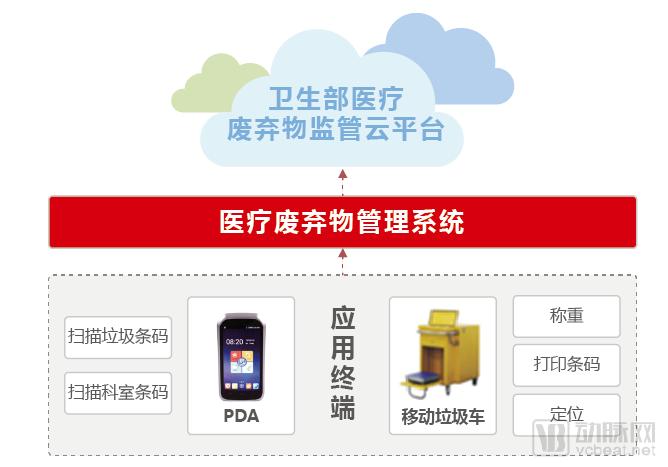
Image source: Company official website
Product Advantages:
● Develop standardized recycling procedures in accordance with the Regulations on the Management of Medical Waste and JCI accreditation standards
● Traceable waste weighing and handover processes, refined categorized management, and automatic generation of cloud-based reports
● Leverage mobile terminals such as PDAs, powered by intelligent recognition and mobile computing technologies, to ensure simple operation requiring only scanning and confirmation, thereby achieving true zero-input data entry.
● Utilizes an enterprise-grade cloud management solution featuring high stability, high performance, and automatic optimization, while ensuring reliable communication between wireless smart terminals and backend management software.
Currently, the system has been implemented in multiple hospitals, including Sir Run Run Shaw Hospital, Zhejiang Provincial People's Hospital, Hangzhou Third People's Hospital, Beilun Traditional Chinese Medicine Hospital, Ningbo Sixth Hospital, Quzhou Kecheng District People's Hospital, and Shandong Provincial Hospital.
Case 2: Hypersensitivity Technology
ChaoMin Technology is a national high-tech enterprise specializing in the manufacturing of high-end equipment and providing smart IoT solutions for specialized fields. It is committed to building IoT systems for public health security, environmental protection, and healthcare informatization, delivering integrated internet-based solutions to its clients.
ChaoMin Technology’s IoT-based “Internet + Medical Waste” real-time traceability cloud platform tracks the entire lifecycle of medical waste, enabling real-time location and monitoring of medical waste containers through barcode technology.
Dedicated sealed vehicles for transporting medical waste bins are equipped with GPS positioning and surveillance cameras. Centralized collection points implement inbound and outbound inventory management for medical waste and are fitted with surveillance cameras. Monitoring devices are installed at both temporary collection points and centralized collection points. This enables real-time location tracking and monitoring throughout the entire medical waste disposal process, thereby significantly enhancing medical safety management.
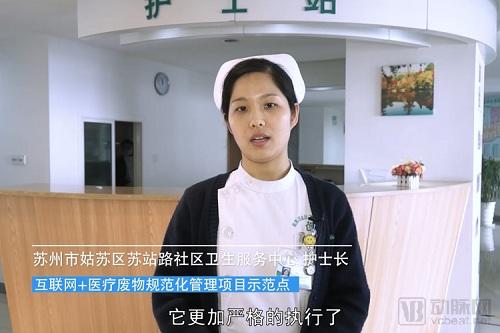
Image source: company website
On March 14, 2017, Chaomin Technology, the Suzhou Municipal Health Inspection Institute, and the Gusu District Health and Family Planning Bureau jointly launched the “Internet+” Standardized Management Project for Medical Waste in Suzhou. The project underwent a demonstration phase lasting over two months at 10 medical institutions in Gusu District. Throughout the entire vertical process—from medical institutions to health supervision—the system demonstrated significant operational effectiveness, achieving the following functions:
Accessible and coherent labeled identification technology eliminates the tedious manual recording and data analysis for medical institutions, while enabling refined management of medical waste. Comprehensive big data provides a solid evidence base for health supervision. For health supervision agencies, simply using a smartphone enables one-click traceability, allowing for 24/7 real-time, visual monitoring of medical waste movements across the city. This approach eradicates management gaps and oversights inherent in traditional health supervision processes, thereby preventing secondary cross-infection.
Furthermore, the innovative application of “Internet Plus” and the deployment of cloud computing platforms have significantly reduced system construction costs. By eliminating the need for local servers at no cost, nearly RMB 15 million in hardware infrastructure expenses can be saved citywide. This approach enables rapid, low-cost achievement of comprehensive regulatory coverage and effectively reduces subsequent system maintenance costs.
The project leader of Chaomin Technology stated that the research, development, and deployment of the “Internet+” Standardized Management Project for Medical Waste aim to promote standardized and information-based management of medical waste. By leveraging information technologies such as online real-time monitoring and full-process tracking, the project focuses on addressing key challenges in the supervision of medical waste within health oversight, thereby enhancing the level of informatization and intelligence in health supervision.
Case 3: Haofu Network
Haofu Network is a high-tech enterprise headquartered in Shanghai, with a long-standing focus on informatization in sectors such as healthcare and municipal operations management. The company actively participates in smart city initiatives to enhance public environmental quality, striving to become a leading provider of comprehensive solutions and services in the fields of public health and smart healthcare in China.
Haofu Network Medical Waste Traceability Management System comprehensively applies Internet of Things (IoT) technology, particularly RFID technology, integrated with the intra-hospital circulation process of medical waste. It achieves full-process management covering front-end collection, mid-stream transportation, and end-point storage, thereby enhancing hospitals’ medical waste management capabilities and preventing loss, leakage, spread, and accidents involving medical waste. The system establishes a comprehensive, intelligent management framework for the intra-hospital circulation of medical waste.
Meanwhile, healthcare supervision authorities can achieve 100% smart oversight of medical waste through the medical waste management dashboard, ensuring comprehensive, end-to-end monitoring with no blind spots.
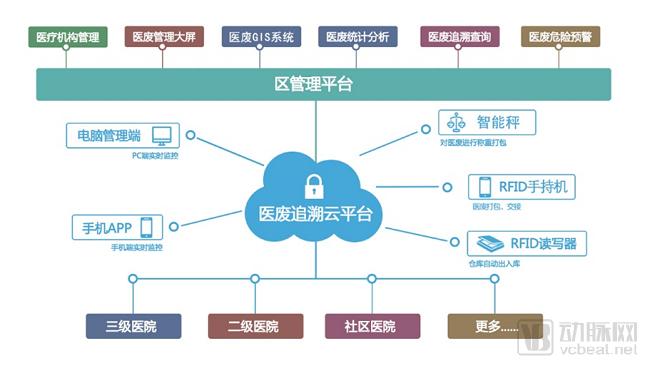
Cheng Jianchun, Technical Director of Haofu Network Technology, stated, “The primary objective of the medical waste traceability system is to achieve end-to-end tracking and positioning of medical waste—from generation and transportation to final disposal—through informatization and automation. Each bag of medical waste generated by hospitals is sealed with RFID-tagged zip ties, and all associated data are uploaded to the cloud platform in real time.”
“Electronic tags have unique codes and are automatically scanned and tracked during transportation, storage, warehousing, and outbound processes. Any bag of medical waste that does not follow the prescribed procedures will trigger a system alarm, and the responsible manager will receive notification immediately.”
Leveraging an IoT cloud platform, Haofu Network’s medical waste traceability management system has established a big data center capable of supporting multi-level administration across provinces, cities, regions, and various types of healthcare institutions. Meanwhile, to achieve precise management of medical waste, Haofu Network has independently developed an intelligent terminal device—the “Yihui Scale.” This scale integrates multiple functions, including RFID tag identification, QR code scanning, weighing, and printing, thereby facilitating seamless operational workflows from medical waste packaging and transportation to warehousing.
VCBeat has learned that, in addition to the three companies mentioned above, several other enterprises—including Wonders Information, Shenzhen Junhai IoT Technology Co., Ltd., and Shenzhen Chengwei Information Technology Co., Ltd.—are developing and promoting informatization management systems for medical waste.
We believe that as national policies continue to improve and the penetration of internet and big data technologies deepens, the multi-billion yuan medical waste treatment market will accelerate its release. At that time, an increasing number of enterprises will join this competitive landscape. For these companies, adopting innovative “Internet Plus” models serves as a powerful means to seize first-mover advantage. Ultimately, the medical waste disposal industry, enterprises, and individuals will all benefit from the integration of internet and big data technologies.