

Iora Health Files for IPO: Revolutionizing Senior Primary Care with $220M-Backed Collaborative Model

Iora health
Healthcare Service Provider
By Cai Aoxue, Zhang Shaodi
“I hope that in the future, I won’t need to take separate leave to accompany my parents to medical appointments, spending an entire day with them undergoing various tests.”
The Demand for Primary Healthcare Among the Elderly Has Become Prominent. Data shows that in the United States, more than 43 million elderly people have long-term and frequent needs for healthcare services. If these seniors were to flock to hospitals all at once, the consequences would be dire.
Iora Health is a primary healthcare provider for the elderly, founded in 2011 and headquartered in Boston, dedicated to supporting Medicare patients aged 65 and older through a collaborative care model.
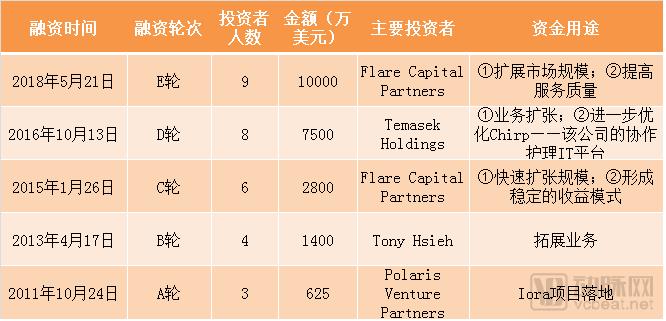
Iora Health Financing and Investment Profile (Source: Crunchbase)
On May 21, 2018, Iora Health secured $100 million in Series E financing. Since its establishment in 2011, Iora Health has raised a total of $223.3 million from 15 institutional investors.
Among these investment firms, most are well-established, prominent institutions that have invested in Iora Health multiple times, such as the serialPolaris Partners, which has made five investments and manages billions of dollars in assets; F-Prime Capital, a 40-year-old firm that has invested four times consecutively; Devonshire Investors, a 40-year-old institution that has invested in Alibaba; and other investment firms such as Humana.
In the fiercely competitive “red ocean” of the primary healthcare market, why has Iora Health remained a favorite among so many top-tier venture capital firms? VCBeat (WeChat ID: vcbeat) consulted multiple sources to analyze what sets it apart.
Iora Health’s founding team consisted of “academia-focused professors and executives with years of business experience,” a common startup playbook in the U.S. health-tech sector.
Rushika Fernandopulle, its founder and Chief Executive Officer (CEO), earned his undergraduate degree from Harvard University’s Kennedy School and concurrently pursued dual doctoral degrees in medicine and public policy at Harvard. Upon graduation, he served as Managing Director at The Advisory Board Company, a healthcare industry research, analytics, consulting, and management firm.
In 2001, Fernandopulle, who had been working for two years, identified problems within the healthcare system and resigned to serve as the Executive Director of Harvard University’s Healthcare System Improvement Project.
In 2004, Fernandopulle resigned to found Renaissance Health—a company dedicated to leading the design and implementation of new healthcare delivery models, which was the predecessor of Iora Health. Meanwhile, he also served as an investing partner at Fidelity Biosciences (a prominent investment firm), a professor at Harvard Medical School, and a lecturer in medicine at Massachusetts General Hospital.
Christopher McKown, Co-Founder and CEO of Iora Health, holds a bachelor’s degree from Pennsylvania State University and an MBA from Harvard Business School. He subsequently founded Response International Services Corporation, a property and casualty insurance company, and Health Dialog, a subsidiary of Bupa, a global healthcare company. Meanwhile, he also serves on the boards of Harvard Medical School, the Boys & Girls Clubs of Boston, Boston Public Radio, Pine Street Inn, and Milton Academy.
The two founders met at Harvard Medical School and jointly discussed the shortcomings of the U.S. healthcare system. Hoping to help more patients stay out of hospitals, they decided to take action to improve the current situation.
Data shows that the elderly population in the United States is approximately 52.2 million, with about 80% of seniors having at least one chronic disease and 77% having at least two.
Today, most medical care in the United States is reimbursed on a fee-for-service basis. According to reliable statistics, there are more than 9,000 billing codes corresponding to individual diagnostic and therapeutic procedures and care services, yet none of these codes represent patient outcomes or satisfaction.
In reality, this healthcare service model, established for the treatment of acute conditions, clearly fails to meet the long-term primary healthcare needs of the elderly. Moreover, it incurs substantial costs, imposing a significant burden on the healthcare system.
Iora Health cited several real-life patient cases that clearly illustrate these challenges: 65-year-old Virginnia Schock, who has diabetes, a foot wound, and a fractured wrist, refused insulin injections due to needle phobia and declined hospital visits due to mobility limitations; 53-year-old Jeffrey Davis was advised to quit smoking and lose weight after a wrist injury, but he struggled to do so on his own, and his physician lacked effective strategies to help; 67-year-old Marry, who suffers from multiple chronic conditions, refused to take her medications because the pills were too large to swallow.
To address the shortcomings of the U.S. healthcare system, Iora Health has proposed an improvement strategy centered on primary care. By leveraging basic healthcare services as its entry point and operating under a value-based (pay-for-performance) model, the company emphasizes proactive health management for patients to reduce the likelihood of disease.
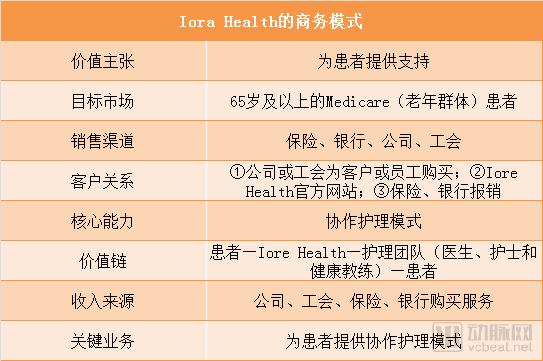
Iora Health's Primary Care Model
Iora Health has transformed the primary care delivery system from three aspects, focusing on new payment models, new team compositions, and redesigned IT systems.
Iora Health has abandoned the traditional fee-for-service model, instead partnering with health insurance giants such as Humana, Grameen PrimaCare (a collaboration between the U.S. Grameen Bank and Iora Health that designed a unique, low-cost monthly subscription-based primary care model for low-income populations), and Tufts Health Plan, as well as with self-insured employers and unions. Under this arrangement, Iora Health charges a fixed monthly fee. This model allows patients to receive unlimited consultations and treatments at Iora Health clinics, thereby ensuring patient health and satisfaction.

(Iora Health Partner)
The second hallmark of Iora Health’s primary care model is the provision of a dedicated care team for each patient. Iora aims to empower patients to proactively manage their own health while “re-humanizing” the care experience. In addition to employing physicians, nurses, and mental health counselors, the company engages numerous health coaches. Although members of the care team come from diverse professional backgrounds, they all excel at building strong therapeutic relationships with their patients.
Iora Health has redesigned its new SaaS system, enabling access to patients’ hospital medical records and comprehensive data throughout the course of their illnesses. This helps physicians gain a thorough understanding of patients’ health status and address medical issues effectively. Through this system, Iora Health physicians can monitor whether patients are adhering to medical advice and actively managing their health. Based on individual patient conditions, they categorize patients and maintain regular contact to ensure optimal health outcomes.
Integration of Four Major Strategies
Iora Health has four core strategies: 1. A patient-centered care model; 2. An integrated care team comprising physicians, nurses, mental health counselors, and health coaches; 3. A collaborative care model; 4. A focus on customer health.
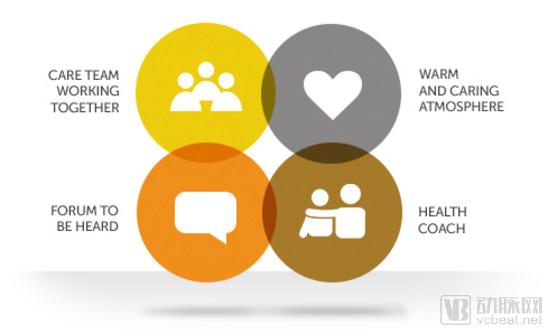
(Image source: Iora Health official website)
Patient-Centric Care: A Holistic Approach to HealthIora Health extends its care beyond merely treating patients’ diseases, placing greater emphasis on guiding them in health management.
Iora Health empowers patients through a care team composed of physicians, nurses, mental health counselors, and health coaches. This team provides comprehensive, patient-centered care, establishing personalized goals to help patients achieve greater happiness and optimism while maintaining their health.
Iora’s collaborative care model uses health coaches as the linchpin. If a physician prescribes “exercise three times per week, 30 minutes per session,” the health coach helps the patient achieve this goal. Their responsibilities include visiting patients at home or in the hospital and reporting any issues to the physician. By incorporating physicians’ recommendations, discussing care plans with other team members, and maintaining timely communication with family members, coaches fully leverage the patient’s surrounding resources to provide comprehensive support.
Iora’s customer-centric focus on health is embodied in its proactive care model. Upon encountering a patient, Iora assigns them a “worry score”—a numerical value from 0 to 10, with higher numbers indicating greater levels of concern. During daily morning huddles, physicians, nurses, mental health counselors, and health coaches convene to identify patients with the most pressing issues, prioritizing those with a worry score of 10 to assess their problems and implement collaborative solutions.

Distribution Map of Iora Health (Image Source: Iora Health Official Website)
After seven years of development, Iora Health has grown to operate 22 clinics across several states in the United States.
Iora Health has six locations in the Phoenix area, spanning the East and West Valleys;
There are five locations in the Seattle area: Central District, Shoreline, Renton, and Federal Way;
Among them, in March 2013, Iora Health began providing services to members of the New England Carpenters Benefit Funds;
In 2015, two facilities were opened in the Boston area, five in the Denver area, and two in Tucson;
In September 2017, one new facility was added in the Hartford area.
Iora Health envisions a transformed primary care experience as follows: Upon arrival, patients are greeted by administrative assistants who offer them coffee or water. Subsequently, health coaches, rather than physicians and nurses, receive patients in the examination rooms for initial assessments. These health coaches aim to create a relaxed atmosphere, helping patients let down their guard and alleviate their burdens.
“Where do you feel pain? How was your winter? Have you seen any good movies recently? How is life at home?” Health coaches ask a series of such questions to create a comfortable environment and atmosphere for patients, while also extracting useful information from their answers. Fernandopulle once stated, “Patients may even visit the clinic specifically because they want to meet and chat with their health coach.”
In this model, physicians are no longer required to participate in the entire process of questioning and data collection, which saves considerable time and significantly reduces patients’ initial anxiety. This allows for more interactive time between physicians and patients during subsequent treatment to identify and resolve issues.
Given that Iora Health operates in the sector of primary healthcare for the elderly, this article selects and analyzes several companies and enterprises within the same domain.
ChenMed
ChenMed, established in 2011, is a physician-led, family-centered primary care provider operating under a full-risk model. It is dedicated to delivering comprehensive, high-quality care to low- and moderate-income seniors. ChenMed integrates traditional medical values with family-oriented principles, supporting patients through active listening, meaningful dialogue, and strong therapeutic relationships, while providing clinical care to address their health conditions.
Dr. James Chen, Founder of ChenMed, stated, “Every staff member understands that they will one day become a patient themselves; therefore, we treat the elderly with empathy, respect, and care when they need it most. We also recognize that illness affects the entire family, so we believe that family stability is just as important as the patient’s health.”
Kites Health
Kites Health was established in February 2016 as a professional elderly care brand with the mission of “improving the quality of life for older adults.” It is dedicated to addressing disease prevention and primary healthcare needs among seniors in community settings. Kites focuses on preventive care and essential medical services, providing holistic support that encompasses physical, psychological, emotional, spiritual, and social well-being. By promoting active aging, it serves as a community platform beneficial to both older adults and their caregivers.
Oak Street Health
Oak Street Health, founded in 2012, is a Chicago-based primary care clinic for seniors, targeting Medicare beneficiaries. The company primarily provides health management services to help older adults stay healthy, while also offering care when they fall ill. Mike Pykosz, co-founder and CEO of the company, stated, “Older adults need more medical care, but most do not receive it. When problems arise, going to the hospital can take a long time, and virtual physicians may be far removed from their needs. We are changing all that.”
In summary, Iora Health is distinctly different from the aforementioned companies. Its advantage lies in providing a collaborative care model that comprehensively addresses the physical health of elderly patients, promptly assesses their psychological well-being based on distress index feedback, and resolves issues through coordinated care.
As China’s aging process accelerates, the demand for primary healthcare among the elderly is gradually increasing, leading to the emergence of community hospitals specifically designed for seniors, such as Taikang Senior Living Community Hospital.
Taikang currently operates 12 senior living communities in China. Within its community hospitals, Taikang has established a comprehensive suite of primary healthcare measures, including regular community rounds, emergency on-site response to unexpected incidents, electronic health record management for residents, interactive health management coordination, and the processing and scheduling of information-based prescription hubs. These services meet the daily medical needs of the elderly population in the communities, as well as their needs for health promotion and management.

(Source: Internet; compiled by VCBeat)
Although Taikang’s operational model is relatively robust, there are currently almost no primary healthcare institutions in China dedicated exclusively to the elderly, aside from senior living communities like those operated by Taikang, leaving a vast untapped market. However, with the advancement of primary healthcare in China, the development of long-term care insurance, and the growing emphasis on elder care, the establishment of a primary healthcare service platform similar to Iora Health in China is just around the corner.