

SoYoung Releases 2018 Medical Aesthetics Industry White Paper: Intimate Plastic Surgery Tops Growth Rankings, Market Exceeds RMB 22 Billion with Nearly 6x Upside Potential

MPCi
Venture Capital Institutions in High-Tech Startup Fields

SoYoung CEO Jin Xing (left) in conversation with renowned plastic surgery influencer Wu Xiaochen (right)
Since 2015, New Oxygen has released an annual white paper on the medical aesthetics industry to summarize development trends in the sector and enhance public understanding of this emerging field. By 2018, it had been published for the fourth consecutive year.
SoYoung was founded in 2013. Its products, the SoYoung App and SoYoung website, reached 114 million unique visitors in 2017. In 2017, SoYoung’s online transaction volume exceeded RMB 6 billion, representing a year-on-year increase of 300%. The company has established a comprehensive database of medical aesthetics consumption.
The “New Oxygen 2018 White Paper on the Medical Aesthetics Industry” reveals seven major development trends in China’s medical aesthetics sector, namely:
First, the scale of China’s medical aesthetics market may reach RMB 224.5 billion, with a year-on-year growth rate of 27.57%. Compared with South Korea, there is still sixfold room for growth, which means that hundreds of millions of people will consume medical aesthetic services in the future. Over the next decade, China’s trillion-yuan medical aesthetics market will gradually unfold.
Second, China currently has a consumer base of nearly 20 million for medical aesthetics. Among every 100 Chinese medical aesthetics consumers, 64 are born in the 1990s and 19 are born in the 2000s. Those born in the 1990s have become the absolute mainstay of cosmetic surgery, while those born in the 2000s are demonstrating an even stronger momentum in medical aesthetics consumption than their 1990s counterparts. For instance, the proportion of Chinese medical aesthetics consumers aged under 19 was 15.44% in 2017 and rose to 18.81% in 2018.
Third, consumer data indicates that medical aesthetics has become an integral part of the daily lives of the post-90s generation. From graduation and job hunting to dating, marriage, and childbirth, individuals are leveraging aesthetic procedures to embrace life’s transitions with enhanced confidence and well-being. Data from the past two years suggests that this trend is beginning to take hold among the post-00s generation, a development that New Oxygen predicts will intensify in the future.
Fourth, male consumers account for 11.12% of China’s medical aesthetics market, slightly lower than the international average of 13.8%. Although fewer in number, men are more willing to spend generously; the average transaction value per male consumer is RMB 7,025, which is 2.75 times that of female consumers. Globally, men who prioritize their appearance are investing heavily in hair-related treatments.
Fifth, big data on consumer procedure choices reveals that Chinese and global medical aesthetics consumers share common beauty standards: smooth and radiant skin, well-defined contours, large eyes with double eyelids, augmented breasts, a slim waist, long legs, a high hairline, and ample hair volume.
Sixth, in terms of the fastest-growing medical aesthetic procedures, intimate plastic surgery ranks first in growth rate in China. Medical aesthetics itself represents a form of consumption upgrading, and intimate plastic surgery constitutes an advanced tier within this upgrade.
Seventh, the average online price for medical aesthetic procedures has decreased by 29% over the past three years, primarily because medical aesthetic apps have made transactions more transparent and open.
Released on August 8 at the Beijing headquarters of So-Young, this year’s white paper was unveiled with the attendance of Zhu Meiru, Secretary-General of the Chinese Association of Plastics and Aesthetics, and renowned aesthetic influencer Wu Xiaochen, drawing dozens of domestic and international media representatives. The *So-Young 2018 White Paper on the Medical Aesthetics Industry* leveraged backend data from 35 million So-Young users online, sampled one million order records, and conducted a comparative analysis across a three-year timeframe. Offline, it involved visits and surveys of 138 medical aesthetics institutions, while also referencing and citing public data from third-party organizations such as the International Society of Aesthetic Plastic Surgery (ISAPS), Deloitte, and Analysys. Below is an interpretation of the full content of the white paper.
I. China's Medical Aesthetics Market Exceeded RMB 220 Billion in 2018, with Nearly Sixfold Growth Potential Remaining
From 2014 to 2017, the medical aesthetics industry experienced explosive growth. On one hand, a large number of individuals born in the 1990s flooded the market; on the other hand, China’s medical aesthetics sector entered a phase of intense consolidation and elimination.
After several years of development, the size of China’s medical aesthetics market is projected to reach RMB 224.5 billion in 2018, representing a year-on-year growth rate of 27.57%. Over the past three years, the market has experienced an average annual growth rate of 31.83%, indicating a period of explosive expansion.
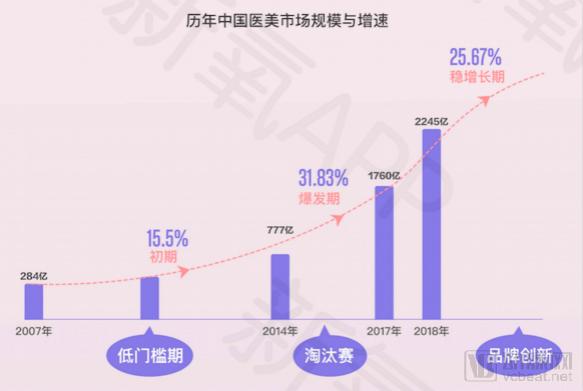
Market Size and Growth Rate of China's Medical Aesthetics Industry
Benchmarking against South Korea, China’s medical aesthetics consumption has nearly sixfold growth potential. Among women aged 18–40, the penetration rate of medical aesthetics users is 7.4% in China versus 42% in South Korea, representing a nearly sixfold gap. This indicates that the upper ceiling of China’s medical aesthetics market remains high, with promising future growth prospects.
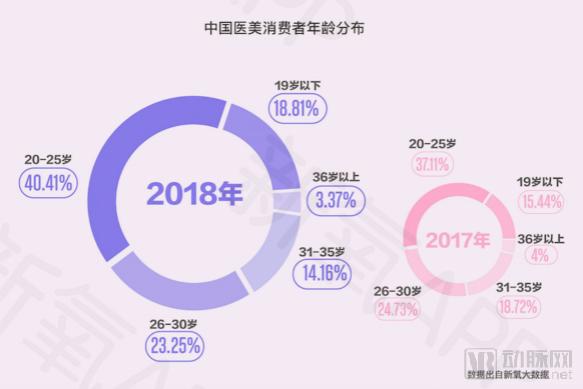
Age Distribution of Medical Aesthetics Consumers in China
Over the next five years, the average annual growth rate of China’s medical aesthetics market is projected to reach 25.67%, with young women in cities below the second tier becoming the primary drivers of this growth. Traffic will further concentrate on leading platforms and branded institutions, prompting more medical aesthetics providers to stand out through brand building and consumer recognition.
On the consumer side, the *2018 New Oxygen White Paper on the Medical Aesthetics Industry* shows that among every 100 medical aesthetics consumers in China, 64 are post-90s and 19 are post-00s. The post-90s generation has become the absolute mainstay of cosmetic surgery, while the post-00s generation is demonstrating even stronger momentum in initiating medical aesthetics consumption than their post-90s counterparts.
Data from the past two years reveals the emerging trend of medical aesthetics becoming a daily lifestyle choice for the post-00s generation. SoYoung predicts this trend will intensify, as the post-00s cohort holds more open attitudes toward medical aesthetics compared to the post-90s generation, further driven by advancements in science and technology and increasingly liberal social norms. Data shows that the proportion of young consumers in the medical aesthetics market is increasing year by year. For instance, among Chinese medical aesthetics consumers, those aged 19 and under accounted for 15.44% in 2017 and 18.81% in 2018.
Regarding attitudes toward medical aesthetics consumption, a survey by So-Young indicates that over 60% of Chinese society holds a positive view of medical aesthetic procedures. Among them, 24.26% express appreciation, considering it a bold choice in a appearance-conscious society; 36.89% are open to minor adjustments; and an additional 4.93% are willing to undergo surgical procedures.
As early as March 8, 2018, Southern Weekly and So-Young jointly released the "Report on Chinese Women's Self-Confidence." The report indicated that Chinese women lack self-confidence, Chinese men exhibit unexplained overconfidence, and Chinese women who undergo cosmetic procedures are more confident. Cosmetic surgery is one of the eight ways for Chinese women to boost their self-confidence; the other seven methods are reading, exercise, clothing, making friends, travel, makeup, and training.
Looking back at history, China’s medical aesthetics consumption was initially driven by celebrities and internet influencers, and in recent years has begun to enter the public’s daily life. In 2015, 49% of users underwent cosmetic procedures for work-related reasons; by 2018, this figure had dropped to 19%. Meanwhile, the proportion of users seeking cosmetic procedures to please themselves rose from 14% to 57%.
In China, while the population size increases progressively from Tier-1 to New Tier-1, and then to Tier-2, Tier-3, and lower-tier cities, the penetration rate of medical aesthetics consumption among the age-appropriate population shows a clear decreasing trend. This indicates that young women in Tier-2 cities and below will constitute the primary incremental consumer base in the future.
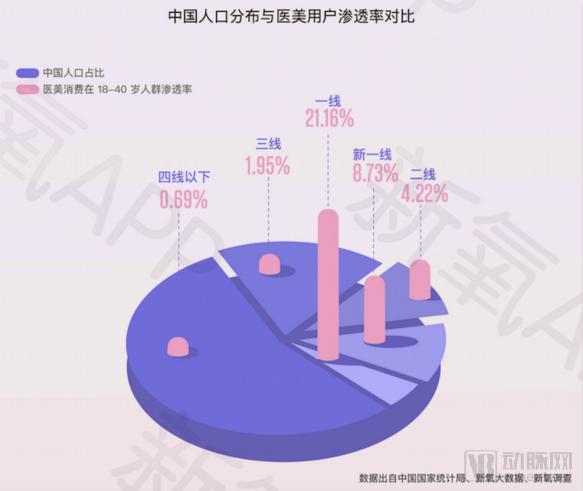
Population Distribution and Penetration Rate of Medical Aesthetics Users
For example, China’s four first-tier cities—Beijing, Shanghai, Guangzhou, and Shenzhen—are home to 4.8% of the national population, with a medical aesthetics consumption penetration rate of 21.16% among individuals aged 18–40. In contrast, 30 second-tier cities, including Kunming and Hefei, account for 10.82% of the national population, yet the penetration rate of medical aesthetics consumption among the 18–40 age group is only 4.22%.
Compared with the vast base of young consumers and the shifting perceptions toward aesthetic medicine consumption, China faces a shortage of plastic surgeons, making the supply side a promising career opportunity. The number of plastic surgeons per million people in China is 2.88, far lower than the 20.88 in the United States and 17.54 in Japan. The scarcity of plastic surgeons has turned this field into a blue ocean for career development.
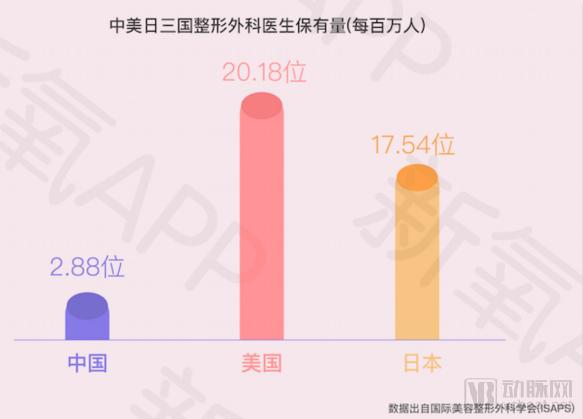
Comparison of the Number of Plastic Surgeons
Addressing the shortage of plastic surgeons, Jin Xing, founder and CEO of New Oxygen, explained: “This is currently one of the factors constraining the development of China’s plastic surgery industry, as it prevents the provision of sufficient effective supply. The shortage can be alleviated by focusing on several areas, including opening up multi-site practice for physicians, improving turnover efficiency, using new technologies to replace some physician tasks, and strengthening training at academic institutions.”
II. What methods are users actively employing to enhance their physical appearance?
Looking at the most popular non-surgical medical aesthetic procedures among consumers, global consumer preferences are very similar, with the top five most popular procedures all includingHyaluronic Acid Fillers, Botulinum Toxin Injections, Laser Hair Removal, and Intense Pulsed Light (IPL) Skin Rejuvenation。
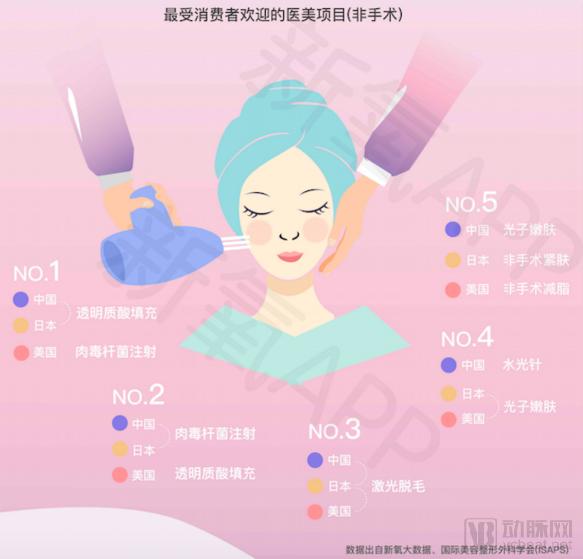
The Most Popular Non-Surgical Procedures Among Consumers
From a market perspective, these four projects have become customer acquisition drivers, meaning they are priced close to cost or even sold at a loss to attract more consumers to the clinic. When people make aesthetic medicine purchases, they primarily consider four aspects: efficacy, safety, price, and pain sensation. Among themThe most important consideration is efficacy.。
Jin Xing explained, “Many people believe that safety is the top priority in cosmetic surgery, but in reality, efficacy is the primary factor driving consumer decisions, followed by safety, then price, and finally pain tolerance. Those who choose to undergo cosmetic procedures are quite brave and not overly afraid of pain.”
An analysis of the least popular medical aesthetic procedures reveals divergent trends between China and global data. According to Chinese data, the procedures being phased out are primarily those with suboptimal efficacy or high risks, with thread lift rhinoplasty ranking as the top discontinued procedure in China. In contrast, global data indicates that the decline in certain procedures is mainly driven by iterations and updates in devices, technologies, and pharmaceuticals. This divergence is primarily attributable to the fact that China’s medical aesthetics consumption stage lags behind that of developed countries.
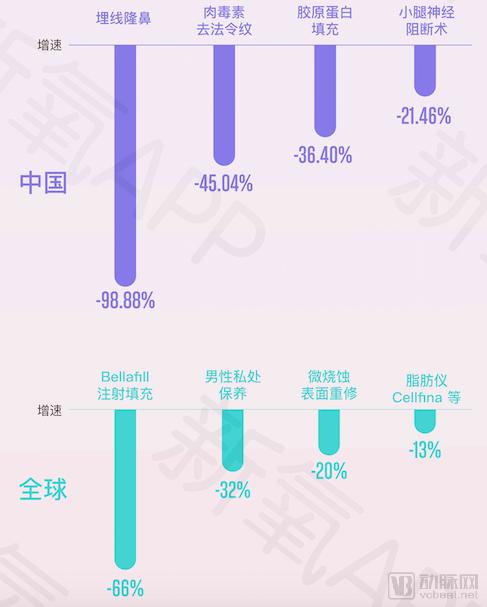
The Least Popular Medical Aesthetic Procedures
An analysis of the fastest-growing medical aesthetic procedures reveals divergent trends between China and global data. In China, intimate plastic surgery ranks first in growth rate, while the demand for skin-related improvements is growing at twice the global rate. Medical aesthetics itself represents a form of consumption upgrading, andIntimate Plastic Surgery: An Upgrade Within Consumption Upgrading。
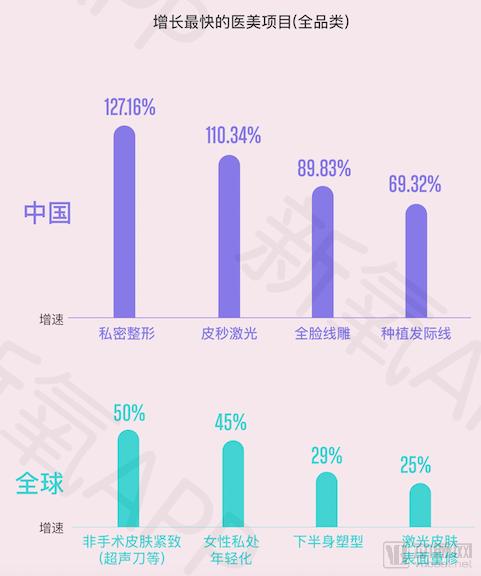
The Fastest-Growing Aesthetic Medicine Procedures
In recent years, technology has driven the rise of “quick-fix minimally invasive procedures,” allowing consumers to achieve long-lasting improvements in skin quality and body contouring by undergoing minor treatments at clinics during their lunch breaks. This approach fully demonstrates the efficacy of medical aesthetics and has gained popularity among consumers.
In addition to women, men are increasingly joining the ranks of medical aesthetics consumers. According to Big Data from New Oxygen, male medical aesthetics consumers in China account for 11.12%, slightly lower than the international average of 13.8%. In the future, the growth rate of male consumers is expected to surpass that of female consumers.
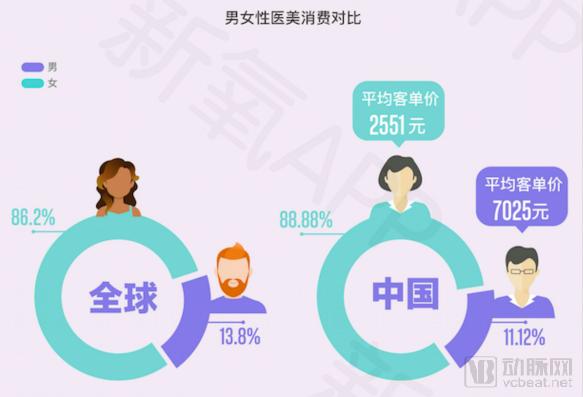
Comparison of Aesthetic Medicine Consumption Between Men and Women
Although men represent a smaller demographic, they are more willing to spend generously. According to big data from So-Young, the average transaction value for male medical aesthetics consumers is RMB 7,025, compared with RMB 2,551 for women; thus, the average spending per order by men is 2.75 times that of women.
Big eyes, double eyelids, a high nose bridge, and ample breasts with a slim waist have become the standard aesthetic ideals chosen by young men and women. What procedures do men opt for that make the costs so high? As previously discussed regarding preferences for non-surgical treatments, whether in China or globally, and regardless of gender, the most popular options remain botulinum toxin injections, hyaluronic acid fillers, laser hair removal, and intense pulsed light (IPL) skin rejuvenation, with no significant price differences among them.
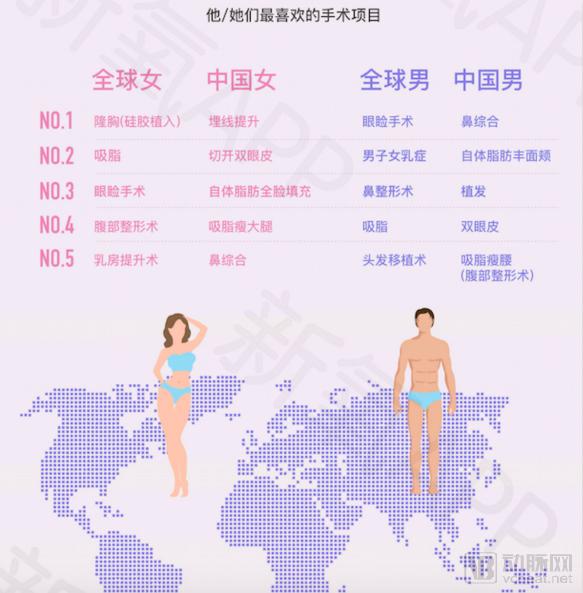
The Most Popular Treatments Among Men and Women
Therefore, we selected surgical procedures to examine the differing preferences between men and women. We found that hair transplantation was chosen by Chinese men but not by women. Hair transplantation is a relatively expensive procedure; however, hair loss among young people is not uncommon, and medical aesthetics can effectively improve hair density.
Global data indicates that hair transplantation is also one of the most popular surgical procedures among men worldwide. Regarding hair loss, the current situation and management strategies for Chinese men are aligned with international standards.
Compared to men, more women are beginning to pay attention to the detailed care of their underarms and intimate areas. In recent years, thanks to the iteration of medical aesthetic technologies and the increasing consumer acceptance of medical aesthetics, new projects have continued to emerge, reflecting consumers' relentless pursuit of a perfect life. For example, the following two items: underarm silky skin management, bikini heart-shaped hair removal. Please imagine the specific effects of the projects based on their names.
A particularly interesting set of data pertains to consumer preferences across China’s provinces. Given the country’s vast territory, populations in different regions exhibit distinct physical characteristics and aesthetic preferences, which are reflected in their varying inclinations toward medical aesthetics consumption.
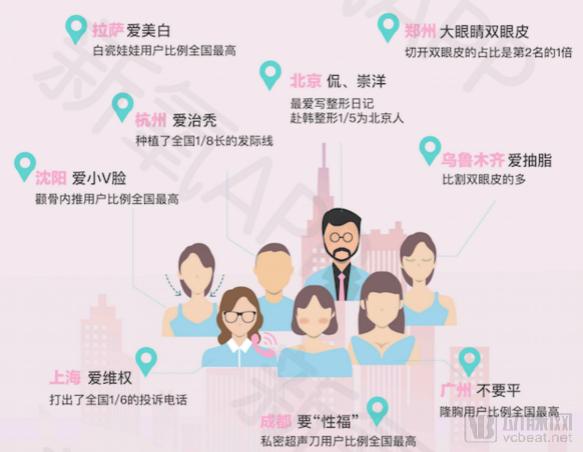
Regional Consumer Preferences in Medical Aesthetics
Zhengzhou is known for producing beauties with large eyes, Urumqi favors slimness, Guangzhou rejects flat chests, Shenyang finds small faces most charming, and Lhasa upholds the belief that fair skin covers three flaws. According to New Oxygen’s big data, Beijing users account for the largest proportion of those traveling to South Korea for plastic surgery, representing one-fifth of the national total. Shenyang users are decisive about facial contouring, striving to achieve a small V-shaped face. Chengdu users place the greatest emphasis on sexual well-being, with the highest national proportion of intimate aesthetic procedures. Shanghai users continue to rank first in the number of complaint calls. Nearly one-eighth of all hair transplant orders are placed in Hangzhou.
III. Rising Consumer Safety Awareness: Tips for Avoiding Pitfalls on Medical Aesthetics Apps
Medical aesthetics involves high-stakes consumer decisions. In 2018, the number of medical aesthetics consumers in China was projected to reach nearly 20 million. Beyond this core group are hundreds of millions of individuals curious about medical aesthetic procedures. In 2017, New Oxygen’s WeChat Official Account reached 120 million users, who turned to the platform to uncover the secrets behind celebrities’ enhanced appearances.
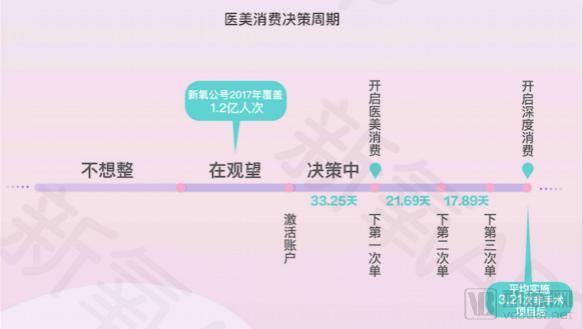
Medical Aesthetics Consumer Decision-Making Cycle
Consumers must overcome significant psychological barriers before placing their first medical aesthetics order. According to SoYoung’s big data, the average time from activating a SoYoung app account to placing the first order is 33.25 days.Accelerated Repurchase Decisions. The SoYoung app has accumulated 3.8 million consumer-written cosmetic surgery diaries and is linked to over 7,000 compliant medical aesthetic institutions and 25,814 licensed practitioners, essentially covering service providers in China’s compliant medical aesthetics market. This has attracted a large number of potential consumers to browse the content.
Although the average decision-making cycle for the first order is 33.25 days, the cycle accelerates after the initial step. On average, users of surgical procedures underwent 3.21 non-surgical treatments before placing their first surgical order.
There is a concept known as “aesthetic procedure addiction.” As humans strive to combat aging, once individuals begin utilizing medical aesthetic services, periodic maintenance treatments are required to sustain the results. SoYoung advises consumers to approach aesthetic procedures rationally and avoid developing an addiction. By making targeted adjustments through a limited number of treatments, one can achieve optimal cost-effectiveness, cultivating both outer beauty and inner well-being.
In 2018, the number of illegal medical aesthetics providers in China was more than ten times that of legitimate ones; however, in terms of growth rate, the formal market surpassed the black market for the first time, marking a reversal.
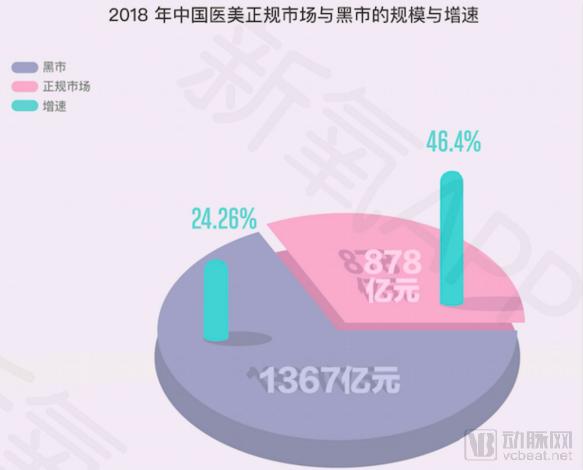
Comparison Between the Regulated and Black-Market Medical Aesthetics Sectors
In 2018, the size of China’s formal medical aesthetics market may have reached RMB 87.8 billion, with a year-on-year growth rate of 46.4%, and nearly 10,000 licensed medical aesthetics institutions provided services. The size of China’s black-market medical aesthetics sector may have reached RMB 136.7 billion, with a year-on-year growth rate of 24.26%, and more than 100,000 unlicensed entities, such as studios and beauty salons, were operating illegally.
Two categories of consumers are most vulnerable to the harms of the black market: those who seek “peace of mind” by paying premium prices, and those who are recklessly drawn to bargain-basement deals. The former undergo procedures such as thread-lift facelifts, anti-aging treatments, rhinoplasty, incisional double-eyelid surgery, botulinum toxin injections, hyaluronic acid fillers, fat grafting, and lipolysis at well-appointed medium-to-large beauty salons or medical aesthetic clinics operating beyond their licensed scope.
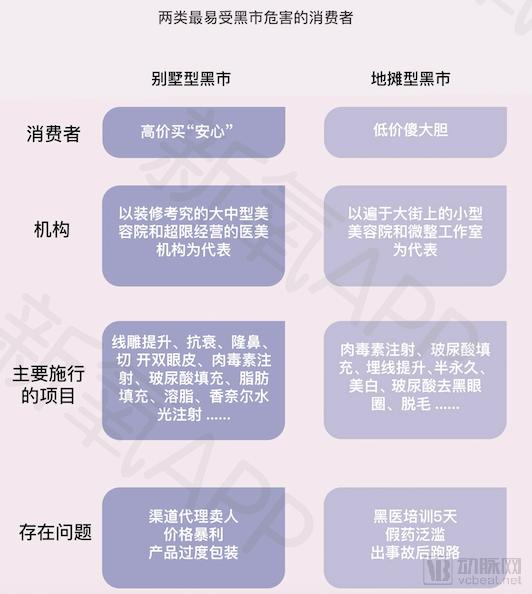
Consumers Most Vulnerable to the Harms of the Black Market
The latter performs procedures such as botulinum toxin injections, hyaluronic acid fillers, thread lifts, semi-permanent makeup, skin whitening, hyaluronic acid treatments for dark circles, and hair removal in small beauty salons and minimally invasive aesthetic studios that are ubiquitous on city streets.
Over 90% of medical incidents in China originate from such “three-illegal” settings: unlicensed institutions, unqualified practitioners, and non-CFDA-approved drugs. Consumers should be wary of both “big-business exploitation” and “street-side quacks.”
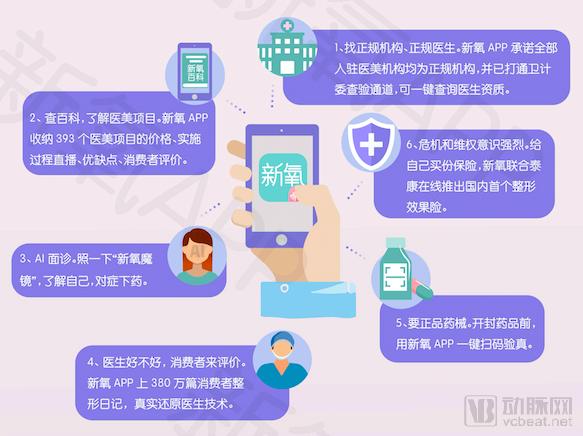
New Oxygen Offers Six Tips to Avoid Pitfalls
The black market is large in scale and numerous in quantity. So, as consumers, how can we avoid falling into the hands of the black market? The "New Oxygen 2018 Medical Aesthetics Industry White Paper" offers six strategies: seek out legitimate institutions and doctors, consult encyclopedias to understand procedures, use AI facial diagnosis for personalized treatment plans, review consumer feedback to find reputable institutions and doctors, insist on authentic pharmaceuticals and medical devices, and enhance awareness of crisis management and rights protection. Specific operational methods are also provided.
Jin Xing added, “AI is a key technological focus for New Oxygen, and we will continue to increase our investment in R&D engineers. By collecting user data across multiple dimensions, we aim to build an intelligent aesthetic diagnosis and treatment matching system. Currently at version 2.0, it will soon be upgraded to version 3.0.”
IV. Quality Consumption Drives Technological Specialization: AI Facial Diagnosis Makes Beauty Enhancement More Scientific
Amid continuous iterations of emerging technologies, consumer purchasing journeys have undergone a shift over the past three years and are poised for fundamental changes in the future.
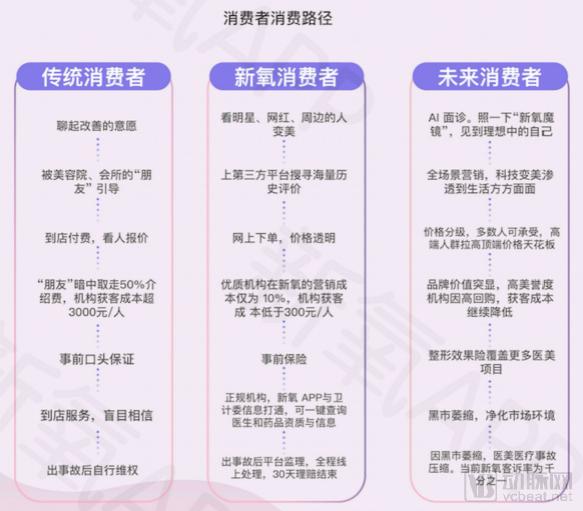
Changes in Consumer Path Selection
Take consultants as an example. Many medical aesthetic institutions have established this position, which plays a crucial role. Although titled “consultants,” they essentially function as sales representatives. They often assess consumers’ spending capacity and willingness to undergo cosmetic procedures, then quote prices on a case-by-case basis, earning substantial commissions from each transaction. Traditional medical aesthetic institutions typically adopt this model, aiming to maximize the value extracted from consumers in a single encounter.
On medical aesthetics apps, transparent pricing and publicly listed procedures leave consultants with less room for maneuvering, thereby maximizing consumer protection and helping high-quality institutions build their brands. In the future, as AI technology matures, consultants will be completely replaced by machines that provide a series of objective solutions.
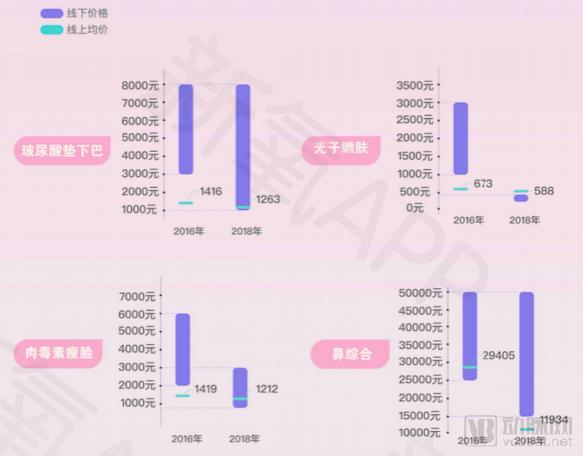
Item Price Changes
In 2018, New Oxygen extracted transaction price data from its backend for nearly 400 procedures over the past three years to determine the average online prices for medical aesthetic services. It then conducted visits to 138 medical aesthetic institutions to establish the primary offline price ranges for these services. Statistical analysis revealed that the average online prices for medical aesthetic procedures decreased by 29% over the preceding three years. This decline in prices was primarily attributed to increased transparency and openness in transactions facilitated by medical aesthetic apps, as well as consumers’ growing emphasis on quality and efficacy for anti-aging and surgical procedures.
Previously, the same procedure at a single institution often suffered from discriminatory pricing. On the SoYoung app, over 7,000 medical aesthetic institutions and nearly 400 procedures feature transparent, clearly marked prices, leaving no room for opportunistic practices.
Medical aesthetic institutions are also becoming increasingly specialized. To meet consumers’ growing demand for professionalism, these institutions must establish their brand positioning within niche segments.
Over the past three years, prices in the medical aesthetics sector have continued to decline, with some customer-acquisition offerings even priced below cost, forcing providers to sell at a loss. Paradoxically, price accounts for only 11% of consumers’ decision-making criteria. Medical aesthetics consumers are often willing to pay a premium for better outcomes and lower risks.
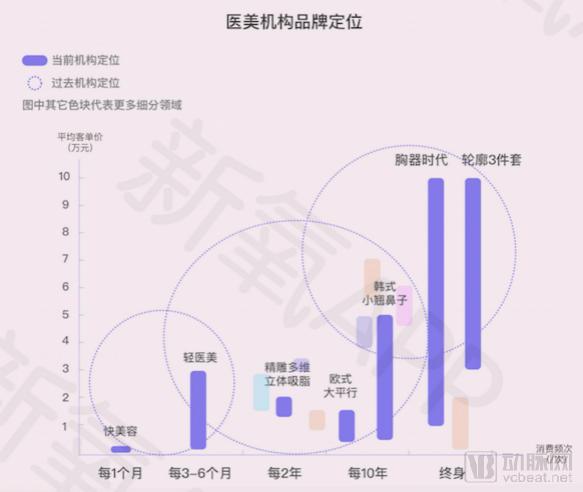
Changes in Brand Positioning of Medical Aesthetic Institutions
Therefore, for medical aesthetics institutions, price wars are not the way forward. Institutions need to establish their brand positioning in niche segments to meet consumers’ growing demand for professionalism. This is indeed the case: while medical aesthetics providers in the past often took pride in offering a wide range of services, they are increasingly moving toward precision and specialization. Medical aesthetics apps are helping more high-quality institutions build their brands and cultivate loyal customer bases.
Jin Xing summarized this by stating, “As competition in the medical aesthetics market intensifies, a growing number of doctors are focusing on specialized areas. Some specialize exclusively in ocular procedures, others focus solely on double eyelid surgery, and some concentrate only on rhinoplasty. In fact, such specialization enhances their competitiveness. Moreover, many medical aesthetics institutions are developing clearer market positioning, ultimately earning consumer recognition for their professional expertise.”