

Gold Nurse Files IPO Prospectus: Pioneering China's Shared Home Care Nursing Model with 30,000 Nurses Nationwide and Beijing’s Largest Licensed Chain of Medical-Grade Care Stations
“To put it emotionally, we started this business for the day when we ourselves grow old.” Ding Shaolei laughed over the phone as he shared with VCBeat his original intention behind founding Gold Medal Nurse.
"Ensuring that the elderly are cared for and supported is a fundamental aspiration. However, as population aging intensifies, the demand for care among individuals with total or partial disability has surged. With this growing unmet need, the market is increasingly recognizing the value of nurses—the core workforce in caregiving and the key representatives of professional technical expertise."
As the sharing economy intersects with caregiving needs, and new technological advancements and business models meet traditional services, widespread attention has emerged. On one hand, there is enormous demand; on the other, concerns persist regarding service quality and safety assurances. Amidst this tension between opportunity and challenge, how can nursing services rediscover their value? VCBeat (WeChat ID: vcbeat) conducted an exclusive interview with Ding Shaolei, Co-founder and CEO of Gold Medal Nurse.

Ding Shaolei, Co-founder and CEO of Gold Medal Nurse
“Gold Medal Nurse,” a brand specializing in professional at-home nursing services, was launched in November 2015 and is affiliated with Beijing Meixin Technology Co., Ltd.
Ding Shaolei, with over a decade of experience in the broader health industry, brings extensive expertise in marketing, operations management, and strategy. He has previously served as a partner at Huiliao Health (an internet healthcare company specializing in reproductive health), Head of Marketing and Operations for Baidu’s Healthcare Division, and Vice President of Azure Knowledge China. He is currently the Co-founder and CEO of Gold Nurse. His co-founder, Li Jun, is a serial entrepreneur who formerly served as Deputy General Manager of Huati Group and Deputy Leader of the Sports Technology Construction Team for the National Stadium (Bird’s Nest) and the National Aquatics Center (Water Cube), where he made significant contributions to architectural engineering.
The two founders’ internet DNA, combined with their experience in the real economy, has given rise to an OMO (Online-Merge-Offline) model that integrates Jinpai Nurse’s online platform (“Jinpai Nurse Platform”) with its offline services (“Meixin Nursing Stations”), further enhanced by synergies with Meixin Health Cloud.
According to the 2016 “Findings from the Fourth National Sample Survey on the Living Conditions of Urban and Rural Elderly in China” released by the Office of the National Working Commission on Aging, there were approximately 40.63 million elderly individuals with disabilities or partial disabilities in China, accounting for 18.3% of the total elderly population.
Over the next two decades, population aging in China will become increasingly severe. Meanwhile, with the implementation of the universal two-child policy, the proportions of infants, young children, and pregnant women will rise significantly. The elderly, newborns, and pregnant women have a much higher demand for medical services, particularly nursing care, than the general population. Studies show that among individuals aged 65 and older, approximately 0.5% require hospitalization, about 2% need institutional long-term care, and roughly 5% require community-based care.
Furthermore, care needs among other populations are also accelerating, such as daily care for individuals in a sub-health state, therapeutic nursing, and comprehensive convalescence. These types of care stem from the demand to improve quality of life.
Furthermore, distinct pain points across various care scenarios have spurred the emergence of internet-based services designed to optimize the allocation of nursing resources. Hospitals, characterized by high bed turnover rates, are unable to provide long-term care; nursing homes suffer from a shortage of skilled nursing beds; and home settings lack professional caregivers. Consequently, disease-related nursing care is often unattainable due to constraints such as insufficient time, lack of skills, and absence of proper qualifications.
Where there is demand, there is a market. In terms of product structure, Golden Nurse’s primary services are delivered through two channels: an online O2O platform and offline community nursing stations. The combined online and offline services have reached a cumulative total of 150,000 patient visits.
1. Online-to-Offline (O2O): Shared Nursing Model
The online shared nursing service is referred to as the Platform Operations Center, which provides home-based nursing services delivered by nurses.
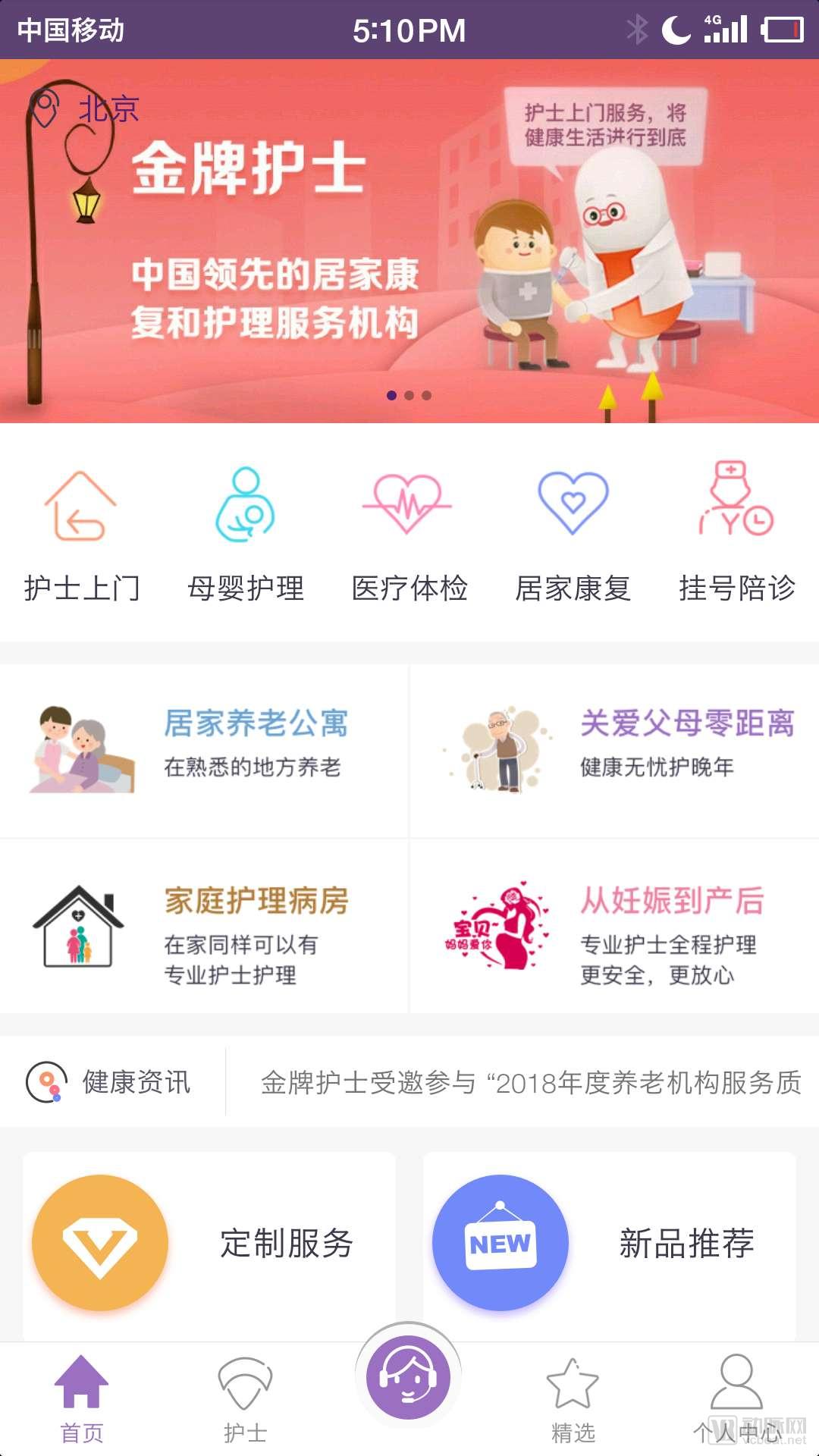
Gold Medal Nurse App
Currently, the Gold Medal Nurse platform has onboarded more than 30,000 professional nurses and rehabilitation therapists, ranking among the top three nursing O2O platforms in China, with services covering over 200 cities nationwide. Ding Shaolei stated that the online platform aims to maximize the integration of nursing resources and provide users with standardized home-based nursing services. Service offerings include injections and infusions, health check-ups, dressing changes, pressure ulcer care, and nasogastric feeding management.
Gold Medal Nurse primarily provides nursing services to three target groups: the elderly receiving home-based care, patients undergoing post-discharge rehabilitation, and maternal and infant populations. Aligning with the “9073” elderly care structure, Gold Medal Nurse’s service focus is predominantly on home-based elderly care, which accounts for 60% of its user base, while maternal and infant care and post-discharge rehabilitation each constitute 20%.
To date, the repeat purchase rate for Gold Medal Nurse orders has reached 60%, with an average transaction value of approximately RMB 200. The platform adopts a revenue-sharing model with nurses, allocating 75% of service income to them.
2. Offline Care Stations: Addressing the Last-Mile Challenge in Nursing Services
Within its internal organizational structure, offline nursing stations are referred to as Member Operations Centers. Ding Shaolei believes that the core advantage of Gold Nurse stems primarily from its offline nursing stations equipped with medical qualifications. These nursing stations adhere to the principle of localization, implementing a networked deployment within their respective regions. As medical institutions, nursing stations face high entry barriers and are prohibited from being duplicated within the same region, thereby granting them exclusive market advantages.
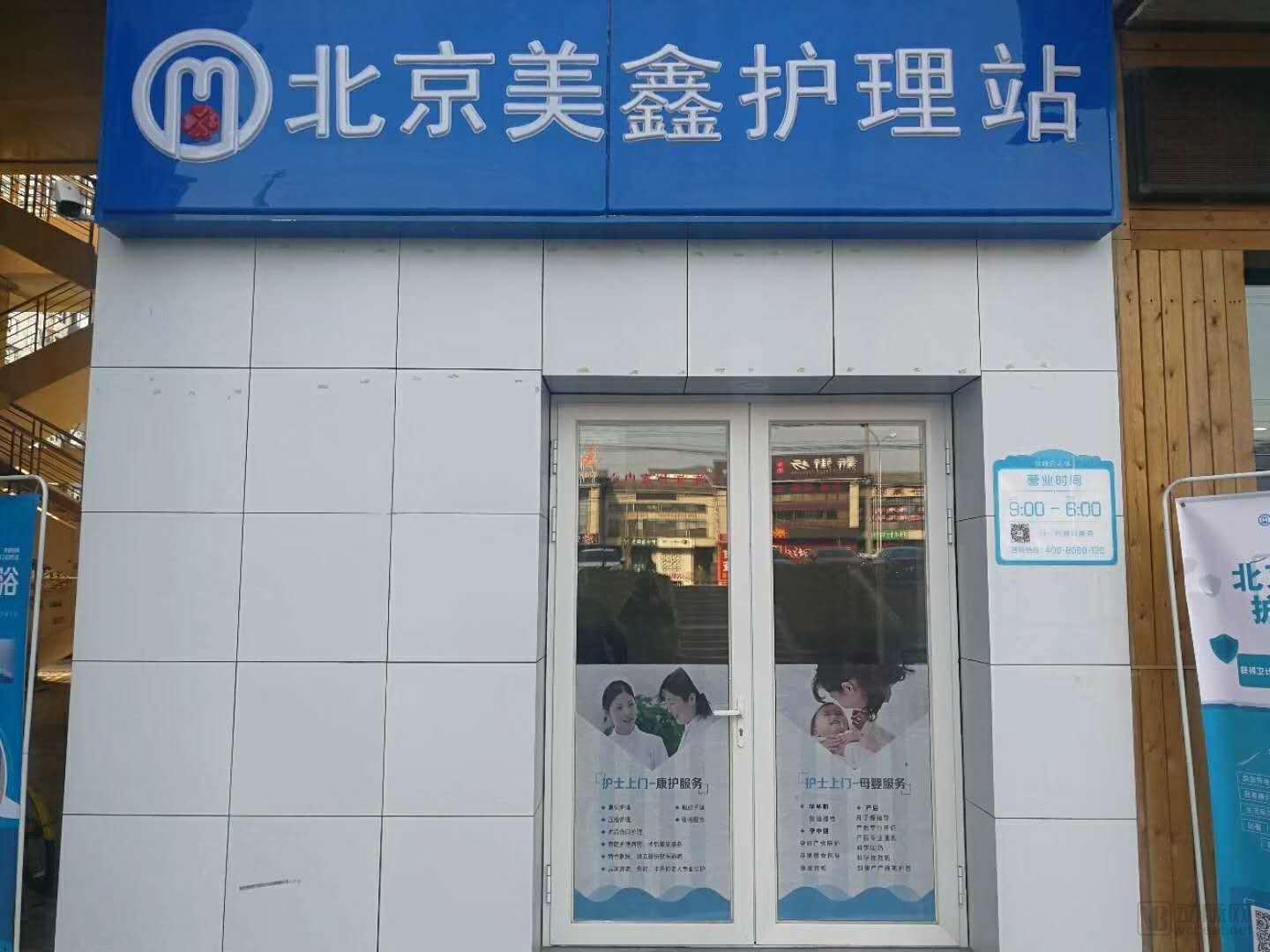
It is worth noting that Meixin Nursing Station is also the first community nursing station in Beijing to obtain medical qualifications. Each nursing station requires an initial investment of less than RMB 1 million, covers an area of approximately 100 square meters, and is staffed with eight nurses (including one head nurse) and two rehabilitation therapists. In addition to providing on-site services, the nursing stations primarily offer home-visit nursing services to residents in the surrounding areas. Currently, Gold Nurse has established three Meixin Nursing Stations in Beijing, organized by region.
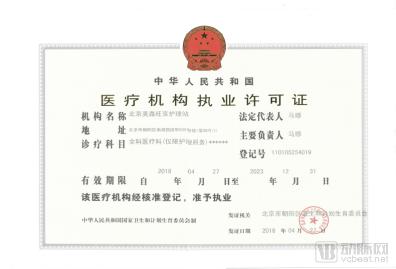
Meixin Nursing Station’s Medical Institution Practice License (Source: Photo provided by the enterprise)
In its current planning, Gold Nurse intends to maximize the professional expertise of nurses by launching specialized nursing clinics. Different specialties are scheduled from Monday to Saturday, with clinics already established for chronic disease care, maternal and neonatal care, and traditional Chinese medicine rehabilitation.
Regarding customer acquisition, Ding Shaolei stated, “Word-of-mouth is the primary source. Moving forward, we will focus on collaborations between nursing stations and hospitals to acquire customers through patient referrals from hospital settings, thereby providing extended post-discharge nursing services.”
Regarding payment, nursing services provided by nursing stations are not yet covered by basic medical insurance; in the future, greater reliance will need to be placed on support from long-term care insurance.
In addition to home-based care, Gold Medal Nurse also provides customized services, including home ICU care programs, elderly care apartments, and private nursing services. Furthermore, its B2B offerings encompass corporate on-site nursing support and medical coverage for sports events, as well as government-procured projects—such as the 2017 initiative in which Gold Medal Nurse conducted in-home disability assessments for 3,800 elderly residents in Fengtai District, Beijing. Over 50% of Gold Medal Nurse’s revenue is derived from B2B clients.
Furthermore, in home-based care services, when emergencies occur, service providers and clients are not physically co-located; therefore, addressing such urgent situations requires leveraging the Internet and smart healthcare technologies.
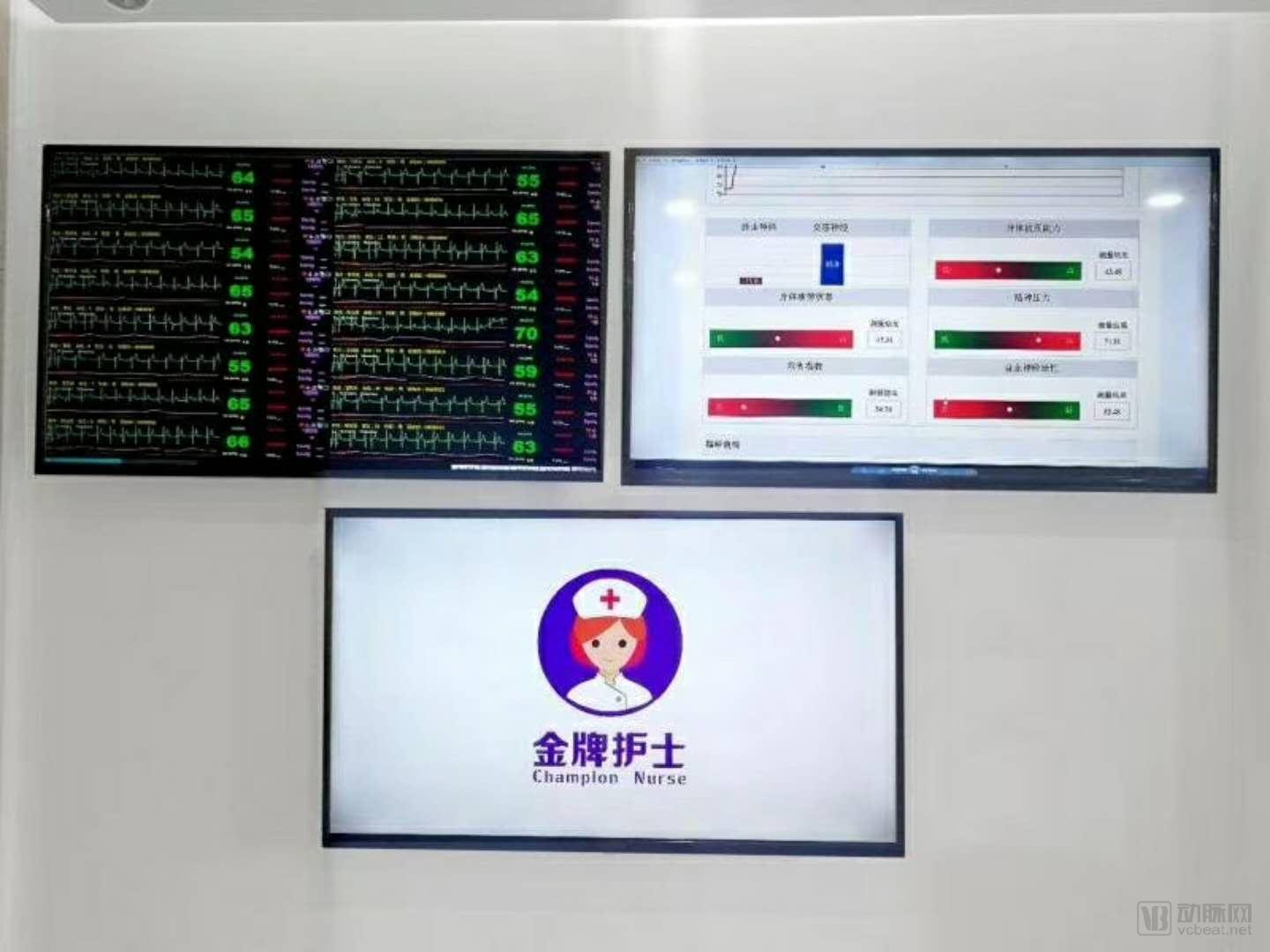
Smart “Large Screen” at the Nursing Station (Source: Provided by the enterprise)
Equipped with an intelligent health monitoring system, the nursing station provides open, unified interfaces for third-party medical-grade smart hardware to conduct monitoring. Nurses can monitor patients in real time via remote integrated information dashboards. This system has currently been deployed in smart health communities, community health monitoring stations, smart home wards, and smart home-based elderly care projects. This represents the 1.0 version of Meixin Health Cloud. The integration of online and offline services, combined with the collaborative model of Meixin Health Cloud, constitutes the OMO (Online-Merge-Offline) model of Gold Medal Nurse. On August 8, Gold Medal Nurse was officially listed in the "Promotion Catalog of Smart Health and Elderly Care Products and Services" jointly issued by the Ministry of Industry and Information Technology, the Ministry of Civil Affairs, and the National Health Commission, and will commit greater resources to promoting smart health and elderly care services.
“The value of nurses is severely underestimated,” Ding Shaolei stated firmly.
In the caregiving market, the core target audience consists of elderly individuals who are disabled or partially disabled. He believes that disease nursing is distinct from daily life care; improper nursing can be fatal. In this context, nurses play a crucial role.
2017 was a year of significant growth for the nursing workforce. According to data from the National Health Commission released in 2018, the national physician-to-nurse ratio improved from 1:0.66 in 2005 to 1:0.79 in 2008, reaching 1:1.1 in 2017, thereby reversing the previous imbalance where nurses were outnumbered by physicians.
This was originally a positive trend, but because nurses’ status has long been subordinate to that of physicians and nursing services are largely delivered in accordance with physicians’ orders, nurses have, over time, become compliant actors within the healthcare service chain.
In contrast, the nursing classification system abroad can be divided from top to bottom into:
Nurse Practitioner (NP), equivalent to a supervisor nurse in China, with the difference being that NPs can perform a significant portion of physicians' duties and fulfill certain responsibilities previously handled by or on behalf of physicians during consultations. These tasks include taking medical histories, conducting physical examinations, prescribing medications, and engaging in research. NPs typically hold at least a master’s degree and are highly experienced nurses.
Registered Nurse (RN), equivalent to a registered nurse in China, collects data for nursing analysis, formulates accurate nursing diagnoses and appropriate care plans, and subsequently leads Licensed Practical Nurses (LPNs) and Certified Nursing Assistants (CNAs) in the implementation of nursing care.
Licensed Practical Nurse (LPN): The specific responsibilities of an LPN constitute a subset of the duties performed by Registered Nurses in China. Under the supervision and guidance of a Registered Nurse (RN), an LPN provides basic, safe, and effective nursing care using appropriate knowledge and technical skills.
Certified Nursing Assistant (CNA), also known as a Nurse Aide, is equivalent to a patient care attendant in China, with work focusing on patients’ personal daily living and hygiene care.
Granting prescribing authority to nurses significantly enhances their autonomy and professional status. While China has not historically maintained a rigid hierarchical system for nurses, the escalating demand for nursing care has led to a fuller realization of their value. According to the Anhui Provincial Health and Family Planning Commission, Anhui became the first province in China to launch a pilot program for Advanced Practice Nurses (APNs) in community settings this August. Currently, the first cohort of 78 senior nurses has been deployed to 22 community health service centers. These 78 senior nurses have not only established eight specialized nursing clinics but are also expected to be granted limited prescribing authority in the future. Anhui is the first province in China to implement such a pilot program.
Ding Shaolei believes that the lack of nursing diagnosis authority for nurses is, in fact, a regression. At Gold Medal Nurse, the value of nurses is being fully amplified: “They are not merely executors, but assume three roles—service providers, managers, and operators.”
Service providers are medical technology professionals, with nursing as their core responsibility. Furthermore, nurses are the ideal candidates for delivering health management services, which constitutes the platform’s value proposition for monetizing medical services.
In the second phase, nurses increasingly transition into managerial roles. As managers, they view user nursing services as a project, implement integrated care, and comprehensively coordinate users’ holistic, full-cycle nursing needs to deliver high-quality nursing services.
In the third stage, nurses will assume the role of operators, coordinating patients’ health needs. With nursing and health management services as the main focus and home care as the core scenario, they will manage patients’ health needs. Leveraging nurses’ professional expertise and services, they will assist users in purchasing health products and services that match their needs.
Ding Shaolei candidly stated, “This is considered from the perspective of our revenue; nurses should be adept at managing patient needs and the needs of those they serve.”
Regarding the monetization model, Ding Shaolei has devised a three-step plan. First, revenue will be generated through home-based and community nursing services. Once nurses have reached a sufficiently large population, their roles as managers and operators will be leveraged to monetize medical traffic by “recommending” health services and products. Finally, the cloud platform will facilitate data monetization; currently, the platform has accumulated approximately 300,000 user data records.
Recently, the term “shared nurses” has gained significant traction, sparked by a service in Xi’an that allows users to book home-visit nursing care through an app similar to Didi. Central media outlets such as People’s Daily and Xinhua News Agency have published articles discussing this trend, triggering widespread public debate.
The crux of the discussion revolves around the compliance and safety of shared nursing services, beyond mere convenience. Ultimately, nursing care is a people-centric service.
Drawing on the tiered nursing systems used abroad, Golden Nurse has implemented a clear hierarchical management framework that categorizes nurses into lead nurses, specialized nurses, and general nurses, clearly defining the responsibilities and roles associated with each level.
For instance, head nurses may serve as Directors of Nursing, Academic Directors, or Nurse Managers, responsible for agent services, personal branding, and content operations. Specialist nurses and senior nurses assume responsibilities encompassing online nurse studios, nursing teams, offline specialist nursing clinics, and operations management. Junior and general nurses receive enhanced training, are recommended to join expert nursing teams, and take on more home-care assignments to hone their skills.
Furthermore, a reward and penalty mechanism should be established for nursing services. Nurses who engage in “platform bypassing” online or receive negative reviews will be placed on a blacklist and permanently barred from providing further services.
Meanwhile, Gold Medal Nurse has established an internal Service Operations Center and Academic Committee to control nursing quality in the areas of standardized services, personnel training, R&D, and management. Internally, the company has developed a standardized system named “SAFE TIMES,” forming home care SOP standards and specifications totaling over 500,000 words. Furthermore, it is currently negotiating collaborations with industry associations, experts, and peers to jointly release industry standards for home care services.
In Ding Shaolei’s vision, he hopes to work with industry peers in the future to promote this standards framework as an industry standard, thereby enhancing the standardization of the entire home care sector.
As People’s Daily focused on “shared nurses,” it also published Golden Nurse’s recommendations for the industry:
1. Referencing internet hospitals, we hope that relevant authorities will issue licenses for “Internet + Nursing” service platforms;
2. Issue industry standards for home-based care;
3. Nursing platforms and nursing stations can collaborate with hospitals to establish medical consortiums for nursing care, providing transitional care services to hospitalized patients.
In the future, Ding Shaolei and his team aim to establish a “nursing-centric” three-tier integrated medical and elderly care network, comprising community nursing stations, nursing centers, and nursing homes. The nursing centers and nursing homes will be scaled to correspond to Level 1 and Level 2 hospitals, respectively, delivering a service continuum that spans from home-based care to transitional care and long-term care within this three-tier framework.
Currently, four Meixin Nursing Stations have been established in Beijing, and Golden Nurse plans to expand this number to ten within the year. Over the next five years, Ding Shaolei aims to achieve large-scale replication and expansion through a combined direct-operation and franchising model, establishing a networked presence in more than ten first- and second-tier cities, including Beijing, Shanghai, Guangzhou, Suzhou, Ningbo, and Qingdao.
It was revealed that the company’s previous construction investments were funded entirely by shareholder contributions and internal cash flow. Currently, to further expand its scale, Gold Medal Nurse is seeking Series A financing, which will be primarily used for building nursing stations, enhancing service quality, and replicating its online urban operational capabilities.