Import Substitution Is Imperative: Health Valley's 'Into Imaging' Series – Stop 3
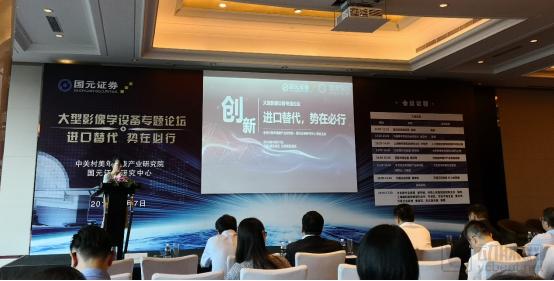
Image source: Health Intelligence Valley
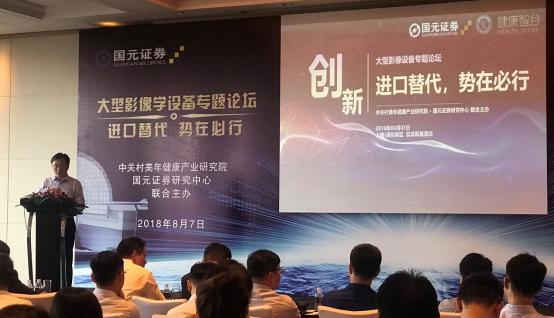
Chen Xin, Vice President of Guoyuan Securities, Delivers Address. Image Source: Health Intelligence Valley
Chen Xin, Vice President of Guoyuan Securities, the host organization, delivered the opening remarks for the forum and introduced Guoyuan Securities’2001Year10Established in [Month], 2007Year10It was successfully listed on the Shenzhen Stock Exchange, becoming the fifth listed securities firm in China and the first financial listed company in Anhui Province. Guoyuan Securities has always been based in Anhui, serving the entire country, and adhering toAdhering to the business philosophy of “Integrity as the Foundation, Standardized Operations, Customer First, and High Quality with Efficiency,” we have developed a business model with distinct Guoyuan characteristics. The Research Center of Guoyuan Securities2018Relaunched sell-side research services in 2026, established an in-depth strategic partnership with the Zhongguancun Meinian Health Industry Research Institute, and implemented initiatives for Guoyuan Research Center.“Integration of Industry and Research”: A Pioneering InitiativeGuoyuan Research Center is committed to integrating industry and research. Leveraging its extensive resources across industries, sectors, enterprises, and experts, the Center tracks the movements of industry leaders, listens to insights from industry experts, and gains a thorough understanding of sectors based on industrial development patterns. It aims to build a distinctive new sell-side research service system characterized by the integration of industry and research and deep specialization in niche sectors.
To Build a Science and Technology Powerhouse, the Core Is to Develop Manufacturing Industries Such as Medical Equipment
Subsequently, Zhao Zilin, Chairman of the China Association of Medical Equipment, mentioned in his address that,“Import substitution is imperative” aptly describes the current state of domestically produced medical imaging equipment in China. The research, development, and manufacturing of domestic medical equipment can drive advancements in new medical technologies and enhance the level of medical diagnosis and treatment. China has become the second-largest medical device market in the world, second only to the United States; however, compared to its total population,1/4In the United States, there are still certain differences in the installed base of medical devices. From this perspective, China’s medical device market remains a rising star.
Address by Chairman Zhao Zilin of the China Association of Medical Equipment. Image source: Health Intelligence Valley
In recent years, the Chinese government has attached great importance to the development of medical equipment, designating it as a key area in the construction of “Healthy China 2030.” National ministries and commissions at all levels, including the National Development and Reform Commission (NDRC), the Ministry of Industry and Information Technology (MIIT), the Ministry of Science and Technology (MOST), and the National Health Commission (NHC), are encouraging innovation in medical devices and enhancing the core competitiveness of domestically produced equipment. The NDRC has included medical devices in its High-End Innovation Development Engineering initiatives. The MOST has launched major projects under the “Special Project for R&D of Digital Medical Equipment” pilot program. Meanwhile, the NHC and MIIT are strengthening grassroots R&D and equipment allocation by deepening the capabilities of existing imaging centers and implementing supportive policies, thereby further boosting competitiveness.Furthermore, the China Association of Medical Equipment (CAME), a Class 4A association, serves as an integrated platform for industry, academia, research, and application. It brings together experts, academicians, and discipline leaders from major medical institutions, as well as leading figures from enterprises. CAME provides more objective market assessments of products, evaluations of international technological positioning, and authoritative guidance on industry trends. Over the past four years, CAME has been entrusted with selecting outstanding domestically produced medical devices. Evaluations are conducted across three dimensions: technical parameters, application performance, and enterprise scale. These assessments guide equipment procurement by medical institutions and award additional points in bidding processes for excellent domestic devices, thereby encouraging technological innovation among leading Chinese brands.
Manufacturing determines the strength of a nation, and building a manufacturing sector with international competitiveness is an inevitable path to becoming a technological powerhouse. As a segment of the manufacturing industry, medical equipment represents a high-end, multidisciplinary field that requires the integration of magnetic, acoustic, optical, and electrical technologies. Its complexity is no less than that of the aerospace industry, necessitating long-term collaboration among the government, research institutions, and enterprises. The research and development cycle for medical devices is lengthy and relatively stable, with high entry barriers that are difficult to overcome in the short term. However, backed by a vast market, it promises substantial returns. Finally, Chairman Zhao Zilin expressed his hope: “It is my hope that friends from all sectors of the medical equipment industry will reach a consensus, work together to pioneer innovation, promote the development of domestically produced medical equipment, and accelerate the realization of import substitution.”
Domestic Substitution in Medical Imaging: The Optimal Time Has Arrived
At the forum, Xie Yufeng, General Manager of Wandong Medical, shared his insights on the “import substitution” of domestically produced medical equipment with attendees. Mr. Xie believes that “substitution” has been a topic of discussion for a decade. In the first five of those ten years, domestic equipment retreated as China opened its doors to high-quality foreign medical devices, which effectively “substituted” domestic products and pushed Chinese brands back into primary healthcare markets. It was not until last year that efforts by domestic manufacturers to achieve “import substitution” truly became substantive. The opportunities for realizing “import substitution” can be examined from three perspectives.
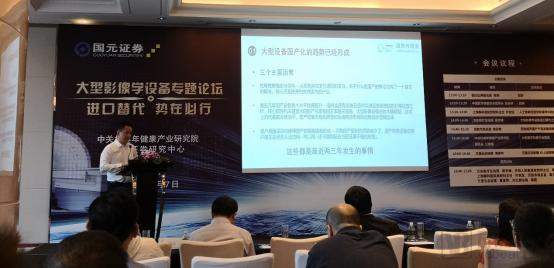
Guest Speech by Xie Yufeng, General Manager of Wandong Medical. Image source: Health Intelligence Valley
First, the purchasing power of healthcare institutions. Looking back over the past ten to twenty years, the revenue of healthcare institutions has grown rapidly, and even previously lower- and mid-tier hospitals, including county-level hospitals, have achieved substantial income. This has provided them with greater financial confidence in procuring medical equipment.
Second, policy initiatives are driving the process of domestic substitution. As early as two years ago, the Ministry of Science and Technology and the Ministry of Industry and Information Technology introduced relevant policies and measures to encourage innovation and development in China’s medical device industry. However, the three major moves successively released by the National Health Commission (NHC) at the end of last year have had a more significant market impact.First, local health commissions in certain provinces and municipalities have begun to explicitly issue policies restricting the procurement of imported equipment, such as in Sichuan, Zhejiang, Guangdong, and Anhui. For clinical-use products, imports of certain items are restricted, while imported products are permitted only for research purposes. These policies have indeed been implemented to some extent, creating substantial opportunities for Chinese-made medical equipment. Mr. Xie believes that other provinces and municipalities will subsequently introduce similar policies, further promoting the localization rate on a larger scale.Second, there has been a reduction in fees for large-scale imaging examinations, with healthcare insurance cost controls extending to examination charges. As is well known, the national healthcare insurance fund faces considerable pressure. Cost containment efforts have intensified, ranging from pharmaceutical expenses to examination fees and consumables, placing significant pressure on healthcare institutions. Previously, since imaging examinations were profit-generating services, healthcare institutions were not highly sensitive to the prices of medical equipment; regardless of the price, they could recover the equipment costs within one to one and a half years. Now, however, the substantial compression of imaging examination fees has led healthcare institutions to shift their focus from pursuing brand prestige back to actual needs, evaluating imported and domestically produced equipment more rationally to seek better cost-performance ratios.Third, adjustments have been made to the configuration permits for large-scale medical equipment. Prior to this year, a configuration permit was required for 1.5T MRI scanners. Small and medium-sized healthcare institutions often struggled to obtain these permits, while large institutions that secured them typically opted against domestic products. Under the promotion of tiered diagnosis and treatment systems, the requirement for configuration permits has been abolished for equipment such as 1.5T MRI scanners, CT scanners with fewer than 64 slices, and Digital Subtraction Angiography (DSA) systems. This change has greatly stimulated procurement by small, medium-sized, and primary healthcare institutions. Mr. Xie emphasized that the three policy aspects mentioned above are the most significant drivers behind the current opportunity for “import substitution.”
Third, medical device products have entered a period of technological stagnation. From the perspective of academic literature, it is evident that many technologies currently employed in medical devices were already being discussed and adopted over the past decade, with no substantial technological advancements made. Although the number of publications has rebounded in the past two years and some cutting-edge research has emerged, it will take approximately another decade for these technologies to be translated into commercially viable devices. At this juncture, imported products have all reached a plateau, providing an opportunity for domestically produced medical equipment to “catch up.” Currently, leading imported brands represented by “GPS” (GE, Philips, and Siemens) are optimizing their application areas. Core components such as X-ray tubes and detectors are gradually being localized. While certain differences remain between domestic and imported brands, Mr. Xie believes that there is no longer a “generational technological gap.”
The Core of Import Substitution Lies at the Primary Care Level, While the Breakthrough Point Is in Tertiary Hospitals
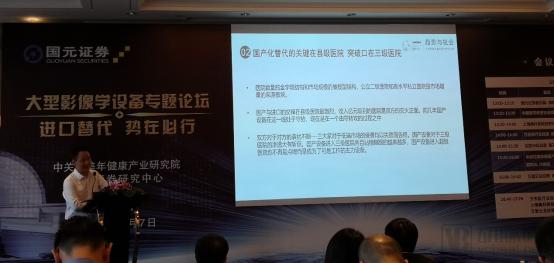
Guest Speech by Xie Yufeng, General Manager of Wandong Medical. Image source: Health Intelligence Valley
Meanwhile, Mr. Xie also believes that the core of domestic substitution lies in county-level hospitals, while the breakthrough point is in tertiary hospitals. Driven by policy mandates and cost-effectiveness requirements, primary care institutions are undoubtedly the main battleground for domestic brands. In reality, however, for primary care facilities or some secondary hospitals, a single large-scale medical device often serves as the hospital’s core asset. These institutions maintain high performance standards while demanding significant price advantages, imposing stringent requirements on manufacturers and making market entry challenging from a corporate perspective. In contrast, tertiary hospitals typically operate multiple large-scale devices. Procuring one domestic brand unit to meet general clinical needs involves lower price sensitivity, making it easier for enterprises to execute. More importantly, tertiary hospitals serve as demonstration centers. Gaining inclusion in their procurement lists and securing recognition from clinical departments can significantly drive regional acceptance and adoption of domestic products. Therefore, while the volume market indeed resides in primary care institutions, the lever for driving import substitution pivots on tertiary hospitals.
From a clinical perspective, domestic brands are gaining increasing recognition and have begun to break the ice by establishing research collaborations with high-tier hospitals. Chinese-made brands are gradually surpassing imported brands in terms of specifications, performance, and after-sales service. The atmosphere favoring the procurement of domestic products is also on the rise. It is worth noting that in the past, purchasing equipment from domestic brands would attract skepticism from various parties, whereas now, an increasing number of medical institutions are choosing to buy from domestic brands. Mr. Xie added that Wandong Medical has implemented a strategy of “encircling the cities from the countryside,” having previously focused primarily on the grassroots market. However, as perceptions of domestic brands have shifted, Wandong’s customer structure has changed over the past two years, with the number of tertiary hospital clients now roughly equal to that of secondary hospital clients. Much like with televisions, consumer mindsets have evolved, and people no longer blindly pursue imported products. Mr. Xie further expressed his hope that domestically produced medical devices will achieve “import substitution” at an early stage, just as domestic television sets did.
Premium Chinese-Owned European Brands Empowering Domestic Brands
Subsequently, Ge Fenqi, Sales Director of Esaote Healthcare, introduced to the attendees Esaote’s understanding of domestic substitution and its strategic planning in China. Founded in Genoa, Italy, in 1982, Esaote is a European medical imaging equipment company with a long history, which entered the Chinese market in 1994. At the end of 2017, Yunfeng Capital, together with Wandong, Tianyi, Yuyue, Shanghai Free Trade Zone Fund, Kangda, and three other medical enterprises and institutions (eight in total), jointly invested €218 million (approximately RMB 1.937 billion) to complete the acquisition of Esaote. The acquisition was led by Yunfeng Capital, which holds a 30.7% stake, followed by Wandong Medical with 18%, Yuyue Technology with 17.1%, Tianyi Industrial with 16%, Shanghai Free Trade Zone Fund with 12.6%, Shanghai Kangda with 2%, and Ningbo Xinda Hua with 3.6%. Currently, Esaote has three R&D centers and four manufacturing facilities worldwide, with a total of 1,216 employees globally. It has established 14 subsidiaries in Europe and other regions, with its sales coverage primarily focused on the European market. Esaote’s main products include ultrasound systems, orthopedic magnetic resonance imaging (MRI) systems, and healthcare IT software.
After becoming a Chinese-controlled enterprise, Esaote will engage in deep strategic cooperation with Wandong Medical in the imaging sector. Esaote’s mid-to-low-end ultrasound products will be marketed under the Wandong brand to circumvent the disadvantages associated with the “non-domestic brand” classification, while its high-end ultrasound products will retain the Esaote brand. Core technologies in areas such as Esaote ultrasound and orthopedic MRI will be localized, further enhancing the competitiveness of domestic brands. Meanwhile, Wandong’s DR, CT, and MRI products will be globally distributed under the Esaote brand. Through this collaboration, both Wandong Medical and Esaote Medical will become companies with comprehensive product portfolios in imaging equipment, jointly facilitating import substitution for domestic brands and expanding into international markets.
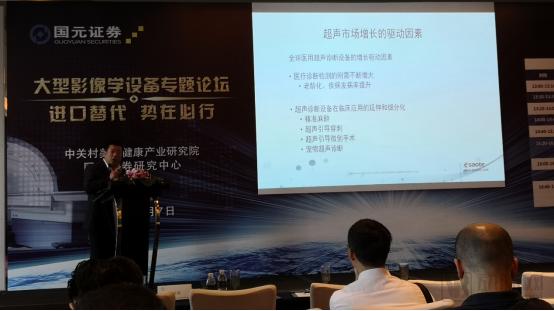
Guest Speech by Ge Fenqi, Sales Director at Baisheng Medical. Image source: Health Intelligence Valley
Compared with other medical imaging modalities, ultrasound products offer superior safety and have virtually no contraindications, enabling broader application scenarios and establishing them as essential equipment in healthcare institutions. In terms of sales volume, domestically produced ultrasound systems have already achieved “surpassing” performance; however, in terms of sales revenue, the market remains predominantly dominated by the “GPS” companies (GE Healthcare, Philips, and Siemens Healthineers), while Esaote’s ultrasound market share is nearly on par with Mindray’s. Mr. Ge further stated that the ultrasound sector will continue to advance in three directions, maintaining a high growth rate. First, R&D efforts will focus on technologies such as high-frequency transducers, enhancing product competitiveness through diversification and differentiation of transducer offerings. Second, specialized ultrasound is gaining increasing attention; although domestic brands have largely closed the generational gap with imported brands in whole-body systems, specialized systems remain dominated by imported brands, representing the next stronghold for domestic brands to breach. Third, interventional therapy—integrating ultrasound with other technologies and clinical needs—will expand application areas and elevate the role of ultrasound, inevitably driving further volume growth in the ultrasound market.
Strong Winds Favor Setting Sail: The Time Is Ripe for Import Substitution
Jiang Weina, Deputy Director of the Zhongguancun Meinian Health Industry Research Institute, introduced to attendees the institute’s flagship in-depth industry report on medical imaging equipment, titled “Strong Winds Favor Setting Sail: The Path to Import Substitution for Medical Imaging Equipment.” This series of in-depth industry reports will be released in multiple installments across the Zhongguancun Meinian Industry Research Institute and Health Intelligence Valley WeChat official accounts, as well as through Guoyuan Securities’ Research Center.
Mr. Jiang introduced that the current overall scale of the medical device industry exceeds RMB 445 billion, with medical imaging equipment being the largest sub-sector in China's medical device industry. Due to high unit prices and broad market demand, the medical imaging industry is currently the largest sub-sector within the medical device market, accounting for 19% with a market size reaching RMB 84.6 billion. Since there are few listed companies in the imaging equipment industry, it has been relatively overlooked in the past and did not enjoy the same level of attention as other sub-sectors such as in vitro diagnostics. However, with the acceleration of domestic substitution for imported imaging equipment, Mindray Medical’s successful IPO approval, the rise of United Imaging Healthcare, and the growth of listed companies like Wandong Medical and Sonoscape Medical, the medical imaging equipment industry is nurturing new hopes.
In recent years, driven by continuous policy support, China’s domestic medical imaging sector is poised for sustained high-speed growth, with an increasing rate of import substitution. From a policy perspective: 1) The state has continuously encouraged and supported the innovative R&D of high-value imaging equipment, stimulating R&D enthusiasm through measures such as accelerating review and approval processes and launching national funds like the “13th Five-Year Plan Special Project for Digital Diagnosis and Treatment R&D.” 2) Regarding hospital procurement, relaxed regulations on configuration permits for domestic medical institutions will help expand demand and boost sales volumes for domestically produced equipment. 3) To lower the entry barriers for high-value domestic devices into hospitals, the government has promoted the procurement of domestic equipment by medical institutions through initiatives such as the “First Set” policy and the selection catalog of outstanding domestic equipment. 4) Local governments have sequentially implemented import restriction policies, administratively curbing blind procurement of imported equipment by hospitals and thereby boosting sales of domestic devices. The primary healthcare market will benefit from the tiered diagnosis and treatment policy, leading to improvements in diagnostic and therapeutic capabilities as well as patient capacity; as medical imaging equipment constitutes essential hardware for diagnosis and treatment, its demand will rise correspondingly. In the future, leading domestic imaging companies, with their continuously strengthening R&D capabilities, are expected to leverage policy support to break down market barriers and accelerate the process of import substitution amid growing demand for imaging services.
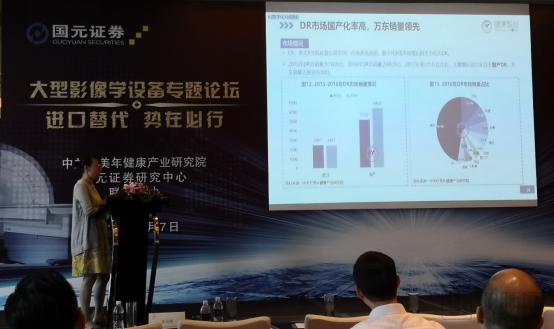
Jiang Weina, Deputy Dean of the Zhongguancun Meinian Health Industry Research Institute, Shares an In-Depth Report on the Medical Imaging Industry. Image Source: Health Intelligence Valley
Large-scale medical imaging equipment mainly consists of X-ray imaging devices (DR), computed tomography (CT), magnetic resonance imaging (MRI), and nuclear medicine. Benefiting from large-scale centralized procurement at the primary care level, the DR market has experienced rapid growth in the past two years, with an estimated volume of around 10,000 units in 2017. The localization rate of the DR market is currently high, reaching 72.6% in 2016. Domestically produced DR systems are growing rapidly, while the sales volume of imported DR systems remains stable. Characterized by a high localization rate and significant market fragmentation, the DR market sees Wandong Medical holding the largest market share.
DSA is a high-end medical imaging device with a high unit price, limiting the number of healthcare institutions capable of purchasing it. DSA is typically used in conjunction with interventional procedures and requires arterial catheterization, demanding advanced technical skills from surgeons. Its primary users are large Grade A tertiary hospitals or specialized cardiovascular hospitals. Currently, only three companies—Wandong Medical, Lepu Equipment, and TCL Medical—have the capability to manufacture DSA systems in China. However, there remains a significant gap between domestic products and imported counterparts in terms of overall machine performance and core component configuration. Imported brands hold over 90% of the market share.
Domestic independent research and development of core CT components is relatively lacking, with a heavy reliance on external procurement. Core CT technologies include detectors, X-ray tubes, high-voltage generators, slip rings and data transmission systems, acquisition systems, and image reconstruction algorithms. Currently, these core components account for more than 60% of CT costs; however, domestic production capacity remains weak, and most components are sourced externally. Since 2016, the CT market has maintained an annual growth rate of over 10%, with the total installed base exceeding 19,000 units. Imported manufacturers hold more than 60% of the market share, although the localization rate is steadily increasing. The market for CT scanners with 64 slices or more is monopolized by imported brands, while domestic brands primarily focus on mid- to low-end products, holding a low share in the high-end CT segment.
Technical barriers in magnetic resonance imaging (MRI) encompass five key areas: magnet technology, radiofrequency (RF) technology, shimming technology, gradient technology, and imaging technology. The domestic MRI market experiences stable incremental growth, with approximately 1,000 units installed annually, primarily serving secondary and tertiary hospitals. Currently, 1.5T MRI systems dominate the Chinese market, presenting significant potential for import substitution, while the 3.0T segment remains monopolized by imported brands. Domestic products are predominantly positioned in the mid-to-low-end market; however, United Imaging Healthcare has launched China’s first domestically produced 3.0T MRI system.
In 2017, the market size of ultrasound in China reached approximately RMB 8.4 billion. However, market demand has not yet reached saturation. Specialized demands, extended applications of ultrasound, and the release of grassroots-level demand will further expand the market. Moreover, the annual replacement market for ultrasound equipment is expected to reach a scale of RMB 10 billion. Chinese-made ultrasound devices have basically completed import substitution in the grassroots market and for low-end products. Meanwhile, mid-to-high-end products are becoming increasingly diverse and gradually gaining market recognition. Under the national initiative to vigorously promote domestic medical equipment, the process of import substitution is expected to accelerate further.
China’s endoscopy market reached approximately RMB 20 billion in 2017, dominated by three Japanese giants—Olympus, Fujifilm, and Pentax. Domestic manufacturers primarily offered lower-priced rigid endoscopes, capturing less than 5% of the market share. With the launch of high-definition endoscopy systems by Sonoscape Medical in 2016 and Aohua Endoscopy in 2018, import substitution for flexible endoscopes is poised to begin. The promotion of active capsule endoscopy as a tool for health screenings and early disease detection will enhance public acceptance of endoscopic examinations and improve disease detection rates, further expanding the market capacity to exceed RMB 10 billion.
Overall, domestically produced medical imaging equipment has largely achieved breakthroughs in the low-to-mid-end segments, resulting in a fiercely competitive "red ocean" market. However, due to the inability to independently develop and manufacture most core components, mid-to-high-end domestic products still lag behind their overseas counterparts by approximately five years, with the market predominantly monopolized by GPS (GE Healthcare, Philips, and Siemens Healthineers). Nevertheless, as Chinese enterprises strengthen their R&D capabilities, overseas talent returns, and policy support intensifies, domestically produced medical imaging equipment is poised to increase its market penetration.
----------------------------------------------------------------------------------------------------------------------
This forum not only provided an in-depth analysis of the import substitution of domestically produced medical imaging equipment, but also explored the future application prospects of medical imaging devices from the perspective of integrating artificial intelligence with medical imaging.
AI in Medical Imaging: “Assistance,” Not “Replacement”
Ye Jianding, Director of the Department of Radiology at Shanghai Chest Hospital, believes that while AI in medical imaging represents an inevitable trend, artificial intelligence still has a long way to go. He emphasizes that the essence of AI is not to replace physicians but to assist them in delivering better diagnostic and therapeutic care. In China, the uneven distribution of medical resources between urban and rural areas, coupled with patients’ freedom to choose healthcare facilities anywhere, has led to overcrowding in major hospitals and excessive workloads for radiologists. The emergence of AI in medical imaging can help physicians improve efficiency by handling routine tasks, thereby conserving their labor. The development of AI in medical imaging aims not to “replace” doctors but to alleviate their workload. However, we have not yet achieved this goal.
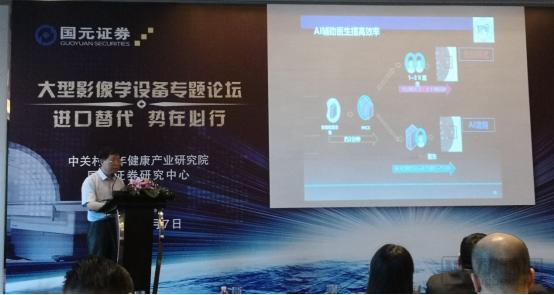
Guest Speech by Dr. Ye Jianding, Director of the Department of Radiology at Shanghai Chest Hospital. Image source: Health Intelligence Valley
Director Ye stated that the term “artificial intelligence” had already emerged during the transition of DR (Digital Radiography) from analog to digital systems, although the technology at that time was far from what we consider AI today. While advancements in AI algorithms have indeed brought new opportunities to medical imaging, Director Ye believes that the field has not yet entered a true “artificial intelligence” stage, but rather remains in a phase of “machine-assisted” operation. Director Ye categorizes the development of artificial intelligence into three stages: the first is computational intelligence, where computers assist humans with superior data storage and memory capabilities—an area where they are already unparalleled; the second and third stages are perceptual intelligence and cognitive intelligence, respectively, enabling machines to play a role in image recognition and continuously improve through self-learning. Currently, AI in medical imaging is akin to an individual who has only studied science and engineering, possessing strong memory and storage capabilities, but lacking education in the humanities, thus making it difficult to effectively “communicate and interact” with physicians.
Medical imaging AI currently still faces several challenges. While machines naturally excel in mathematical and logical reasoning, they are unable to incorporate contextual judgment in human-centric scenarios. For instance, consider a small lesion suspected of potentially becoming pathological in ten years. If this lesion is present in an 80-year-old patient, intervention is largely unnecessary; however, in a younger patient, a specific treatment plan would be warranted. Artificial intelligence is not yet capable of integrating medical history and other clinical data to assist in such decision-making. Medical imaging AI also needs to better account for individual variability. Differences in phenotypes, varied presentations of the same disease, similar symptoms across different diseases, and comorbidities all complicate diagnostic judgment. Furthermore, the collection of much clinical data lacks standardization. Variations in CT dosage, equipment, image resolution, and lesion size measurement create significant obstacles for AI training. Many AI companies claim during promotions that their systems can interpret any type of image. In reality, radiologists themselves are often helpless when faced with non-standardized images caused by poor clarity or inaccurate positioning, so how can artificial intelligence overcome these barriers? Director Ye calls for the establishment of imaging standards in the development of medical imaging AI, emphasizing that only through data standardization can accuracy be improved.
Finally, Director Ye also expressed his expectations for AI in medical imaging, hoping to achieve a deep integration of imaging and pathology for precise diagnosis, so that doctors are no longer overburdened and patients no longer face difficulties in accessing medical care.
“Starting AI from the Doctor’s Perspective”
Mr. Huang Jiaxiang, General Manager of Wanli Cloud, shared with the audience some of Wanli Cloud’s explorations and achievements in artificial intelligence (AI) for medical imaging. AI has been a focal point of the industry over the past two years, and its application prospects in medical imaging are highly anticipated, with medical imaging serving as a key scenario for its practical implementation. Currently, there are more than 470 AI companies in China’s medical sector, including over 40 specializing in AI-based medical imaging. Judging by the number of startups, the barrier to entry into AI appears relatively low, allowing new ventures to easily enter the field of AI medical imaging. However, truly implementing AI solutions in practice remains exceedingly challenging. Medical imaging data is typically non-closed, multi-source, and heterogeneous, making it difficult to achieve broad generalizability for AI imaging systems. Compared with AI research-oriented companies, Wanli Cloud places greater emphasis on the practical deployment of AI, starting from specific clinical scenarios to better align with real-world conditions.
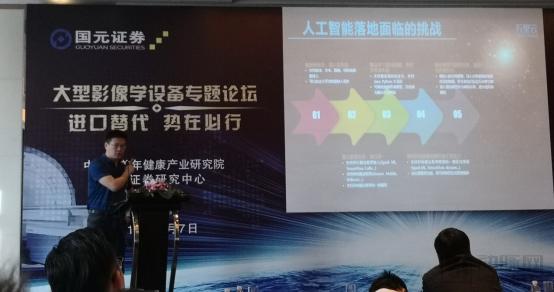
Guest Speech by Huang Jiaxiang, General Manager of Wanli Cloud. Image source: Health Intelligence Valley
Wanli Cloud’s artificial intelligence (AI) initiatives initially focused on pulmonary nodules, as their detection presents relatively lower technical difficulty. However, in clinical practice, both physicians and patients are concerned not merely with a single condition such as pulmonary nodules, but rather with the overall health of the lungs. Consequently, through dedicated technological research and development, Wanli Cloud has created its next-generation “Intelligent Lung AI,” which is poised for market launch. This system represents a transition from focusing solely on pulmonary nodules to assessing the entire lung. From a technical standpoint, there is a substantial gap between single-disease and multi-disease AI models, with the complexity of data annotation increasing geometrically.Currently, the evaluation of AI systems primarily relies on two key metrics: precision and recall. Precision refers to the ratio of true positives among all cases flagged as positive or suspicious for physician review. Recall is critically important for minimizing false negatives. When recall reaches 90%, precision typically ranges between 30% and 40%. The data on the Wanli Cloud platform encompasses health examination centers and primary healthcare institutions, thereby ensuring strong generalizability of its AI solutions.
Enhancing the Effectiveness of AI Applications Can Be Achieved Through Four Key Areas: Optimization and Iteration of Algorithmic Models, Standardization of Image Data Quality, Comprehensive Supplementation of Medical Information, and Rational Optimization of Business Processes. Algorithm optimization involves adjusting the parameters of established models based on the specific requirements for recall rate and precision at the application end, ultimately meeting differentiated needs through data iteration. Standardization of image data quality refers to establishing uniform specifications for scanning positions and parameter settings, which is essential to ensure the accuracy of results. The third area is the comprehensive supplementation of medical information; medical information encompasses not only diagnostic images but also auxiliary data such as patient age, family history, and laboratory indicators, all of which hold significant value for final clinical judgments. The fourth area is the rational optimization of business processes, including decisions on whether to implement pre-quality control or post-quality control, and how to effectively integrate and collaborate between AI systems and physicians. These specific issues are crucial for delivering value in real-world clinical scenarios.
Furthermore, Wanli Cloud is also conducting more in-depth explorations in AI for medical imaging, primarily focusing on intelligent diagnostic processing. This includes developing a framework for processing medical textual information, which can be applied in the future to intelligent recommendation of similar cases, knowledge graphs in radiology, and intelligent diagnostic templates for medical imaging. Currently, AI mainly serves roles in annotation and validation, assisting physicians with diagnosis. In the future, however, physicians will lead the next wave of AI evolution. AI is essentially one approach to solving clinical problems, and physician involvement will better facilitate AI’s growth and development. The next generation of AI will evolve from general-purpose AI to specialized, domain-specific AI. At present, applications such as pulmonary nodule detection rely on general-purpose AI. In the next phase, through deep integration with clinical practice and physician-led development, AI will become truly problem-oriented, leveraging data sources, computational power, and algorithmic models to achieve tighter integration with healthcare scenarios.
Currently, the practical implementation of artificial intelligence (AI) still faces numerous challenges. Further advancements based on existing technologies are encountering a rigid ceiling. The primary technical hurdles can be categorized into five aspects: diverse data types with high integration costs, lack of unified algorithmic frameworks, steep learning curves for algorithms, high model development costs coupled with demanding engineering capabilities, and poor interpretability of algorithmic models. Given the steep learning curve and the inherent limitations in AI’s performance ceiling, collaboration with physicians is essential. While AI can achieve a performance level equivalent to 80–85 points, the remaining gap must be bridged by physicians’ professional expertise.
Wanli Cloud’s artificial intelligence is the company’s core technological capability. Currently, more than 3,000 hospitals are connected to the company’s platform, with over 30,000 cases uploaded daily. In the future, the company aims to leverage the deep integration of these data and AI to better empower primary healthcare institutions and health checkup centers through intelligent imaging.
----------------------------------------------------------------------------------------------------------------------
Finally, experts from healthcare institutions, industry, and investment firms gathered for the discussion session of the Forum on Domestic Substitution of Medical Imaging Equipment.
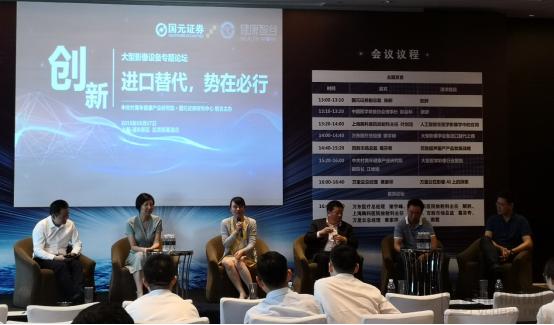
Guest ForumQ&ASegment. Image source: Health Intelligence Valley
First, the guests shared their messages and expectations for the localization of future imaging equipment, all agreeing that domestically produced medical devices have entered a golden period of development.
Huang Jiaxiang, General Manager of Wanli Cloud: Whether in terms of policy support or our own efforts, the development of domestically produced medical equipment has entered a prime golden period. In the future, the “product + Internet” model will enable our equipment to achieve a victory similar to that of domestic TV brands in the color television industry.
Xie Sheng, Director of the Department of Radiology at Danyang People's Hospital: "Primary care physicians endure significant hardship, seeing over one hundred patients daily. The workload for diagnostic image interpretation is extremely heavy. In the future, artificial intelligence will provide substantial assistance to primary-level hospitals."
Esaote Sales Director Ge Fenqi: In terms of ultrasound products, Japanese brands currently hold the top position in China’s market, Esaote ranks first in Italy, and GE leads in the United States. In the future, domestically produced products will truly achieve import substitution in the Chinese market. Esaote’s current English-language user interface is not user-friendly for physicians, and localization is an inevitable trend. As Esaote transitions into a Chinese-owned company, it aims to rise to the forefront of market share in China.
Yan Xia, Vice President of Tianyi Group: The global technological development of large-scale medical imaging equipment has entered a plateau phase. Digital Radiography (DR) has already achieved domestic production in China. For CT scanners, further reduction in slice thickness beyond current limits holds no clinical significance, as the resulting images fail to reach pathological diagnostic quality. Meanwhile, 3.0T Magnetic Resonance Imaging (MRI) technology has also reached its peak. The current landscape is highly favorable for Chinese enterprises to rapidly follow suit, making the substitution of imported devices with domestically produced ones an inevitable trend.
Xie Yufeng, General Manager of Wandong Medical: Domestic substitution is not a possibility but an established trend. Within as little as three to five years, or at most seven to eight years, we can expect mainstream product categories to surpass imported counterparts in both sales volume and revenue. From a segmented perspective, DR has already achieved this dual surpassing, while MRI, CT, and ultrasound are all likely to accomplish the same in the near term. Currently, the organic growth rate for mainstream domestically produced equipment exceeds 20%. I believe that in recent years, particularly since last year, the industry has entered its most favorable period.
Jiang Weina, Deputy Director of the Zhongguancun Meinian Health Industry Research Institute: The trend of import substitution is evident. The fact that Mr. Ge and Mr. Yan have joined a domestic platform indicates that talent is also flowing back, which is a crucial factor supporting the development of domestically produced medical equipment.
Subsequently, the guests and investors in the audience engaged in an interactive session within the limited time available.
Q: As local governments across China have been successively issuing regulations on the procurement of domestically produced medical equipment, how rigorously are these policies being implemented by local government entities, particularly in tertiary hospitals?
A: Since 2007, the Chinese government has successively issued policies supporting domestically produced medical equipment; however, substantial implementation has only gained momentum in the past two years, with particularly strict enforcement in Sichuan Province. If hospitals seek to purchase imported equipment citing research needs, they are generally required to have approved research projects, resulting in a lengthy and cumbersome approval process.
Q: Are medical devices affected by procurement cycles, and what is the future industry outlook?
A: Sales data do not show a significant trend, as the industry exhibits weak cyclicality. The primary care segment is influenced by government procurement policies. The decline in industry sales during the first half of last year was mainly attributed to two factors: 1) Private hospitals were unable to sustain follow-on investments, thereby affecting product procurement; and 2) The Administrative Measures for Medical Equipment created a six-month vacuum period in approval processes. In the medium to long term, market sentiment in China remains robust, with high growth expected to continue over the next five years.
Q: Why has GPS not entered these niche sectors, such as echocardiography and orthopedic MRI?
Currently, there are no policy interventions for color Doppler ultrasound systems. Physicians tend to purchase fully featured units, although only a subset of functions is utilized in daily practice. This differs from the situation in the United States, where departments are typically equipped to meet all clinical needs, resulting in a larger overall medical device market and higher demands for specialized products. In China, due to configuration permit regulations, hospitals have historically prioritized acquiring general-purpose, whole-body imaging systems once permits were obtained. As these permit restrictions ease, hospitals are increasingly procuring equipment based on specialty-specific requirements, such as those for obstetrics and gynecology, cardiology, and orthopedics. Particularly in obstetrics and gynecology and cardiology, general-purpose devices fail to meet clinical demands, necessitating dedicated transducers and analytical software. Major multinational corporations such as GE, Philips, and Siemens (collectively referred to as “GPS”) typically focus on large markets rather than niche segments, so they rarely engage in small-market, highly specialized products like orthopedic MRI. However, although obstetrics/gynecology and cardiology represent specialized segments, their overall market size is substantial; therefore, they remain key strongholds for GPS’s high-end product portfolios.
This forum was broadcast via VCBeat Investment Research Club. You are welcome to watch the replay.
Webcast Replay Link:http://t.cn/RDVCBR7