Medtronic Achieves Major Breakthrough in Leadless DDD Pacing: Preclinical Study Validates Feasibility of Single-Device Dual-Chamber Leadless Pacemaker

Medtronic
Medical Device Manufacturer

Heart Future
Since 2013World's First Micra Leadless PacemakerSince its implantation, the leadless therapy has evolved from an "innovative concept" to a mature "innovative treatment," continuously benefiting patients globally and in China.
Leadless pacemakers significantly reduce the risk of lead-related and pocket complications, completely revolutionizing the landscape and future direction of pacing therapy.
From the initial leadless right ventricular pacing (VVI) to achieving atrioventricular synchronization (VDD) with a single device, the indications for leadless pacemakers have continued to expand.
In the development direction of dual-chamber leadless pacing,MedtronicFrom the initial"Micra AR + Micra AV" Dual DevicesThe strategy has shifted to focus on “One Device for Leadless DDD”(Single-device leadless dual-chamber pacingA brand-new solution centered around.
The solution of single-device dual-chamber leadless pacing can avoid some drawbacks brought by dual devices: such as lower surgical success rates, higher risk of complications, shorter pacemaker lifespan, and mismatch. This solution is gradually moving from theory to clinical practice, fulfilling the long-awaited expectations of clinical experts.Leadless DDD (Dual Chamber Pacing)Become a reality.
Medtronic in“One Device for Leadless DDD" has long beenTraceable, and the findings disclosed at multiple international academic conferences can serve as supporting evidence:
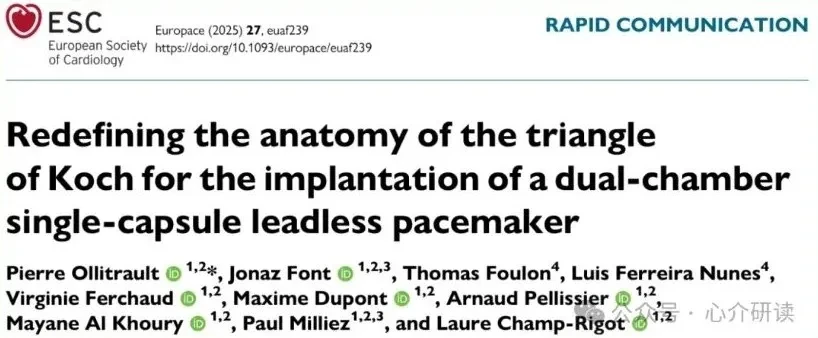
1. Recently ESC PublishCompleted《Redefining the Anatomy of the Triangle of Koch for the Implantation of a Dual-Chamber Single-Capsule Leadless PacemakerFrom a New Anatomical Perspective: Koch's Triangle (Triangle of Koch, ToK)For“One Device for Leadless DDD" feasibility of implantation lay the foundation;
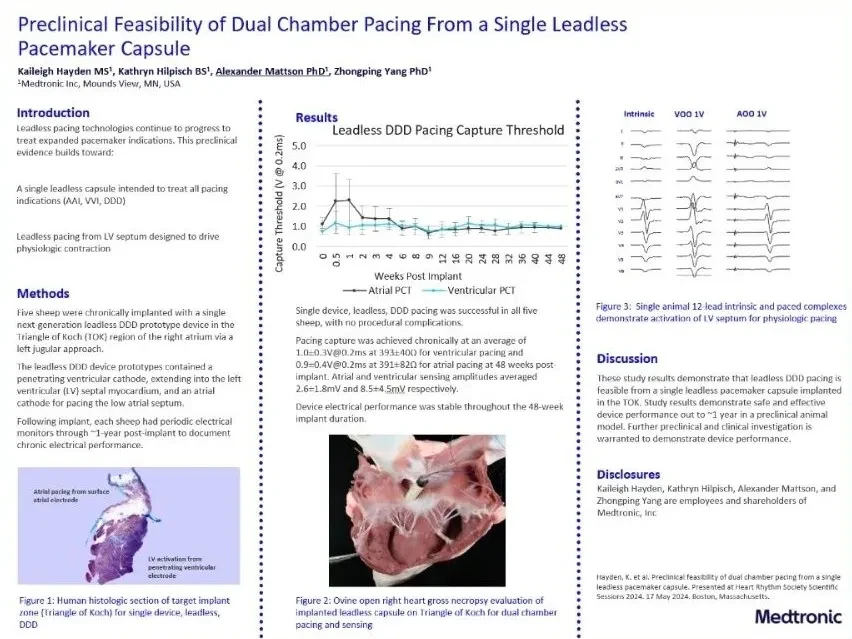
2. RecentlyHRS(American Heart Rhythm Society Annual MeetingUp, MedtronicAnnounced a key studyPoster《Preclinical Feasibility of Dual Chamber Pacing From a Single Leadless Pacemaker Capsule》,Verified "One Device forLeadless DDD”Technical Prototype in Animal ExperimentsUpFeasibility and Effectiveness;
3. This YearAPHRS ConferenceUp, Hong KongRegionProfessor Chen Rixin from Prince of Wales HospitalBrought a pieceLBCT(Breakthrough Clinical Research) Report:《Feasibility of Single Lead Ventricular Pacing from the Right Atrium: Results from the VFAHF Clinical Study》,ThroughSpecially DesignedThe right ventricular electrode further confirmedClinical Effectiveness of VFA Procedure (Implantation Pathway from Atrium to Ventricle via ToK) in Humans。

The above public information reveals that,Medtronic in“One Device for Leadless DDD"The forward-looking layout of the leadless strategy has been gradually implemented, successfully achieving a key leap from R&D concept to clinical application."


Design Principle
Research Methods
1) 5 sheep underwent implantation of 1 next-generation device in the right atrial ToK region via the jugular vein approach.LLeadless DDD PrototypeMachine。
2) TheLHeadless DDD PrototypeMachineIncludeOne penetrating ventricular cathode (extending to the left ventricular septal myocardium) and one atrial cathode for pacing the low atrial septum.
3) PostoperativeFollow-up, each sheep approximatelyDuring a 1-year period, regular electricalStudyMonitoring, to record the equipment'sAcute Phase and LongElectrophysiologyPerformance.

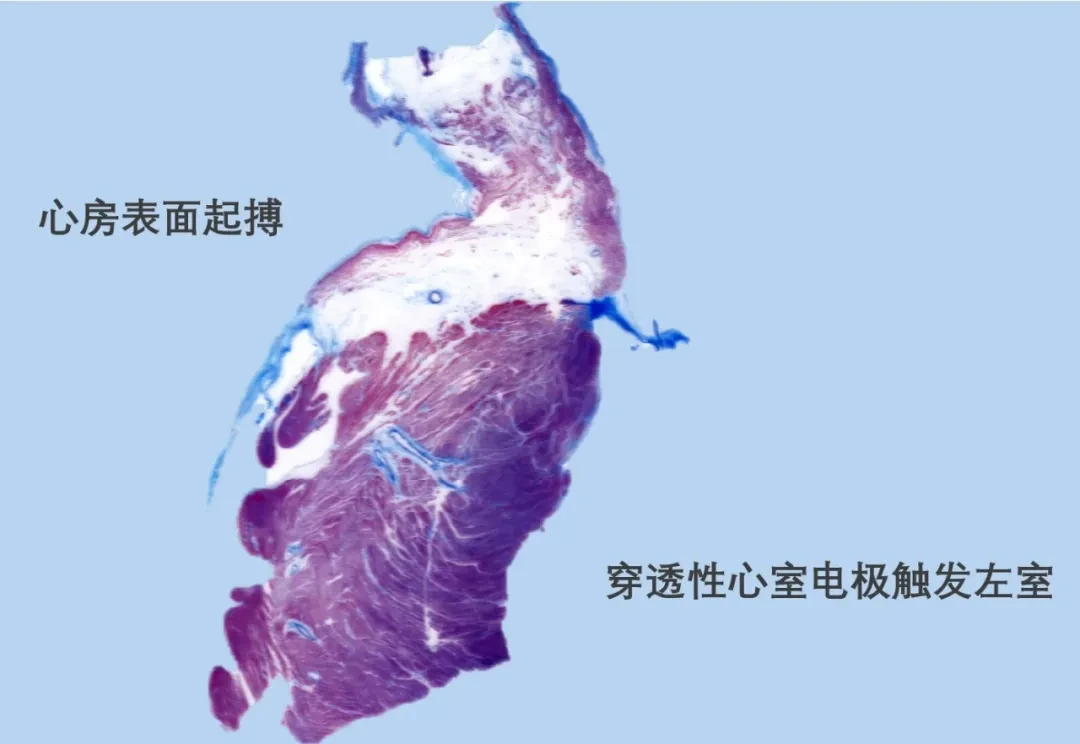
▲Koch's Triangle (Target Implantation Area) Histological Section of Human Tissue —— Observational Study on the Adaptability of Single-Instrument Leadless DDD Pacing Mode
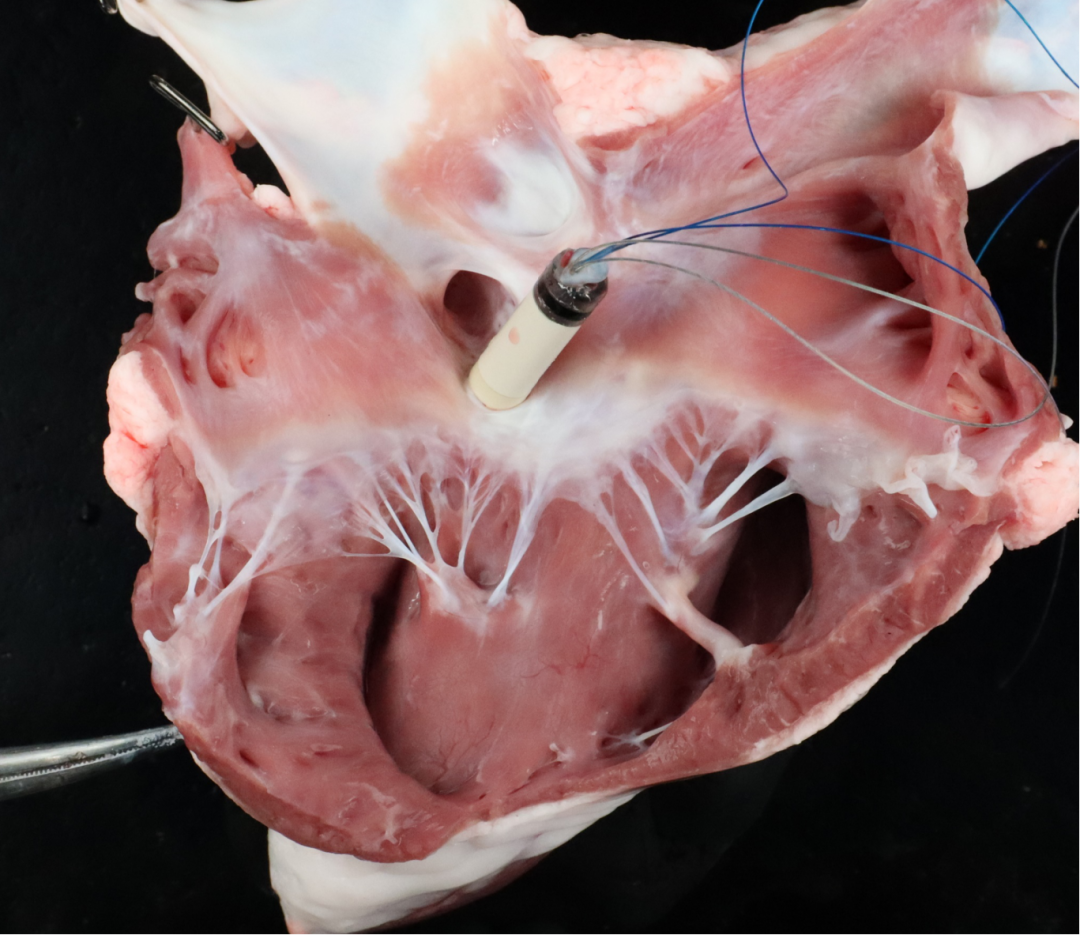
▲Gross Postmortem Evaluation of Right Heart in Open-Chest Sheep —— Verification of Dual-Chamber Pacing and Sensing Functions with Leadless Capsule Pacemaker Implanted in Koch's Triangle

Research Results
1) All 5 sheep successfully achieved single-device, leadless DDD mode pacing without surgery-related complications.
2) PostoperativeAt 48 weeks, all sheep maintained long-term pacing capture: the average ventricular pacing threshold was 1.0±0.3V@0.2ms (impedance 393±40Ω), and the average atrial pacing threshold was 0.9±0.4V@0.2ms (impedance 391±82Ω); the average atrial sensing amplitude was 2.6±1.8mV, and the average ventricular sensing amplitude was 8.5±4.5mV.
3) InThe electrical performance of the device remained consistently stable throughout the 48-week implantation cycle.
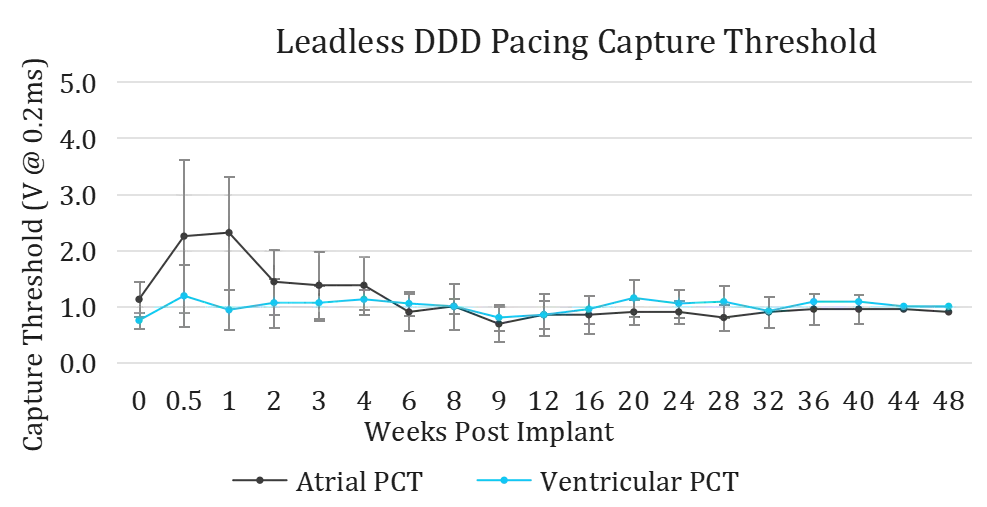
It can be found that after the operationAfter 48 weeks, both the atrial threshold and the ventricular threshold remained basically stable at around 1V/0.24 ms, demonstrating the feasibility of long-term stable pacing at this location.
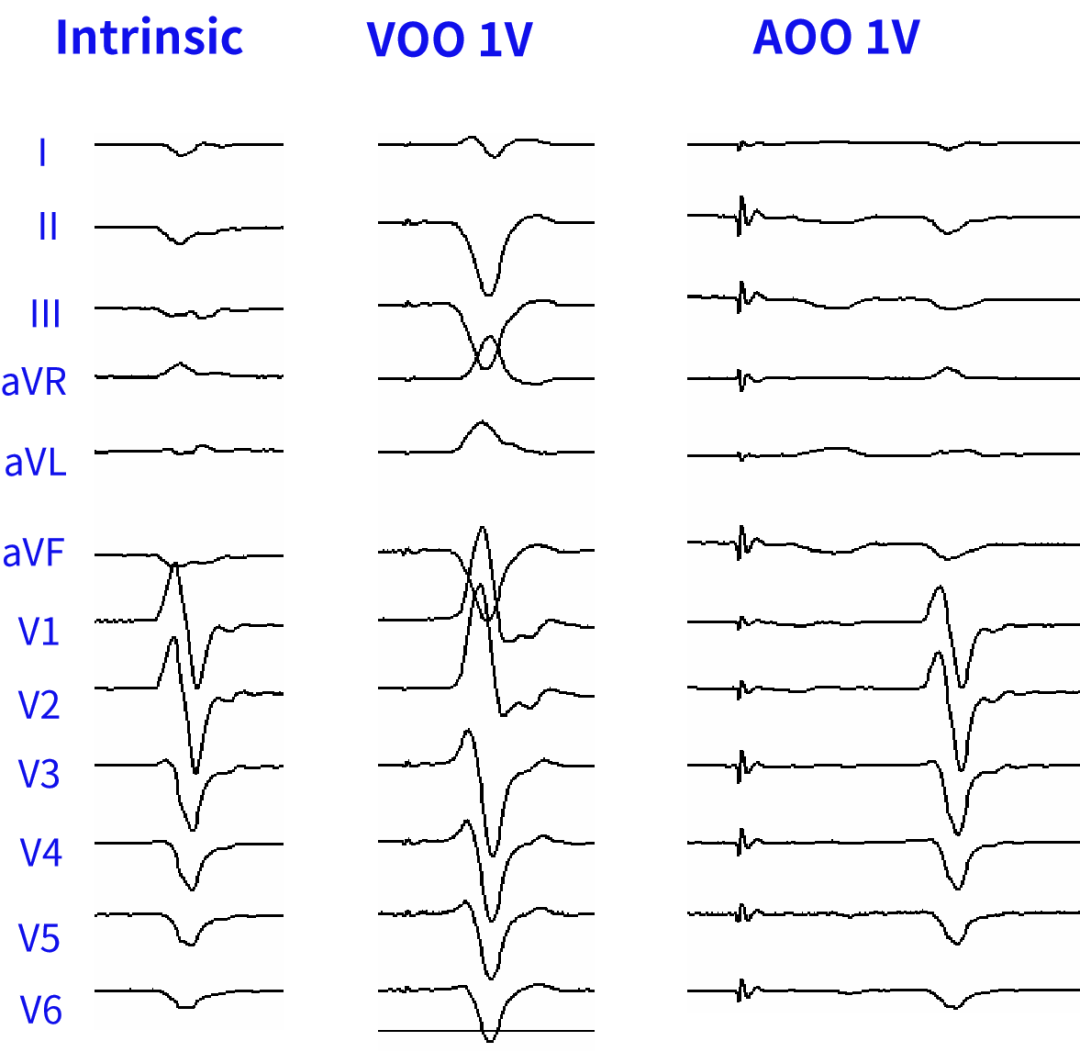
Discussion
This study confirmed that throughToK Site Implantation, can achieveSingle InstrumentLeadlessDual-chamber pacingTechnical feasibility. Preclinical animal model data shows,MachineIn aboutThe device demonstrated safe and effective performance during the 1-year observation period. Based on the existing research results, it is necessary to conduct further preclinical and clinical studies to comprehensively verify the overall performance of the device.

Through this animal experiment, we can discover:

The communication technology relied on by the dual-device solution, although a mature technology for traditional pacemakers, has high power consumption and willGreatly reduce the lifespan of the pacemaker; The single-device solution also avoids multiple issues brought by dual devices: in addition to the high power consumption of dual devices themselves, theirBattery Depletion AsynchronizationMay require patients to undergo multiple surgeries for device replacement; additionally, dual-device implantationHigher surgical complications, the patient'sThe economic burden is also heavier.——Need to bear the cost of two devices; Based on the above considerations, Medtronic ultimately abandoned the leadless atrial design and shifted to a single-device solution:Single-device atrioventricular synchronous leadless pacemaker (Micra AV)——It has been widely used in clinical practice, and the latest breakthrough we see now"Single-Instrument Dual-Chamber Pacing"The solution.



With the clinical transformation and implementation of this technology, patients will truly enjoy the full-dimensional benefits brought by leadless technology: they will no longer have to endure complications associated with traditional transvenous pacemakers and leads, while also benefiting from the single-device, leadless dual-chamber system. We look forward to this breakthrough technology completing clinical validation and being widely applied as soon as possible, bringing higher quality and more humanized leadless treatment options to bradycardia patients worldwide.


Statement

Content Declaration:"Heart Future" tracks global medical technology advancements, aiming to disseminate technical and industrial knowledge. All content is for industry exchange and academic discussion only, and does not constitute medical advice or commercial promotion. Information about companies, products, and registrations mentioned in the text is sourced from publicly available materials or verified channels. If there are any errors or omissions, please contact us for corrections. Email: jacky@suribot.com
Copyright Statement:The original article "Heart Future" is copyrighted by Beijing Siyu Bot Technology Co., Ltd. Without authorization, it cannot be reproduced, excerpted, or mirrored on other websites, official accounts, or commercial platforms; for reprinting, please contact the backstage to obtain authorization. This platform reserves the right to pursue legal responsibilities for unauthorized full-text reproduction, rewriting, or paraphrasing.