

How Lin Xin-Yi and Star Harmony Medical Aesthetics Leverages a Centralized Headquarters Model to Build a Scalable Light Aesthetic Chain in China’s Blue Ocean Market
Having been established for 10 years and deeply rooted in aesthetic dermatology, Star Medical Aesthetics Group (hereinafter referred to as “Star”) from Taiwan, China, plans to open 100 true chain clinics in mainland China within the next three years.
As an emerging segment of the medical aesthetics market, light medical aesthetics has established its own operational model, distinct from traditional large-scale plastic surgery hospitals and lifestyle beauty services. Amidst a somewhat homogenized competitive landscape, Xinghe has deployed 14 facilities across mainland China, leveraging efficient customer acquisition strategies and a replicable chain-store model.
What are the characteristics of the non-surgical aesthetic medicine market, and how has Xinghe crafted a differentiated operational strategy? To find out, VCBeat (WeChat: vcbeat) conducted an exclusive interview with Lin Xinyi, founder of Xinghe.
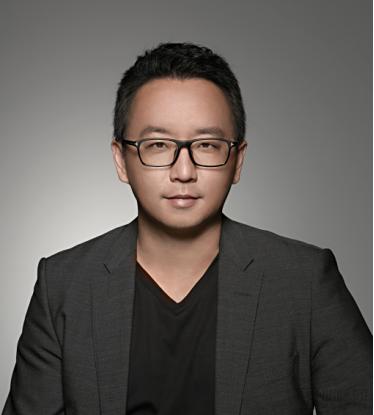
Lin Xinyi, Founder of Starhe Medical Aesthetics Group
Here are some brilliant insights:
1. Strategic collaboration in optoelectronic devices and biological consumables is a critical link connecting consumers;
2. The rise of the younger generation of medical aesthetics consumers is forcing traditional institutions to reform and upgrade their customer acquisition and service processes;
3. The apparent boom in the light medical aesthetics industry stems from homogeneous competition; the key to breaking through lies in innovation and differentiation. Xinghe aims to build an affordable brand akin to MINISO.
4. The core essence of the Service Process SOP is to manage processes with precision down to the minute and second.
In countries and regions with earlier and more mature medical aesthetics industries, such as those in Europe, the United States, Japan, and South Korea, penetration rates can reach 12%–15%, whereas the current penetration rate in mainland China is only about 2%.
However, according to data from the "So-Young 2018 Medical Aesthetics Industry White Paper," China's medical aesthetics market size is projected to reach RMB 224.5 billion, representing a year-on-year growth rate of 27.57%. Compared with South Korea, there is sixfold room for growth. Moreover, individuals born in the 1990s have become the primary demographic undergoing cosmetic surgery, while those born in the 2000s are demonstrating an even stronger momentum in medical aesthetics consumption. The potential of this incremental market is substantial, and over the next decade, it may evolve into a trillion-yuan-scale industry within the broader health sector.
Regarding the differences between the medical aesthetics markets in Taiwan, China and the Chinese mainland, Lin Xinyi first used the metaphors of “street stalls” and “hypermarkets” to describe the two distinct models found in Taiwan, South Korea, and the mainland. “Both models have their respective advantages and disadvantages. After decades of development, the mainland market—particularly in the sectors of plastic surgery hospitals and lifestyle beauty services—has reached a relatively monopolistic state. In reality, the market requires a new industrial format to meet the widespread aesthetic enhancement demands of younger consumers.”
Lin Xinyi believes that the online information gap is not significant, as different scenarios generate corresponding demands. “The innate desire for beauty is quite similar worldwide; in fact, mainland China may even benefit more from internet platform dividends, such as medical aesthetics apps like SoYoung and platforms like Meituan-Dianping. In Taiwan, the market primarily relies on unified platforms like Facebook and Google. The most significant difference lies in regulation: fewer devices and consumables have been approved by the NMPA, and some diagnostic and treatment methods are not yet synchronized with those available in mainland China.”
The reporter learned that there is a significant disparity in the variety of hyaluronic acid products currently available in the markets of Taiwan, China, and mainland China. “However, biotechnology R&D is a cutting-edge field. Xinghe gains early access to the latest information and products in Taiwan. After accumulating treatment experience and developing clinical guidelines, we then transfer and promote these advancements to our clinics across mainland China. As a result, our physicians have an inherent educational advantage over those of other brands. It was precisely this strength that motivated me to come to mainland China to incubate a chain brand.”
According to available information, Lin Xinyi founded the Medical Aesthetics Quality Assurance Association in Taiwan, China. Through this association, he has brought together medical aesthetics brands and manufacturers in Taiwan to establish unified strategic partnerships, ensuring robust production-and-sales traceability and strict control over equipment imports. “As a result, we have established deep collaborations with manufacturers in the United States and Europe, all of which are preparing for approval by the China Food and Drug Administration (CFDA). Some treatment modalities have been widely practiced in Taiwan for many years. For instance, ‘Magic Cube Radiofrequency’ combines hyaluronic acid with laser technology, delivering rejuvenation effects three to five times greater than those of Ultherapy. This technology has not yet been introduced to mainland China. However, Starhe has already laid a solid foundation, positioning itself to capitalize on first-mover advantage once the technology is officially launched.”
Strategic cooperation in optoelectronic devices and biological consumables is a crucial link connecting consumers. Additionally, Xinghe will establish agency partnerships with manufacturers within the next two to three years.
Since the 1990s, China’s medical aesthetics market has undergone more than a decade of golden growth, giving rise to industry giants in both medical and lifestyle aesthetics. With the rise of younger consumers, particularly those born in the 1990s, these institutions are increasingly being compelled to transform and upgrade. This includes refining customer acquisition strategies and service processes, as the previously extensive operational models need to evolve into more refined and iterative approaches.
Light medical aesthetic chains, represented by skin rejuvenation services, have gradually emerged as an industry model in the Chinese mainland market in recent years. Particularly in first-tier cities such as Beijing, Shanghai, Guangzhou, and Shenzhen, these businesses, being a novel concept with no prior benchmarks to reference, are increasingly facing challenges such as service homogenization. There have even been instances of institutions poaching doctors and consultants from one another.
In this regard, Lin Xinyi believes that “the key determinant of whether this industry is overheated lies in homogeneous competition. If companies continue to rely on traditional Baidu promotions, conventional marketing channels, and a sales-driven model where consultants negotiate discounts, they will inevitably fall into a ‘red ocean’ scenario, as they are competing for the same pool of resources. However, with the advent of mobile internet technology, we must persist in innovation and differentiation. Xinghe focuses on providing affordable medical aesthetics services, leveraging our substantial resources accumulated over ten years in Taiwan. This enables us to mobilize Taiwanese physicians’ medical resources and train new medical aesthetics practitioners.”
In China, it is relatively easy to establish regional, scaled chains of small medical aesthetic clinics. However, building a truly nationwide chain with standardized SKUs and service protocols, akin to McDonald’s or KFC, is exceedingly difficult. “This is a dilemma faced by healthcare institutions worldwide.” Leveraging its decade of successful industry experience and strong brand recognition, Xinghe possesses the capability to mobilize appropriate medical resources; otherwise, expanding operations and offering affordable pricing would be far from easy.
Similar to the “MINISO” of the medical aesthetics industry, Xinghe is precisely pursuing this path by popularizing medical services and medical-grade skincare products that enable women to enhance their beauty. “This is a blue ocean market, but the primary issue that needs to be addressed as soon as possible is standardization. We have gradually developed replicable models.”
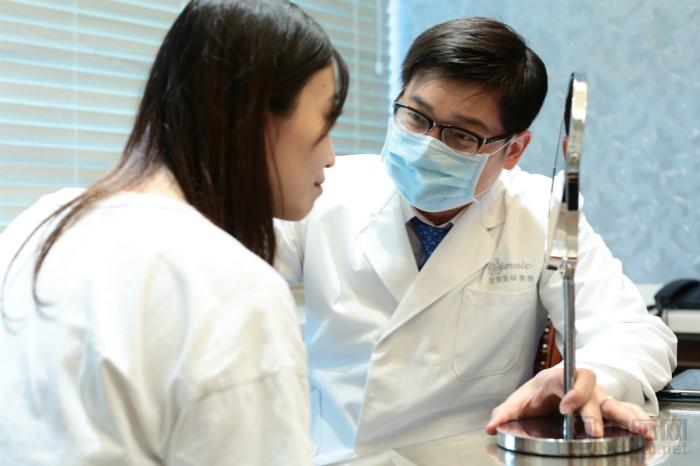
"The doctor is conducting a face-to-face consultation."
The reporter learned that Xinghe’s core business is divided into four main segments: skin management, minimally invasive contouring and sculpting, anti-aging and rejuvenation, and laser and light-based therapies. “Essentially, we do not perform surgical plastic surgery. Compared with other chains in the non-surgical medical aesthetics sector, our advantages lie in a decade of brand and technical accumulation, as well as a highly internet-driven operational model. In Taiwan, Xinghe built its brand awareness solely through word-of-mouth and testimonial articles and blogs by key opinion leaders (KOLs). All users are acquired online, with an internet-centric and data-driven mindset embedded throughout our operations. This allows us to operate with high efficiency even without sales consultants.”
From the perspective of overall industry positioning, Lin Xinyi believes that within the healthcare sector, medical aesthetics is the closest to the consumer and fast-moving consumer goods (FMCG) industries. At Starhe’s offline facilities, there are no sales consultants; operations are highly internet-based, with user communications conducted online rather than in person. “The concept of ‘internet’ is not novel at all, but it is quite unconventional within the healthcare industry. It shortens the distance to users and helps build trust.”
Regarding specific non-surgical aesthetic procedures, Lin Xinyi revealed, “I am committed to skin rejuvenation and will focus exclusively on this area in the future. Body rejuvenation is a key operational focus for fitness institutions.”
“Leveraging the mature technology and training systems accumulated through our operations in Taiwan, Star Harmony selects best-selling products with the highest quality and competitive pricing, such as Restylane hyaluronic acid fillers, to engage users in initial interactions. We aim to generate profits through future product iterations, so we take a long-term view.”
Leveraging intelligent IT systems and the concept of a centralized headquarters, Xinghe has created standardized, replicable models, with the goal of opening 100 actual light medical aesthetics chain clinics in mainland China within three years.
What is the concept of a "large headquarters"? Lin Xinyi explained, "The traditional medical aesthetics market in mainland China actually follows the philosophy of a 'large front-end and small back-end.' For example, in typical medical aesthetics institutions, on-site staff—primarily administrative, procurement, and financial personnel—outnumber back-office support by roughly 5 to 10 times, resulting in an extremely small back-end presence. However, in actual operations, back-end resources need to be two to three times those of the front-end to provide adequate support. In Taiwan, Star Harmony operates 10 clinics, each with approximately 12–15 employees, but its headquarters employs 100 people to adequately support the distribution of these 10 clinics across a north-south span of over 300 kilometers."
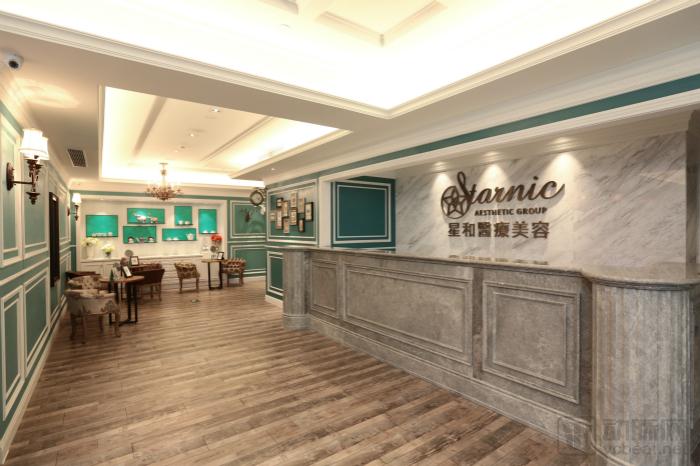
Warm and Inviting Décor Style of Xinghe Stores
Furthermore, the advent of internet technology has resolved issues related to distance and value transmission, transcending geographical barriers. This has allowed Taiwan’s successful experience to be seamlessly integrated into the mainland Chinese market. “In particular, between 2012 and 2015, the rise of vertical medical aesthetics APP platforms brought significant changes to customer acquisition and operational methods in the traditional medical aesthetics market; otherwise, it would have been difficult to break through the existing market landscape.”
“By leveraging a low-cost customer acquisition platform, delivering satisfactory user experiences to enhance stickiness, and fostering sustained repeat purchases, profits naturally follow. This long-term mindset of Xinghe is underpinned by technological confidence and comprehensive chain management.”
In this closed-loop service model, Lin Xinyi believes that the most critical component is improving efficiency. “Essentially, Xinghe operates its business based on six key words: influencers, efficiency, and repeat purchases. Influencers are used for customer acquisition and traffic generation; efficiency drives management, with clear division of personnel responsibilities and KPIs; and repeat purchases generate profits, while continuously optimizing and iterating along this chain. Therefore, reaching 100 stores is not difficult, as the system is already highly standardized, much like McDonald’s, KFC, or Starbucks, where opening a hundred-chain network is relatively easy.”
It has been learned that SingHealth’s two largest expense categories in the Taiwan market are physicians and medical devices/consumables, each accounting for 30%, with a net profit margin of approximately 10%. “On the Chinese mainland, as long as newly graduated physicians possess qualified academic credentials, we send them to Taiwan for training. Through collaborations with manufacturers, exchanges among directors and chief physicians across our 10 clinics, and on-site guidance, we have established a comprehensive physician training system. This results in relatively low physician costs. Coupled with internet-based customer acquisition strategies, our general and administrative expenses are also kept low. We project that future net profit margins could reach 25%–30%.”
As for the standardized service SOPs, Lin Xinyi cited three processes that he considers to be the most critical:
First, the most critical aspect of non-surgical medical aesthetics is addressing customer complaints; the key lies in securing informed consent prior to procedures to mitigate post-operative disputes, with meticulous attention paid to both the volume and content of signed agreements.
Second, the control of treatment duration by physicians; for instance, a single hyaluronic acid injection should be completed within 12–13 minutes. The time required may vary depending on the physician’s years of experience, and corresponding assessment standards are established for physicians at different levels and competencies.
Third, by leveraging internet technologies and indoor positioning tracking to integrate multiple process nodes, we aim to ensure that each customer’s waiting time does not exceed three minutes in the future.
“A single user, based on our statistics, requires approximately 77 minutes to complete treatment involving two SKUs. This metric serves as a key performance indicator for Xinghe’s services, enabling precise tracking of a user’s location every second within a given timeframe. By establishing a robust market management mechanism powered by IT-based alert systems, store managers can oversee the quality of management services across 5–10 stores without relying on traditional visual inspections. Thus, this SOP is fundamentally built upon IT infrastructure.” Lin Xinyi summarized that the core essence of the SOP lies in managing processes with precision down to the minute and second.
Across Taiwan, data indicates that there are approximately 1,300 medical aesthetic institutions, all of which focus on facial treatments, while lifestyle beauty establishments primarily provide body massage services. The business scopes are clearly delineated, with significant barriers between the two sectors. In contrast, mainland China features an integrated model where medical aesthetics and lifestyle beauty services are cross-operated.
Lin Xinyi believes this is an excellent transitional period. “Drawing from Taiwan’s experience, the transition phase proceeds very rapidly. Currently, the focus remains more on addressing the existing market, yet the potential of the incremental market is even greater. At Starhe, 10% of users come from So-Young, 10% from other traffic platforms, and 80% through word-of-mouth referrals. For dermatological procedures, the demand for authentic experiential quality is exceptionally strong. We engage top physicians from Taiwan, offer the most competitive prices in the market, are willing to cede margins to benefit users, and dedicate time to interacting with them. This strategic approach has already been established; the next step is scaling up across China.”
With a unified brand identity and minimalist, warm interior design, Xinghe will leverage its better-than-expected sales per square meter to expand its chain operations, starting from Shanghai and extending into East China, northern Zhejiang, southern Jiangsu, and South China. “Under Xinghe’s current model, each 300-square-meter store in Shanghai requires an investment of RMB 8 million, with the break-even point reached within two years. In the first year, we plan to open approximately 10–20 stores in northern Zhejiang and southern Jiangsu, depending on the pace of licensing approvals. Once this target is achieved within the year, we will then move into South China, which is one of the most dynamic segments of the overall aesthetics market.”
On the one hand, Lin Xinyi is highly confident in the standardized chain-store model; on the other hand, he closely monitors future trends in the medical aesthetics industry. He believes that “gene testing and facial biometric recognition are technologies poised for more rapid development within mainland China over the next three years, as the penetration rate of internet technology and related tech products is relatively high there. This constitutes a competitive advantage and offers valuable lessons for Taiwan.”
Perhaps in the near future, robotic technologies capable of automated injections will emerge. By leveraging facial recognition to precisely identify deficiencies in users’ muscles and nerves, these systems will accurately predict the effects of botulinum toxin injections, the outcomes of hyaluronic acid fillers, and the rate at which hyaluronic acid is metabolized.
“I believe that AI powered by big data, integrated with the entire internet platform, will bring about significant changes to the medical aesthetics industry within three years. When these tools mature, the winners in the future market will be those who have sufficient scale and personnel skilled in these technologies, rather than those adhering to traditional concepts of competing to introduce new technologies and products first. This trend is irreversible.”