

The Next Golden Decade of Aesthetic Medicine: Gengmei and AI Join Forces to Shape the Future
Last month, Gengmei announced the completion of a $50 million Series D1 financing round led by Meitu.
As the most lucrative marketing segment in the medical aesthetics industry, medical aesthetics apps serve as new traffic gateways. By leveraging the internet to integrate content, social interaction, and transactions, they achieve efficient audience reach, reshape the consumer healthcare service industry chain, break down information asymmetry, and significantly enhance industry efficiency.
Founded in 2013, Gengmei has spent the past five years striving to collaborate with upstream and downstream enterprises in the medical aesthetics industry to create a user-reputation-based ecosystem. This initiative aims to streamline the consumer decision-making journey and enhance the efficiency of users’ purchasing decisions in medical aesthetics.
Compared with mature overseas markets such as those in Europe and the United States, China’s medical aesthetics market remains a rapidly growing incremental market. Younger demographics, particularly those born in the 1990s and 1995s, have emerged as a new pool of potential consumers. Their consumption habits are compelling traditional large-scale medical aesthetics institutions to undergo reforms, meeting the younger generation’s beauty aspirations through innovations in service, products, and technology.
Of course, the medical aesthetics industry still faces certain challenges, such as difficulties in cross-regional expansion of chain operations, the search for broader online traffic entry points, and the standardization of services and products. With the entry of internet giants like Meituan Dianping and Alibaba Health, the entire medical aesthetics market is poised to witness a new wave of intense competitive battles.
As a leading platform in the medical aesthetics app sector, Gengmei’s services currently cover more than 300 cities worldwide, spanning five major countries and regions: China, Japan, South Korea, Thailand, and Singapore, helping 36 million users enhance their appearance. The Gengmei app has onboarded over 7,000 licensed medical aesthetics institutions and more than 20,000 practicing physicians, with a cumulative total of 3.9 million real-patient cosmetic surgery case studies on the platform.
Following the completion of its latest funding round, in which areas will Gengmei focus its efforts, and what new changes is the Chinese medical aesthetics market facing? To address these questions, a reporter from VCBeat (WeChat ID: vcbeat) interviewed Liu Di, Founder and CEO of Gengmei, to hear him share the story behind the financing and outline Gengmei’s future strategic plans.
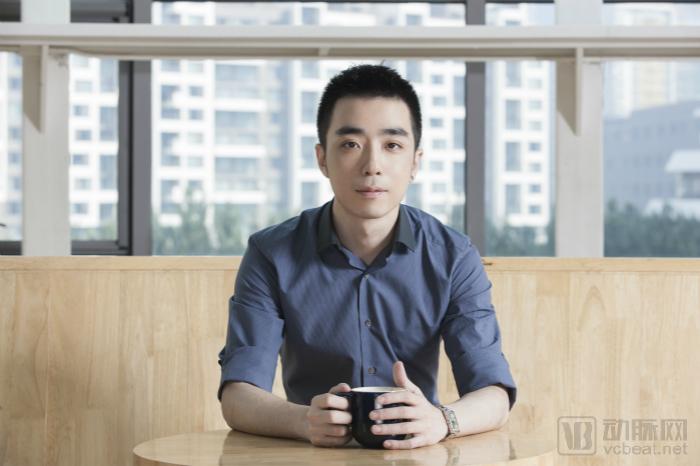
Liu Di, Founder and CEO of Gengmei
The current state of the industry is characterized by a significant influx of young consumers born in the 1990s and 1995s into the medical aesthetics market, unlocking new consumption potential. Medical aesthetics spending is gradually shifting from luxury-oriented surgical procedures toward routine, health-focused beauty experiences. High frequency, localization, and affordability are the foreseeable trends for the future.
Liu Di believes that such a transformation has been made possible because internet companies represented by Meitu and Douyin have cultivated a large pool of high-potential consumers for the medical aesthetics industry over the past few years, enabling them to recognize their genuine need for beauty enhancement. Virtual beauty filters have become an essential requirement for internet users.
“Most people have not actually undergone plastic surgery. When young individuals realize that their real-life appearance falls short of the idealized images seen through beauty-filter cameras, they experience a sense of discrepancy. This gap creates an impetus for them to consider aesthetic medical treatments. To some extent, the proliferation of beauty-filter, live-streaming, and video apps has pulled the trigger on incremental growth in the industry.”
Meitu, an investor in Gengmei’s current funding round, has spent a decade leveraging advanced imaging technology to develop a suite of hardware and software products, thereby building an extensive beauty ecosystem.
“A large number of users are engaging with beauty-enhancement apps, generating consumer demand; therefore, we accepted investment from Meitu. Both companies are positioned at the intersection of beauty and social networking, with complementary and interconnected operations, capital, and technology. This synergy will empower Gengmei and provide significant strategic support.”
"If one sentence were to summarize Gengmei’s value to the medical aesthetics industry, Liu Di believes that Gengmei’s fundamental objective has always been to shorten the consumer journey and enhance the efficiency of decision-making."
“Whether it is the initial doctor-patient Q&A, community, e-commerce, or evaluation system, all are designed to help users make more precise decisions. Based on the user, hospital, and doctor data accumulated by Gengmei over the past five years, Gengmei will introduce Meitu’s long-established imaging and big data technologies to build an intelligent medical aesthetics engine, leveraging AI technology to integrate all resources and maximize their value more efficiently.”
Reporters learned that the engine enables users to obtain personalized appearance reports and aesthetic recommendations by uploading photos and videos, while also recommending the most suitable medical aesthetic procedures, clinics, and doctors.
In terms of market size, the most lucrative segment of the medical aesthetics industry is marketing, which necessitates the exploration of new online traffic channels. Currently, Meituan-Dianping and Alibaba Health have entered the competition in the medical aesthetics market. Regarding this, Liu Di stated, “The combined sales of online medical aesthetics services account for less than 5% of the industry’s total revenue, and it will represent a larger incremental market in the future. At present, the medical aesthetics industry is still in the phase of user accumulation and market education, leaving considerable profit margins for channel providers; it has not yet reached the stage of burning cash to subsidize users.”
China’s RMB 100-billion-plus medical aesthetics market is still in its early stages, with enormous growth potential. In mature markets such as those in Europe, the United States, Japan, and South Korea, 20% of the market is devoted to cosmetic enhancement, while 80% focuses on anti-aging. The situation in China is completely reversed. “In China, 80% of spending is aimed at enhancing beauty, with only 20% allocated to anti-aging or rejuvenation treatments. However, in ten years, the market will resemble that of the United States, with more consumers seeking to maintain a more youthful appearance, firmer skin, or a more proportionate figure, rather than undergoing surgical procedures directly.”
Anti-aging is a highly popular emerging market. “Although current demand is not yet substantial, growth is rapid, with search volume on the Gengmei platform increasing by approximately 50% each quarter. The relatively small base for anti-aging services is largely due to the currently high average transaction value, the need for more personalized and professional services, and the involvement of overseas medical treatment, which is subject to certain sensitive policy restrictions. Gengmei is still in active preparation, selecting partners with great caution.”
Liu Di believes that over the next decade, the medical aesthetics industry will become more mainstream, high-frequency, and health-oriented. “More people are willing to spend money to maintain a relatively healthy state, rather than spending more on procedures such as rhinoplasty and double eyelid surgery. In the next three to five years, plastic surgery will continue to see growth; however, in the long run, it is no longer the segment with the greatest market potential. More capital will flow into areas such as weight management, dentistry, ophthalmology, skin care, and obstetrics and gynecology. While medical aesthetics may be the most profitable segment, it is by no means the entire picture.”
However, from a business positioning perspective, Gengmei is still pursuing a dual-track strategy: its short-term plastic surgery operations and its long-term consumer healthcare business, represented by anti-aging treatments, are being advanced simultaneously. The offline medical aesthetics market in China, or the broader beauty industry, will undergo dramatic changes within the next two to three years, and this trend of continuous transformation is expected to persist in the future.
In the current offline beauty and wellness market, traditional large-scale medical aesthetic institutions have made transformation their core task in recent years. Their business models operated smoothly for over a decade, but profound changes in new-generation consumers’ demands for markets and services, as well as in how they access information, are forcing these institutions into a challenging period of transition.
Small-scale, light medical aesthetic clinics or boutique clinics, which represent a new model of consumption, have “evolution” as their core theme. Overall, such service providers seamlessly meet the demands of young consumers, resulting in rapid growth. The development of light medical aesthetic clinic chains in China has been a process of building from scratch, free from historical burdens. As industry players navigate this exploratory phase with relatively low costs for trial and error, intense competition persists. Nevertheless, successful breakout players will inevitably emerge by effectively integrating resources such as customer flow and technology.
Therefore, capital entering the chain medical aesthetics sector must also undergo this transition period alongside the institutions, requiring greater patience.
It has been reported that Gengmei has achieved profitability. Currently, one-third of the platform’s revenue comes from commissions, while two-thirds is derived from advertising and enterprise services charged to merchants. The funds raised in this round of financing will be primarily allocated to AI technology research and development, team expansion, and geographic and category diversification.
“In terms of technological R&D, leveraging Meitu’s data and technical expertise accumulated over more than a decade, we will develop an intelligent engine tailored for the medical aesthetics industry with Meitu’s assistance. This engine will instantly recommend suitable hospitals and physicians based on a single consumer photo, thereby shortening users’ decision-making time. Regarding geographic and team expansion, we will continue to penetrate from first- and second-tier cities into third-tier cities, while expanding our service offerings in consumer healthcare categories such as dentistry, ophthalmology, and weight management.”
Social networking, e-commerce, and enterprise-level services constitute the core business segments of Gengmei. The community drives traffic, e-commerce facilitates conversion, and enterprise services enhance efficiency; together, they improve the overall efficiency of the platform’s services. Liu Di outlined the plans for the second half of the year.
In the community segment, Gengmei will evolve toward higher frequency, stronger user stickiness, and a broader range of content categories, transforming into a more inclusive, high-frequency appearance-focused community that taps into a larger potential user base. “Our user base is also becoming more diversified. The earliest adopters were young women particularly interested in plastic surgery, whereas now the platform attracts a broader demographic of beauty-conscious women. The entire medical aesthetics industry is likewise expanding its service offerings. The term ‘plastic surgery’ is being mentioned less frequently, while ‘medical aesthetics’ is gaining traction, primarily because over half of all transactions are non-surgical procedures—such as injectables, laser treatments, or topical applications—that help users address their concerns.”
In the e-commerce and enterprise services sectors, Gengmei has also followed these trends. “Initially, Gengmei could be described as an e-commerce platform for plastic surgery. We curated a network of top-tier plastic surgeons from Grade 3A hospitals across China. Over time, we observed that user demand was shifting toward broader market segments, prompting our institutional services to expand accordingly. Today, Gengmei provides users with comprehensive solutions for aesthetic enhancement. On the merchant side, we primarily help enterprises reposition themselves by identifying their unique specialties, thereby building brand strength and price competitiveness. Overall, Gengmei is moving closer to the fields of non-surgical medical aesthetics and aesthetic services, rather than remaining confined to the narrow niche of surgical plastic surgery as it did in the past.”
As for Gengmei’s future goals, Liu Di summarized them as expansion and efficiency improvement. “Expansion refers to the dual growth of users and business, while efficiency improvement aims to shorten the user consumption journey and enhance decision-making efficiency. With a pragmatic and impactful approach, Gengmei’s future business planning will be more focused, striving to achieve depth and strength in its core businesses.”