

Honor Files IPO Prospectus: The 'Uber for Elder Care' Revolutionizing Home-Based Senior Support Through Internet+ Innovation

Honor
Provider of Elderly Care Service Platform
How Can We Age Gracefully? In Our Later Years, Do We Still Aspire to Dress Stylishly and Smell Pleasant? Do We Still Desire Dignified and Equal Conversations? This Is the “Human-Centered” Approach That the Elderly Care Sector Must Prioritize.

(Image source: Honor official website)
According to data released by the United Nations Statistics Division, the U.S. population reached approximately 325.7 million by 2017, with the elderly accounting for 15.41% of the total. Meanwhile, amid the rapid economic growth in the United States, young people have been consistently preoccupied with work away from home, leaving them little time to care for their elderly family members. Consequently, hiring professional caregivers for in-home care has become a prevailing trend.
Honor, a U.S.-based O2O company providing in-home care for the elderly, has seized the opportunity presented by the “silver tsunami.” After four years of development, it has established a unique business model and now operates in 13 cities across four major regions of the United States.
How has this company managed to establish itself in the fiercely competitive “red ocean” of elderly care? Let’s take a closer look at what sets Honor apart.
Honor was established on August 1, 2014, with its headquarters in San Francisco. It has since grown to become the largest online home care service provider in the San Francisco Bay Area. To date, it has raised $115 million in funding.
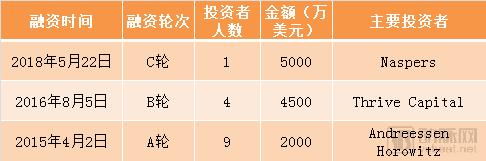
Honor’s Financing and Investment Profile (Source: Crunchbase)
In 2015, Honor completed its Series A financing round. In addition to securing funding from select investment firms, it garnered support from numerous prominent figures, including Marc Andreessen, founder of the premier Silicon Valley early-stage investment firm Andreessen Horowitz; renowned American actress Jessica Alba; Jeremy Stoppelman, co-founder and CEO of Yelp; and Mike Schroepfer, CTO of Facebook. The Series A funds are slated to accelerate Honor’s market entry and expansion in the United States.
Compared with the star-studded lineup of its Series A round, the investor consortium for Honor’s Series B financing a year later was significantly leaner. The round was led by New York-based Thrive Capital, with participation from 8VC, Andreessen Horowitz, and Syno Capital. Notably, Andreessen Horowitz had already invested $15 million in Honor during its Series A round. Reportedly, the new funding will help Honor rapidly capture a significant share of the multi-billion-dollar U.S. home care market.
The Series C financing round completed in 2018 saw Naspar alone invest $50 million. This century-old investment firm, valued at $100 billion, was also an early investor in Tencent.
According to the company’s official website, its network currently covers 13 cities. With such a robust support team, Honor is naturally confident about its future. It is reported that the new round of financing will be used to support its expansion in California, Texas, and New Mexico. If all goes well, by the end of the year, it will expand from California and Texas into cities such as San Diego, Sacramento, Houston, and Austin.
Seth Sternberg, Founder and CEO of Honor, earned his bachelor’s degree from Yale University, where he double-majored in Political Science and International Relations. After graduation, Sternberg worked successively at IBM (International Business Machines Corporation) and Plaxo (a social networking service platform for business clients).
In 2004, Seth Sternberg, who had been working for three years, returned to academia to pursue an MBA at Harvard University. He dropped out after just one year to found Meebo, a web-based instant messaging platform. Seven years later, he sold the company to Google for approximately $100 million.
Sandy Jen, co-founder of Honor, graduated with a degree in computer science from Stanford University. She then worked as a software development engineer at Xilinx, a global leader in providing complete programmable logic solutions. Later, she co-founded Meebo with Seth Sternberg and served as its Chief Technology Officer (CTO).
Life experiences often serve as the catalyst for new entrepreneurial ventures. Much like many elderly care service companies in the United States, Seth Sternberg identified a key concern during a visit to his mother: living alone in old age does not provide peace of mind for family members. Determined to improve the quality of his mother’s later years, Seth Sternberg decided to take action.
Coincidentally, after Sternberg sold Meebo to Google, he and his former Meebo co-founder Sandy Jen had been searching for a new startup idea. Joined by two Stanford friends—Plaxo co-founder Cameron Ring and Monica Lo, who holds both an MBA and an MPA—the four hoped their next venture would be more meaningful, helping more people and bringing about substantial improvements in their lives.

From left to right, they are:Sandy Jen,Cameron Ring,Monica LoandSeth Sternberg
(Image source: Forbes website)
According to a survey in the United States, the vast majority of people aged 50 and older live independently at home; even among those aged 80 and above, more than three-quarters reside alone in their own homes.
How can children living far away provide care for the vast number of elderly individuals aging in place? What is the quality of hired caregivers, and are they capable of providing adequate care? How can adult children supervise caregiving personnel? Is there a risk of fraud and abuse?
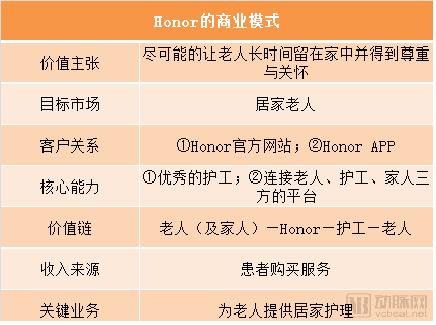
To address these challenges, Honor employs an “Internet + real-time monitoring” approach, connecting caregivers, elderly individuals in need of care, and their families through Honor’s website and mobile app to facilitate better communication among all parties.
In the field of home-based care for the elderly, two major challenges are faced:
On one hand, how to provide the rapidly growing elderly population with services that are as humane, respectful, and caring as possible, thereby giving their families peace of mind;
On the other hand, caregivers hold a negative attitude toward their work. Currently, this demanding job does not make them feel respected, and even when they perform exceptionally well, they do not receive the recognition and rewards they deserve.
In response to the above two issues, Honor has proposed its own approach.
To ensure the quality of its caregiving staff, Honor implements a rigorous screening process. Additionally, Honor installs monitoring devices in patients’ homes, allowing authorized family members to remotely monitor their elderly relatives’ activities and track caregivers’ duration of stay via mobile devices at any time, even while at work, and ultimately rate the caregivers.
Addressing caregivers’ primary concern over compensation, Honor pays hourly wages that are on average 50% higher than those in the U.S. caregiving market. Meanwhile, caregivers are scheduled and compensated on an hourly basis, with no long-term contracts; if employers fail to treat them with sufficient respect, they may refuse to provide future services.
Of course, if both parties are satisfied, Honor prefers to establish long-term relationships.
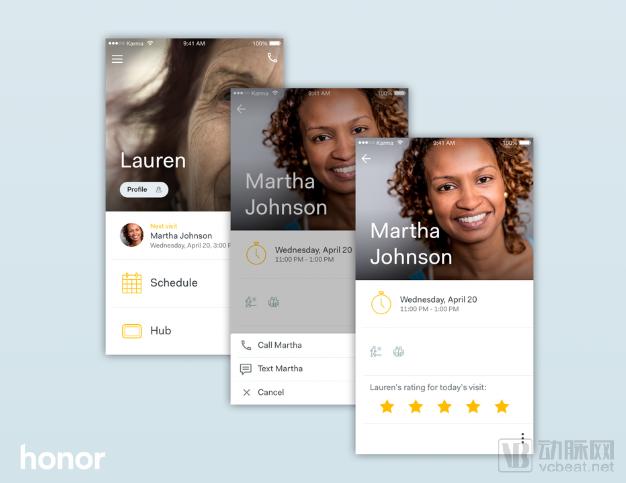
(Image source: Internet)
The U.S. home health care industry is a fragmented system, with nearly 2.5 million home caregivers in the market and approximately 2,400 home health agencies managing this workforce, among whom there are numerous issues in management and coordination.
Honor’s entry point is to leverage internet and technological approaches to enhance the efficiency of this traditional model.
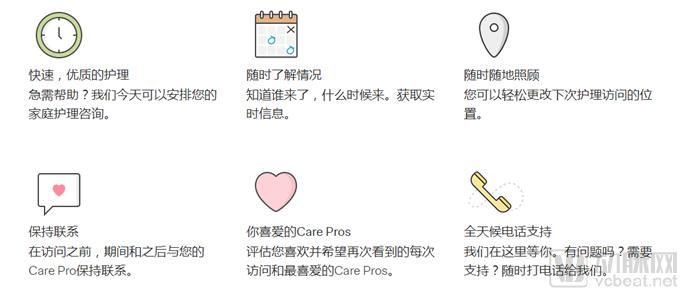
(Image source: Honor official website)
Honor brings together a team of experienced, compassionate professionals who collaborate to provide better care for the elderly.
Care Consultant: Assess the user's care needs and develop a care plan during the initial visit;
Caregivers (referred to by Honor as Care Pros): Provide in-home nursing services;
Nursing Expert: Providing 24-Hour Telephone Consultation.
Caregivers can specify their qualifications, skills, available service hours, and acceptable work locations on the Honor app; elderly users can indicate the types of services they require, their preferred service times, and important personal information (such as speaking only Chinese, keeping cats at home, or living in high-rise units)."One-Click Call"。
Then, the Honor Frame (the company’s core software system) matches caregivers with elderly clients; for instance, an elderly person with cancer may be directly connected to a caregiver specializing in oncology care. The matching results are then submitted to the elderly individual and their family for review and confirmation. Through the mobile app, family members can also schedule their own caregiving duties according to their availability, allowing professional caregivers to take scheduled breaks.
Compared to traditional home care agencies, Honor provides elderly clients with a customized, user-friendly tablet. This touchscreen device allows them to update their care requirements, enabling caregivers to be informed and fully prepared before their shifts. Additionally, elderly clients can easily track information such as the identity of their assigned caregiver and their expected arrival time.
Another difference is that existing care intermediaries in the market typically provide medical services, whereas Honor focuses more on assisting the elderly with activities of daily living, such as helping them get out of bed and eat breakfast.
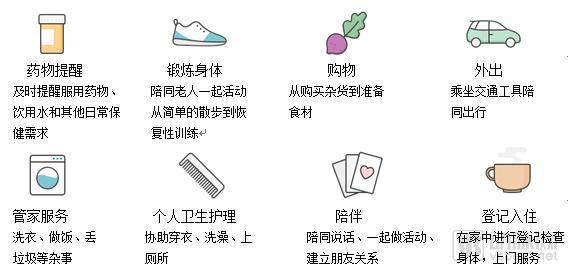
Services Offered by Honor (Image source: Honor official website)
Honor hopes that caregivers can accompany the elderly like family members and help with household chores. Meanwhile, Honor plans to provide psychological care services and offer more emotional counseling to alleviate the loneliness of elderly people living alone.
In addition to its current business, Honor aims to expand into connecting seniors’ at-home health information with hospitals and physicians. Honor is also collaborating with relevant medical institutions, such as the American Cancer Society and the National Parkinson Foundation, to establish seamless information channels between patients and doctors.
As Honor operates in the field of home care, this article selects and analyzes articles related to home care for comparison.
Hometeam
Hometeam, founded in 2013, has completed its Series B financing to date, raising a total of $43.5 million. Reportedly, Hometeam provides each family with an iPad equipped with an app that allows caregivers to upload information such as the elderly patient’s physical condition and medication adherence. Family members can also communicate with caregivers at any time through photos and text messages.
Hometeam also employs a team of nurses who conduct regular spot checks on patients in their homes to ensure they receive appropriate care.
Founder Josh Bruno stated that Hometeam has recruited top-tier caregivers in the field, all of whom possess at least five years of nursing experience and certified qualifications. The company provides highly personalized care plans to its clients; for instance, Hometeam caregivers are required to identify the preferences of elderly clients, and a small budget is allocated to fulfill these preferences.
CareZapp
Founded in 2014 and headquartered in Cork, Ireland, CareZapp differs from typical O2O platforms by leveraging the power of family support. The app features a built-in “Community” function that enables patients to communicate with doctors, family members, and other patients with similar conditions, thereby providing them with social support.
CareZapp features a built-in directory of local healthcare providers. Integrated with existing smart home technologies, the platform utilizes sensors such as motion alarms to monitor patient activity and alerts designated contacts when the system detects that the patient requires assistance or reminders.
HomeHero
HomeHero, founded in 2013, has completed its Series A financing round, raising a total of $23 million. HomeHero is an O2O care platform that partners with hospitals to serve elderly patients after discharge. These individuals often do not require professional nursing care; instead, they simply need someone present to assist with meals and provide basic supervision. HomeHero fulfills this need, thereby improving hospital operational efficiency, reducing the risk of patient readmission, and lowering patients’ out-of-pocket expenses.
In summary, within the elderly home care sector, many O2O platforms have captured specific user markets by focusing on niche segments. Honor’s competitive advantage lies in its high-quality, professional caregiving team that provides non-medical home care services, which align with the needs of most families and are relatively more affordable compared to caregivers with medical backgrounds. Its disadvantage is the relatively limited range of services offered and insufficient innovation for future development.
Compared with Honor, China’s home-based elderly care is more inclined toward medicalization, premiumization, an employee-based model, and professionalization, whereas non-medical care is mostly categorized as domestic housekeeping services, lacking professionalism.
“Professionalism” Does Not Equal “Medicalization”. In fact, many people in China misunderstand the “professionalism” of elderly care, believing that only care provided by individuals with a medical background qualifies as professional care. Consequently, home-based care in China is often equated with domestic housekeeping services.
At present, one of the key reasons for this phenomenon is the shortage of corresponding talent—home care providers. The professional role of home care providers lies between domestic helpers and family nurses; they are capable of providing assistance with daily living activities while also possessing certain medical nursing skills.
It is precisely for this reason that most family care startups in China need to bear the cost of training their employees themselves. For instance, Xiaobai Home Care adopts a self-training model where employees must meet standards before taking up their posts; Ermao Care also requires elderly-care nannies to undergo training before providing services to seniors.
Qingsong Rehabilitation has adopted a home-based model integrating medical care and elderly care. Its mobile app, “Medical Care at Home,” offers a range of services—including infusion, injections, urinary catheterization, dressing changes, and venous blood sampling—with a strong emphasis on clinical medical care.
In summary, China still has a long way to go in developing home-based care. From the training and implementation of professional home caregivers to the continuous refinement of the home care industry, this process requires not only support from national policies but also persistent exploratory efforts by entrepreneurs, working together to advance “human-centered” solutions in the elderly care sector.
Investors or investment institutions interested in the elderly care sector may contact the reporter (WeChat ID: Shirley_CaiAx).