

LinkDoc's Zhang Tianze: Driving China's Healthcare Industry Upgrade with Medical Big Data
Medical informatization has effectively streamlined the patient care process, improved the quality of medical services, and brought significant convenience to the public. As a core value in the development of healthcare, big data serves as a powerful lever for the digital transformation of the medical sector and is an indispensable driving force propelling its advancement.
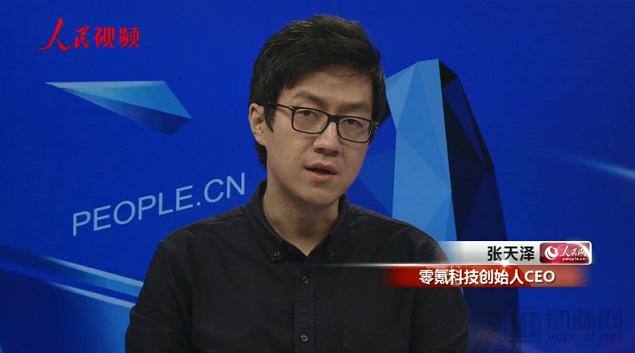
Recently, Zhang Tianze, founder and CEO of LinkDoc Technology, gave an exclusive interview to People’s Daily Online, discussing the topic of “Medical Big Data Driving the Upgrading of China’s Healthcare Industry.”

Lingke Technology’s Zhang Tianze on How Medical Big Data Is Driving the Upgrading of China’s Healthcare Industry
Artificial Intelligence Is Widely Applied in the Assisted Diagnosis and Treatment of Major and Refractory Diseases
From a clinical perspective, the healthcare industry appears to lack a unified “industry standard.” Instead, it is perceived as an ecosystem composed of various secondary disciplines—such as internal medicine, surgery, obstetrics and gynecology, and pediatrics—along with numerous specialized fields. Zhang Tianze noted that different medical conditions present distinct challenges and difficulties. The application of artificial intelligence (AI) in healthcare can be categorized into three types. The first type addresses common and frequently occurring diseases, such as colds and diarrhea, where clinical diagnosis primarily involves over-the-counter (OTC) medications and patient self-medication. The second type focuses on chronic diseases, such as diabetes and cardiovascular diseases, leveraging wearable devices and smart medication adherence tools to monitor patients’ blood glucose levels in real time and provide health management reminders. The third type represents the most extensive application scenario for AI: providing auxiliary diagnosis and treatment support for major and complex diseases.
Artificial Intelligence and Big Data Are Inseparable, Like Two Sides of the Same Coin
Artificial intelligence and big data are as inseparable as the two sides of a coin. Zhang Tianze pointed out that AI can only emerge when there is an abundance of rich data and a large volume of high-quality raw data available for training AI models. Conversely, without AI algorithms, it is difficult to directly utilize massive amounts of data. The relationship between the two is indivisible, much like the obverse and reverse of a coin. He emphasized that complexity and scarcity are the primary characteristics of medical big data.
Zhang Tianze stated that medical big data is complex because it originates from patient case records maintained by different hospitals, physicians, and specialists. Even in electronic format, these records reflect diverse clinical documentation and expression conventions. The primary challenge in medical big data lies in transforming this complex information into data suitable for statistical analysis and artificial intelligence (AI) model training. The second challenge is scarcity. Medical data comprises comprehensive records of patient care, which cannot be simulated. Therefore, the scarcity and value of medical big data stem precisely from its non-simulable and non-replicable nature.

“Focus on Patient Benefits, Focus on the Value of Life” is LinkDoc Technology’s mission and values.
“Care Data, Care Life” is the core philosophy of LinkDoc Technology. Zhang Tianze stated that this philosophy serves as the fundamental guarantee for “gaining widespread support” during the entrepreneurial journey—by strictly adhering to principles in the medical industry and focusing solely on initiatives that benefit life.
Zhang Tianze emphasized that focusing on patient benefits and the value of life constitutes the mission, vision, and core values of LinkCare Tech. Pursuing short-term commercial value is inadvisable; the key lies in generating genuine social benefit. As long as an initiative benefits society, it inherently possesses social value, which in turn creates industrial value. If a product or service offers no benefit or fails to drive progress in patients’ life and health, it will be firmly rejected regardless of its commercial potential. Purely commercial interests must not be allowed to hinder the advancement of the industry.