

VITAS Healthcare Files IPO Prospectus to Expand America's Leading Hospice Care Provider

Vitas Healthcare
Hospice Service Provider
Chinese individuals who wish to refuse intubation, blood exchange, and overtreatment have no other options.
Some time ago, Daxiang Gonghui published an article titled “How Far Are Chinese People from Dying with Dignity?”, which sparked industry discussions on hospice care.
In China, hospice care remains a relatively unfamiliar concept. In contrast, after undergoing prolonged development spanning centuries, foreign countries have established more mature hospice care systems characterized by more meticulous services and highly standardized protocols.
VITAS Healthcare Corporation (hereinafter referred to as “VITAS”) is the largest hospice care provider in the United States, serving hundreds of thousands of patients. Adhering to the principle of putting patients and their families first, VITAS has become a leader in the U.S. hospice movement.
What Makes VITAS Unique? Can It Offer Insights for the Development of Hospice Care in China? VCBeat (WeChat ID: vcbeat) has consulted multiple sources to analyze its distinctive features.

(Image source: Vitas official website)
Hospice Care (English: hospice or palliative care) is not a curative therapy, but rather refers to appropriate medical nursing care (provided in hospitals or at home) for terminally ill elderly patients with a limited life expectancy (six months or less), aimed at alleviating disease symptoms and slowing disease progression.
It typically refers to a multidisciplinary team comprising physicians, nurses, psychologists, social workers, and volunteers providing specialized palliative care services to terminally ill patients with no hope of cure and a life expectancy of no more than six months, as well as offering psychological and physical comfort and support to the families of these patients.
Hospice care prioritizes patient comfort, avoids all invasive treatments, and primarily relies on medications to alleviate symptoms. Data indicate that the clinical manifestations commonly encountered in hospice care are as follows:
Dyspnea
Approximately 70% of patients experience dyspnea during the last six weeks of life. Dyspnea can induce anxiety, fear, panic, and a sense of impending death, while panic can also exacerbate dyspnea.
Fatigue
The incidence of fatigue in the late stages of life exceeds 75%; it can persist for several years and is far more distressing than pain or nausea and vomiting.
# Pain
During the end-of-life stage, 84% of patients suffer from the torment of disease and are unable to care for themselves. Pain disrupts sleep, leads to decreased appetite and weakened immunity, causing distress to both patients and their families.
Depression
Depression is associated with mortality. It can reduce patients' treatment adherence and disrupt their daily routines, such as by decreasing physical exercise, increasing tobacco and alcohol consumption, and leading to non-compliance with treatment regimens and schedules.
According to a domestic study, patients receiving hospice care demonstrated superior outcomes in overall quality of life, emotional functioning, physical functioning, and cognitive functioning compared to other patients.
VITAS was founded in 1978, with its headquarters in Miami, South Florida, USA, and was acquired in 2004 byChemed Corporation (a holding company specializing in acquiring and operating subsidiaries with diverse business activities) continued to operate its hospice care programs after the acquisition.
“VITAS,” derived from the Latin word for “life” or “living,” symbolizes the mission of VITAS Healthcare: to provide comprehensive medical care that maintains a high quality of life for patients with limited life expectancy in the terminal stage.
The story dates back to 1976. The founder, Hugh Westbrook, was a church pastor who had visited patients as a volunteer and chaplain in oncology wards. While teaching part-time at a university in Miami, he met Esther Colliflower, who was also teaching there. Esther was a registered nurse with professional knowledge in nursing. Both believed that the U.S. healthcare system at the time severely lacked appropriate care for terminally ill patients. Consequently, they collaborated to launch courses on death education and psychological counseling, attracting like-minded friends. At that time, Elisabeth Kübler-Ross’s theories on death and thanatology had just emerged, and the hospice care philosophy of St. Christopher’s Hospice in the United Kingdom had just begun to spread to the United States.
In 1978, the two co-founded Hospice of Miami, a hospice care group composed of several volunteers, which became the predecessor of Vitas. At that time, they started from scratch as volunteers, with no funding, no insurance reimbursement, no operating license, and no rules or regulations. It was not until 1979, with the assistance of Florida State Representative Kelly Mick (who later became a U.S. Congresswoman) and Florida State Senator Jack Gordon (who later became the Chairman of the National Hospice Foundation), that Hugh Westbrook drafted and helped pass the nation’s first legislation defining and regulating hospice care organizations, after which the organization gradually grew.
VITAS has become the largest hospice care provider in the United States, thanks to its diverse service offerings and high-quality care teams.
Vitas’s care team is composed of registered nurses, physicians, social workers, hospice aides, chaplains, volunteers, and specialists. Hailing from diverse regions and holding varied beliefs, they are inclusive and open-minded, embracing the natural cycle of life, aging, illness, and death. They understand all patients and are committed to ensuring that terminally ill individuals and their loved ones live with comfort and dignity in their final days, regardless of race, nationality, religion, gender identity, gender expression, or sexual orientation.
Hospice care is not a unilateral service provided to patients; rather, it is a process that requires full cooperation among the patient, their family, and the care team. During this period, the patient’s family also bears significant stress. Therefore, Vitas Healthcare’s care team provides comprehensive services not only to patients but also offers corresponding support to their families.
VITAS Services for Patients
Coordinated Care at All Levels:Care plans are developed with the physician’s informed consent. During Vitas’ weekly meetings, the care team assesses the patient’s physical, psychological, and spiritual condition, as well as any needs or concerns the family may have. Additionally, Vitas coordinates and provides relevant medications, medical supplies, and equipment to ensure patients have everything they need.
Pain Management and Symptom Control: Hospice care is designed to ensure patients remain comfortable, pain-free, and able to enjoy their remaining time, while maintaining as much control over daily decisions as possible. If symptoms become severe, Vitas provides continuous care, with staff working in shifts to deliver 24-hour service until symptoms are under control.
Emotional and Psychological Support: A diagnosis of late-stage cancer can cause significant distress to patients or lead to psychological issues. VITAS enables psychologists and social workers to collaborate in alleviating patient anxiety, thereby maintaining their emotional and mental well-being.
Personalized Care Plan: Each patient is a unique individual, and VITAS tailors clinical care and support services to meet the distinct symptoms, as well as social and emotional needs, associated with each specific condition. Conditions treated by VITAS include: amyotrophic lateral sclerosis (motor neuron disease); cancer; dementia and Alzheimer’s disease; heart disease; HIV/AIDS; renal failure; liver disease; lung disease; and neurological disorders (including conditions involving neurological dysfunction such as stroke, coma, Parkinson’s disease, and multiple sclerosis).
Caring for Patients Anywhere: VITAS’s hospice team provides services to patients in their homes, long-term care facilities, or assisted living communities. If symptoms become difficult to manage at home, inpatient hospice services are also available to provide round-the-clock care until the patient can return home.
Vitas also provides services for patients' families
Caregiver Education and Training: Family members play a vital role in assisting the hospice care team with patient care. As patients’ vital signs weaken, symptoms increase, and communication becomes difficult, VITAS educates families on how best to care for their loved ones and provides coping skills to alleviate patients’ concerns and stress, creating a relaxed atmosphere that allows them to enjoy their final days.
Helping to Make Difficult Decisions: Based on a patient-centered approach, the VITAS care team helps families make difficult decisions, such as whether to administer antibiotics for recurrent infections.
Emotional and Spiritual Support: Family members need to maintain emotional stability in front of the patient, but they also require an outlet to express their feelings. VITAS counselors and social workers help family members release their emotions through active listening and by encouraging emotional catharsis.
Financial Assistance: Although hospice care services are covered by Medicare, Medicaid/Medi-Cal, and private insurance companies, families may face financial challenges due to prolonged illness. Social workers can assist patients’ families with financial planning and in seeking financial assistance.
Respite Care: During the end-of-life care of patients, family members may experience significant stress. VITAS provides up to five days of inpatient care for patients, allowing their families to take a respite break and relax.
Bereavement Services: VITAS’s team worked with the patient’s family for up to 13 months to help them alleviate grief and adjust their emotional well-being.
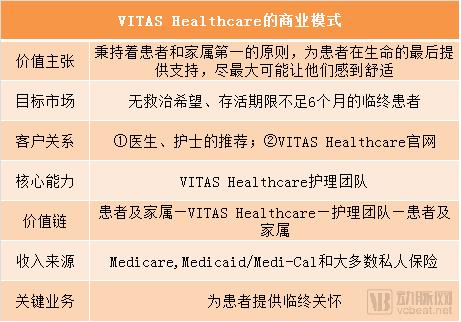
Since 1978, VITAS has been a pioneer and leader in the hospice movement, operating 44 hospice centers across 14 U.S. states and the District of Columbia, with a workforce of 11,490 employees.
Most VITAS patients are referred by physicians and nurses, because in the United States only physicians are qualified to determine a patient’s remaining life expectancy. Hospice care can be initiated only when the prognosis is six months or less, at which point third-party payers such as Medicare, Medicaid, and private insurers will provide reimbursement.
For years, VITAS has upheld four core values that serve as guiding principles for every employee within its large family:
Patients and their families come first;
We take care of each other;
I will do my best today and do even better tomorrow;
I am proud to make a difference.
Guided by this philosophy, the team has assumed greater social responsibility. For services falling outside the scope of Medicare benefits, VITAS provides them free of charge whenever they are needed by or beneficial to patients.
It is precisely this welfare-oriented approach that has earned greater patient recognition for VITAS, thereby attracting more patients and generating a relatively stable revenue stream.
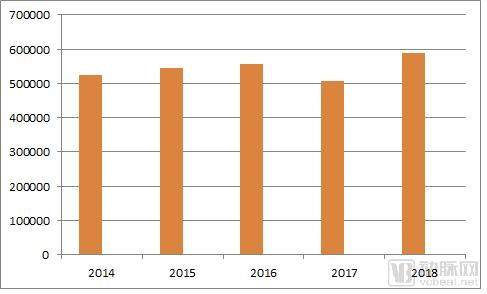
2014 to 2018 (statistics onlyFirst Half of the Year) Service and Sales Revenue (in USD) (Source: Chemed Quarterly Report)
Based on a year-over-year comparison (covering only the first half of the year), VITAS Healthcare’s revenue has remained largely stable. Meanwhile, due to Medicare’s restrictions on reimbursement for patient treatment duration and services, achieving breakthrough growth in revenue remains challenging.
According to previous reports by VCBeat, with the deepening integration of internet thinking, many overseas hospice care service companies are now leveraging the internet as a medium to develop their businesses.
Cake
Founded in 2015, Cake provides users with a platform to express their end-of-life wishes and preferences, helping them discover, store, and share their advance care plans. Targeting the general public, the company guides users in making decisions across various aspects of personal end-of-life planning, including healthcare, legacy, legal matters, and funeral arrangements.
Everplans
Everplans, established in 2010, is an online platform for funeral and end-of-life planning. The company provides a platform that enables users to create end-of-life planning documents, including their final wishes, wills, healthcare proxies, financial information, legal documents, banking details, and other critical personal information. Users can share this information with individuals who can help them execute their end-of-life plans.
Grace
Founded in 2015, Grace initially operated as an online concierge service platform for funeral arrangements and end-of-life care. It later transitioned into a hospice care marketplace, while also providing education to patients and their families on the benefits of hospice care.
In summary, most “Internet+” hospice care service platforms are late entrants with limited financing, fragmented business models, and insufficient offline service capabilities. They are hardly competitive with VITAS Healthcare. However, given the rapid global development of the internet, the “Internet+” hospice care model will gradually evolve, presenting VITAS Healthcare with opportunities to further expand its online presence.
Influenced by traditional Chinese ethical and moral values, end-of-life care for the elderly has long remained in an awkward position. The filial piety–centric mindset places people in a dilemma; in many cases, families are willing to spare no expense to ensure that their elderly relatives receive medical treatment in hospitals.
To some extent, family members’ pursuit of aggressive or even excessive treatment for terminally ill patients means that some elderly individuals undergo medical surgeries shortly before death, which instead inflicts greater physical and psychological suffering on them.
In fact, China established its first hospice care hospital, Beijing Songtang Care Hospital, as early as 1987. However, its development was fraught with difficulties; during the most challenging 16-year period, the hospital was forced to relocate seven times. In July 1988, Tianjin Medical College established the country’s first “Hospice Care Research Center.” Shortly thereafter, Shanghai founded its own hospice care facility, Nanhui Nursing Hospital. Since then, hospice care services have gradually taken root in major metropolitan areas such as Beijing and Shanghai. Currently, there are more than 150 specialized institutions established across China, primarily located in large cities and increasingly extending to some medium-sized cities. Since 2001, Li Ka-shing has donated over RMB 17 million annually to provide free home-based hospice care services through 17 key hospitals nationwide and has established 20 palliative care wards, thereby promoting the development of hospice care in China to a certain extent.
Hospice care has also drawn attention from government authorities. In 1992, the Ministry of Health proposed designating hospice care as one of the key priorities within China’s tertiary healthcare sector, incorporating it into national development plans to promote its healthy growth.
In 2004, certain regions in China incorporated hospice care into their hospital accreditation standards, thereby emphasizing it through policy guidance.
In 2006, the State Council approved the "Opinions on Accelerating the Development of the Elderly Care Service Industry," jointly formulated by ten departments including the Office of the National Working Commission on Aging, the National Development and Reform Commission, and the Ministry of Labor and Social Security. The document explicitly outlined six key priorities for the future development of the elderly care service industry, one of which was to support the development of elderly nursing and hospice care services, and required that policy support be provided in accordance with regulations based on actual conditions.
On February 9, 2017, the National Health and Family Planning Commission issued the “Notice on the Basic Standards and Management Specifications for Hospice Care Centers (Trial),” which stipulated the basic standards and management specifications for hospice care centers.
Since then, policies on hospice care have been further refined. Data show that as of 2015, there were 2,103 medical institutions in China with dedicated hospice care departments, 7,791 geriatric (care) hospitals providing hospice and related services, and 289 nursing homes.
Hospice care in China is still in its nascent stage, with its development exhibiting the following characteristics:
Uneven distribution and narrow coverage;
Low public awareness and insufficient government support;
Shortage of specialized talent;
Insufficient funding sources and lack of clear financial support;
Constrained by traditional beliefs, individuals are unable to face the natural cycles of birth, aging, illness, and death with equanimity;
As population aging in China continues to intensify, the critical issue we must truly address is how to improve the quality of life for terminally ill patients, uphold their personal dignity and the sanctity of life, and enable them to navigate this final journey with greater peace and comfort.