

U.S. Pediatric Dental Clinics Rethink Adult-Centric Models: 9 Innovative Approaches Streamlining Care for Children
Pediatric dental chain clinics and children’s oral health management centers have emerged as a rapidly growing niche within the dental industry in recent years. However, providing dental care to children presents challenges such as anesthesia risks and a lack of high-quality products. Children often become uncooperative while seated in dental chairs; therefore, it is advisable to move away from the traditional adult-oriented dental chair mindset.
“Dental procedures can be very simple and quick when children are cooperative and relaxed. But if they are not, the procedure can present an extraordinary challenge,” said Jason Gould, DDS, Director of Clinical Affairs at Premier Dental Products Company.
So, how can the process of children’s dental visits be streamlined? What high-quality products should pediatric dental clinics offer? And do dentists need to master behavioral management theories? VCBeat (WeChat ID: vcbeat) has compiled insights from international oral health industry experts, sharing the challenges they have encountered in operating pediatric dental clinics and the solutions they have implemented.
The most common problem faced by dental professionals when dealing with children isBehavior and Fear Management. If children seated in the chair are uncooperative, it may adversely affect surgical practice.
“Dental hygiene educator and international speaker Katrina Sanders says, ‘When you’re working in the clinic and there’s a screaming child, everyone can hear it. This certainly affects the work morale of everyone in the clinic.’”
Dr. Jeffrey Limbrey, a private-practice dentist and training specialist based in Mooresville, North Carolina, agrees that uncooperative children can disrupt the care of other patients.
Dr. Jeffrey Limbrey said, “If you attempt to perform surgery on a pediatric patient who also has behavioral management issues, the procedure will slow down, causing your surgical workflow to fall behind, and this slowdown will trigger a snowball effect.”
It is an undeniable reality that pediatric dentistry carries significant risks. The American Academy of Pediatric Dentistry (AAPD) recommends that all children establish proper dental visit habits before the age of one, a stage at which children are notoriously difficult to manage. When these early dental experiences are negative, they can have a lasting impact on the individual’s attitude toward dental care in later life.
Dr. Nathaniel Lawson is the Chair of the Department of Biomaterials at the UAB School of Dentistry. He no longer treats pediatric patients, having witnessed the adverse effects stemming from poor dental experiences in childhood among his adult patients.
Dr. Lawson stated, “I have observed that some adults experience varying degrees of dental anxiety due to adverse experiences in their early years. At times, they delay treatment; some even postpone it until root canal therapy becomes necessary, simply because they wish to avoid visiting the dentist.” Dr. Jeffrey Limbrey noted that deferring treatment until serious problems arise only exacerbates the cycle of fear.
Dr. Jeffrey Limberry explained, “When adults delay treatment and allow problems to worsen, we must perform more challenging, difficult, and costly procedures, as we are either attempting to save the teeth or need to replace them.”
Attention to Hands and Feet, Building Trust
Tina Clark is the Academic Program Director of the Dental Hygiene Program at Oregon Tech, teaching her students at Chemeketa Community College to focus on children’s hands and feet, helping them become accustomed to interacting with dental professionals.
Many dentists focus their attention on the mouth, head, and chest area of patients aged 18 months to 4 years. Clark recommends focusing on the hands and feet during the initial interaction. For instance, she likes to draw attention to the patient’s shoes to alleviate anxiety and allow time for pre-procedural warm-up.
“When you encounter a dog, you don’t immediately grab its ears or bury your face in it. You must let the dog sniff your hand to reassure it that you pose no threat. Then, you can interact with it,” Clark explained. “For children, when interacting with dogs, it is also important to first allow the animal to become familiar with their personal space, ensuring the interaction is safe and free from hazards.”
Reconsider Restorative Materials for More Comfortable and Efficient Treatment
Dr. Lawson suggests reconsidering the materials used in pediatric dentistry. Because time is critical for pediatric patients, adopting simpler and faster methods for similar procedures can help improve efficiency. When Dr. Lawson previously treated pediatric patients while working at a Dental Service Organization (DSO), he wished he could have used more flowable composite materials.
Dr. Lawson explained, “Flowable composite materials (also known as flowComposite Resin, which are the primary materials for tooth restoration) came under heavy criticism in the 1990s, but now they are not significantly different from packable composites. Flowable composite is a good choice that allows for fasterRestoration of Primary Teeth, and achieve good adaptability through small cavity preparation.”
He also stated that he would use more glass ionomer cements instead of composite resin restorations, as glass ionomer cements are more moisture-resistant and can release fluoride, thereby reducing the risk of dental caries.
Dr. Janet McLean, a private-practice pediatric dentist in the Glendale area of Arizona and an international lecturer on minimally invasive dentistry, agrees that glass ionomer sealants and restorative materials are highly useful in pediatric dentistry. The use of GC Fuji TRIAGE glass ionomer sealant has been remarkable for her practice, as it allows her to apply sealants in children who were previously not candidates for such treatment.
“This material is hydrophilic, so it requires moisture to set. You can apply the sealant on a moist surface without using the traditionally corrosive 37% phosphoric acid etchant. Instead, a milder 20% polyacrylic acid conditioner is used to treat the oral cavity and carious lesions,” said Dr. McLean. “Most importantly, glass ionomer sealants will”Release of Fluoride, thereby forming a more caries-resistant enamel surface.”
Dr. Lawson also recommends using TheraCal LC, a light-cured pulp capping material for both indirect and direct pulp capping. This light-cured, resin-modified, calcium silicate-filled pulp capping agent and base material is indicated for direct and indirect pulp capping, or as a protective base beneath resins, amalgams, cements, and other restorative materials. It offers faster setting compared to traditional calcium hydroxide and glass ionomer techniques. Additionally, he would reconsider performing permanent restorations on certain deep carious lesions.
Biodentine is a calcium silicate-based lining and temporary material that can form reparative dentin adjacent to the dental pulp and can also be used as a temporary material for up to six months.
Dr. Lawson said, “If a child has a deep cavity in a tooth and it is unclear whether root canal treatment is needed, how can one respond appropriately without permanent restoration? Biodentine can be used to assess the situation.”
Another treatment for dental caries recommended by Dr. Lawson is silver diamine fluoride (SDF). Silver diamine fluoride can arrest dental caries until a more durable restoration is feasible, or until the primary tooth exfoliates.
Dr. McLean also likes to useSilver Fluorideto treat dental caries in young patients, particularly during the initial encounter when establishing trust, as it is rapid, simple, and painless. Furthermore, it serves as a desensitizing agent. Dr. McLean stated that the combination of silver fluoride with glass ionomer cement has opened up a “whole new world,” enabling treatment without the need for local anestheticsAchieving Minimally Invasive Treatment。
Dr. McLean said, “We now have far more tools and materials at our disposal than before. As a result, we can care for more patients and provide treatments that are more comfortable, easier, and faster.”
Let the Right Products Deliver Their Efficacy
Sanders is an international lecturer specializing in local anesthesia. She recognizes that fear of injections is widespread. “Even for adults, syringes can be intimidating. It is important for dental professionals to be mindful of the fear children may experience upon seeing dental equipment in the clinic,” she said.
This is why he likes Kovanaze, a product on the marketNasal Spray, can replace injections and provide anesthesia to the entire maxillary arch, including the palatal aspect.
Sanders said, “Any dentist knows that they never prepare to inject the palate in pediatric patients. Kovanaze’s intranasal administration is highly useful for non-injection anesthesia techniques.”
Another challenge hygienists face is flossing around orthodontic appliances. Hormonal changes and nutritional deficiencies, common among adolescents, often lead to inflamed gums, making flossing difficult. However, the Platypus Ortho Flosser simplifies this issue. “Recommending products like the Platypus Ortho Flosser to orthodontic patients makes it easier for them to adhere to their home care recommendations,” she said.
Kim Miller stated that another challenge for dental professionals is keeping the patient’s mouth open. She prefers using various types of bite blocks and clamp devices. Miller said, “They hook onto the lower anterior teeth, supporting the downward movement of the mandible and helping the patient keep their jaw open.”
Show Dental Tools to Children to Alleviate Fear
Children have never seen similar equipment in dental clinics. Miller has been working for 36 years since 1992 and has received training. Miller believes that children should be introduced to various tools in advance, even allowing them to touch them.
Miller said, “I always spend considerable time showing children what the tools are. So, when I pick them up and begin to interact with the child face-to-face, if you can eliminate the unknown, the fear will disappear.”
When Alyssa Aberle worked at school and community health centers, she would take the sealant/etchant applicator with its blunt tip and press it against her glove to demonstrate that it was not a needle and would not puncture her glove.
“I affectionately call it the ‘little spray gun,’ which is about the same size as a tooth,” Abler explained. “It’s always helpful for children to learn something new from such situations.”
Dr. Gould is a general practitioner, but he has treated many children and excels at using tools to gain their trust, particularly dental handpieces and dental instruments, butNot applicable to needlesHe said, “Never show the needle to a child.”
Distract the Child
Dr. Jennifer Saunders is a private-practice general dentist in rural Montana, where she provides in-home treatment to approximately 10% of her pediatric patients. The challenges faced by her pediatric patients stem from fear of the unknown. Dr. Saunders employs various techniques to manage their anxiety, including tell-show-do. However, if these methods prove ineffective, she attempts toEngage them in conversation to distract their attention.。
Many operators have televisions capable of playing children’s programs. However, distraction does not necessarily require something flashy or high-tech.
Dr. Saunders said, “Although I wish we had televisions in our rooms, we do not. Therefore, we talk with them and try to get them to wiggle their toes or focus on other things.”
Seize the Gaps in Children's Rhythms
Dr. Gould stated that a significant distinction between pediatric and adult dentistry is the absence of comparable periods of quiet treatment time.
“Adults can sit quietly there, open their mouths, and cooperate with you,” he said. “But for children, that’s not always the case. Sometimes, you have to work on their schedule. If they can remain still and quiet for a period of time, you’d better complete the procedure as quickly as possible within that window. Minimizing buffer time is extremely helpful.”
Creating an Eco-Friendly Clinic Environment
A child-friendly office makes children feel comfortable and sets a warm tone for future visits. Sanders works one day a week at a train station-themed pediatric clinic. “We attract quite a few children,” he said. An office designed with a playful, child-centric theme not only looks fun but also feels non-threatening, helping to put children at ease.
Dr. McLean, a mother of two, co-owns her private pediatric dental practice with another female dentist and mother. Together, they have built a team of assistants and hygienists who are passionate about working with children.
“Our office has a movie theme. When you walk in, there is a sign that says ‘Welcome New Patients,’ with each new patient’s name clearly displayed,” said Dr. McLean. “When children see their names, they get very excited. Their parents have told us that the kids are truly happy to come here because the environment is very child-friendly.”
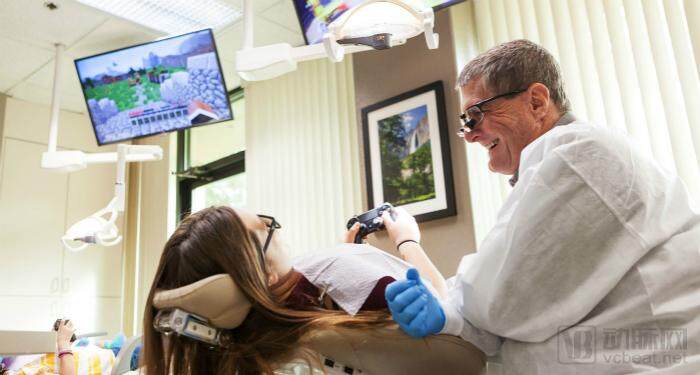
In an Environmentally Friendly Clinic, Appropriately Distract Children
Dr. McLean’s office features bright colors, toys, books, and play areas designed at children’s eye level. The clinic is equipped with numerous televisions, and even includes aVideo Game Room. For a child, a sterile, hospital-like clinic with cold, bright lighting may cause some anxiety.
Clark stated that one way to be child-friendly is for dental professionals to speak their language and keep up with the current thinking and behavioral patterns of children. She said, “This creates a connection where you can talk with children about things that interest them.”
Learning Behavioral Management Techniques
As a dentist, you are responsible for managing children’s behavior in the dental chair. Dr. McLean believes that strong behavior management skills are the primary way to make pediatric dentistry easier.
Dr. McLain pointed out that over the past decade, due to changes in parenting styles and pediatric dental training programs, there has been a particular emphasis on the increasing use of sedatives.
Tranquilizers are drugs that exert an inhibitory effect on the cerebral cortex, reducing the activity of certain organs or tissues and suppressing the central nervous system to produce a sedative effect. Tranquilizers help alleviate depression and anxiety. At appropriate doses, they do not impair normal brain activity; however, excessive or long-term use can lead to certain side effects, such as central nervous system depression manifested by drowsiness and confusion.
“Anyone can work on an unconscious child,” said Dr. McLean. “What sets pediatric dentists apart is their training in child development and psychology, as well as their ability to build trust with children and their families. We need to collaborate with these young patients, and sometimes I feel that behavior management is an art form.”
Dr. McLean believes that working with children requires patience; when communicating with them, one should distract their attention and encourage compliance. “I enjoy telling interesting stories and even singing to them to create a comfortable and pleasant medical experience,” she explained.
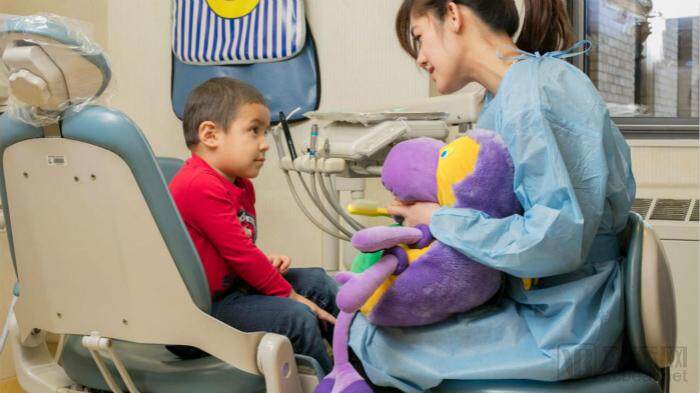
Pediatric Dental Care: Building Trust and Alleviating Concerns
Dr. McLean said, “When you have the patience and willingness to invest more time in building trust, you create a positive experience for both children and their parents. There is no better word-of-mouth or free advertising than a satisfied customer telling all their friends, ‘My kids love going to the dentist.’”
Abele stated that reasonable scheduling makes treatment more likely to succeed. Regardless of who arranges the schedule, parents should work together to identify the optimal timing to facilitate cooperation with their child.
She said, “Parents know better than anyone what the best time of day is for their children, whom they know best, or at least when to schedule therapy when the children are not hungry, not tired, and have no new things on their minds.”
Anesthesia may be administered if necessary.
Sometimes, even your best efforts may not suffice. Some patients require a specialist who can administer sedatives, such as an anesthesiologist, to make the treatment less traumatic. Recognizing when to refer patients to a reputable pediatric clinic that is well-equipped to handle some of these challenges can improve patient outcomes. Saunders states that all dental professionals need to know how to manage referrals within their practices.
Saunders said, “Talk to your parents and tell them that you don’t want your child to panic every time they hear the dental drill or see the dentist’s chair; it shouldn’t be like this.”
Clark concurred, emphasizing the importance of early positive experiences in preventing adverse effects later on. For some young patients with dental fear, sedation is the optimal choice.
Clark said, “Do not be afraid to use nitrous oxide, as it serves a sedative function.” He stated, “A positive experience in a dental clinic can mitigate any negative effects. If we can start with positive experiences early on, it will have a significant impact.”
Article Author:Terri Lively, all images sourced from dental.columbia.edu
References:
www.dentalorg.com
dental.columbia.edu