

Long Hill Capital's Jiang Xiaodong: Backing Three Healthcare Unicorns and Driving 80% Portfolio Revenue Growth in 20 Months

Long Hill Capital
Venture Capital Institution
—“The more difficult the times, the more we must return to fundamentals, rather than swimming in bubbles every day or creating bubbles ourselves.”
In October 2016, Long Hill Capital completed the fundraising for its first U.S. dollar fund, totaling $125 million.
At that time, Jiang Xiaodong had just concluded his 10-year tenure at NEA (New Enterprise Associates), a global venture capital firm managing $20 billion in assets. During those decade, the projects he invested in generated over $500 million in cash returns for NEA.
On July 24, 2018, Long Hill Capital announced the completion of fundraising for its second U.S. dollar fund and the first closing of its first RMB fund, with a combined total exceeding RMB 2 billion. With this milestone, Long Hill Capital, established 20 months ago, now manages two U.S. dollar funds and one RMB fund, bringing its total assets under management to RMB 3 billion.
Since the founding of Long Hill Capital, VCBeat (WeChat ID: vcbeat) first interviewed Jiang Xiaodong in March 2017. A year and a half later, following Long Hill Capital’s oversubscribed fundraising round, VCBeat spoke with Jiang Xiaodong again to explore where healthcare companies should head amid the current challenges of raising capital in the primary market.
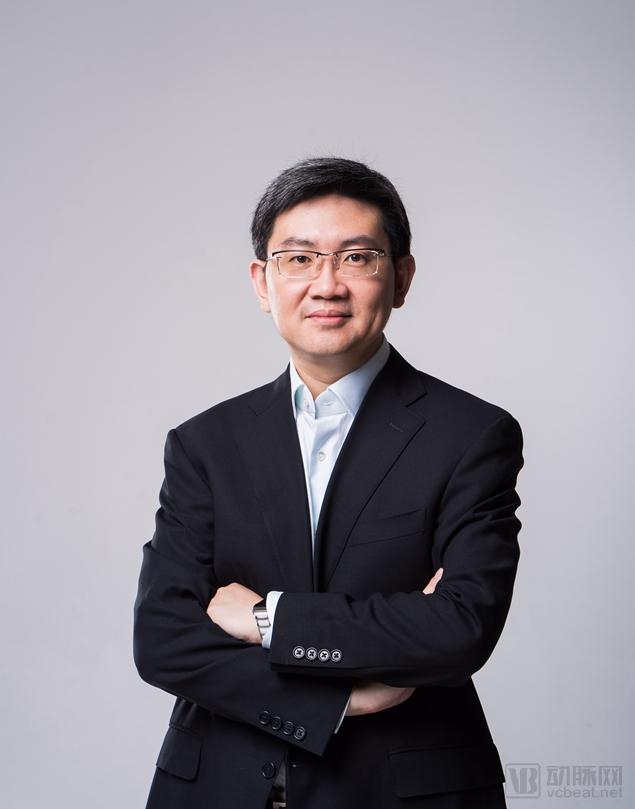
Jiang Xiaodong, Partner at Long Hill Capital
VC 2.0: Achieving Oversubscription Amid a Capital Winter
According to statistics from Zero2IPO Research, in the first quarter of 2018, the number of VC/PE funds successfully raised in China decreased by 54.82% year-on-year, while the total amount raised dropped by 74.85% year-on-year. The supply of RMB capital entering the primary market experienced a precipitous decline.
Addressing the widespread fundraising difficulties in the primary market, Jiang Xiaodong stated that this was mainly due to the impact of the new asset management regulations and the collapse of P2P lending platforms, which further shrank private capital.
Similarly, the outlook for the US dollar is not optimistic. Although overseas investors are relatively less affected by China’s immediate environment, potential economic factors such as a US-China trade war and the repatriation of US dollar capital have cast a shadow over the capital markets.
Against this market backdrop, Long Hill Capital’s second U.S. dollar fund completed its fundraising in less than three months, with a total raise of $265 million—significantly exceeding its initial target. The fund’s investors include numerous globally renowned pension funds, endowments, foundations, financial institutions, family offices, and funds of funds. Its first RMB-denominated fund also garnered support from a diverse range of institutional investors, including national-level government guidance funds for venture capital, market-oriented funds of funds, and prominent family offices.
Long Hill Capital is a VC 2.0 fund and, based on its establishment date, is a relatively new fund. VC 2.0 primarily refers to funds established after 2013 by a new wave of general partners (GPs) who had worked for over ten years at existing institutions, accumulating extensive experience, professional networks, and a strong track record before branching out to launch their own firms.
Amid a grim fundraising environment, Long Hill Capital’s ability to achieve oversubscription and break through the capital winter is attributable to LPs’ recognition of its impressive historical performance and investment strategy.
In terms of historical performance, Long Hill Capital invested in approximately 30 projects within just 20 months. The portfolio companies’ aggregate revenue in 2017 increased by 80% compared to 2016, with two-thirds of them achieving positive cash flow. Follow-on financing raised by these portfolio companies totaled over RMB 2 billion. Among them, LinkDoc, Hygeia Healthcare, and Gushengtang have become unicorns in the traditional sense.
“Even with strong historical performance data to back it up, Jiang Xiaodong still believes that LP investing is essentially about investing in the future, not in past performance. ‘Investment focuses on future actions; historical performance only reflects the past. Therefore, what investors care about most is: What projects are being invested in? And what investment methodology is being employed?’”
Long Hill Capital continues its successful thematic investment strategy, focusing on early- and growth-stage companies in China’s healthcare and quality consumer sectors. Jiang Xiaodong believes, “By concentrating all our energy, capabilities, and intellect on a select few areas, we naturally accumulate greater expertise. The resources and experience possessed by Long Hill Capital can provide substantial added value to our portfolio companies.”
“Accompanying companies in their growth is the mission of early-stage investors”
Long Hill Capital focuses on early-stage healthcare and medical enterprises. At a stage when the business model is not yet fully formed, its investment criteria place greater emphasis on the market segment and the founder’s determination. Among Long Hill Capital’s portfolio companies, LinkDoc serves as a typical example.
For Jiang Xiaodong, LinkDoc was undoubtedly special. “It took only one day from our first meeting to signing the investment agreement.” At that time, LinkDoc was worlds apart from the current “unicorn” it has become. The entire team consisted of just five people; Beijing LinkDoc Technology Co., Ltd. had not yet completed its business registration; the team was working out of an affiliated company’s office; the number of accumulated medical records stood at only a few hundred; and there was just one partner hospital.
He recalled, “At that time, there was no well-established system; some processes were even semi-manual.” For a project still in its infancy, what prompted him to make such a swift decision was the distinctiveness and “resilience” demonstrated by the founder, Zhang Tianze.
“Although the project is in its very early stages, the founders have a clear understanding of just how difficult this endeavor will be. Despite this awareness, they have remained steadfast and possess a well-defined blueprint in mind, including detailed strategies for execution and overcoming challenges. Their thinking goes beyond mere enthusiasm; it is deep and thorough. This was a key factor in our rapid decision to invest.”
Precisely because Zhang Tianze regarded his mission as extremely challenging from the very first day of his entrepreneurial journey, he was able to exert 120%, or even 150%, effort to overcome difficulties whenever they arose in the future.
Jiang Xiaodong believes that, whether from the perspective of medicine or healthcare, the three fundamental goals of healthcare—improving quality, reducing costs, and expanding accessibility—must increasingly be guided by evidence-based principles. The application of artificial intelligence in new drug development, along with the research and utilization of real-world data, has given rise to LinkDoc Technology as it exists today.
As the sole investor in LinkDoc’s Series A round, Long Hill Capital gave strong endorsement to LinkDoc Technology at its early stage. After just three years of development, LinkDoc Technology has leaped from a startup to a high-profile unicorn, with a post-money valuation of RMB 7 billion following its Series D financing. In terms of specific business performance, by the first half of 2018, the penetration rate of single-cancer types on LinkDoc’s medical big data platform had reached 60%, far surpassing that of its U.S. peers.
Jiang Xiaodong believes that it is precisely the founder’s “resilience” and the market’s demand for real-world data that have enabled LinkDoc to increase its valuation by 40-fold in just three years, becoming a unicorn valued at $7 billion.
Beyond financial support, early-stage investors often serve more as companions—a sentiment described by Jiang Xiaodong as “a special kind of emotional bond.” As evidenced by Long Hill Capital’s continued backing of LinkDoc through its Series B, C, and D funding rounds, this approach underscores the firm’s commitment to supporting companies with tangible actions, aiming to accompany them on their journey toward genuine long-term success.
“The biggest trend in healthcare is the increasing shift toward being user (patient)-centric.”
Healthcare is a slow-moving industry, yet it boasts a substantial market size with highly pronounced demand. Long Hill Capital seeks out the drivers of future healthcare transformation. Future healthcare will serve as a critical “infrastructure” within the market. The core investment thesis of Long Hill Capital is to identify combinations of technological advancements and business model innovations that propel transformative change across the entire healthcare industry.
In the healthcare industry, stock market “black swan” events occur frequently, and the persistently high costs of innovative drug R&D have led to the frequent emergence of sky-high-priced drugs. Addressing these social issues, Jiang Xiaodong stated, “The market must not allow bad money to drive out good.”
He told VCBeat that the most prominent trend in today’s healthcare industry is being “customer (patient)-centric.” Evidence-based outcomes are driving a shift from fee-for-service to value-based, outcome-driven payment models. This transition offers more choices for patients, physicians, and payers alike, with reforms hinging on real-world results. This is the primary force propelling transformative change across the pharmaceutical and healthcare sector.
Over the past 20 months, Long Hill Capital has invested in nearly 30 companies. In the healthcare sector, its portfolio spans both the currently trending field of oncology big data and niche areas with substantial unmet demand, such as rehabilitation and mental health.
In addition to LinkDoc Technology, a technology-driven enterprise that has rapidly grown into a unicorn, healthcare services also represent a key investment sector for Long Hill Capital. Jiang Xiaodong stated, “I believe the investment opportunities in healthcare services lie in service upgrades that address strong demands which remain unmet or inadequately met.”
In niche segments such as mental health, rehabilitation, and oncology, the investment targets selected by Long Hill Capital address substantial, genuine, and significantly unmet market demands.
A typical example is Hygeia Healthcare. Hygeia Healthcare focuses on third- and fourth-tier cities, addressing the pain point of the lack of dedicated oncology hospitals in these areas through a chain-operated model. Currently, it operates more than 10 self-owned oncology hospitals and over 50 oncology centers, establishing itself as one of the leading enterprises in China’s chain-based oncology services sector.
Rehabilitation medicine is highly marginalized in public hospitals, and rehabilitation is a long-term process. Long Hill Capital’s investments in “Dongfang Qiyin,” “Qingsong Kanghu,” and “Jing Yiwei” were driven by the latent demand in this market. Taking Dongfang Qiyin as an example, although it operates in the relatively niche field of speech rehabilitation, it has gradually grown into a leader in this segment due to the scarcity of professional speech therapy services in the market, with 23 chain speech therapy centers across China.
Regarding the development challenges of chain institutions, Jiang Xiaodong believes that the core issue lies not in capital investment, but in talent. The scarcity of talent is a central challenge in the development of almost all industries, particularly in the rehabilitation sector, where imperfect training mechanisms and narrowed career paths have led to a shortage of professionals.
The core of delivering high-quality service lies in having high-caliber talent. “A key issue is the enormous demand; how can we more effectively increase the supply of high-quality services to meet this demand?” In Jiang Xiaodong’s view, the field of psychological counseling, which suffers from a shortage of excellent professionals despite huge market demand, is also a promising direction.
China faces a severe shortage of high-quality psychological counselors, with their numbers totaling only a few thousand. The distinguishing feature of Jiandan Xinli (Simple Psychology), another enterprise invested in by Long Hill Capital, lies in its ability to revitalize existing resources of qualified psychological counselors and transform traditional psychological counseling services through internet-based approaches.
Moreover, the key to a sustained talent pipeline lies in education. JianDan XinLi is also leveraging internet-based education to rapidly cultivate psychological counselors with professional competence and qualified clinical practice experience. For this niche sector of mental health, “it is conceivable that changes in supply will become markedly evident within three to five years.”
“From the perspective of the overall market, an increasing number of enterprises are undergoing transformation, with the essence of this change lying in the passage of time.” Moving beyond the traditional framework of face-to-face psychological counseling, artificial intelligence (AI) has been introduced into the Jiankang Xinli (Simple Psychology) platform. Jiang Xiaodong stated, “Software and machines can provide continuous attention and support to clients; if successful, this approach may well spark a revolution in the mental health industry.”
“We never discuss with entrepreneurs when they can become unicorns.”
According to Jiang Xiaodong, the key to a “unicorn” lies in these three characters: “uni,” “corn,” and “beast.”
“Du” refers to a company’s unique attributes; “Jiao” denotes its competitive advantages, which can be continuously reinforced; and “Shou” embodies animalistic instinct, often described in Chinese business culture as “wolf-like” spirit. Only with such wolf-like tenacity within the team can a company rapidly stand out in fiercely competitive markets.
“Although market enthusiasm for ‘unicorns’ has never waned, Jiang Xiaodong stated, ‘We never discuss with entrepreneurs when they will become a ‘unicorn.’ Capital should guide entrepreneurs on how to build a great company, rather than being driven by short-term interests.’”
The fervor surrounding unicorns may divert entrepreneurs’ attention toward more utilitarian, short-term objectives. Yet the essence of healthcare lies in problem-solving. “Since we have chosen to focus on this industry, we must address its challenges.” In his view, only companies that effectively resolve industry pain points can ultimately create substantial value.
In the current environment, Jiang Xiaodong offered several suggestions for startups:
From a funding perspective, companies should improve their cash flow as soon as possible by securing financing quickly to lock in gains.
From an operational perspective, enterprises should return to their essence and original aspirations, reflecting on for whom they are solving problems and how they are solving them. “Customers are the true mentors. What we should ponder every day is how to resolve customers’ problems and serve them better.”
“I encourage everyone not to shy away from difficulties; we must tackle even the toughest challenges, but our ultimate goal is to truly solve problems and deliver real value to customers,” said Jiang Xiaodong.