

2018 New Health Capital Summit Kicks Off, Focusing on Investment Value Amid Industrial Transformation
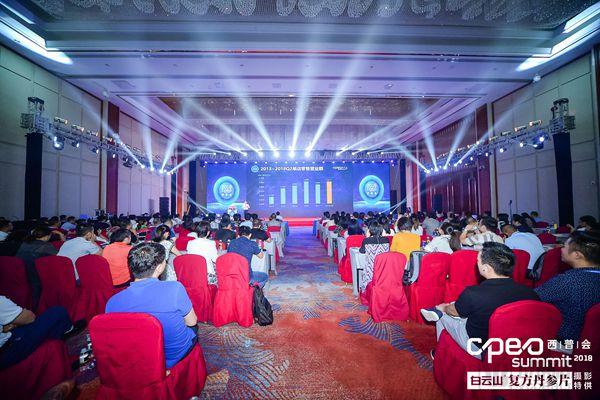
On August 12–13, the “2018 New Health World Healthcare Industry Capital Summit” was held in Boao, Hainan. As a deep strategic media partner of the conference, VCBeat (WeChat ID: vcbeat) attended the event in its entirety and provided comprehensive coverage.
This year’s summit, themed “Investment Value Amid Industrial Leapfrogging,” brings together leading enterprises in China’s health industry.Decision-makers,Mainstream Investment InstitutionsExecutives, etc.Over 300Famous IndustryLeaderElites, focusing on the value direction of the health industry development.
In recent years, China’s health industry has witnessed multiple inflection points marked by structural restructuring and transformation. There has been a surge in national health demands, while the country’s economic growth model has shifted toward a “consumption-driven economy” alongside the comprehensive implementation of the Healthy China Strategy. Major policy initiatives, including the 36 Measures for Pharmaceutical Innovation, the Consistency Evaluation, and the Two-Invoice System, have been introduced in succession. Meanwhile, returning overseas talents have increasingly embarked on entrepreneurial ventures, sparking an emergence of new technologies, business models, and enterprises within the industry.
Concurrently, investment and financing demands in the health industry have surged, with substantial inflows of cross-sector capital, frequent mergers and acquisitions (M&A), and growing calls for deeper integration between industry and capital. According to a ChinaBio report, venture capital (VC) funding and M&A investment in the healthcare sector grew rapidly from 2013 to 2017, achieving a compound annual growth rate (CAGR) of 86%. In 2016, the total value of M&A transactions in China’s health industry reached $25 billion, with domestic deals primarily focused on pharmaceuticals, while overseas acquisitions were concentrated in the medical device and healthcare services sectors.
However, the influx of investment firms, intense capital competition, and the scarcity of high-quality targets have driven up valuations across health industry projects, showing signs of a bubble. Identifying undervalued opportunities with reasonable valuations and pinpointing investment directions with future potential have become the top priorities for investors in the health industry today.
In recent years, China’s pharmaceutical market has maintained a steady growth trajectory. However, based on policies introduced since 2016—including the Consistency Evaluation, the “36 Articles on Innovative Drugs,” and the Law of the People’s Republic of China on Traditional Chinese Medicine—the key value segments of China’s pharmaceutical market in the coming years have become clearly defined.
In the realm of innovative drugs, China has provided a fertile ground for pharmaceutical R&D innovation through supportive policies, talent support, special funding investments, and complementary medical insurance measures. Coupled with the new regulations introduced by the Hong Kong Stock Exchange, which have reduced the risks associated with innovative drug development, the potential for domestically produced innovative drugs in fields such as CAR-T technology, PD-1/PD-L1 inhibitors, and small-molecule targeted therapies is significant, as indicated by international drug sales figures. Therefore, companies with robust R&D pipelines and substantial R&D investments, such as Hengrui Medicine, Luye Pharma Group, BeiGene, and Innovent Biologics, can be considered prime investment targets.
In the generic drug sector, rising pressure on medical insurance payments and the onset of the patent cliff have significantly boosted demand in China for high-quality, affordable generic drugs, leaving substantial room for growth. Currently, China’s generic drug market is vast, with a total size of approximately RMB 500 billion. Therefore, the few generic drug manufacturers that are among the first to pass consistency evaluations and address urgent clinical needs—such as Poly Pharma, Salubris, and Huahai Pharmaceutical—will be the primary beneficiaries of this expansive consumer market.
In the realm of traditional Chinese medicine (TCM), most listed TCM enterprises in China are currently undervalued, representing a value depression. In recent years, favorable policies have been continuously introduced, including the exemption from drug markups, the promulgation of the Traditional Chinese Medicine Law, and the issuance of the Belt and Road Development Plan for Traditional Chinese Medicine. These developments have enhanced market recognition of TCM. Furthermore, the TCM industry itself boasts high brand barriers and a stable customer base. Therefore, branded TCM companies with high brand awareness, exclusive products, and clear product heritage—such as Conba, Yunnan Baiyao, Guangyuyuan, and Tasly—are expected to benefit significantly.
In terms of services, as health consumption awareness among urban and rural residents in China continues to rise, consumer demand for high-quality medical services is gradually awakening. However, the sector for premium medical services in China emerged relatively late, leaving significant untapped potential in this essential market. Data shows that the number of private hospitals in China has surged in recent years, increasing by 68% over five years—from 9,786 in 2012 to 16,432 in 2016. Therefore, high-quality medical service providers such as Meinian Onehealth Healthcare, Aier Eye Hospital, and Ma Yinglong are poised for promising growth prospects.
In the chain pharmacy sector, China’s retail pharmacy industry has entered a period of consolidation amid the rise of new retail models and the influx of external capital. Statistics from the China Food and Drug Administration show that between 2012 and 2017, the number of independent retail pharmacies dropped by nearly 50,000, while the number of chain pharmacy outlets grew to 220,000. Large-scale chain pharmacies with substantial capital reserves and clear management models enjoy significant competitive advantages, such as Laobaixing Pharmacy, Dashenlin Pharmaceutical Group, and Yixintang.
In summary, it can be concluded that the five key sectors—innovative drugs, generic drugs, branded traditional Chinese medicine (TCM), healthcare services, and chain pharmacies—are currently value depressions in health industry investment, with promising future potential.
“New Health World Healthcare Industry Capital Summit” is one of the most forward-looking and influential annual events in China’s healthcare industry. Leveraging the industrial resources of the CPHI Conference, it convenes hundreds of decision-makers from listed companies, hundreds of senior capital executives, and dozens of media outlets each year, exerting significant influence across China. The summit serves as a platform for the integration of industry and capital, offering an optimal venue for the discovery and recognition of value in the healthcare sector. It identifies new investment tracks driving industrial transformation, uncovers high-quality targets at various stages both domestically and internationally, and pinpoints value depressions in specialized industry segments, thereby leading the direction of development and investment in the healthcare industry.
The summit’s agenda is tightly aligned with current hot topics. Past agendas have included: the development direction of China’s health industry over the next decade; regulatory trends and new approaches to capital operations for pharmaceutical companies; the logic of value discovery for pharmaceutical enterprises under new circumstances; and innovation directions and project selection in China’s health industry.
Regarding the convening of the summit, Wu Han, President of Zhongkang Information, stated in his opening remarks: “As the world’s most populous country and its second-largest economy, it is essential to host a global health industry conference on Chinese soil, leveraging China’s strengths and integrating global wisdom to drive the development of the health industry and meet humanity’s health needs.”