

Cambridge Cognition: Five Years Post-FDA Approvals, How CANTAB Is Reshaping Digital Neurology
Humanity’s exploration of the brain has never ceased for thousands of years.

(Image source: Cambridge Cognition)
The brain is a product that emerged only after billions of years of biological evolution reached a certain stage; it is arguably the most complex system in the universe. Despite occupying only a small volume of the body, this tissue governs the consciousness and behavior of animals and humans.
Data shows that more than 2 billion people worldwide are affected by brain and neurological disorders, with the global economic impact of brain-related diseases reaching $2.2 trillion annually. Reports indicate that early diagnosis helps reduce the costs associated with treating these conditions. Validated evidence demonstrates that effective assessments can timely track disease progression, thereby enhancing treatment adherence and efficacy.
Almost everyone is aware of the dangers posed by neurological disorders. Today, our focus is on Cambridge Cognition, whose core product, CANTAB, offers benefits that extend beyond the assessment of brain conditions; it plays an irreplaceable role in their prevention. CANTAB enables early detection of neurological issues, allowing patients to better manage their brain health.
Cambridge Cognition’s vision is to make CANTAB a tool for early screening in all patients, thereby delaying the onset of disease. Multiple CANTAB products have received FDA clearance and are authorized for commercial sale.
In the “enigmatic” field of brain health, what new innovations has Cambridge Cognition’s CANTAB introduced? VCBeat (WeChat ID: vcbeat) consulted multiple sources in an attempt to analyze its distinctive features.
Cambridge Cognition was founded in 2002 by Jean Hammond, John Hammond, and Guy Wood-Gush (who are currently shareholders of the company). It was listed on the Alternative Investment Market ('AIM') of the London Stock Exchange in 2013 (ticker: COG) and is registered in the United Kingdom.
The company is a digital neuroscience technology company,Leveraging CANTAB (Cambridge Neuropsychological Test Automated Battery, which includes highly sensitive, precise, and objective measurements of cognitive functions related to neural networks)Specializing in the study of the brain's nervous system.The conditions currently under study include: Alzheimer’s disease, attention deficit disorder, autism, depression, Down syndrome, epilepsy, Huntington’s disease, multiple sclerosis, neuromuscular diseases, obsessive-compulsive disorder, Parkinson’s disease, schizophrenia, stroke, traumatic brain injury, and others.

(Source: Cambridge Cognition Official Website)
Cambridge Cognition’s business segments comprise three areas—pharmaceutical clinical trials, academic (cognitive) research, and healthcare products—which work in synergy to enhance the overall operational efficiency of the company.
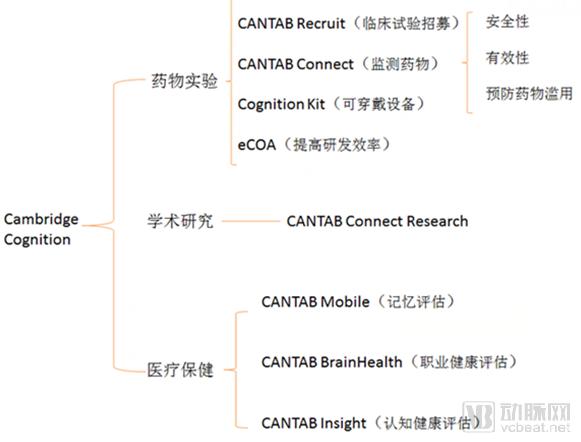
To accelerate the development of safe and effective drugs, reduce the risks of clinical trials, and increase the likelihood of success, Cambridge Cognition has combined leading neuroscience with innovative technologies to develop new digital products and a cloud platform.
CANTAB Recruit (Clinical Trial Recruitment)
CANTAB Recruit software can be configured to meet a company’s specific research needs and leverages built-in inclusion criteria and participant matching, enabling companies to screen patients at home with CANTAB Recruit, thereby saving on trial-and-error and time costs.

(Source: Cambridge Cognition; compiled by VCBeat)
CANTAB Connect (Medication Monitoring)
CANTAB Connect provides precise, objective, and reliable digital cognitive assessment solutions for drug clinical trials across all therapeutic areas in Phase I–IV studies, ensuring the safety and efficacy of pharmaceuticals while helping to prevent drug misuse.

(Image source: Cambridge Cognition official website)
Cognition Kit is a custom-designed digital health platform that provides wearable devices and smartphone applications for high-frequency data collection to demonstrate the real-world effectiveness of treatments.

(Image source: Cambridge Cognition official website)
eCOA (Enhancing R&D Efficiency)
Electronic Clinical Outcome Assessment (eCOA) enhances the validity of data in trial outcomes, improves clinical trial efficiency, increases success rates, and minimizes the risk of cognitive study failure.
CANTAB Connect Research by Cambridge Cognition is a highly precise and reliable research software that provides rapid, sensitive, and objective measurements of behavior, underlying neural circuits, neurochemical systems, and biomarkers, suitable for all areas of brain research.
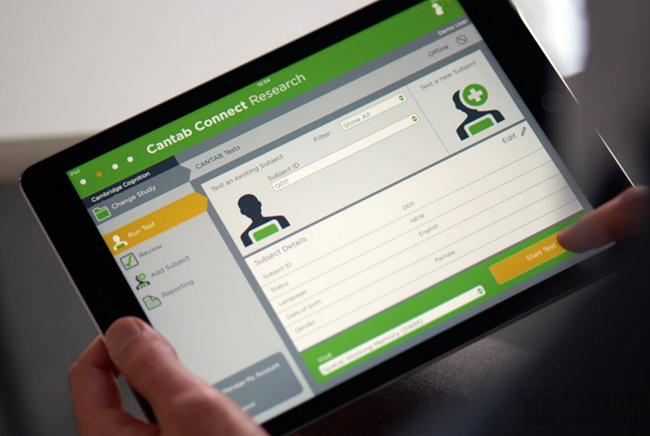
(Image source: Cambridge Cognition official website)
Cambridge Cognition’s healthcare products enable clinicians to assess patient health across various applications, facilitating the early detection of cognitive impairment, thereby maximizing treatment efficacy, improving health outcomes, and reducing costs.
CANTAB Mobile (Memory Assessment)
CANTAB Mobile uses the iPad as a medium, leveraging its sensitive touchscreen to conduct memory tests that have been utilized in clinical research on Alzheimer’s disease for over 30 years. Data shows that the use of CANTAB Mobile has increased the diagnosis rate of dementia from 39% to over 46%. CANTAB Mobile has enhanced awareness of mild cognitive impairment in primary care and serves as an incentive to actively encourage patients to undergo assessment at an early stage.

(Image source: YouTube video, compiled by VCBeat)
Using the mental health scales included in CANTAB BrainHealth to assess employees' psychological well-being enables early intervention, which can reduce operational risks, lower absenteeism costs, and improve productivity for enterprises. It also allows for timely follow-up on employees' mental health, thereby generating greater benefits for the organization.

(Image source: YouTube video, compiled by VCBeat)
CANTAB Insight is an analytical assessment tool that evaluates five domains: executive function, processing speed, attention, working memory, and episodic memory. It also offers optional emotional assessment using the Geriatric Depression Scale (GDS-15) to evaluate the current emotional state of test participants.
B2B-focused, with sound financial standing
Cambridge Cognition went public in 2013, leveraging its advanced technology, superior products, high-quality services, and robust personnel support to provide products and corresponding ancillary services to enterprises, neuroscience researchers, and healthcare providers.
Cambridge Cognition boasts a robust team dedicated to neuroscience research, providing clients with neuroscience consulting services in addition to conducting research.
Meanwhile,To ensure the quality of client services, Cambridge Cognition’s research management team handles a comprehensive range of tasks, including clinical trial initiation, logistical support, rater training for assessments, data management, technical support, and study maintenance through to completion.
In addition, professional statistical analysts provide specialized data analysis, the data team delivers precise data, research designers offer strategic planning for corporate operations, technical consultants provide expert technical guidance, and professionals offer interpretation and oral translation services for complex reports.

Note: Unit in hundreds of millions of pounds (Source: Annual Report)
In fact, the data indicate that Cambridge Cognition’s current business focus is on developing software to optimize the CANTAB system and providing associated services.
Compared with 2016, although total revenue decreased by £15 million (2.2%), software and services revenue increased by £300,000 (4.7%). As shown in the table, one reason for the decline in total revenue was the drop in hardware revenue.The company underwent a strategic restructuring in 2015, with hardware no longer serving as a core business area. However, revenue figures were inflated by a large hardware order secured in 2016.
Service revenue increased by 33%, reflecting the proactive strategic measures taken by Cambridge Cognition to diversify its product offerings; software revenue declined by 13.5%, reflecting the absence of significant contract signings in 2017.

Note: Amounts in thousands of pounds sterling (Source: Annual Report)
The annual report shows that Cambridge Cognition’s gross profit increased by 4%, from £5.89 million in 2016 to £6.11 million in 2017. As the gross margin on hardware sales was significantly lower than that of the higher-margin software and services segment, the corresponding decline in hardware sales volume contributed to the rise in overall profitability. The profit margin reached 91% in 2017, up from 86% in 2016.
Administrative expenses increased by £630,000 (11%), from £5.86 million in 2016 to £6.49 million in 2017. Cost of sales was impacted by the restructuring of the sales team in 2016, decreasing from £986,000 in 2016 to £622,000.In addition, corporate operations and company costs remain under strict control.
Overall, since its listing in 2013, Cambridge Cognition has maintained a sound financial position, with an overall upward trend.
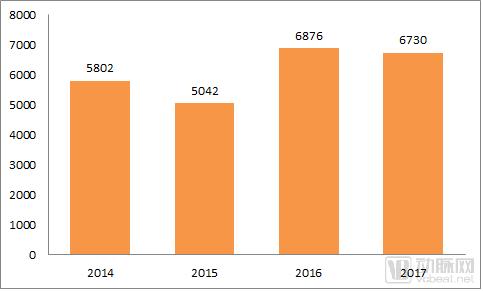
Revenue of Cambridge Cognition from 2014 to 2018 (in thousands of pounds)
(Source: Cambridge Cognition Annual Report)
Although Cambridge Cognition has established a solid track record in exploring the human brain, the recent intensive exploration of the digital health sector has given rise to several new startups worthy of our attention.
Kernel
Kernel, founded in 2016, has gained considerable recognition; within just one year of operation, it acquired Kendall Research Systems, a company established in 2011 that provides pioneering new tools for neuroscience discoveries using optogenetics technology.
Kernel is a brain-computer interface technology company that develops neural implants to connect human thoughts with computers. Founded by Bryan Johnson, the founder of the online payment company Braintree, Kernel received $100 million in personal investment from Johnson.
G-Therapeutics
Founded in 2014, G-Therapeutics is developing a therapy that combines spinal cord implants with gravity-assisted training, aiming to accelerate and enhance functional recovery in patients with spinal cord injury and improve their quality of life.
BrainCo
Founded in 2015, BrainCo originates from the Harvard Innovation Labs and specializes in brain-computer interface (BCI) wearable devices. The company has currently developed two product lines: the Focus series and the Lucy series. The Focus series is a wearable headband that monitors brainwaves and provides teachers with real-time feedback on students’ attention levels in the classroom. The other product, “Lucy,” enables users to interact directly with electronic devices (such as toys or robotic equipment) using only brain signals.