

Delian Capital's Pharma Investment Strategy: Focused on Core Risk Points, Not Traditional Funding Rounds
Lead: Delian Capital focuses on VC+, offering higher valuations to teams in China with strong commercialization capabilities and those with products that possess international competitiveness.
Founded in 2011, Delian Capital is an investment firm dedicated to technology-driven innovation. It focuses on technology-centric projects in sectors such as advanced manufacturing, cutting-edge technologies, and healthcare. The firm has invested in dozens of startups across multiple sub-sectors, including robotics, smart hardware, new energy, artificial intelligence, big data, enterprise services, and healthcare.
Since 2016, the institution has focused on domestic pharmaceutical innovation and development projects. These projects range from mature ventures post-Series C financing to early-stage startups that, at the time of investment, possessed nothing but their founding teams.
What is their assessment of current investment opportunities in China’s pharmaceutical and healthcare sector? What underpins their investment thesis? For this firm, what types of projects are considered attractive and worthy of attention? With these questions in mind, VCBeat interviewed Zhao Guobao, Vice President of Delian Capital, to seek his insights.
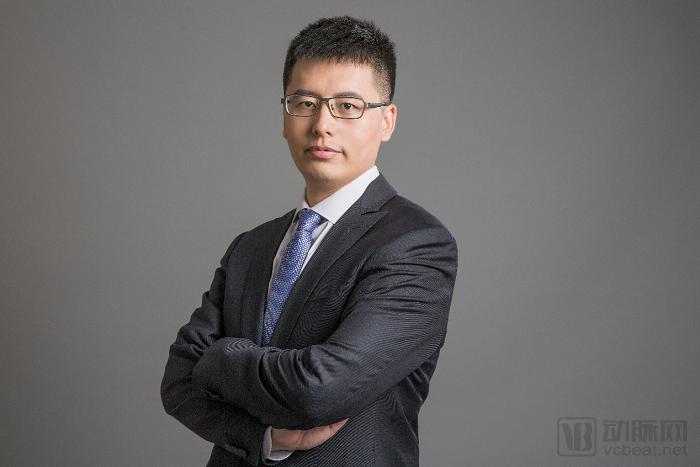
Zhao Guobao, Vice President of Delian Capital
Across all sectors, most investment institutions exhibit preferences for specific funding rounds, such as angel rounds, Series A, or private equity (PE) stages. Among the projects invested in by Delian Capital, there are teams with highly mature R&D pipelines and management structures, as well as ultra-early-stage ventures that have just been established, lacking both laboratories and products.
When asked about Delian Capital’s preferences, Zhao Guobao told VCBeat, “Whether in the early or late stages, the entire process of new drug development faces different risks and offers varying levels of return.”
He believes that, against this backdrop, the first priority is to clearly recognize the fundamental essence of a fund. In his view, Delian Capital is a composite entity, and the core essence of a fund is to deliver returns to limited partners (LPs) while fostering the growth of high-potential portfolio companies.
“Risk is ever-present. When evaluating a project, we first consider the risk-to-reward ratio, which is the most fundamental logic underlying all investments,” stated Zhao Guobao.
Whether a project is in its early or late stage is more of a relative concept. None of these projects generate revenue, let alone profits; in other industries, they would all be considered early-stage ventures. When focusing specifically on the pharmaceutical industry, risk profiles vary across the sector due to scientific and market factors. “We do invest in some challenging projects, but our fundamental principles remain unchanged: we ensure that the return-on-investment ratio stays within a controllable range,” he added.
Drug development differs from other sectors, as every stage—from clinical trials to new drug applications—is subject to stringent regulations and external oversight. “While there are variations, our expectations for companies follow a clear pattern,” said Zhao Guobao. “Delian Capital tends to invest in companies at the VC+ stage, meaning we believe they have largely overcome core risks and entered a phase of rapid growth, regardless of their funding round or how long they have been established.”
In addition to the projects themselves, policy trends serve as a critical reference in the investment process. China is currently undergoing a period of reform, during which shifts in policies supporting innovative drug development are evident. These changes are driven by two areas of unmet needs within the healthcare sector.
On one hand, there is widespread public demand. In real-world practice, innovative drugs are utilized only 20% of the time, with conventional medications being the mainstay of disease treatment for the majority of cases. Although China is a major pharmaceutical manufacturer, it is not yet a pharmaceutical powerhouse. There remains significant room for improvement in both generic and innovative drugs.
“The generics market boasts a nearly RMB 1 trillion opportunity space; identifying companies with high entry barriers still presents significant opportunities,” stated Zhao Guobao. He acknowledged that this rationale underpinned Delian Capital’s investments in Hangzhou Changxi and Shukang Biopharma.
Hangzhou Changxi is the first company in the pharmaceutical sector invested in by Delian Capital, and one of the very few companies domestically and internationally that possess platform technology for dry powder inhalation drug delivery systems. The market size for inhalation drug delivery in China is estimated at RMB 10 billion, yet domestic companies hold less than 10% of the market share.
Zhao Guobao frankly admitted that when he invested in Changxi, the project was at a very early stage. The entire venture consisted of only four founding team members, with no office, R&D center, or even laboratory in place. However, the founding team’s experience in the inhaled drug delivery market allowed him to see the future potential of the project.
Shukang Biopharma is a company invested by Delian Capital, specializing in the development of pediatric suspension medications.
In addition to physiological differences, pediatric drug dosages also differ from those for adults. Pediatric doses are lower than adult doses, making dose division a challenge. Compared with tablets, liquid formulations are more suitable for children because they allow for better dose control. “If the drug has good solubility, it can be formulated as a solution; if solubility is poor, it can be formulated as a suspension, in which the drug particles are suspended in the liquid,” stated Zhao Guobao.
Pediatric clinical trials are relatively challenging. To address this, the government has introduced new policy guidelines to accelerate the market approval of pediatric drugs, such as extrapolating data from adult studies. Many drugs have been extensively validated in adult populations over a long period. These guidelines for pediatric drug development allow for the estimation of pediatric dosages based on adult data, thereby reducing the time required for dose-finding trials.
“Not only that, but foreign suspension formulations have been validated over a long period and are supported by robust pediatric data. ‘Therefore, the country has also issued new guidelines that allow for the extrapolation of appropriate dosages for the Chinese population using data from Asian populations and first-line drugs used abroad,’ Zhao Guobao revealed.”
In terms of policy and regulatory oversight, these supportive measures can accelerate the market launch of pediatric drugs while ensuring their safety. Meanwhile, technological barriers enable Shukang Bio to maintain a competitive edge in the industry.
On the other hand, high-quality, highly innovative novel drugs represent a major trend. For China to become a pharmaceutical powerhouse, it must carve out its own path in innovation. “Although much of our investment in novel drugs is directed at Chinese companies, it is largely global in scope; the data generated by their products are global,” Zhao Guobao revealed to VCBeat. “Due to changes in domestic regulatory review policies, the pace at which global drugs enter the Chinese market has accelerated, shortening the window of opportunity for local innovative drug teams. Only by ensuring their products possess international competitiveness can innovative drug companies thrive.”
MicuRx Pharmaceuticals is a biopharmaceutical company focused on the research and development of drugs against drug-resistant bacteria, with operations in both China and the United States. Its R&D center is located in the U.S., boasting antibacterial new drugs closest to commercialization in China and an internationally leading R&D pipeline. When Delian Capital participated in its financing round, the company was already relatively mature.
It is worth mentioning that,MicuRx Pharmaceuticals is currently the only pharmaceutical company in China to have received CARB-X funding for new drug development.This signifies that Chinese R&D enterprises have gained a degree of global recognition, and also underscores MicuRx Pharmaceuticals’ competitiveness in China and even worldwide.
In addition, Delian Capital has also invested in an epigenetics drug platform called OnKure. OnKure is a biopharmaceutical company focused on the discovery and development of targeted small-molecule drugs, aiming to optimize current standards of care by modulating the tumor microenvironment.
“OnKure’s current product portfolio is primarily focused on oncology therapeutics; however, epigenetics is a discipline that extends beyond cancer,” Zhao Guobao revealed. “In the future, we will launch entirely new product lines that are not exclusively limited to oncology.”
"Logic from Cases: Delian Capital does not limit itself to the role of an investor in either generic or innovative drugs, but instead selects the most promising partners in niche sectors based on policy and market trends."For generic drugs, we must strive to be the best in China; for innovative drugs, we must ensure global competitiveness."Zhao Guobao concluded."
When asked how to screen a project, Zhao Guobao emphasized: “First and foremost, it must align with the policy trends of the industry.” That is, what are China’s policies? What are the trends in the United States? Does the project’s development direction conform to the industry’s logic?
“Products that meet clinical needs must always come first. Those lacking clinical significance or merely exploiting regulatory loopholes will still face significant risks in the future,” he emphasized. Moreover, as more companies enter the pharmaceutical industry, factors such as market dynamics and competitiveness have also become essential considerations.
In the coming years, multiple independently developed innovative products will gain regulatory approval in China. Consequently, capital will focus more intently on commercial success, making commercialization capabilities particularly critical and rendering the narrative around commercial viability increasingly difficult to articulate. The challenges of future commercialization pose a significant hurdle for China’s existing biopharmaceutical startups.
It is not only required that products be competitive in terms of efficacy, but also that the right choices be made in market access, KOL education, and pricing strategies (particularly in light of Gilead’s low-pricing strategy for hepatitis C drugs and Bristol Myers Squibb’s low-pricing approach for anti-PD-L1 antibodies). It remains questionable whether many existing scientist-led pharmaceutical R&D companies are capable of meeting these new challenges. Enterprises with stronger commercialization teams will have better prospects.
Taking the diabetes drug market as an example, there have been few small companies in the global diabetes market to date. The four major giants—Novo Nordisk, Sanofi, Eli Lilly, and Merck—dominate the primary market segments. Moreover, there are relatively few startups across the entire metabolic disease market.
“These are medications intended for long-term use, so the requirements for safety are extremely high. The number of participants and costs involved in clinical trials are often prohibitive for startups,” explained Zhao Guobao. Furthermore, given the established advantages of industry giants, latecomers will also need to incur substantial marketing expenses after launching their products.
In contrast, the oncology field has also seen an influx of many companies, yet the landscape is markedly different. Most antibiotic drugs achieve cure rates exceeding 90%, leaving limited room for further improvement. Oncology, however, is distinct; even a two-month extension in survival time holds profound significance for cancer treatment.
In short, the value of new oncology drugs is more evident.
Moreover, in oncology clinical trials, small-scale studies may also gain approval as long as suitable patients are identified.
In addition to external factors, assessing technical complexity and risk is indispensable for biotechnology investments. Technologies must have barriers to entry and moats to secure a competitive advantage over peers. However, whether these risks can be overcome requires further validation, which Zhao Guobao believes constitutes the scientific foresight necessary in the investment process.
“Innovation is a scientific endeavor; while risks cannot be entirely avoided, many can be anticipated through meticulous research and comparative analysis,” he continued. For instance, by benchmarking against similar products, validated targets, and competitors’ progress, and by consulting industry experts, one can identify the most critical risk factors.
“We believe that if the most critical risks have been overcome, the remaining risks are acceptable,” he stated. “Whether the team is large or small, and whether the venture is in its early or mature stage, is actually less important.”
Overcoming the most critical risks also demonstrates the company’s competitiveness within the industry.Projects with leading competitiveness in a specific niche are highly attractive to Delian.
“If a project’s core risks have not yet been overcome or fully validated, it remains worthy of attention. ‘If certain progress has been made, such projects are also ones we are willing to engage with and support,’ he told VCBeat.”
In 2018, the Hong Kong Stock Exchange officially extended an olive branch to pre-profit biotechnology companies. This move sent shockwaves through China’s biotechnology sector, particularly in the pharmaceutical industry.
Before the opening of the Hong Kong stock market, unprofitable biotechnology companies could only access capital markets through NASDAQ, which served as one of the few exit channels for investors. If listing in Hong Kong enables investor exits, it will attract greater capital participation, thereby indirectly accelerating R&D in China’s pharmaceutical industry and narrowing the gap with international standards.
How do such changes impact Delian Capital's investment logic?
Zhao Guobao believes that Hong Kong is an internationalized market. This market is still predominantly composed of Chinese individuals, who can better understand their fellow countrymen; as a result, most companies can obtain more reasonable valuations than those available on the Nasdaq market.
“Investors are more aware that China’s value proposition differs from the global landscape, which is a positive development for high-quality startups,” he said.
However, he also emphasized thatRegardless of market fluctuations, the criteria for project evaluation and the technical barriers within the industry remain unchanged.Therefore, he believes that changes in exit channels do not imply shifts in market demand, let alone alterations to the fundamental nature of funds.
“We will"Responding to All Changes with Constancy"“, the investment logic will not change significantly.” He replied. “In China, Delian will offer higher premiums to outstanding commercialization teams; globally, Delian will offer higher premiums to teams with internationally competitive products.”