

How Light Aesthetic Medicine Chains Break Through in the Battle for Tier-1 and Tier-2 Cities
Following the era of plastic surgery hospitals, non-surgical medical aesthetics has emerged as a new industrial paradigm, with competitors from first-tier cities such as Beijing, Shanghai, Guangzhou, and Shenzhen flocking to join the “battle” for this expanding market.
How can the current ecological characteristics of the non-surgical aesthetic medicine sector be defined? Can different business models outperform their competitors? Do conventional market positioning and the alignment of resources such as talent, technology, and capital meet the development needs of the non-surgical aesthetic medicine market?
VCBeat (WeChat ID: vcbeat) conducted an exclusive interview with Huang Kan, co-founder of PhiSkin (hereinafter referred to as “PhiSkin”), a leading chain brand in the non-surgical aesthetic medicine sector and an industry benchmark in skin management and minimally invasive aesthetic procedures.
Here are Huang Kan’s insightful perspectives:
1. The vitality of light medical aesthetics brands stems from market positioning and business philosophy, which serve as the cornerstone for aligning with a robust support system;
2. For PhiCare, the top priority is to establish an efficient, high-quality, standardized service process from the perspective of customer needs;
3. Beyond marketing and customer acquisition systems, a critical asset and barrier supporting the future development of the medical aesthetics industry is the accumulation and deep understanding of customer data;
4. Consumer demands are gradually diversifying, with non-surgical needs expected to surpass surgical ones. Younger consumers increasingly prefer minimally invasive, non-invasive, and even reversible methods to enhance their appearance and maintain a youthful look.
Prior to the interview, our reporter conducted research and found that under a centrally controlled operational and monitoring system, PhiSkin has completely abandoned the traditional approach used by some institutions of relying on consultants to “close big-ticket sales.” Instead, it emphasizes meticulous and standardized customer service processes, with a greater focus on long-term customer satisfaction. How has PhiSkin achieved this management model? We invited Mr. Huang to share his insights below.

PhiSkin’s Three Partners: CEO Kang Yajun (center), CIO Zhang Haodong (right), and COO Huang Kan (left)
Since the 1990s, traditional large-scale medical aesthetic and plastic surgery institutions, represented by the Putian network, entered a golden age of development. Their service offerings were predominantly surgical, and they invested heavily in marketing. After 2010, with the rise of younger consumer generations such as those born in the 1990s and mid-to-late 1990s, non-surgical “light” medical aesthetics gradually emerged as a new industry model, representing an untapped blue ocean market. Young consumers who grew up in the mobile internet era have developed consumption habits that have fostered new perspectives on medical aesthetic spending and novel approaches to institutional brand management.
In 2012, against this broad industry backdrop, PhiCare Medical was established. “Initially, we were driven by the vision and aspiration to create the ‘Starbucks of the medical aesthetics industry,’ striving to build an institution with relatively standardized services and a compelling brand appeal. We placed greater emphasis on consumers’ long-term word-of-mouth, loyalty, and repurchase rates, aiming to establish our brand as safe and trustworthy in their minds.”
Before founding PhiSkin, Huang Kan served as a senior executive at Allergan China, offering unique insights into the trends of China’s medical aesthetics market. “For PhiSkin, the priority is to address issues from the customer’s perspective by consciously establishing standardized steps in the service process. The core component of this service workflow is the formulation of treatment plans and the identification of patient needs. Recognizing that every consumer is unique, PhiSkin’s current service pathway can be summarized as ‘Whitening, Radiance, Beauty, and Tightening.’ This approach delivers progressive, intelligent aesthetic solutions tailored sequentially to skin tone, skin texture, facial contours, and anti-aging needs.”
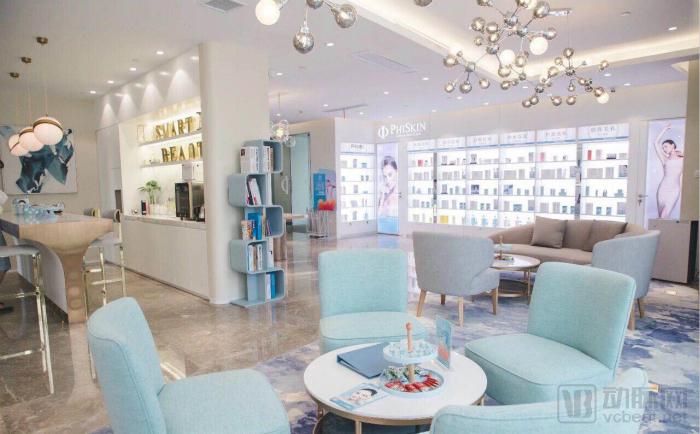
PhiSkin Fu'ai MedicalFeaturing an Integrated Smart Aesthetic Solution for Whitening, Radiance, Beauty, and Firming
A vast influx of young, first-time patients—over 90% of whom had never previously visited a medical aesthetics clinic. PhyPlus begins with entry-level skin management services, which are somewhat akin to those offered by broader life-beauty establishments. “Whitening” addresses concerns such as skin brightening, correcting dullness, and spot reduction; while “Light Therapy” focuses on comprehensive improvement of skin texture, tackling issues like lackluster complexion, enlarged pores, blackheads, nasal comedones, acne scars, and post-acne marks.
Following improvements in skin tone and texture, the next step is to enhance the aesthetic appeal of clients’ facial contours. Huang Kan revealed, “This represents PhiAesthetics’ core competitive advantage. We have developed proprietary offerings such as the OG Curve (Phi-OG Volumizing Technique) and the Golden Ratio Scale, leveraging aesthetic principles to help clients formulate treatment plans for contour lifting and minimally invasive procedures.”
Reporters learned that in the minimally invasive and non-invasive energy-based device sector, PhiSkin has specially invited Professor Su Gongmin, a leading authority in laser therapy in the Asia-Pacific region, to join its team. Together with high-quality upstream manufacturers, they have jointly developed treatment guidelines for various laser, radiofrequency, and skin-tightening energy-based devices, as well as established clinical standard operating procedures (SOPs). In the injectable aesthetics segment, “We have an internal training white paper that categorizes physicians into six levels and offers three types of training programs: beginner, intermediate, and advanced. Therefore, every physician at PhiSkin must undergo rigorous assessment and evaluation to determine which anatomical areas they are authorized to treat, ensuring consistency in training and assessment standards.”
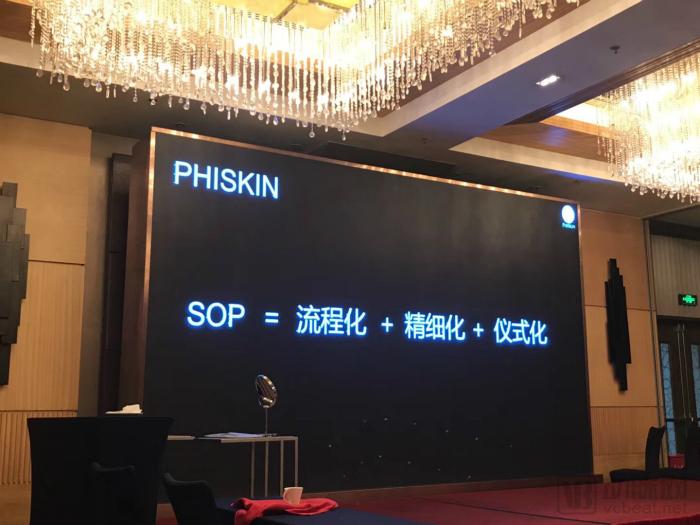
Developing Clinical SOPs: One of PhiSkin’s Core Competencies
“Tightening” targets facial anti-aging and rejuvenation treatments, primarily addressing issues such as skin laxity and sagging. Procedures like thread lifts, Thermage, Ultherapy, body contouring, and autologous fat grafting deliver significant results in youthful maintenance for consumers.
In terms of service workflows, aesthetic planning, and standardization of treatment protocols, PhiSkin has also implemented extensive clinical supervision and assessment to ensure physicians effectively adhere to clinical guidelines when delivering treatments.
As an emerging industry format, there are many players eager to seize the first-mover advantage and claim a share of the market. Numerous institutions have joined the ranks of non-surgical medical aesthetics, while traditional plastic surgery hospitals, lifestyle beauty providers, and skin care management centers are also expanding their service offerings and accelerating chain expansion. However, each is still searching for breakthroughs in defining what constitutes an effective chain business model.
Huang Kan believes that the vitality of a light medical aesthetics brand stems from its market positioning and business philosophy, upon which a robust support system is aligned.
For Fuyi, the brand’s target audience is positioned as urban CEO (Confident, Elegant, Optimistic) women, primarily distributed in first- and second-tier cities with relatively developed economies. “The connotation behind the brand represents a very special customer experience, making people feel that it is trustworthy. After establishing the brand’s overall top-level design, the key lies in how to align corresponding talent, systems, capital, and market insights to sustain the brand’s continuous development.”
Huang Kan revealed that PhiCare emphasizes standardization within its operational framework, while prioritizing respect for individual patient needs when addressing customer demands. “PhiCare aims to build a trustworthy brand, which is a systematic endeavor encompassing elements such as marketing, team management, service standardization, IT infrastructure, training systems, medical quality control systems, and financial support. To become a chain brand capable of cross-regional expansion and gaining recognition in different cities, these upfront investments are indispensable. Although they may not yield immediate returns, substantial human, material, and financial resources must be allocated to establish a robust centrally managed operational system, thereby ensuring the future seamless operation of multi-location chains.”
How the central or headquarters control system operates: Huang Kan shared with reporters several core steps and advantages of PhiSkin.
First, prioritize talent development.The training and development of all store managers, consultants, and nurses at PhiSkin strictly adhere to the headquarters’ centralized control and coordination system. Externally, PhiSkin has partnered with the Chinese Association of Plastics and Aesthetics (CAPA) to establish a global academic exchange platform for medical aesthetics—PhiSkin Academy. Additionally, a panel of 51 experts, led by Professor Xiang Leihong, Chief Physician of the Department of Dermatology at Huashan Hospital, forms the expert consortium known as the Dr.Phi Alliance. Internally, “We have established a corporate university for in-house training, featuring a comprehensive system for physician training, management, and tiered evaluation. This ensures that newly recruited employees at PhiSkin meet medical service standards within the specified timeframe. Furthermore, we impart holistic aesthetic concepts, as client experience is directly linked to physicians’ clinical skills and expertise.”
Second, establish a brand and marketing system.All core project planning and implementation at Fuyi are designed, managed, and executed by the headquarters’ marketing department. This includes brand external image, third-party platform collaboration models, and the grid-based consultation team, all following unified execution logic and planning. Fuyi was among the early medical aesthetics institutions to partner with online platforms such as Meituan-Dianping and Alibaba Health (Tmall) in the non-surgical aesthetic medicine sector.
Third, adopt intelligent IT and CRM systems.Beyond marketing and customer acquisition systems, the critical assets and competitive barriers underpinning the future development of the medical aesthetics industry lie in the accumulation and deep understanding of customer data. “PhilCare has implemented a WeChat-based CRM and a Hospital Information System (HIS). By leveraging digital software systems to monitor the implementation and execution of standardized protocols, our management team, even at the Shanghai headquarters, can access real-time information on appointments, treatment procedures, and post-operative satisfaction levels at remote clinics. The data-driven management system archives customer consultations, treatment records, and skin type-specific needs. Based on these insights, PhilCare’s physician team formulates more precise and effective long-term aesthetic management plans for each client, ensuring that PhilCare can sustain refined operational excellence.”
Fourth, strictly control medical quality and mitigate risks.In the medical aesthetics industry, the greatest challenge in maintaining a comprehensive medical quality control system lies in ensuring safety and mitigating risks, as any oversight can cause irreparable damage to the brand. To address this, PhilCare has established a dedicated medical team responsible for managing medical records and standardizing treatment protocols at each of its clinics.
Based on the aforementioned management processes, Huang Kan revealed that the repurchase rate among long-standing customers at some of Phi’s clinics exceeds the industry average.
It was reported that in July 2017, PhiSkin announced the completion of a Series B financing round amounting to hundreds of millions of yuan, led by Legend Capital and participated by Ares Management Corporation, Zhengqi Finance, and Shiyu Capital. Following the financing, PhiSkin continued to focus on and strictly control the quality of medical services and customer consumption experience, creating an upgraded service process that further enhanced customer trust in the PhiSkin brand.
In July 2018, the flagship store of PhiSkin, located in the Lujiazui Financial Center in Shanghai, officially opened. Currently, it operates a total of 11 specialized clinics and three high-end Medical Spas across Beijing, Shanghai, Hangzhou, and Ningbo. Future expansion will primarily focus on the Yangtze River Delta region and Beijing.
“Fuyi primarily establishes its chain of clinics in core CBD business districts within cities, where customers are relatively concentrated. Its facilities generally fall into two categories: outpatient departments spanning 800–1,000 square meters, and smaller clinics of approximately 300 square meters. Under this model, Fuyi deploys two to three flagship stores with distinct technical specializations in each core area. These regional outpatient centers collaborate closely over a short period, sharing medical and brand resources to capture market share.”
Reporters learned that under a centrally controlled operations and monitoring system, PhiSkin has completely abandoned the traditional practice of relying on consultants to “close large deals,” thanks to its meticulous and standardized customer service processes. “PhiSkin places greater emphasis on long-term customer satisfaction.”
“Driven by diverse consumer demands, in the second half of the year, PhiAir will continue to roll out a series of non-medical skin management centers. By leveraging high-frequency treatments and low-risk devices, these centers aim to achieve noticeable improvements in clients’ skin conditions while simultaneously educating them on how to select appropriate and effective medical-grade skincare products based on their individual skin characteristics. Through a multi-tiered integration of services and products, as well as a strategic combination of medical and non-medical offerings, PhiAir meets consumers’ personalized needs. This constitutes one of PhiAir’s core competitive advantages.”
Regarding future planning, Huang Kan outlined several strategic priorities. “First, we will continue to deepen our presence in the Yangtze River Delta market, with plans to open 50 chain clinics in the future. We will also focus on expanding into the Beijing market to further increase the number of outlets. By concentrating on a specific region, we can maintain a relatively smaller management radius, allowing us to continuously validate our development path and business model, which emphasize refined management, service standardization, and enhancing physicians’ professional expertise.”
Additionally, Fuyi will continue to strengthen and enhance its internal team. “To forge strong iron, one must be strong oneself.” Frontline nurses, aestheticians, and physicians, as well as the headquarters team, will remain highly focused on internal training and capability development to deliver the best possible experience for clients.