

PillPack: Revolutionizing Medication Adherence and Pharmacy Delivery – Lessons for China's Online Pharmacies
Speaking of Pillpack, it is a startup that needs little introduction. This June, Amazon acquired Pillpack for $1 billion. Overnight, Pillpack transformed from an obscure mail-order pharmacy into a rising star that major pharmaceutical retail giants now view with apprehension.
Pillpack was founded in 2013 and launched its products in 2014. In just four years, it grew its customer base from 50 to 40,000. The company sold one million medication packs annually and generated $100 million in revenue in 2017, carving out a niche in the U.S. market dominated by pharmaceutical retail giants. It was subsequently acquired by Amazon, serving as a strategic lever for the tech giant to penetrate the multi-hundred-billion-dollar prescription drug market.
VCBeat (WeChat: vcbeat) has outlined PillPack’s development trajectory and business model, seeking to uncover the “secret” behind Amazon’s interest in this relatively small online pharmacy retailer and service provider.
Pillpack’s services are primarily designed for patients with chronic conditions requiring long-term medication, helping them manage complex drug regimens. These conditions mainly involve new and specialized medications for cancer and autoimmune diseases, as well as drugs for chronic diseases that require long-term use. Due to the complexity of multiple medications and frequent prescription updates by physicians, coupled with the fact that most patients with chronic diseases are elderly, these patients often end up taking duplicate medications or failing to adhere to their prescribed regimens.
Pillpack, literally translated as "medicine pocket," requires users to provide relevant information upon registration, including their treating physicians and current medications. Pillpack packages each dose of the user’s various prescription medications into individual pouches, with the administration time clearly labeled on each package. Users can only remove one pouch at a time from their customized Pillpack medication dispenser. Additionally, Pillpack offers a companion app to send medication reminders.
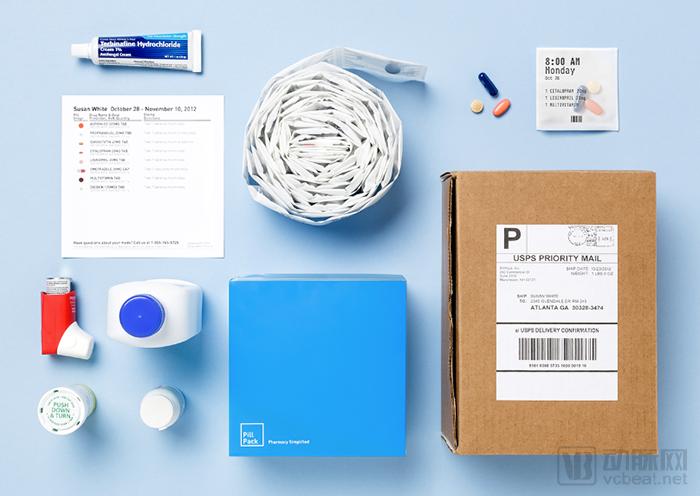
PillPack’s Monthly Home Delivery. On-demand medication ordering is also available. Users can choose from two plans: if the prescribed medications equal a one-month supply, users only pay for the medications with no shipping fees. If the required medications exceed those listed during registration, users only need to pay a $20 monthly service fee.
Medication repackaging is not a novel concept in the United States. Given the substantial pharmaceutical consumption by American consumers, the U.S. spent nearly $450 billion on medications in 2017. In China, according to forecasts by Sinohealth Information, the prescription drug market is not expected to surpass RMB 300 billion until 2030. Considering that the U.S. population is only a fraction of China’s, the complexity of medication use among Americans becomes evident. According to research by the Mayo Clinic, more than 20% of Americans take more than five prescription drugs daily.
Pillpack offers not just medication repackaging, but end-to-end prescription drug management. After registering with Pillpack, users provide relevant diagnostic and treatment information as well as medication details, enabling Pillpack to automatically update prescriptions and handle insurance reimbursement issues. At the time of its acquisition by Amazon, Pillpack had already achieved legal sales of prescription drugs in 49 U.S. states and established connectivity with insurance companies and physician networks. This gave it a first-mover advantage in the pharmaceutical retail sector, which is characterized by high entry barriers and complex regulations.
Pillpack was co-founded in 2013 by TJ Parker, then 32, and Elliot Cohen, then 35. Currently, TJ Parker serves as CEO of Pillpack, while Elliot Cohen is the Chief Product Officer. TJ Parker is a pharmacist, and Elliot Cohen holds an MBA from the Massachusetts Institute of Technology.
Parker grew up in his parents’ traditional, family-run pharmacy and later became a pharmacist himself. Within the confined space of the pharmacy, he witnessed the difficulties patients faced in managing their prescriptions and medications. He encountered customers who could not recognize medication names, prompting him to help by writing initials on the packaging. While Parker was in college, his father experimented with pre-packaging customers’ medications at the pharmacy, an experience that inspired Parker to found PillPack.
In 2012, Parker brought his idea for an online pharmacy to the “Hacking Medicine” competition at the Massachusetts Institute of Technology (MIT), where he met another founder, Elliot Cohen. The two began collaborating to build a “consumer-friendly online pharmacy,” and thus Pillpack was born.
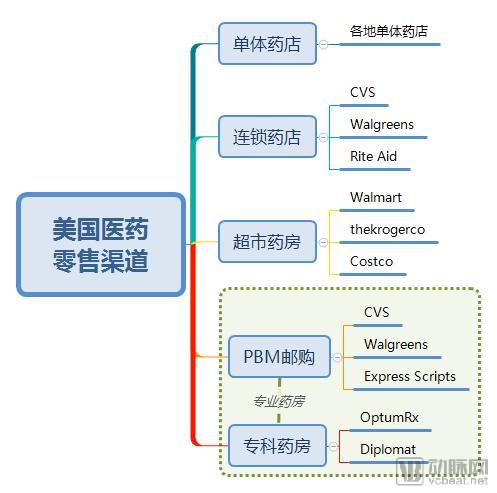
Pillpack’s core business involves handling mail-order pharmacy services for Pharmacy Benefit Management (PBM) companies, such as Express Scripts, the largest PBM provider in the United States. Due to the separation of prescribing and dispensing in the U.S., patients with chronic conditions regularly visit brick-and-mortar pharmacies to “purchase” medications based on their prescriptions. However, it is often misunderstood and overlooked by stakeholders in China that U.S. retail pharmacies do not directly provide chronic disease medication management services; rather, they serve merely as pickup locations where patients collect their medications and make copayments facilitated by PBMs. The primary role of PBMs is to control healthcare costs for payers, chiefly through negotiating drug prices with manufacturers and managing service-related expenses. Pillpack helps PBM companies improve patient medication adherence, thereby achieving better clinical outcomes.
The market for prescription drugs for chronic diseases is vast. In 2017, out of a total of 4.46 billion prescriptions in the United States, 1.94 billion were for chronic conditions, accounting for 43.4%. Spending on chronic disease medications reached $106 billion, representing 23.4% of the total. Medications for chronic diseases are characterized by long-term use, stable and controllable regimens, and high prevalence among the elderly. Chronic diseases account for 86% of healthcare expenditures in the United States. This substantial market has given rise to companies like Pillpack, which aim to improve medication adherence among older adults.
Medication adherence has long been a major challenge in global healthcare, and a key hurdle that startups are racing to overcome. Both innovative companies and pharmaceutical giants are employing various measures to address patient adherence issues, such as developing pills embedded with biosensors.
Insufficient medication adherence among patients not only poses a threat to their health but also imposes a substantial economic burden. Data from the U.S. National Library of Medicine at the National Institutes of Health indicate that, in the United States alone, hospitalization costs attributable to medication non-adherence reach $13.35 billion annually. Beyond the most apparent direct costs, non-adherence is a risk factor for various subsequent adverse health outcomes, directly contributing to as many as 125,000 deaths each year.
Especially in the treatment of chronic diseases, which typically involves long-term medication use, a survey published in *Mayo Clinic Proceedings* indicates that approximately 50% of patients do not take their medications as prescribed. However, low patient adherence is not entirely the fault of the patients.
Addressing patient non-adherence requires targeted interventions. In some cases, such as with depression, low adherence stems from the primary care system’s failure to provide effective diagnoses. However, other interventions demand robust social support systems, healthcare system reforms, and the implementation of complex solutions that remind patients of their required actions, ultimately achieving optimal medical outcomes. This precisely underscores the value of Pillpack.
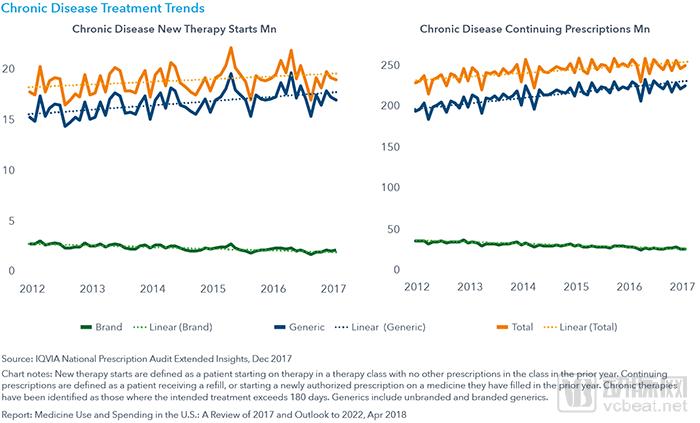
In 2017, the use of chronic medications in the United States also showed an upward trend, which IQVIA attributed to improved patient adherence.
The ability to streamline chronic disease medication management through the retail prescription drug channel is one of the reasons Amazon valued PillPack. Amazon’s consumer base skews younger, with a high proportion of Prime members aged 18–34. Through PillPack, Amazon can reach more older adults and convert them into Prime members.
After Amazon acquired Pillpack, some argued that the service offered by Pillpack did not have high industry barriers, and under the pressure of several major pharmaceutical retail giants in the United States, it would be difficult for Amazon to break through. However, Pillpack is actually more than just a small mail-order company that packages medications in boxes. It uses digital methods to save costs and improve efficiency, achieving what several pharmaceutical retail giants have failed to do.
Pillpack’s service is more than just online mail-order pharmacy; it has revolutionized the medication delivery system. Compared with traditional single-dose vials (SDV), Pillpack has popularized multidose drug dispensing (MDD) and multidose medication management (MMM). Walgreens acquired DailyMed, a similar provider of MDD services, in 2011, but the initiative failed to gain significant market traction and was ultimately discontinued as a pilot project.
By leveraging a highly centralized and digital operating model centered on a central pharmacy plus online delivery, Pillpack has reduced costs, with an estimated profit margin of 15%–20% (according to Forbes estimates). Meanwhile, Pillpack also uses robotic medication dispensing to minimize human errors and further cut costs. Coupled with the favorable environment for prescription outflow in the United States, Pillpack has successfully obtained legal operating qualifications in 40 states, achieving rapid growth in a short period.
However, traditional retail giants are reluctant to lower their status, focusing instead on their large-scale stores.
In the case of CVS, its services are inextricably linked to its retail pharmacy network. For instance, CVS launched the Maintenance Choice program to improve medication adherence, allowing customers to obtain a 90-day supply of prescription medications at any of its retail pharmacies at prices comparable to its mail-order service. In its annual report, CVS outlined plans to fully implement on-demand next-day prescription delivery, with the future goal of achieving same-day delivery. This June, CVS officially announced a partnership with the United States Postal Service (USPS) to provide 1–2 day mail-order prescription services across its 9,800 pharmacies nationwide, charging a $4.99 delivery fee per shipment. Additionally, it launched same-day prescription delivery in areas such as Washington, D.C., requiring a one-time registration fee of $8.99, thereby strategizing a counteroffensive from offline to online channels.
Clearly, this offers no significant advantage compared to Pillpack’s rapid, personalized medication delivery service. In just four years, Pillpack has secured legal operating status in 49 U.S. states, a pace that traditional pharmacy expansion simply cannot match. The mindset of giants like CVS resembles the “resource curse” theory in economics: an overabundance of one resource can crowd out other factors.
From online retail to the online retail services market, and from pharmaceutical retail to health insurance, Amazon is bringing new perspectives to the healthcare industry with its unique innovative capabilities. Pillpack’s acquisition by Amazon was largely driven by its spirit of innovation and commitment to customer/patient experience.
Therefore, we see that whether in online retail or online pharmaceutical retail, achieving efficient delivery of retail products or medications is merely the first step; what matters more is the accompanying services. Especially in the healthcare industry, patients need not only treatment and medications, but also comprehensive disease management solutions and care. The greatest insight Pillpack offers to China’s “Internet + Healthcare” companies is that supply chain capability comes first, while high-quality service can turn patients into loyal advocates.