

Neusoft Crowned Leader in Public Hospital IT Project Bidding in First Half of 2018
Who Was the King of Bidding for Public Hospital Medical Informatics Projects in the First Half of 2018? This question now has an answer. To give a slight spoiler, the top-ranked company secured projects worth over RMB 80 million through competitive bidding.
Recently, VCBeat reviewed the China Government Procurement Network and compiled the following table from nearly 10,000 data entries related to healthcare informatization between February 14, 2018, and August 14, 2018 (please scroll down patiently; the valuable insights are at the end):
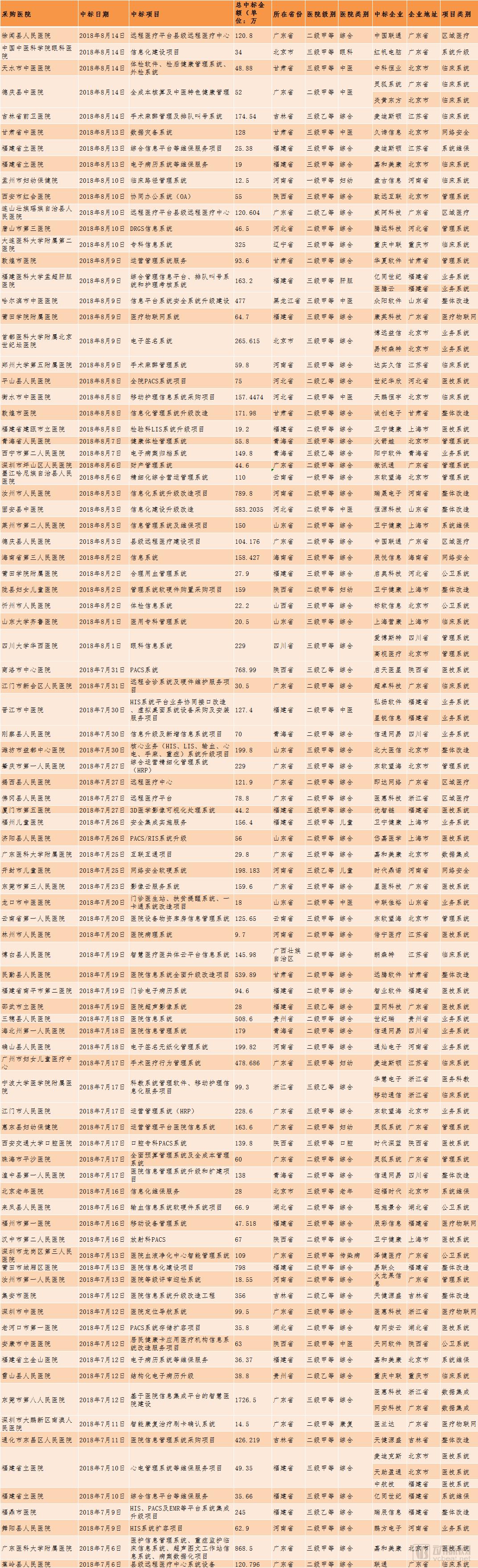
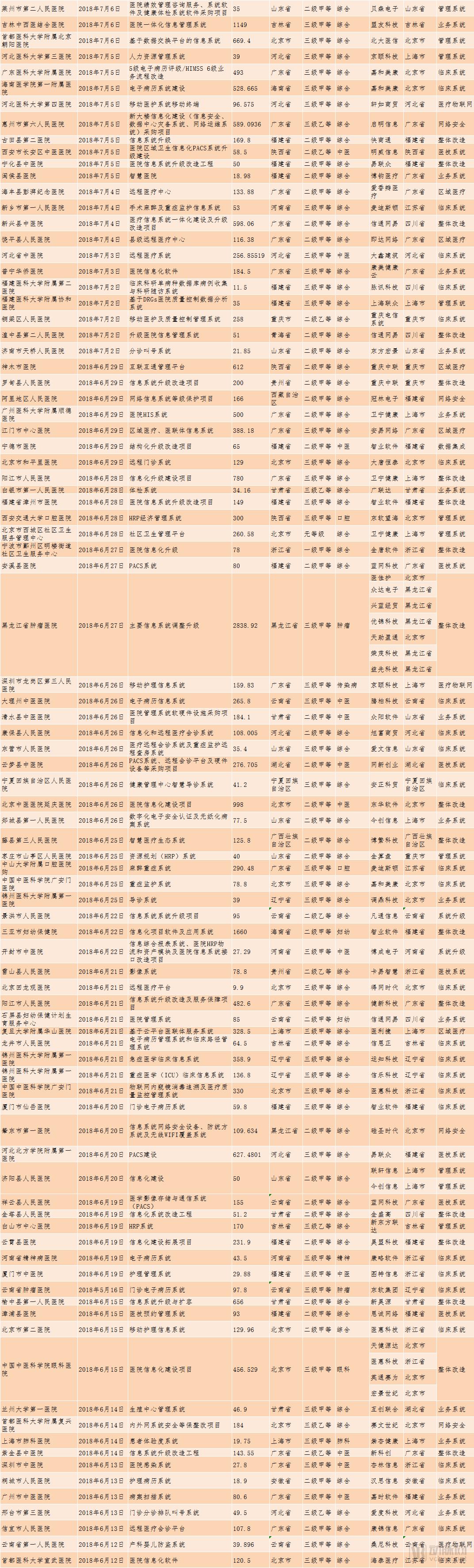
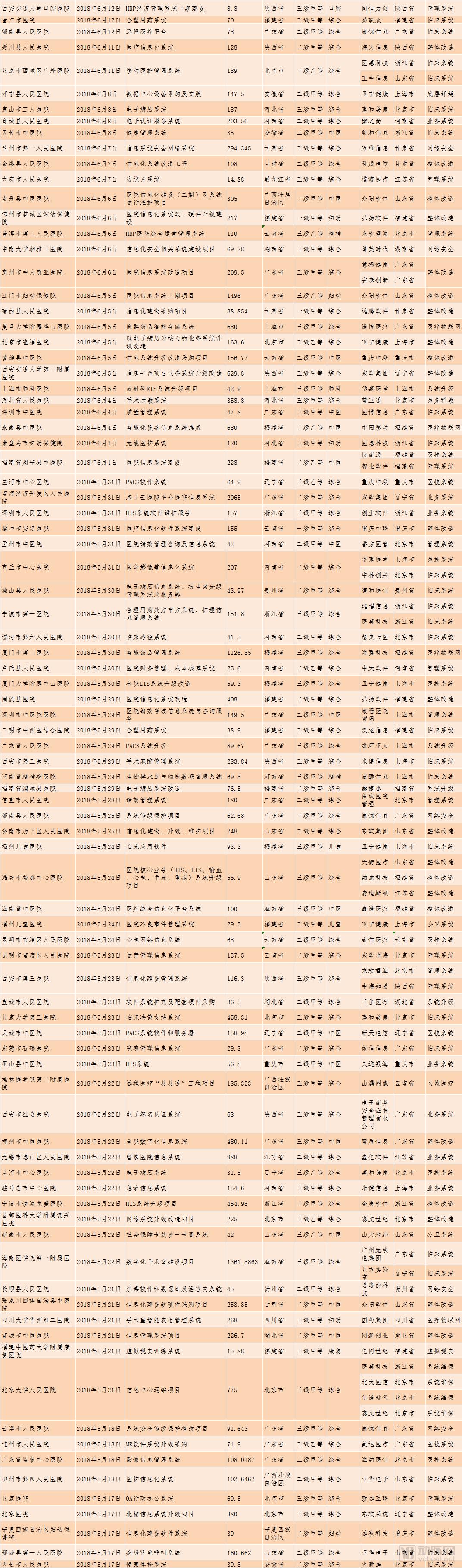
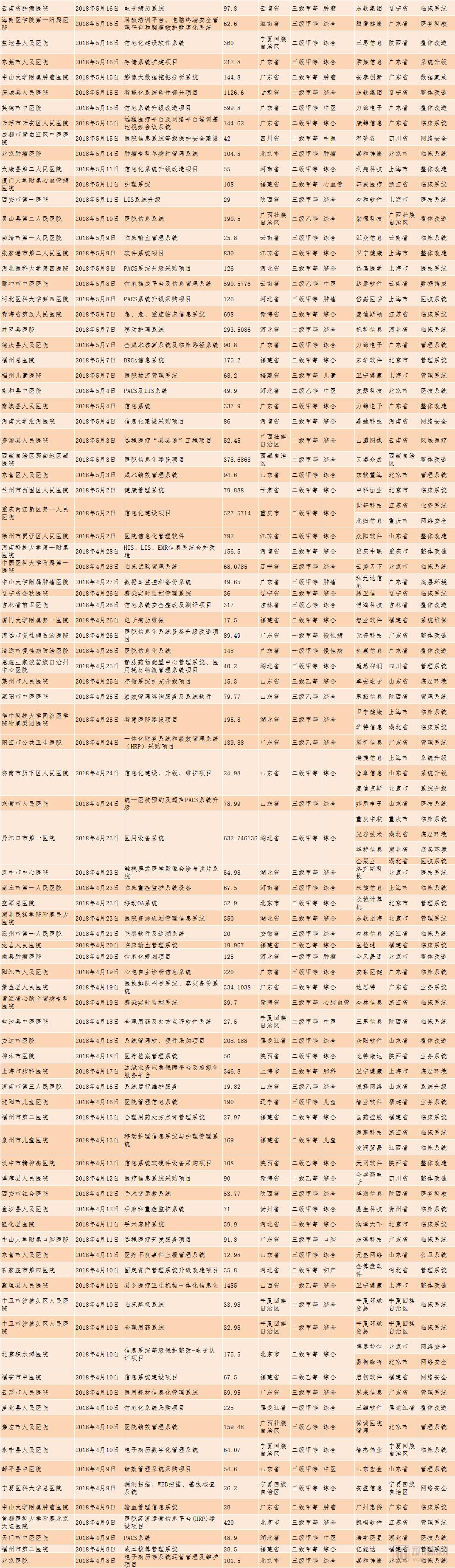
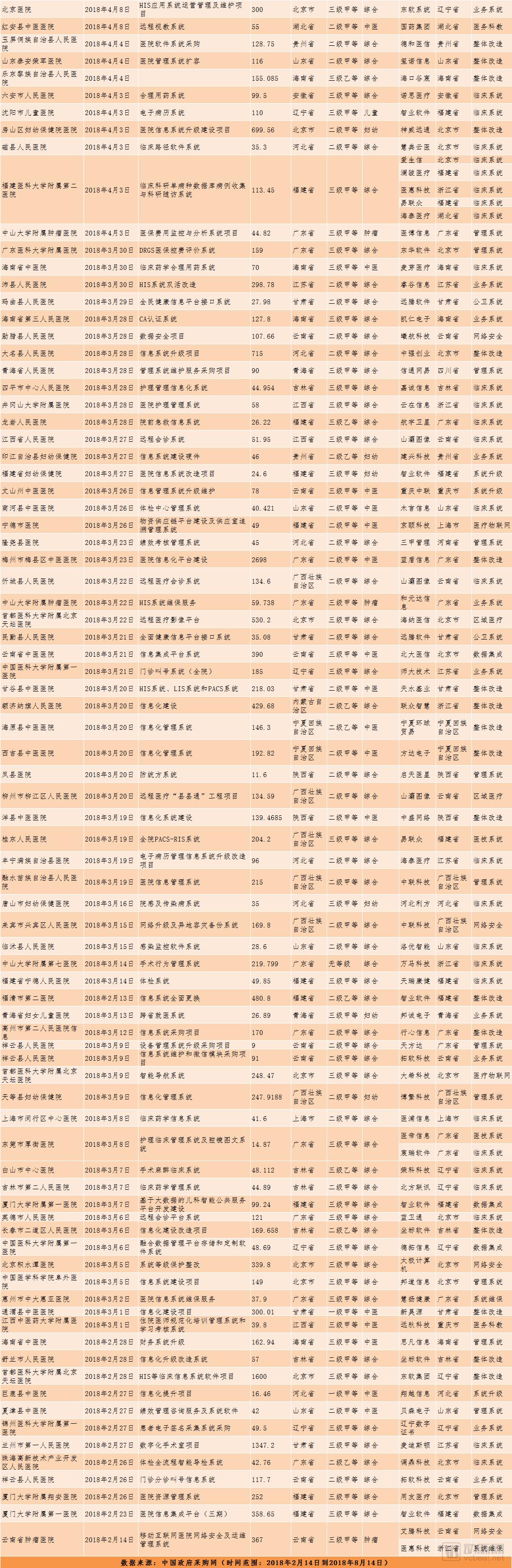
Given the substantial amount of information contained in this table, we have divided its content into eight sections and derived the following four key insights through analysis:
1. Comprehensive upgrades of hospital information systems, cloud hospitals (internet hospitals), and digital operating rooms are currently the informatization projects with the highest winning bid prices;
2. The comprehensive upgrading and transformation of hospital clinical systems, business systems, and information technology systems currently constitute the three largest core industries;
3. The focus of informatization construction in tertiary and above hospitals is on clinical systems, while secondary hospitals prioritize overall system upgrades;
4. Most public hospitals tend to select bidding companies from their own provinces or cities.
Next, let’s get straight to the key points.
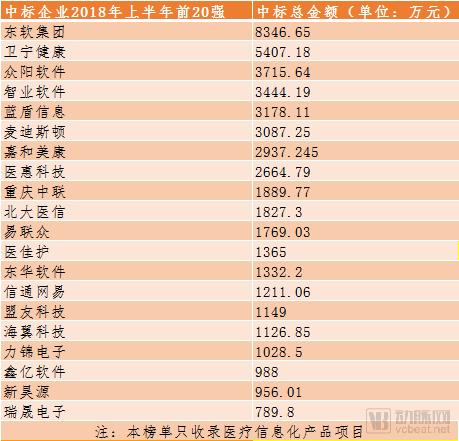
In the public hospital informatization construction projects during the first half of this year, Neusoft (including Neusoft Corporation, Neusoft Medical Systems, and Neusoft Wanghai) topped the list with a total value of RMB 83.4665 million, while Winning Health ranked second with RMB 54.0718 million.
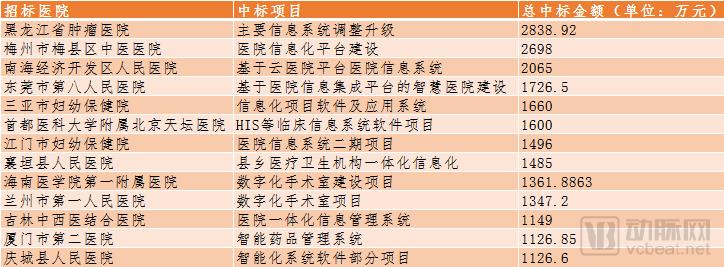
This chart displays projects priced over RMB 10 million from the table, totaling 13. The majority involve comprehensive upgrades to hospital information systems. Due to the large number and complexity of systems involved, the total costs are high. Other individual projects with significant price tags, including Cloud Hospitals (Internet Hospitals), Digital Operating Rooms, and Intelligent Medication Management, all exceed RMB 10 million.
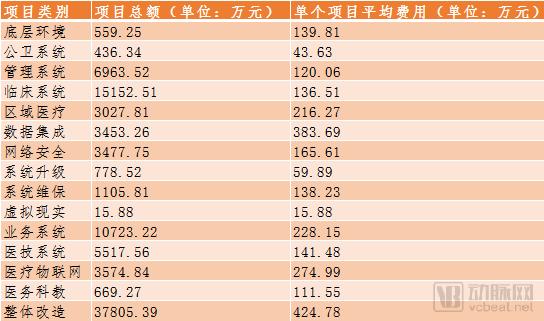
As indicated by project categories, the comprehensive IT overhaul of public hospitals currently constitutes the largest project segment in terms of market scale. Meanwhile, the development of clinical systems (such as anesthesia and perioperative care, intensive care unit [ICU] management, nursing, and rational drug use), operational systems (including physician workstations, registration systems, and medical record management), and management systems (covering human resources, fixed assets, and equipment) represents the three core areas of single-system implementation in hospitals. In terms of average project pricing, apart from comprehensive overhauls, hospital data integration (integration platforms, big data, etc.) and healthcare Internet of Things (IoT) solutions (infusion monitoring, asset management, mobile nursing, etc.) involve relatively higher construction costs.
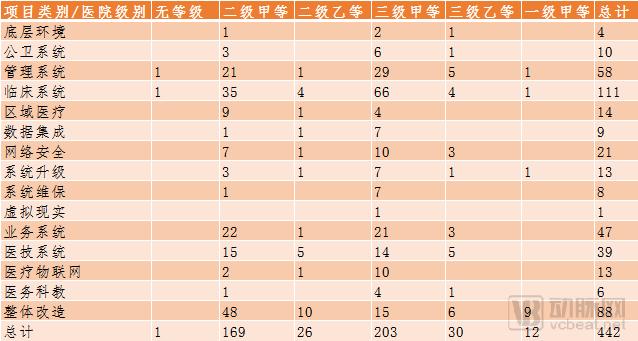
The differences in system category requirements among hospitals of different tiers are also significant. For tertiary hospitals, particularly Grade 3A hospitals, clinical systems constitute the absolute core of IT infrastructure development. In contrast, while secondary hospitals also prioritize clinical systems, their focus extends more broadly to comprehensive digital transformation. This indicates substantial market opportunities in this sector. Primary care institutions and ungraded hospitals have fewer informatization projects, which indirectly reflects that the level of digitalization in public hospitals at these tiers remains very low.
From the table, VCBeat has also derived some basic information:
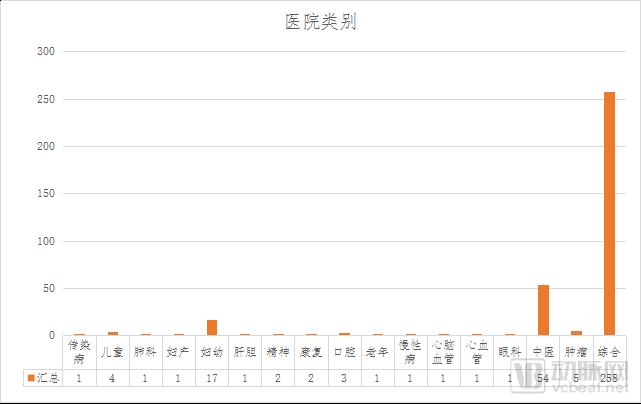
General hospitals account for the vast majority and need not be mentioned; among specialized hospitals, traditional Chinese medicine (TCM) hospitals and maternal and child health hospitals collectively represent a relatively large proportion of projects.
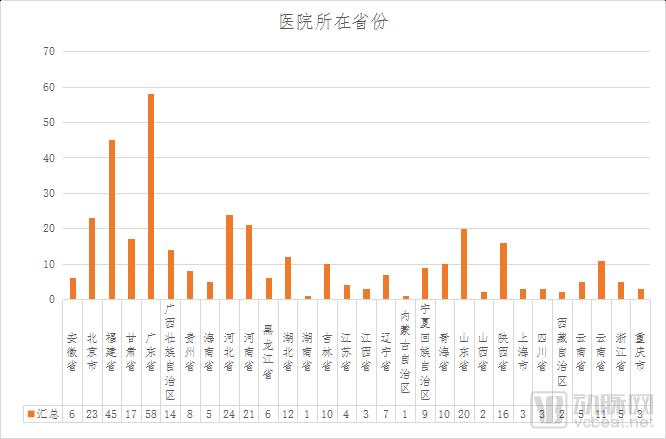
Guangdong Province and Fujian Province are currently the two provinces with the strongest demand for informatization in public hospitals, while the demand from hospitals in western regions is generally weaker.
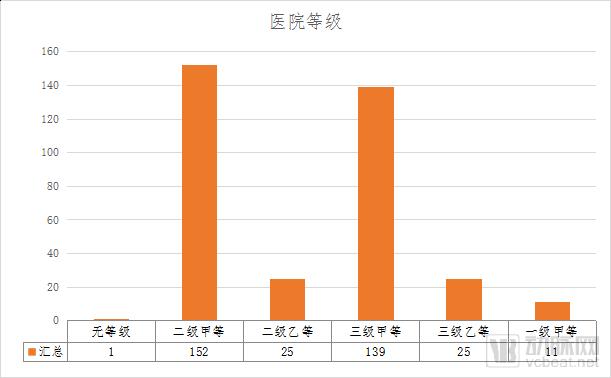
"Grade II Class A and Grade III Class A public hospitals are currently the main force in medical informatization construction."
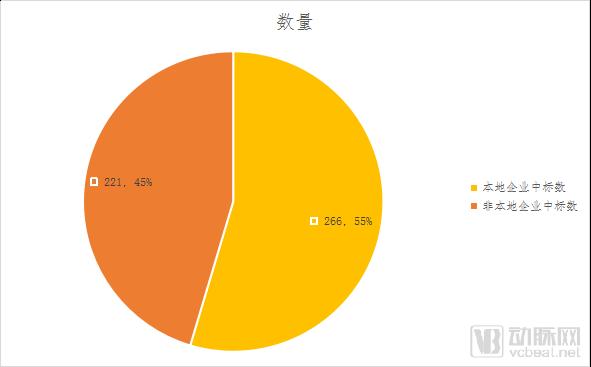
It is worth noting that most public hospitals still tend to select bidders from their own city or province during the tendering process. We conducted a supplementary analysis of Guangdong Province, a region with high demand, and found that the proportion of bids won by local enterprises reached as high as 63%.
Based on the above information, VCBeat offers the following four recommendations for healthcare IT enterprises:
1. Currently, enterprises should seek business opportunities by focusing on the comprehensive system upgrades of secondary hospitals in prefecture-level cities;
2. Cloud hospitals (internet hospitals), digital operating rooms, and intelligent medication management are poised to become significant new growth drivers for large enterprises;
3. The construction of clinical information systems in Grade 3A hospitals remains a key focus, with outstanding industry representatives such as Jiahua Meikang and Medisston. Medical Internet of Things (IoT), characterized by relatively high average pricing and substantial demand, also demonstrates considerable market potential. In this segment, YiHui Technology stands out prominently;
4. Fujian Province and Guangdong Province are currently the primary battlegrounds for healthcare informatization, but it remains difficult for non-local enterprises to enter these markets; the most effective approach is still to leverage local distributors.