

Merck & Co.'s Digital Innovation Strategy: Embracing New Technologies from Internal Management to Digital Marketing
Technology has brought boundless wealth to the pharmaceutical industry, fostering its remarkable prosperity.
Digital technologies, represented by artificial intelligence, machine learning, big data, and mobile health, are reshaping the pharmaceutical industry and bringing a new look to the sector. VCBeat has recently launched a special feature on “Digital Transformation in the Pharmaceutical Industry,” providing a comprehensive analysis of the technology-driven industrial changes.Click here for the special feature.
This issue’s case study on digital transformation in pharmaceutical companies features Merck & Co. (known as MSD outside the United States and Canada). As an innovative and respected enterprise, Merck has launched numerous products that have advanced human medicine. In recent years, the company has entered a period of stable growth, providing a solid foundation for sustained innovation. Digital transformation has become a key strategic direction, with initiatives spanning AI-driven drug discovery, clinical research, patient services, and digital marketing.
According to the rankings in PharmExec magazine, Merck & Co. achieved prescription drug sales of $35.563 billion in 2017, ranking fourth globally (with Pfizer, Novartis, and Roche occupying the top three spots, respectively). At number 27 on the list is another company with the same name, Merck, which reported annual prescription drug sales of $6.633 billion.
The story of Merck & Co. begins with this “eponymous” tale. In 1668, a pharmacist opened the “Angel Pharmacy” in Darmstadt, Germany, and operated it for over a century. In 1816, Emanuel Merck inherited the pharmacy business, renamed it “Merck,” and shifted its focus from retail pharmacy to chemical manufacturing, as well as the production and sale of pharmaceuticals.
By 1891, George Merck of the Merck family had expanded the family business to the United States and formally established a branch of Merck & Co. in New Jersey in 1902. During World War I, the U.S. government seized the American Merck company under the wartime “Trading with the Enemy Act.” In 1919, George Merck regained ownership of the American Merck company, which by then had become an entity independent from its German counterpart.
In 1953, Merck & Co. of the United States merged with Sharp & Dohme, Inc., a Philadelphia-based, time-honored pharmaceutical manufacturer founded in 1845. The newly formed entity was named Merck Sharp & Dohme (MSD)—the origin of the name “Merck Sharp & Dohme” (known as MSD outside the United States and Canada).
The two companies share a common origin but were separated due to historical reasons, meaning both theoretically hold rights to use the “Merck” trademark. With judicial intervention, their respective rights to the “Merck” trademark have been delineated. In principle, Merck & Co. (U.S.) holds the rights to use the “Merck” mark in the United States and Canada, while Merck KGaA (Germany) retains the rights for all other countries and regions worldwide. For clarity, we will refer to Merck & Co. as MSD throughout the remainder of this text.
Like the large pharmaceutical companies we previously introduced, Merck & Co.’s development history has been characterized by a dual strategy of “organic growth” and “inorganic growth.” Organic growth refers to high R&D investment in developing new drugs and launching “blockbuster” products, while inorganic growth involves acquisitions and mergers to secure high-quality products and market opportunities.
Historically, Merck & Co. has developed a range of drugs and vaccines that have advanced human medicine, including the first mumps vaccine, the first rubella vaccine, hepatitis B vaccine, varicella vaccine, as well as the first statin drug and thiazide antihypertensive agents.
In Merck’s 125th-anniversary materials, the company specifically highlighted scientist Maurice Hilleman. During his 25 years at Merck, he researched and developed more than 40 human and animal vaccines—including the hepatitis B vaccine mentioned earlier, which reduced disease incidence among American adolescents by 95%.
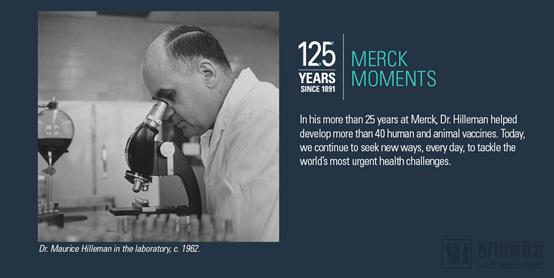
Image source: Merck & Co., Inc. official website
Of course, what is even more famous is a quote from George W. Merck, the founder of Merck & Co.: “We should always remember that medicine is for the people. It is not for the profits. The profits follow, and if we have remembered that, they have never failed to appear.”

George W. Merck appeared on the cover of “Time” in 1952
Over the past decade, Merck & Co. has undertaken two major strategic moves that have significantly influenced its subsequent growth: the acquisition of Schering-Plough and the divestiture of its consumer health business.
In 2009, Merck & Co. acquired Schering-Plough for $41.1 billion in cash and stock. This was the largest merger and acquisition in Merck’s history, driven by the impending expiration of patents on many of its key drugs and a lack of viable candidates in its internal R&D pipeline, which forced the company to seek external targets.
Merck & Co. acquired a portfolio of high-quality products from Schering-Plough, including pharmaceuticals and consumer health goods. The most notable among these is Keytruda, a PD-1 inhibitor that has since generated a substantial market. PD-1 inhibitors work by blocking the binding of specific proteins to their receptors, thereby reactivating the body’s immune response to combat cancer. They are indicated for the treatment of advanced melanoma, non-small cell lung cancer, renal cell carcinoma, and other conditions. In 2017, Keytruda achieved sales revenue of $3.809 billion, representing a year-on-year increase of 172% and accounting for approximately one-tenth of Merck & Co.’s total sales.
In 2014, Merck & Co. sold its consumer health business to Bayer for $14.2 billion. This portfolio included well-known brands such as Claritin®, Marvelon®, and Elocon®. Immediately after closing the deal, Merck used the proceeds to acquire Idenix Pharmaceuticals ($3.85 billion), Cubicin ($9.5 billion), and OncoEthix ($375 million), thereby securing multiple blockbuster products in the fields of hepatitis C, antibiotics, and oncology.
Currently, Merck & Co. divides its business into pharmaceuticals (including vaccines), animal health, and other segments. Its star products include Januvia/Janumet (antihypertensive drugs), Gardasil/Gardasil 9 (HPV vaccines), ProQuad, and M-M-R II/VARIVAX (measles, mumps, rubella, and varicella vaccines).
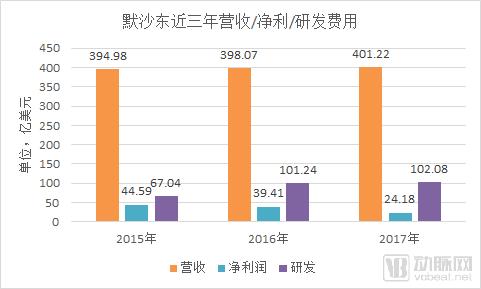
In 2017, Merck & Co. reported total revenue of $40.1 billion, with pharmaceutical segment revenue reaching $35.39 billion. In the first half of 2018, revenue amounted to $20.502 billion, and full-year revenue for 2018 is projected to continue its growth trajectory.
Source: VCBeat Graphics
From a revenue perspective, Merck & Co. is currently in a period of stable development. Although its performance has shown some growth, the rate falls below both the pharmaceutical industry average and investor expectations. Furthermore, sustained high R&D investment has, to some extent, weakened Merck’s current profitability, creating an urgent need for the company to identify new growth drivers.
For a century-old enterprise seeking transformation, leveraging digital tools and technologies is one of the most effective approaches. Thus, in recent years, Merck & Co. has actively pursued “digitalization” across internal management, drug research, clinical trials, patient services, and marketing.
MSD’s Digital Innovation Across All Stages
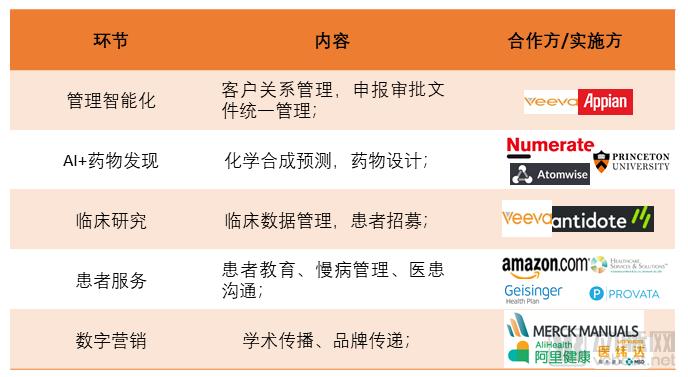
In the areas of internal data retrieval, process management, and performance evaluation, Merck & Co. has boldly adopted new tools to drive intelligent management transformation through strategic collaborations. Two notable examples include its partnerships with Veeva and Appian.
Veeva is a highly successful U.S.-based information technology company that primarily serves clients in the life sciences industry. It provides CRM (Customer Relationship Management) software to Merck & Co., enabling the company to manage its customer relationships on a unified global platform.
Appian is also an information services provider, with its key selling point being “digital transformation.” In its collaboration with Merck & Co., Appian helped the latter establish a Regulatory Information Management (RIM) system. This solution centrally manages documents previously submitted by Merck to regulatory agencies, facilitating employee access and accelerating both internal document processing and regulatory submissions.
Merck & Co. was among the earliest pharmaceutical giants to apply AI-driven drug discovery technologies. In 2012, it partnered with Numerate, a U.S.-based AI drug development company, to conduct research on cardiovascular disease targets.
Meanwhile, Merck & Co. is collaborating with Atomwise, another AI-driven drug discovery company, to leverage deep learning technologies for screening existing drugs and redesigning them to combat both established and emerging diseases.
Both companies are leaders in the field of AI-driven drug discovery. Founded in 2007 and headquartered in San Bruno, California, Numerate boasts 11 years of R&D experience, setting it apart from other AI drug discovery firms. Its algorithms can extract valuable insights from very small datasets to address novel biological challenges. By leveraging 3D ligand-based modeling, Numerate applies machine learning to solve phenotype-driven drug discovery problems without requiring structural data on compounds. Such R&D efforts typically involve low-throughput, high-content biological issues. The company has raised over $15 million in funding to date.
Atomwise, founded in June 2012, is a pharmaceutical R&D company that leverages supercomputing. The project aims to simulate the drug development process using supercomputers, artificial intelligence (AI), and complex algorithms to predict the efficacy of new drugs while reducing research and development costs. In March this year, Atomwise completed a new round of financing amounting to $45 million, with investors including Baidu and Tencent.
Merck & Co. has also partnered with Princeton University in the United States to conduct research on AI-enabled chemical synthesis. In February 2018, the findings of this collaboration were published in “Science” journal. The collaborative work involves using machine learning to predict the outcomes of chemical reactions, a technology that could potentially accelerate the synthesis of new drugs.
The primary task in clinical research is the collection and exchange of data. The traditional approach involves back-and-forth data transmission between research departments and contract research organizations (CROs), which is not only inefficient but also prone to data loss and breaches. Merck & Co. was an early adopter of digital systems in clinical research data management, partnering with Veeva, a provider of informatics solutions for the life sciences industry.
According to a document on Veeva’s official website, Merck & Co. has implemented the eTMF (electronic trial master file) in clinical research data management, significantly improving the efficiency of clinical studies. The original statement reads: “The global rollout of Vault eTMF was completed in less than 11 months, training over 5,000 users and migrating more than 8 million documents.” Vault eTMF is part of the Veeva Clinical Data Management Suite, which also includes Vault EDC and Vault Study Startup.
Merck & Co. has also invested in Antidote, a patient recruitment services company founded in 2010 that operates in the United Kingdom, the United States, and other regions. Antidote offers clinical trial search communities, health community networks, and electronic health record (EHR) interfaces to facilitate matching between patients and clinical trials. The company has raised nearly $30 million in cumulative funding.
Merck & Co. is partnering with Amazon to explore the creation and delivery of innovative digital consumer solutions for patients with chronic diseases. The collaboration will focus on diabetes, a chronic progressive condition that currently affects 415 million people worldwide.
Merck & Co. has recently partnered with Geisinger Health to develop two new applications aimed at enhancing patient services. Geisinger Health is a well-known U.S. healthcare informatics provider with extensive expertise in electronic health records and system development.
One of these two new programs, named Family Caregiver, enables two-way communication between patients and their healthcare teams; the other, called MedTrue, aggregates medication data from various sources to help patients understand and adhere to their regimens, creating a medication list reviewed by both patients and providers. Both applications will mobilize patient engagement in healthcare, thereby improving diagnostic and treatment outcomes.
Merck also owns a subsidiary called Healthcare Services Solutions (HSS), which specializes in healthcare system and patient services. Its core business focuses on care management, clinical decision support, remote monitoring, and patient education. In February 2018, HSS acquired Provata Health, a digital health company that provides integrated hardware and software solutions to facilitate health management and lifestyle interventions.
Digital marketing refers to the use of internet and mobile internet tools and platforms to disseminate academic information, drug-related information, and health information to patients and physicians, thereby indirectly promoting brand value.
Brand building through academic dissemination is a specialty of Merck & Co. In 1899, Merck published the first edition of The Merck Manual, which became the most widely used medical reference worldwide for over a century. Today, The Merck Manual has transitioned to an online platform, serving a global audience.
Merck & Co.’s approach to digital marketing aligns with the ethos of “The Merck Manual”—delivering valuable information and services to benefit readers. For instance, its online resource platform “MediVida,” launched for healthcare professionals in China, provides a range of services including case references, training on essential medicines, and updates on clinical pharmacotherapy.
On the patient side, MSD has partnered with AliHealth to enable users to access information on cervical cancer and HPV vaccination—both key product lines for MSD—as well as locate nearby vaccination sites through Alibaba-affiliated apps. Users can also engage in real-time online consultations with intelligent chatbots. This model aims to establish an integrated “Internet+” preventive health management system and promote infrastructure development for adult vaccination.
Additionally, Merck & Co. has released numerous patient services, pharmaceutical care services, and health education applications on the Google Play Store and Apple App Store, which can also be regarded as a significant component of its digital marketing strategy.
Summary
We believe that digital technologies are reshaping the pharmaceutical industry, and a wave of digital transformation in this sector is imminent. This judgment is based on three lines of reasoning: First, technologies have reached sufficient maturity to drive “qualitative changes.” Artificial intelligence, big data, and mobile internet have all undergone years of development and are now ready for deployment in specific application scenarios.
Second, the pharmaceutical industry, and indeed the healthcare sector at large, possesses an intrinsic drive for transformation. As the costs and risks associated with new drug development and clinical research continue to rise, the industry requires new tools to revolutionize existing production models. Meanwhile, the application of technology in digital marketing and patient services will help address challenges related to accessibility and satisfaction, paving the way for a new commercial order.
Third, numerous industry leaders are already poised to enter the fray—including major pharmaceutical companies such as Merck & Co. When a new technology has both payers and service providers, it can rapidly gain momentum.
The most important lesson from Merck’s century-long history is to “go with the flow,” encompassing its transition from pharmaceutical distribution to manufacturing, and from basic chemical production to the discovery of high-tech drugs and vaccines. Technological barriers create competitive commercial advantages, which form the foundation of the pharmaceutical industry. In the process of digital transformation, it is evident that Merck is seizing this opportunity.