

HealthEdge Files IPO Prospectus Highlighting $97.8M in Total Funding and Next-Gen Healthcare Technology Platform
Recently, market research firm Survata, in collaboration with HealthEdge, completed a survey of more than 2,500 primary Medicare beneficiaries. The results indicate that customer satisfaction is a top priority for Medicare insurers in 2018. With the rise of diverse consumerism and the growing size and influence of demographic groups such as millennials, it is crucial for insurers to innovate to meet or even exceed consumer expectations in order to maintain their industry leadership.
VCBeat (WeChat: vcbeat) has found that HealthEdge is a leading software company dedicated to providing next-generation technology products to the health insurance market. HealthEdge offers modern, disruptive technologies and is the first enterprise to provide a suite of products that help health insurers adopt entirely new business models. HealthEdge enables its clients to innovate fundamentally, significantly reduce administrative costs, and effectively address the business demands arising from the evolving healthcare economy, thereby facilitating communication and improving outcomes throughout the healthcare delivery cycle.
HealthEdge was founded in December 2004 by Albert Waxman and Rob Gillette of Psilos Group. Headquartered in Burlington, Massachusetts, the company maintains a research and development center in Powell. In January 2005, HealthEdge acquired intellectual property and other assets valued at over $125 million. The acquired technology subsequently served as the foundation for its proprietary product, HealthRules. In December 2012, HealthEdge acquired Click4Care, a care and utilization management software company, thereby adding next-generation clinical capabilities to the HealthRules product suite.
HealthEdge’s Patented Products—HealthRules, is a comprehensive financial, administrative, and clinical platform designed for health insurance companies. This language-based technology platform delivers services to clients via cloud or on-premises deployment. The HealthRules product suite provides insurers with scalable, flexible, and modern technology that can fully replace or enhance legacy systems, satellite applications, and manual processes. The suite includes next-generation claims and benefits management, care management, business intelligence, and portal solutions, aiming to help health insurance organizations evolve into leaders in the healthcare industry as they navigate the innovations, challenges, and opportunities of the new healthcare economy.

Rob Gillette, the founder of HealthEdge, is a graduate of Vassar College and the primary author of *Physical Database Design for Sybase SQL Server*. Prior to founding HealthEdge, Rob Gillette achieved career success as an innovator in the field of software development. He served as Chief Technology Officer at Callidus Software, a leading provider of software solutions for sales and marketing effectiveness. He also held leadership positions at Sybase, Comsat, and Shoppers Express, the world’s first online shopping service company. Rob’s professional experience spans healthcare, enterprise and financial applications, business intelligence, telecommunications, and content management.
Stephen Krupa currently serves as the CEO of HealthEdge, while also holding the positions of CEO/COO and Managing Partner at Psilos Group. Stephen holds an MBA from the Wharton School of the University of Pennsylvania and a Bachelor’s degree in Mechanical Engineering from the University of South Florida. As the leader of HealthEdge, Stephen brings professional experience across multiple domains. He began his career as a mechanical engineer and programmer at Johnson Controls, where he leveraged software and digital interfaces to control large-scale mechanical systems. After graduating from business school, Stephen entered the mergers and acquisitions sector within the healthcare industry, participating in strategic acquisitions and recapitalizations totaling over $12 billion, including Aetna’s landmark acquisition in the U.S. healthcare sector. During his 18-year tenure as a healthcare venture capital partner at Psilos Group, he invested in several healthcare, IT, and services companies, including ActiveHealth Management, Extend Health, and HealthEdge.
June 2017, HealthEdge and Remedy Partners have partnered to launch a bundled payment initiative, managing a novel health insurance benefit plan based on healthcare services and bundled payments. This initiative provides a configurable, advanced-technology platform for end-to-end management of medical benefit plans (including group or member enrollment and eligibility maintenance), medical claims processing, provider network maintenance and reimbursement, and customer support for employers, providers, and members.
“Remedy Partners and HealthEdge have brought together experts from various fields to provide assistance to health plans, Medicare third-party administrators (TPAs), and large self-funded plans,” said Carolyn Magill, CEO of Remedy Partners.
February 2018Blue Cross Blue Shield Announces Selection of HealthEdge’s HealthRules as Next-Generation Core Administration System to Scale Operations and Achieve Strategic Business Objectives. After conducting a comprehensive evaluation, Blue Cross Blue Shield determined that HealthRules Payor is the right solution to reduce administrative costs, enhance information transparency, and automate key processes.
“Susan Courtney, Executive Vice President of Blue Cross Blue Shield, said, ‘We look forward to partnering with HealthEdge to meet our current and future commercial needs and help us navigate challenging times in the healthcare sector. HealthRules Payor will provide the critical foundational technology to help us scale our operations and accelerate the adoption of value-based payment models.’”
HealthEdge’s HealthRules suite comprises financial, administrative, and clinical software applications that can operate independently or in concert, facilitating communication among all parties throughout the healthcare delivery cycle. Through HealthRules, health insurers can adopt new business models, enhance administrative efficiency, reduce healthcare costs, and deliver superior customer service.
June 2018HealthEdge Announces Partnership with MedeAnalytics. A pioneer in healthcare analytics, MedeAnalytics currently serves more than 1,500 organizations and 60 million individuals. Leveraging state-of-the-art data orchestration in the healthcare sector, MedeAnalytics’ cloud-based intelligent analytics platform integrates data to deliver cutting-edge analytics that empower enterprises to make more informed decisions. HealthEdge’s customers will be able to leverage MedeAnalytics’ services to assess and enhance the effectiveness of care management programs through improved risk stratification and interventions tailored to specific patient populations, enabling them to rapidly improve healthcare delivery while reducing costs, and boosting member engagement and satisfaction.
To date, HealthEdge has completed six rounds of financing, totaling $97.8 million.
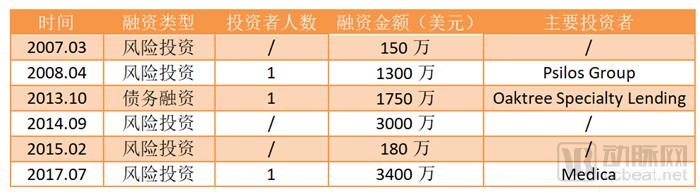
(Data source: Crunchbase)
In July 2017, Medica invested $34 million in HealthEdge, an IT company based in Manchester. Mary Quist, Vice President of Finance at Medica, stated, “HealthEdge’s IT platform integrates multiple software systems, including those for premium payments, claims processing, and healthcare service management. Our investment in this company is aimed at leveraging this platform to advance new technologies.”
Quist also pointed out, “A recent report shows that health plans are making significant investments in private companies and technology firms to cope with changes brought about by the Affordable Care Act (ACA). Medica uses HealthEdge’s management platform for the individual health insurance market. This market has undergone major changes since 2014 due to the ACA. In 2016, health insurers faced enormous challenges in managing Medicaid programs and selling individual insurance policies, resulting in substantial financial losses.”
Research firm CB Insights noted in a report that health plans are actively investing in private companies. Insurers continue to seek additional ways to manage the health of their covered populations, launch differentiated products, and acquire new datasets. To achieve these objectives, some larger health insurance companies have turned to the private market for investment or acquisition opportunities.
Reference: https://www.healthedge.com/