

Shiliu Yunyi (Formerly Qilekang Internet Hospital) Files for IPO, Focusing on China's Largest Online Chronic Disease Revisit Platform
“What's past is prologue.” — Shakespeare’s play The Tempest
August 18 marked a fresh start for Qilekang Internet Hospital (hereinafter referred to as “Qilekang”). This isFollowing the August disclosure byLead Investment by GTJA Capitalstrategic investment, made its first public statement. VCBeat was the first to report on this financing round. ([Exclusive] Qilekang Completes New Round of Strategic Financing, Led by GTJA Investment, to Build a Complete Online Consultation Business Loop Integrating “Doctors, Medicines, and Patients”)
This public announcement can be regarded as a major strategic move. At the Four Seasons Hotel in Guangzhou, Qilekang upgraded its internet hospital to “Shiliu Cloud Medicine.” Attendees at the press conference included Mr. Shi Zhenyang, Founder, Chairman, and CEO of Qilekang, along with other senior executives; industry experts such as Liao Xinbo, former Inspector of the Guangdong Provincial Health and Family Planning Commission; Li Shulan, Supervisor of the Guangdong Hospital Association; and Deng Chunhua, President-Elect of the Andrology Branch of the Chinese Medical Association; as well as representatives from the investment community and the pharmaceutical industry.
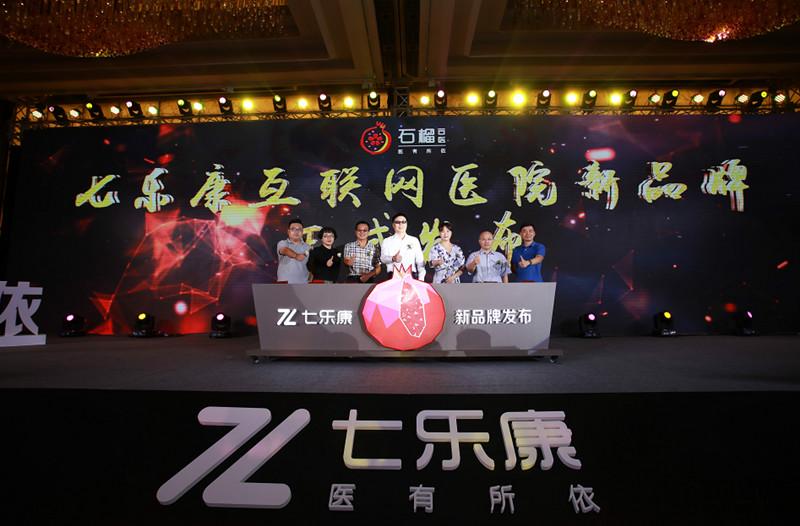
So why did Qilekang change its name? What are the plans following the rebranding? To answer these questions, Shi Zhenyang, founder of Qilekang, provided his insights.
Shi Zhenyang stated, after years of effort, Qilekang has developed into China’s leading internet healthcare platform in terms of both the number of physicians and prescription volume. To date,We need a bolder, more dynamic new brand to reflect our company’s strategic layout and dedication in the internet healthcare sector.The name “Pomegranate” for our new brand embodies our heartfelt aspirations for every doctor, patient, and partner on the platform: enabling doctors to fully realize their professional value, providing patients with the most attentive and personalized diagnostic and treatment services, and fostering resource sharing, mutual support, and win-win collaboration with our partners.
In his vision, the “Shiliu Yunyi” platform will attract an increasing number of distinguished physicians to engage in vibrant academic exchanges, share extensive medical case studies, and leverage cutting-edge diagnostic and therapeutic technologies. Like crystal-clear pomegranate seeds, these efforts will coalesce into a fruit of hope symbolizing good fortune, prosperity, longevity, and unity, all working together toward the noble mission of “a world free from disease.”
Founded in Guangzhou in 2010 by Mr. Shi Zhenyang, Qilekang has evolved over eight years from a chain pharmacy to a pharmaceutical e-commerce platform, then to a mobile hospital, and finally to an internet hospital. Currently, Qilekang’s business encompasses four core segments.
Over the past eight years, Qilekang has undergone two business transformations. The first was a shift from traditional chain pharmacies to pharmaceutical e-commerce, and in 2014, it became China’s largest “air pharmacy,” laying a robust foundation for its subsequent transformation into an internet hospital by building a highly competitive pharmaceutical supply chain.
In 2014, the concept of “Internet Plus” was introduced. Although Qilekang was already the leader in the pharmaceutical e-commerce sector at that time, its reliance on third-party platforms meant it depended on others for traffic allocation. Not content with the status quo, Shi Zhenyang began to consider building the prototype of an internet hospital. With support from the Guangzhou Municipal Government, Qilekang secured endorsements from public hospitals and obtained qualifications for operating an internet hospital, thereby establishing a genuine prescription flow and achieving a closed loop integrating medical services, patients, and pharmaceuticals.
The second instance occurred in 2015, when Qi Lekang transitioned from an “air pharmacy” model to an internet hospital. According to the latest data, by 2017, Qi Lekang’s internet platform had accumulated hundreds of millions of medical big data records and served tens of millions of users.Provided over 1.2 million chronic disease management services annually, cumulatively saving patients more than RMB 300 million in medical expenses. As of today, Qilekang has developed into the internet hospital with the largest prescription volume.
With the comprehensive upgrade and launch of the new “Shiliu Yunyi” brand, Qilekang will create a unique matrix connectivity structure in a composite domain for physician community operations, striving to build the industry’s only internet healthcare platform for chronic disease follow-up visits that closes the loop among “medical care, pharmaceuticals, patients, diagnostics, and insurance.” The transition from Qilekang Internet Hospital to Shiliu Yunyi represents an all-around upgrade from product to service.What it represents is not merely superficial metrics such as user volume and transaction value, but rather an ecosystem—a system that benefits all participants.
Qilekang Internet Hospital has positioned itself around follow-up consultations for chronic diseases as its industry entry point for two primary reasons. First, it leverages its established pharmaceutical supply chain advantages; within the closed-loop ecosystem of healthcare providers, patients, and medications, pharmaceuticals serve as both the core and the foundation. Second, this strategy stems from Qilekang’s original vision—or more specifically, from founder Shi Zhenyang’s background as a former physician—which emphasizes cultivating strong relationships between doctors and patients.
“I firmly believe that the internet is merely a tool; the essence of medicine lies in diagnosis and treatment, in saving lives and healing the wounded. Any form of internet-based healthcare not aimed at curing diseases is nothing but empty talk. ‘A world free of disease’ is not a gimmick or a slogan—it is my conviction. I am committed to genuinely solving problems for both doctors and patients,” Shi Zhenyang stated candidly.
Therefore, unlike other internet healthcare players whose core businesses focus on lightweight consultations and appointment registration—where doctor-patient interactions are characterized by many-to-many weak ties—Shiliu Yunyi positions itself in the field of chronic disease diagnosis and treatment. Here, the doctor-patient relationship is a one-to-one strong tie. Due to the long treatment cycles, as long as follow-up visits and prescription services are conducted on the platform, doctors’ stickiness to the platform remains relatively stable and robust. This strong relational dynamic is a key driver behind the brand upgrade of Qilekang Internet Hospital to Shiliu Yunyi.
To achieve this objective, Qilekang has accumulated substantial resources in the medical and pharmaceutical sectors. On the physician side, Qilekang currently boasts hundreds of thousands of registered doctors.
As one of the first enterprises to obtain qualifications for online pharmaceutical sales, Qilekang operates multiple third-party sales platforms as well as its own proprietary platforms, including an official website and mobile applications. The company has independently developed and implemented several advanced systems, such as a Warehouse Management System (WMS), a Supply Chain Management System, an Order Fulfillment Center (OFC) system, and a basic database management system. These systems enable fully paperless operations and provide comprehensive management of the entire process—including initial vendor approval, goods receipt and inspection, warehousing, outbound order verification, pharmaceutical transportation, and cold-chain logistics—thereby achieving thorough back-end tracking and query capabilities.
As of today, Qilekang has established the most comprehensive pharmaceutical database in the industry, containing detailed information on over 30,000 drugs. This database integrates all data related to drug safety and usage, as well as all information required for Good Supply Practice (GSP) compliance. Meanwhile, Qilekang is among the first batch of enterprises in China to obtain approval for pilot B2C pharmaceutical logistics operations. By leveraging electronic drug supervision codes as the core mechanism, it achieves traceability management throughout the entire drug distribution process, ensuring drug quality and safety during delivery.
Regarding the doctor-patient interface, as the predecessor to the Shiliu Yunyi APP, the “Qilekang Doctor” APP is divided into two portals: one for doctors and one for patients. The doctor-side product is positioned for the diagnosis, treatment, and management of chronic diseases, helping physicians perform tasks such as patient management, doctor-patient communication, electronic cloud medical records, post-consultation follow-ups, and medication recommendations, serving as a portable virtual clinic for doctors. The user-side platform can simultaneously support online medical information exchange for hundreds of thousands of users, offering a range of medical services including online consultations, intelligent triage, appointment scheduling, medication counseling, health check-up reservations, prescription inquiries, and payment for diagnosis and treatment.
Currently, Shiliu Cloud Medicine has established a comprehensive data system, encompassing online functionalities such as the Electronic Health Record (EHR) system, Electronic Medical Record (EMR) system, electronic prescription and online medical order system, remote consultation system, prescription review and medication delivery system, and payment and settlement system. This platform provides physicians with a network infrastructure for multi-site practice. By facilitating interoperability and connectivity of regional healthcare information, it enables balanced allocation of medical resources, thereby extending the reach of high-quality healthcare services to primary care settings.
Since then, Qilekang has continued to refine and deepen its internet hospital operations, integrating diagnostic testing and insurance into the closed-loop system of healthcare providers, patients, and pharmaceuticals, thereby forming a new “healthcare–pharmaceuticals–patients–testing–insurance” closed loop. This means that patients can access comprehensive services through Qilekang’s internet hospital platform, “Shiliu Yunyi,” including online consultations, online prescription fulfillment, offline medication delivery, physical examinations, and insurance purchases.
According to Shi Zhenyang, doctors and patients currently exhibit a relatively high level of dependency on the Shiliu Cloud Medical platform, with a physician prescription recommendation success rate of 90% and a patient repurchase rate of approximately 40%.
Because the doctors on the Shiliu Yunyi platform trust it, they are motivated to leverage their social networks to attract fellow physicians to join. In this process, the platform provides these doctors with the most comprehensive, complete, and effective end-to-end community services. This is also a competitive advantage that other platforms cannot replicate in the short term.
Professor Sun Erwei, Chairman of the Clinical Immunology Committee of the Guangdong Provincial Society for Immunology, has been using Shiliu Cloud Medicine to manage his patients from across China. He expresses deep appreciation for the Shiliu Cloud Medicine platform, as most of the patients he treats suffer from chronic conditions, and the platform enables him to stay promptly informed about their status. Among his patients, one has maintained contact with him for over 20 years, developing a close friendship; they even shared the news when the patient’s son was admitted to university.
Meanwhile, Professor Min Xiaohui from the Department of Infectious Diseases at the Second Affiliated Hospital of Sun Yat-sen University, a senior user of Shiliu Cloud Medicine, stated, “Internet hospitals enable connectivity between doctors and patients across time and space. I am grateful to the Shiliu Cloud Medicine platform for enhancing my professional value as a physician, providing reliable support for medical practice, and empowering me to help more people with my expertise.”
It is reported that, in line with this brand upgrade, Shiliu Cloud Medicine will roll out a series of initiatives to build physicians’ personal brands, establish a brand image embodying the benevolence of medical professionals, and convey more positive energy in doctor-patient relationships to society.
Moreover, Shi Zhenyang aims to position Shiliu Cloud Medicine as a platform that connects enterprises across the upstream and downstream segments of the healthcare industry. The company has already signed strategic cooperation agreements with Shenzhen Neptunus Chinese Medicine Pharmacy Co., Ltd., Chengdu Better Pharmaceutical Co., Ltd., and Beijing Huimei Technology Co., Ltd. Through these strong alliances in the pharmaceutical and intelligent technology sectors, the company seeks to better serve physicians and the broader user base.
Backed by investors including Mayo Clinic and Hillhouse Capital, Huimei Technology has comprehensively introduced Mayo Clinic’s advanced knowledge system and leveraged cutting-edge technologies such as deep learning and natural language processing to design and develop clinical-centric artificial intelligence solutions for healthcare.
“With the Mayo Clinic’s knowledge framework and authoritative domestic clinical guidelines as our core knowledge base, we leverage medical AI technology to provide multi-dimensional decision support—spanning management and clinical decision-making—to healthcare institutions at all levels across China,” said Zhang Qi, CEO of Huimei Technology. He introduced that during the early stages of the company’s founding, the core mission of the team was to localize Mayo Clinic’s expertise and identify practical entry points for genuine application in healthcare and clinical practice. Fortunately, they succeeded in this endeavor by developing the Huimei Clinical Decision Support System powered by AI.
It is understood that the Huimei Clinical Decision Support System has now developed versions for general practice, outpatient care, and inpatient care, which are applied in numerous primary healthcare institutions and Grade 3A hospitals across China. Through this collaboration with Qilekang, they aim to leverage the system to help physicians on the Shiliu Yunyi Platform improve their diagnostic and treatment efficiency.
“Leveraging the application features of Shiliu Cloud Medicine, we developed a mobile version based on the general practice edition, integrating chronic disease management protocols for conditions such as hypertension, gout, and hyperlipidemia. This enables physicians to provide timely and accurate services to patients via their smartphones,” said Zhang Qi.
Shi Zhenyang stated that before founding Qilekang, he was a physician. Driven by his deep understanding of the medical profession and compassion for patients, he aimed to build “Shiliu Cloud Medicine,” a borderless healthcare service platform. By mobilizing broader social resources, the platform seeks to enhance the social value of physicians and help more people, ultimately realizing the vision of “a world free from disease.”
In his view, he will continue to collaborate with more enterprises committed to contributing to the greater health industry, aiming for mutual benefit and win-win outcomes. “I believe that on this journey, I will not be alone.”