

Who Will Emerge as the Next Medical AI Unicorn in the Second Half of the AI Era?
From AlphaGo’s showdown with Ke Jie to OpenAI’s decisive victory over semi-professional Dota 2 players, AI has once again taken center stage in history. Since 2012, artificial intelligence has experienced a surge in growth, driven by the exponential increase in data volume, the emergence of deep learning, and substantial improvements in computational power.
However, as recently as March this year, Caijing published an article titled “Chinese AI Companies Face the ‘Series C Death,’” causing a stir. In May, reports emerged that IBM’s healthcare division had undergone massive layoffs, affecting 50%–70% of its workforce. Subsequently, the U.S. medical media outlet STAT reported obtaining documents from Andrew Norden, then Deputy Chief Health Officer of IBM Watson Health. These documents revealed strong criticism from physicians using Watson for Oncology, who pointed out that Watson frequently provided inaccurate medical recommendations, plunging IBM Watson into its most severe trust crisis to date. More recent media surveys have indicated that many AI-based medical imaging products are left unused in hospitals, merely gathering dust.
Behind the AI Healthcare Frenzy: New Technologies Frequently Face Awkward Challenges in Practical Application Scenarios. Is Medical AI Merely Conceptual Fantasy, or Just a Capital Game? If Technological Implementation Can Be Achieved, What Characteristics Must Products Possess to Be Truly Accepted by Hospitals and Avoid the Fate of Being Left Unused?
Patient-Centered, User-Friendly Products That Don’t Gather Dust
The current trend of artificial intelligence development is unstoppable. From abroad to China, and from capital giants to tech giants, active layouts in the intelligent healthcare industry are already underway. AI for medical imaging has garnered significant favor from investors, being regarded as the sector most likely to achieve commercialization first and poised to enable latecomers to overtake established players.
Currently, many companies have developed products to assist physicians across various departments and are accelerating their commercial deployment. However, after the frenzy from 2017 to the first half of 2018, medical AI companies do not appear to have delivered impressive results. It is reported that as many as 10 medical AI companies have partnered with the Department of Radiology at Sir Run Run Shaw Hospital in Zhejiang.
Chai Xiangfei, CEO of Huiyi Huiying, believes that AI-driven healthcare entrepreneurship is still in its early stages, with significant room for improvement in underlying technologies, product innovation, and user experience. Currently, many medical AI products lie unused in hospitals, gathering dust, due to several factors. First, there are relatively high expectations for medical AI, yet the greatest contradiction lies between the demand for rapid AI deployment and the slow pace of transformation within the healthcare industry, resulting in prolonged overall R&D cycles. Healthcare is a traditionally conservative sector with many characteristics of legacy industries; for instance, new drug development can take 10 to 15 years from research to commercialization, while medical device development typically requires 5 to 10 years.
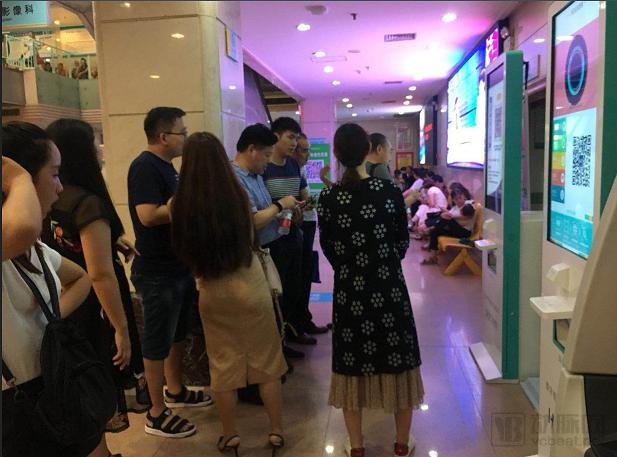
Second, most current products are still in the trial phase within hospitals; their usability and user-friendliness remain to be evaluated, and AI’s involvement in clinical practice is currently too shallow and limited. We believe that AI companies must not only design products with physicians at the center—integrating them into physicians’ workflows and aligning with their usage habits to improve diagnostic efficiency and accuracy—but also design with patients at the center. The ultimate goal of product design is to genuinely serve patients and enhance their healthcare experience; creating easy-to-use and user-friendly medical AI products is key to success. For example, Huiyi Huiying, building on its existing digital film business, provides patients with intelligent report interpretation services, which have been well received by both hospitals and patients.
Differentiated Competition: Breaking Through the Ceiling
AI technology can master diverse professional expertise through data training, benefiting numerous commercial sectors. AI-powered medical imaging employs image recognition techniques to perform image-based diagnostic assessments. Medical data primarily fall into two categories: imaging data and pathological data. Many challenges associated with these data types can be addressed using image recognition methods.
Lung nodule screening is a primary focus for most AI imaging companies. Although AI can assist in detecting nodules, it is not yet capable of providing definitive conclusions regarding further benign-versus-malignant differentiation or generating diagnostic report recommendations. Moreover, current market offerings are heavily concentrated on lung nodules, resulting in significant product homogenization. A single tertiary hospital may have installed products from more than ten AI vendors, yet routinely uses only one or two. Due to the lack of physician feedback for optimization, other products suffer from slow iteration and end up unused, effectively “gathering dust” in hospitals.
There is an abundance of publicly available data on pulmonary nodules, with many datasets readily downloadable. Consequently, numerous companies have developed pulmonary nodule screening products in the past two years. However, AI product development for a broader range of diseases has progressed slowly. Acquiring data for new disease categories is challenging, as high-quality data requires collaborative annotation by experts, leading to prolonged R&D cycles. Furthermore, standalone image recognition in clinical settings is insufficient to meet physicians’ needs; disease screening and computer-aided diagnosis offer limited clinical value. To become an indispensable tool in daily practice, AI must integrate into clinical decision-making, with physicians demanding AI solutions that cover the entire healthcare workflow.
Therefore, products that cover a wider range of diseases and participate in more medical workflows are likely to gain greater support and recognition from hospitals and physicians, which may become the most critical competitive advantage for AI imaging companies in the future. In this regard, Huiyi Huiying has carved out a unique path by leveraging imaging data as an entry point to integrate AI throughout the entire radiology workflow, thereby creating a closed-loop service that encompasses all stages from screening and diagnosis to treatment and prognosis.
In 2017, Huiyi Huiying launched three widely used image-recognition products for screening scenarios, including CT-based pulmonary nodule detection, chest digital radiography (DR) analysis, and fracture detection. The training models for these products incorporated not only imaging data but also extensive patient clinical information, laboratory test results, and follow-up prognostic data. These AI-powered solutions are capable of lesion localization and annotation, assist in tumor staging and classification, and provide decision support for physicians’ treatment plans.
In April 2018, Huiyi Huiying, in collaboration with the Chinese PLA General Hospital (301 Hospital), launched AORTIST 2.0, an artificial intelligence platform for aortic dissection. This platform effectively integrates the development of models for new disease types with comprehensive, end-to-end coverage for single-disease management. Validation studies have demonstrated that AORTIST 2.0 achieves accuracy far superior to conventional manual measurements and provides prognostic predictions for aortic dilation and composite endpoint events. The performance of AORTIST 2.0 essentially matches the precise diagnostic and predictive standards of the Chinese PLA General Hospital (301 Hospital). It has been shown to reduce the five-year adverse outcome rate from 40% to 15%, thereby enabling deeper integration into clinical scenarios and decision-making workflows.
Chai Xiangfei, CEO of Huiyi Huiying, stated that medical AI has entered its second half, transitioning from the 1.0 era to the 2.0 era. This shift is driven by the realization that while the past one to two years focused on enhancing diagnostic efficiency for physicians, the true core of healthcare services lies with patients. Therefore, adopting a patient-centric approach and integrating the service chain from patients to physicians and then to hospitals is crucial.
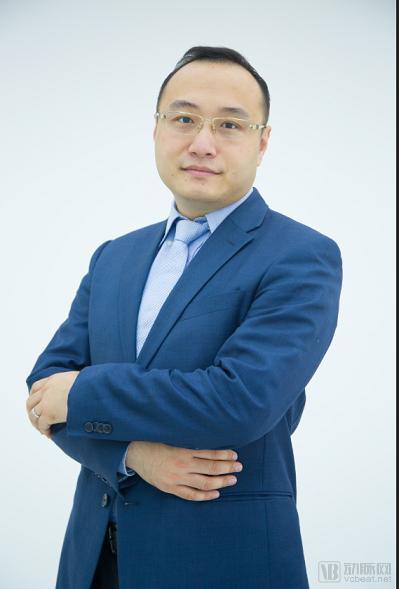
Huiyi Huiying is committed to building an online imaging center that connects patients, hospitals, and physicians, providing them with a digital, mobile, and intelligent closed-loop imaging service system. The company aims to develop in depth by constructing a platform capable of continuously incubating innovative medical services, and is attempting to participate in medical treatment and prognosis follow-up. Meanwhile, Huiyi Huiying has broken the deadlock of the profitability dilemma that plagues the industry most through its full-chain service business model, breaking out of the encirclement and escaping the curse of cash burn. It is reported that Huiyi Huiying already achieved impressive revenue results in 2017 and is regarded by the industry as a quasi-unicorn or unicorn.
Huiyi Huiying Launches the "AI Tiered Diagnosis and Treatment Public Welfare 100-Hospital Initiative"
China’s healthcare sector faces two major challenges: a scarcity of medical resources and an uneven distribution of those resources. According to data from the China Health and Family Planning Statistical Yearbook, among all medical institutions in the country, there are 28,261 urban hospitals, while the number of primary care institutions reaches 927,147—32 times that of urban hospitals.
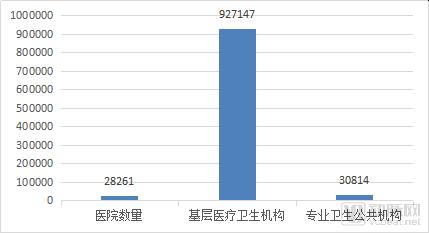
Statistics on the Number of Various Medical Institutions in China in 2016
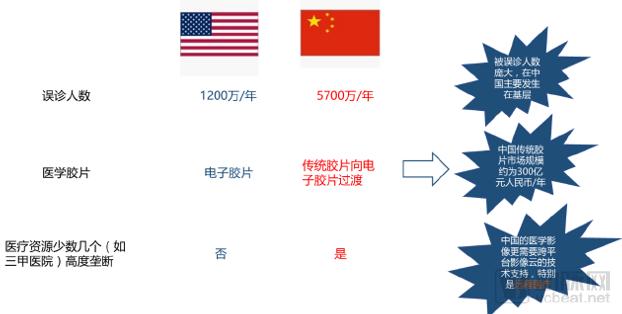
According to misdiagnosis data released by the Chinese Medical Association, the overall clinical misdiagnosis rate in China is 27.8%, with an average misdiagnosis rate of 40% for malignant tumors; these misdiagnoses occur primarily at primary healthcare institutions. The total number of misdiagnosed patients in China exceeds 57 million annually, more than four times that of the United States.
Guo Na, Co-founder and COO of Huiyi Huiying, stated that the scarcity and insufficiency of high-quality medical resources constitute a fundamental contradiction. What primary-care hospitals truly lack is diagnostic capability, which is itself a scarce resource. As an essential enabler for the implementation of tiered diagnosis and treatment, artificial intelligence can ensure that residents at the grassroots level have access to standardized resources and services.
In this regard, Huiyi Huiying aims to leverage medical consortia as a vehicle to integrate online and offline services, providing a comprehensive suite of solutions to primary-care hospitals. Taking the Third Affiliated Hospital of Zhengzhou University as an example, Huiyi Huiying has built an intelligent imaging center for the Maternal and Child Health Alliance within the medical consortium, based on cloud computing, big data, and artificial intelligence technologies. This initiative enables the sharing of medical imaging information and diagnostic data within the consortium, promoting the integration and sharing of medical imaging resources and imaging-based healthcare services. All maternal and child health institutions within the consortium can upload imaging data for centralized management, as well as share and access imaging information and diagnostic reports, ultimately facilitating the downward distribution of high-quality medical resources.
The Third Affiliated Hospital of Zhengzhou University is not an isolated case; it is reported that there are dozens of similar medical consortium imaging centers. Guo Na stated that to further promote the adoption and application of medical AI in primary healthcare institutions and significantly enhance their diagnostic and treatment capabilities, Huiyi Huiying will soon launch the “AI-Enabled Tiered Diagnosis and Treatment Public Welfare 100-Hospital Initiative,” providing free lung nodule screening services for one year to 100 primary hospitals. Currently, Huiyi Huiying’s lung nodule screening product can rapidly achieve lesion localization and annotation, with an automatic CT lung nodule recognition accuracy rate exceeding 90%, thereby helping physicians improve diagnostic efficiency while reducing rates of missed and misdiagnoses.
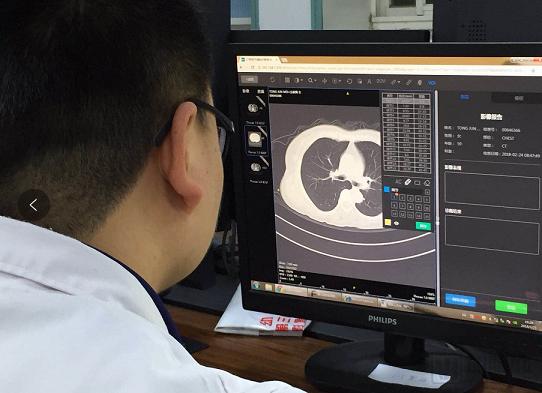
Discussing the decision to focus on pulmonary nodule screening, Guo Na stated that this approach was determined based on China’s current national conditions and future strategic goals. On one hand, lung cancer is arguably the leading cause of cancer-related deaths in China. According to the “2013 Annual Report of Cancer Registration in China” released by the National Central Cancer Registry, there are approximately 600,000 new cases of lung cancer each year. Lung cancer accounts for 20.48% of the incidence and 27.05% of the mortality rates among all malignant tumors in urban areas; in rural areas, it accounts for 18.05% of the incidence and 22.42% of the mortality rates, with both incidence and mortality showing an upward trend. Pulmonary nodule screening can effectively assist primary care hospitals in providing initial screening services.
On the other hand, as the state vigorously promotes the tiered diagnosis and treatment policy, the medical imaging cloud platform provided by Huiyi Huiying offers robust cloud-based support for medical consortia and tiered care. It facilitates the sharing of data and physician resources between primary healthcare institutions and urban hospitals, truly realizing the model of “examinations at the primary level, diagnoses at the tertiary level,” thereby aligning with the national call for tiered diagnosis and treatment.
As Chai Xiangfei, CEO of Huiyi Huiying, stated, “Against the backdrop of overall insufficient medical capacity, the application of medical artificial intelligence at the primary care level is not only an urgent current necessity but also benefits from a relatively mature environment. First, AI helps physicians improve diagnostic efficiency, freeing them from inefficient and repetitive tasks. Second, it assists primary care physicians in enhancing their diagnostic capabilities, thereby reducing misdiagnosis rates at the grassroots level. Although this path is challenging, we must not refrain from acting simply because it is difficult. Someone has to take the initiative; value is created only through action, whereas inaction yields no value whatsoever.”
Currently, Huiyi Huiying’s AI and imaging cloud platform products have been deployed in nearly 800 hospitals and are widely used across hundreds of medical institutions. It is fair to say that AI and primary healthcare institutions form an ideal “partnership,” achieving a win-win outcome for AI healthcare companies, primary healthcare providers, and patients at the grassroots level, while also significantly driving the development of China’s AI healthcare industry.