

Rendever Files IPO Prospectus: Revolutionizing Senior Care with Virtual Reality

Rendever
Provider of Virtual Reality Platforms for the Elderly
The film *The Bucket List* tells the story of billionaire Edward Cole and auto mechanic Carter Chambers, who, in the final stages of cancer, go skydiving, race cars, watch wildlife in Ethiopia, and climb the Himalayas, seizing their last moments to fulfill their wishes.
In the final stages of life, virtually everyone wishes to fulfill their unaccomplished desires. This is particularly true for the elderly. Yet a series of aspirations—such as attending a grandchild’s wedding, visiting an underwater world, climbing Mount Everest, or experiencing foreign cultures—can seem utterly out of reach for older adults facing declining physical function, modest financial means, or even bedridden conditions.
Technological innovation has brought infinite possibilities. With the widespread application of VR technology in the medical field, the large demographic of elderly people has gained favor among innovators and entrepreneurs.
According to VCBeat (WeChat ID: vcbeat), Rendever is such a company, integrating VR technology with the elderly population. It creatively enters the eldercare industry market while helping seniors regain their ability to explore the world.
Rendever’s founders, Dennis Lally and Reed Hayes, were graduate students at the Massachusetts Institute of Technology (now alumni), and both drew their entrepreneurial inspiration from their families.
Dennis Lally’s idea stemmed from his grandmother. Through her, he personally witnessed how the world shrinks for elderly individuals who lose their mobility.
When Lally left home for college, regular phone calls with her grandmother became the sole source of new information for the elderly woman. Lally noticed that her grandmother, confined to the house all day, was striving to stay informed about the outside world, yet her connection to it was gradually shrinking.
Reed Hayes had a similar experience. His uncle and mother-in-law were both placed in nursing homes due to Alzheimer’s disease. “I remember the atmosphere when I went to visit them—the vacant look in the eyes of Alzheimer’s patients in the wards. No one there was truly happy,” Hayes said. The decline in his loved ones’ quality of life deeply affected him.
The two met at the MIT Sloan School of Management. During a conversation, they discussed their respective concerns about aging family members. “We believed we could leverage emerging technologies, such as virtual reality, to help simulate the perspectives of these elderly loved ones,” said Hayes.
“I quickly agreed with this idea,” said Lally. “I have a background in the healthcare industry and have always been passionate about it. New technologies like VR are not exclusive to the young; older adults should also share in the novel experiences these technologies bring.”
(Image source: Rendever)
“We ‘forever’ deliver new experiences, hence the name Rendever,” said Dennis Lally.
Rendever was founded at MIT (Massachusetts Institute of Technology) in October 2015. It is a virtual reality platform dedicated to addressing loneliness and depression among the elderly population. By leveraging VR technology, it enables seniors to travel the world from the comfort of their “homes” and “relive their 18-year-old selves.”
To ensure the company’s smooth operation, Lally and Hayes recruited students from other disciplines at MIT, including engineering, computer science, business, and design. As the initial project was in the “development stage,” Rendever first launched a beta version. By June 2016, it had tested certain VR components with more than 500 residents.
On September 1, 2016, Rendever secured its initial funding from the MTI delta v accelerator. To support the Rendever project, MTI delta v also carefully selected mentors and board members for the company.
In addition to financial support (approximately $30,000 to help cover student salaries and other expenses), Rendever also received advice related to legal matters, fundraising, and marketing consulting. Meanwhile, MTI delta v introduced them to industry leaders and investors, with the hope that Rendever could secure further funding from external investors.
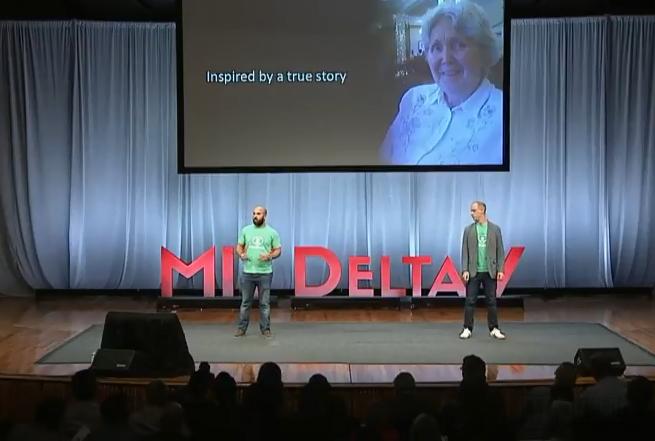
Pitch Deck by the Two Founders to Secure Support from MTI Delta V
(Image source: YouTube; compiled by VCBeat)
On February 23, 2017, Rendever won the $25,000 grand prize in the MIT Sloan Healthcare Innovations competition to officially launch its project, fulfilling the desire of elderly individuals in nursing homes or care facilities to virtually explore the world.
On March 29, 2017, Rendever, having completed testing at Brookdale Senior Living (one of the largest senior living companies in the United States), won $25,000 in a pitch competition hosted by TENN (the “TENN” accelerator program of Launch Tennessee) to further test and promote its business.
On June 13 of the same year, Rendever secured a $40,000 grant from MassChallenge, a non-profit business accelerator. Rendever aims to raise additional funding to expand its team in the areas of content and product development.
Currently, Rendever has tested and refined more than 30 features of its VR products designed for nursing homes and senior centers. To accelerate progress toward this goal, Lally even lived with designers in a long-term care facility for a week to facilitate direct feedback from residents.
Since it is inconvenient for the elderly to travel far, we will bring the outside world back to them.
(Image source: longevitynetwork)
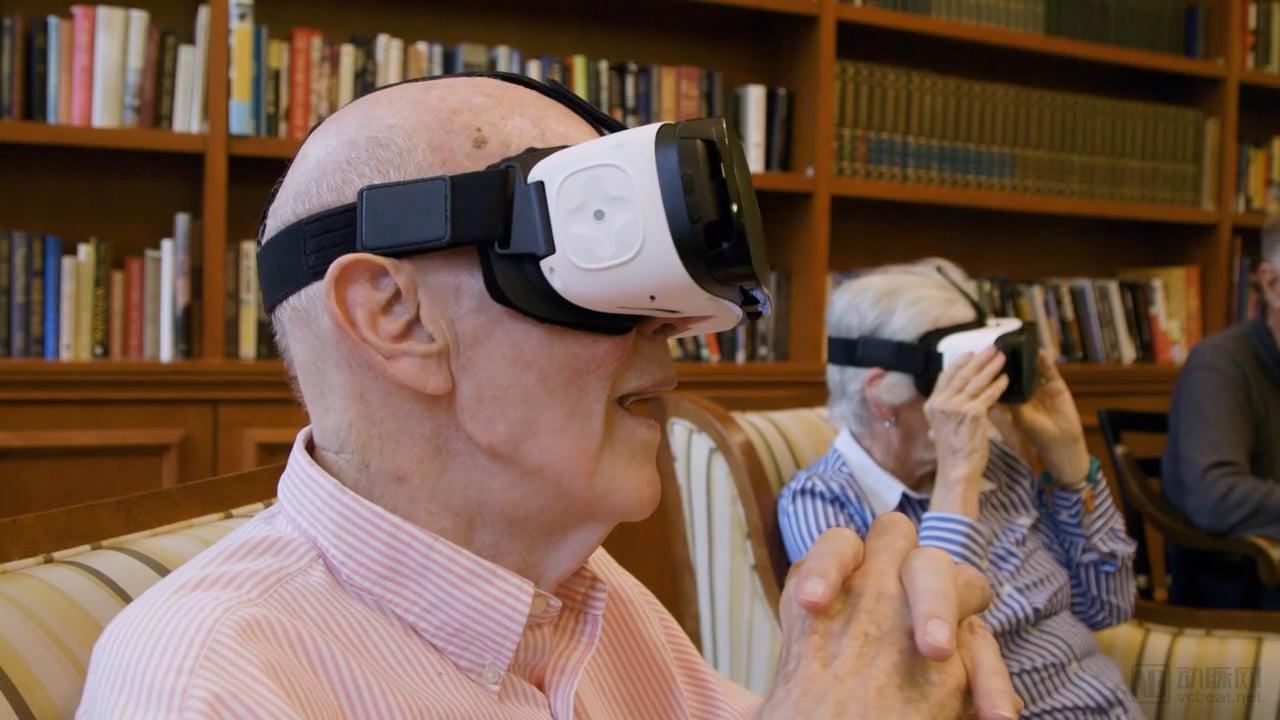
Loneliness and depression among the elderly are significant challenges they face, and Rendever aims to address these issues through its VR platform.
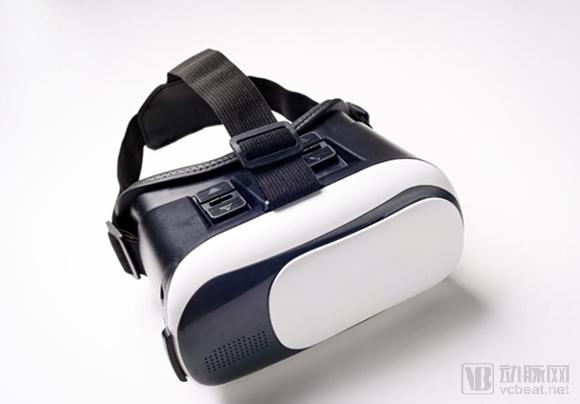
VR Headset (Image source: Shutterstock)
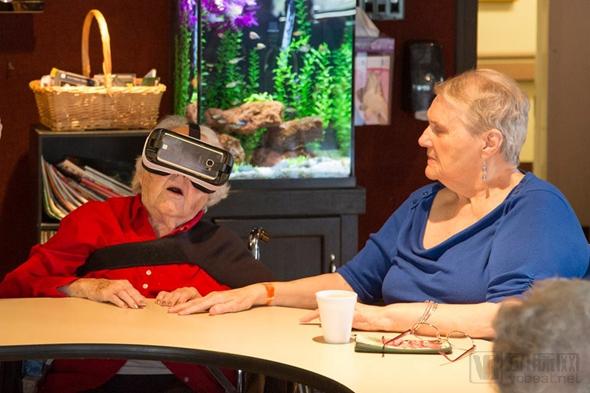
Rendever operates using its proprietary VR system, which comprises a VR headset, customized software, and a tablet. Seniors can explore the world from where they are by wearing the VR headset. Caregivers use a tablet equipped with the customized software to configure seniors’ requests into their accounts, thereby helping them fulfill their wishes.
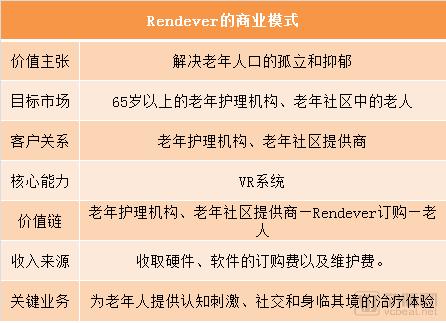
Rendever generates revenue by selling VR hardware kits to senior care facilities and retirement communities through its proprietary software system, with an upfront cost of approximately $4,000 plus a monthly subscription and maintenance fee of $500.
Rendever targets seniors aged 65 and older residing in elderly care facilities and senior living communities. Due to prolonged separation from their families and poor physical health, these individuals rarely have opportunities to engage with the outside world. Leveraging Google’s Street View feature, Rendever creates customized experiences that allow elderly users to virtually visit their homes, hometowns, schools, or major tourist attractions around the globe, thereby reducing the risk of depression.
Dennis Lally believes that the most significant value of their product lies in connecting seniors with their families. Due to limited mobility or health issues, older adults are often excluded from gatherings and large-scale events. Rendever has launched a feature called “Family Moments,” which allows family members to capture live scenes using 360-degree cameras—whether it’s a grandchild’s wedding or conversations around the dinner table. These immersive experiences can then be uploaded to residents’ accounts, enabling seniors to “participate” in real time.
Meanwhile, Rendever aims to use VR to assist in the diagnosis of dementia: users undergo a series of simulations of real-life scenarios (such as doing laundry, cooking, and completing various tasks). During this process, Rendever’s software collects thousands of data points per minute, including metrics on movement, reaction time, and executive function. These data can help facilitate early diagnosis of dementia and assess the effectiveness of treatments.
“We can very precisely track users’ movements in space, as well as their actions,” Reed Hayes told the media. “We are developing a machine learning model that can help distinguish between the behavioral patterns of individuals with early symptoms of dementia and those of healthy individuals.”
(Image source: Rendever Facebook)
Meanwhile, with the help of Rendever's software, caregivers can also view the VR experience from the perspective of elderly individuals with dementia, glaucoma, or cataracts, whose vision is blurred.
“This truly helps foster empathy, enabling caregivers to better understand what patients are experiencing. We are in discussions with leading training companies that specialize in employee development, particularly in dementia care, about creating more immersive staff training applications,” said Lally.
Given that Rendever operates in the VR-for-seniors sector, VCBeat (WeChat: vcbeat) has selected two of the most representative companies for analysis.
One Caring Team
One Caring Team, founded by Justin Moravetz and Sonya Kim in 2013, is headquartered in San Carlos, California, USA. One Caring Team provides personalized communication for the elderly, offering support and addressing their concerns and needs through phone calls from caregivers.
One Caring Team’s product, called Aloha VR, is designed to engage older adults whose psychosocial needs are unmet in daily life. One Caring Team provides a care team that establishes one-on-one relationships with seniors, identifies and addresses life challenges, delivers the emotional support they need, and helps them reintegrate into society.
One Caring Team divides care plans into four tiers, allowing families to select the most appropriate plan for their elderly loved ones based on individual circumstances. The tiers are as follows:
Bronze Plan: $49.99 per month, includes one care call per week;
Silver Plan: $89.99 per month, includes 2 care calls;
Gold Plan: $119.99 per month, includes 3 care calls;
Platinum Plan: $500 per month, including 3 care calls, 4 triage nurse calls, and 2 customer advocacy calls.
“Care Listener” records care information after each phone call, allowing family members to view it at any time and leave messages for the “Listener” to convey to the elderly.
Kim said, “Aloha VR has helped many of our patients reintegrate into life, and some patients with dementia have benefited from our program.”
MyndVR
MyndVR was founded by Chris Brickler and Shawn Wiora in 2016 and is headquartered in Dallas, Texas, USA. MyndVR provides VR technology to senior care facilities, home healthcare providers, and individual consumers, targeting adults aged 55 and older.
Over the past year, MyndVR has tested its proprietary virtual reality interface to optimize the experience for older adults. Additionally, MyndVR is curating an extensive VR content library, pioneering an innovative business model that integrates entertainment, cognitive stimulation, and on-demand therapeutic interventions. Older adults can use VR to briefly escape reality, enjoying the positive emotions derived from mentally transcending time and distance.
The company’s full-service delivery model provides everything needed for senior living communities and individuals to successfully implement the program, including equipment, an extensive content library, hardware support, and training.
Its content is customizable and can be specifically tailored to certain diseases, such as Alzheimer’s disease, Parkinson’s disease, and macular degeneration. To create original content, the team films natural landscapes, urban architecture, and leisure and entertainment venues across China. Additionally, the team has developed unique menus and vision-based navigation, enabling users to select content and navigate experiences using eye movements, thereby making the technology more accessible.
In terms of elderly care, some overseas universities organize design competitions for products aimed at assisting the elderly. In addition to the Massachusetts Institute of Technology mentioned in this article, the Stanford Center on Longevity has been hosting such competitions since 2012, with the theme changing annually. The inaugural theme was “How to enable older adults with cognitive impairment to live as independently as possible,” which later evolved into themes such as “How to ensure mobility at every stage of life” and “How to leverage mental well-being to optimize our longevity.” Each year’s theme effectively reflects the evolving trends in concepts and practices. Among the entries were various VR projects, such as Snapchat, known for its “disappearing messages” feature, which launched Spectacles, camera-equipped glasses.