

BMS Announces Pricing for China's First PD-1 Inhibitor Opdivo: 40mg at RMB 4,591
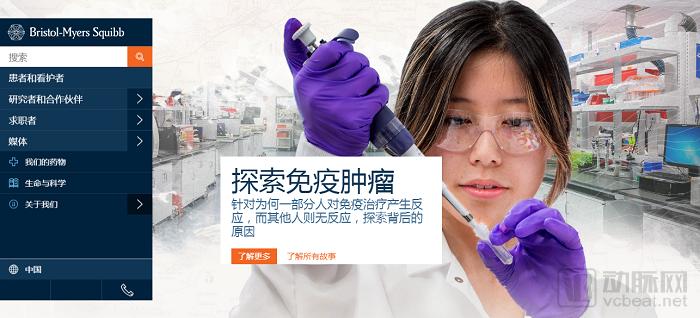
Image from the official website of BMS China
In June 2018, Bristol-Myers Squibb’s PD-1 monoclonal antibody Opdivo (nivolumab) officially received approval for its marketing application in China for the second-line treatment of non-small cell lung cancer, marking the launch of the first PD-1 inhibitor in the Chinese market.
On August 20, 2018, two months later, Bristol Myers Squibb (BMS) officially announced the full pricing of its PD-1 monoclonal antibody:
Suggested Retail Price: CNY 9,260 for 100 mg/10 mL; CNY 4,591 for 40 mg/10 mL.
For cancer treatment, the advent of PD-1 inhibitors has been revolutionary. Since their market launch in 2014, PD-1 antibodies have been hailed as “miracle anti-cancer drugs.” Backed by robust clinical data, the FDA approved indications for at least six types of malignant tumors within just over two years, including melanoma and non-small cell lung cancer, with response rates ranging from 20% to 40%. Remarkably, PD-1 antibodies successfully treated former U.S. President Jimmy Carter’s melanoma, earning them the nickname “the President’s Drug,” with Carter repeatedly endorsing them.
Opdivo was first approved in Japan, becoming the world’s first PD-1/PD-L1 inhibitor to reach the market. It subsequently received its initial FDA approval in April 2014 for the treatment of melanoma. To date, the FDA has approved Opdivo for eight major oncology indications. Additionally, its indication for gastric cancer was first approved in Japan in September 2017.
According to Bristol-Myers Squibb’s Q2 2018 financial data, Opdivo generated $1.627 billion in sales as of July 27. Currently, approved indications for Opdivo include advanced melanoma, certain non-small cell lung cancer indications, and head and neck cancer.
Opdivo is typically administered over a course of approximately three months via intravenous infusion. For non-small cell lung cancer (NSCLC), the recommended dosage is 240 mg every two weeks. Based on this regimen, the total dosage per treatment course is approximately 1,440 mg, with the medication cost exceeding RMB 134,000 per course.
In addition to Opdivo, Merck’s Keytruda was also approved for official launch in China on July 26. Furthermore, the marketing applications for PD-1 inhibitors from three domestic pharmaceutical companies—Junshi Biosciences, Innovent Biologics, and Hengrui Medicine—are all under regulatory review and are expected to be approved for market entry. It is anticipated that drug prices will decrease through collective efforts as domestically produced products enter the market and competition becomes more diversified.