

Hangzhou GuanZi Health Technologies Files for IPO, Offering Four CRISPR-Based Gene Editing Kits for Research
2002,"CRISPR"First entered the human field of vision. No one could have anticipated,Over the past decade,CRISPR ApplicationsWith rapid technological advancements, it has become the hottest gene-editing tool today.
CRISPR, an acronym for Clustered Regularly Interspaced Short Palindromic Repeats, refers to clustered, regularly interspaced short palindromic repeat sequences found in archaeal DNA fragments. These sequences are formed by the cumulative integration of small segments of exogenous DNA into the terminal regions of the archaeal genome, which are excised and inserted during invasions by foreign genetic material.
This is an immune defense mechanism in archaea. Exogenous DNA fragments integrated into their own genomes are transcribed into crRNA upon encountering homologous foreign DNA. The crRNA then associates with tracrRNA to form a single guide RNA (sgRNA) complex, which directs exonucleases to cleave the invading DNA, thereby achieving immune defense.
The nucleotide sequences adjacent to CRISPR are known as Cas genes. Currently, humans have mastered the Cas9 gene located at the ninth locus adjacent to CRISPR; this gene encodes an exonuclease. By designing sgRNA sequences and utilizing Cas9, a complex capable of precisely cleaving DNA—often referred to as “molecular scissors”—is formed. This technology is known as CRISPR/Cas9.
Gene Editing and Stem Cell Technologies: A Powerful Synergy, Poised for Breakthroughs
Prior to the advent of CRISPR/Cas9 technology, the gene-editing tools available to researchers were limited to two techniques: ZFN (zinc-finger nucleases) and TALEN (transcription activator-like effector nucleases). In 2013, Chad Cowan and Qiurong Ding from Harvard Medical School in the United States published in “Cell Stem Cell》 published the first comparative study of CRISPR and TALEN, demonstrating that the CRISPR system has higher gene-editing efficiency.
“Ding Qiurong was my senior fellow doctoral student at the Chinese Academy of Sciences. After she returned to China and became a professor at the Chinese Academy of Sciences, we had in-depth discussions and agreed that applying gene-editing technology to stem cells for disease modeling holds significant promise for studying pathogenic mechanisms and screening drug efficacy and toxicity,” recalled Dr. Li Cheng, founder of Guanzi Health.
For commercial applications, a stable R&D platform is required.Since late 2014, Dr. Li Cheng has been closely monitoring the latest applications of gene-editing technologies and the domestic development landscape in China. In 2017, when Professor Zhang Jin resigned from Amgen, where he had been responsible for building a stem cell drug R&D platform, and returned to China, Dr. Li immediately contacted him to share his vision of establishing a gene-editing R&D platform. The two quickly reached an agreement, and in February 2017, Hangzhou Guanzi Health Technology Co., Ltd. was founded.
Guanzi Health is a biotechnology company that utilizes gene-editing technologies to customize cell lines for pharmaceutical manufacturers and research clients. In addition to gene-edited cell lines, the company also provides vector/library construction services and high-throughput genetic screening technology services.
The company’s founder, Li Cheng, graduated from Zhejiang University and subsequently earned his Ph.D. in Biochemistry and Molecular Biology from the Chinese Academy of Sciences. After completing his doctoral studies, he served as Vice President of R&D at a cell therapy drug development company and later as General Manager of R&D at the corporate research institute of a stem cell drug development firm. In June 2015, Li Cheng co-founded a stem cell drug development company. His hands-on experience in building teams and advancing stem cell therapies through the Center for Drug Evaluation (CDE) for cell quality assessment laid the foundational skills for establishing Guanzi Health.
Guanzi Health TeamofOtherThe team comprises experts from world-leading research institutions such as Harvard University and the Chinese Academy of Sciences, as well as seasoned industry veterans with many years of experience at multinational corporations.
Guanzi Health focuses on “gene editing” and “pluripotent stem cell technology” to develop novel cell and gene therapies. By leveraging high-throughput genetic screening, the company helps research institutions accelerate new drug development and mitigate the risk of R&D failure. Within a year and a half of its establishment, Guanzi Health has received support as a key entrepreneurial project from the Zhejiang Overseas High-Level Talent Innovation Park and completed the construction of a GMP-compliant experimental platform at Hangzhou Fengshang Wisdom Valley.
By the end of 2017, the company had independently developed and completed four reagent products related to gene editing services. In March 2018, as the exclusive partner of Zhejiang University’s Center for Continuing Education, the company jointly launched the “Gene Editing Technology Workshop” across China, promoting industry development and receiving widespread acclaim from the professional community. In April of the same year, Guanzi Health was selected for the third cohort of the “Bayer G4A Shanghai” startup program. In August, it was honored as a “High-Tech Enterprise in Hangzhou.”
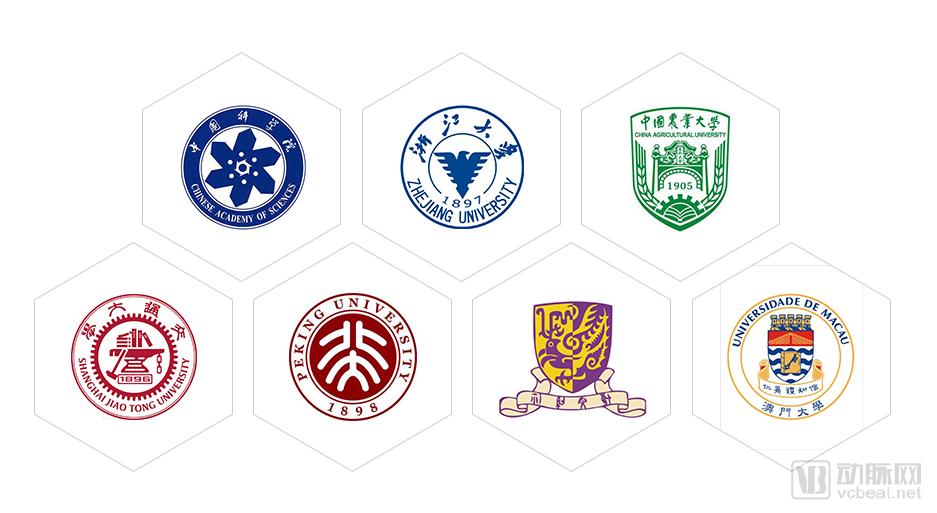
Research Institutions Partnered with Guanzi Health (Image Source: Guanzi Health Official Website)
To date, the company has filed 12 national invention patent applications through independent research and development, two of which have been granted. It currently offers four product lines: gene editing service kits, stable cell lines with gene edits, primary cell gene editing services, and gene editing services for pluripotent stem cells and mesenchymal stem cells. Among these, four gene editing kits have been launched on the market: the CRISPR/Cas9 (puro) Expression Vector Construction Kit, the CRISPR/Cas9 (GFP) Expression Vector Construction Kit, the CRISPR Mutation Detection Kit, and the Lentiviral Packaging Kit. The company also provides high-throughput genetic screening services based on gene editing technology to scientific research and pharmaceutical R&D institutions, helping clients reduce R&D costs and improve efficiency.
The biggest pitfall scientist-entrepreneurs must avoid is working in isolation—exerting tremendous effort to forge a “dragon-slaying saber,” only to discover upon entering the market that there are no dragons to slay. Therefore, from the outset of product commercialization, Guanzi has prioritized “building the right product.” By continuously optimizing its products and services based on market demands and customer feedback, the company achieves service iteration and industrial upgrading throughout this process.
Guanzi Health is currently pursuing commercialization in three key areas. First, it conducts gene function research and provides gene-editing products to scientific research clients. Second, it leverages human genomic data related to diseases to assess drug sensitivity and optimize precise dosing, thereby accelerating pharmaceutical R&D for corporate clients and reducing their development risks. Finally, the company offers engineered cell line services to pharmaceutical manufacturers engaged in cell therapy and antibody development, enhancing drug efficacy and safety while quantifying production yields.
Furthermore, Guanzi Health has developed a patented long-fragment gene knock-in technology, which significantly improves knock-in efficiency in primary cells and pluripotent stem cells, laying the foundation for constructing disease-simulating cell models.
Li Cheng stated that the company would continue to expand its portfolio of in vitro gene editing products, strengthening its technological advantages in primary cell and stem cell gene editing. Meanwhile, it would leverage gene editing technologies to develop rapid clinical diagnostic products for applications such as pathogenic microorganism detection.
The company will continue to strengthen its technical service platform, covering more comprehensive levels of scientific research and drug development needs, and provide more customized services according to customer requirements.