Interprovincial Migrant Population Medical Service Demand Report: Six-Year Data Across Nine Dimensions – Current Status and Trends
Content Summary
With the acceleration of economic growth and urbanization, the number of floating population in China has been continuously increasing (the term “floating population” generally refers to individuals who are separated from their household registration, meaning their place of household registration differs from their place of residence, and they have left their registered location for more than six months). The emergence of the floating population is a distinctive phenomenon during China’s social transition. While they have made significant contributions to urban modernization and economic development, they face various health-related challenges. Typically characterized by high work intensity, low income levels, suboptimal dietary and living conditions, and insufficient awareness of healthcare, this group encounters numerous health issues. Worse still, the floating population rarely has access to the public health resources and services provided by the cities in which they reside.
Based on the dynamic monitoring data of China’s floating population from 2011 to 2016, released by the Migrant Population Service Center of the National Health and Family Planning Commission, this report presents a multi-dimensional analysis of the living conditions of the floating population in recent years. The analysis covers various aspects, including migration scale, age, gender, marital status, education level, average monthly income, reasons for migration, duration of migration, and basic healthcare needs. VCBeat Institute primarily utilizes 2016 data to analyze the characteristics of the floating population and their healthcare demands, while also reviewing historical data to observe continuous trends and changes within this demographic.
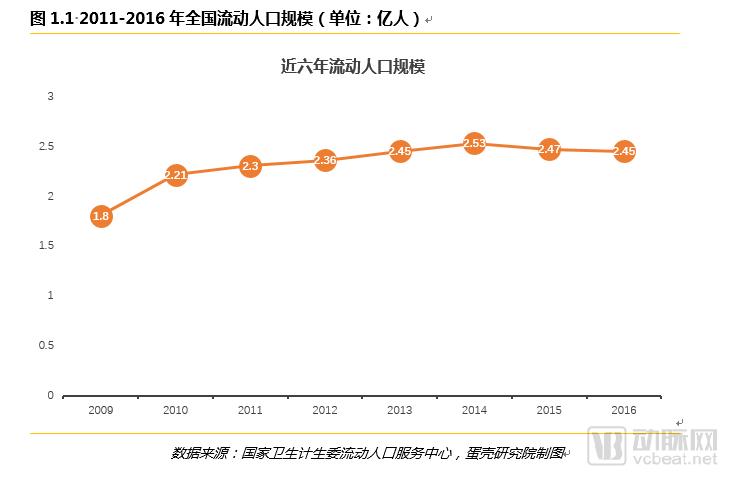
In 2016, China’s floating population totaled 245 million, marking the second consecutive year of decline following a decrease in 2015. After sustaining annual growth since 2009 and reaching a peak of 253 million in 2014, the initial increase followed by a subsequent decrease in the floating population reflects that Chinese residents are becoming more stable and their willingness to migrate is beginning to wane.
1. Males exhibit a slightly higher propensity for migration than females, with young and middle-aged adults constituting the main force of the migrant population
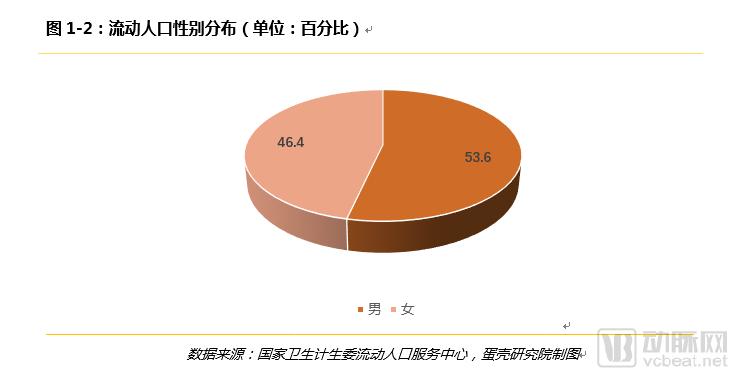
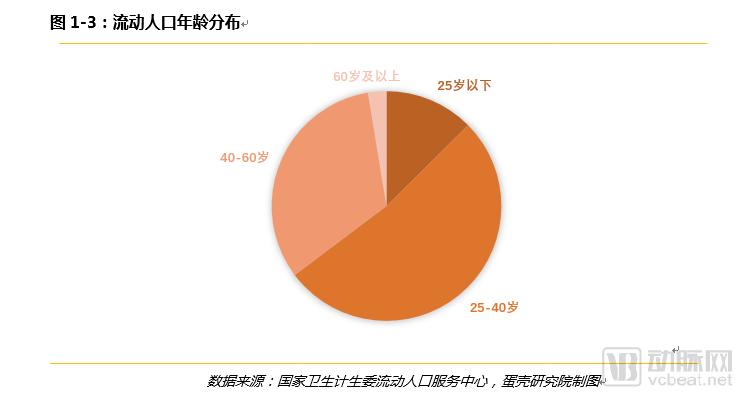
Sample data from 2016 on the floating population shows that males and females accounted for 53.6% and 46.4%, respectively. Compared with the national total population, where males and females accounted for 51.2% and 48.8% respectively, this reflects a greater propensity for migration among men. This is related to China’s traditional labor concept of “men working outside the home and women managing the household.” Furthermore, migrants primarily engage in occupations requiring considerable physical strength, for which men are better suited. Meanwhile, the floating population is predominantly composed of young and middle-aged adults aged 25–40 years, accounting for52.2%, reflecting that the floating population mainly consists of young and middle-aged individuals who are in their prime working years.
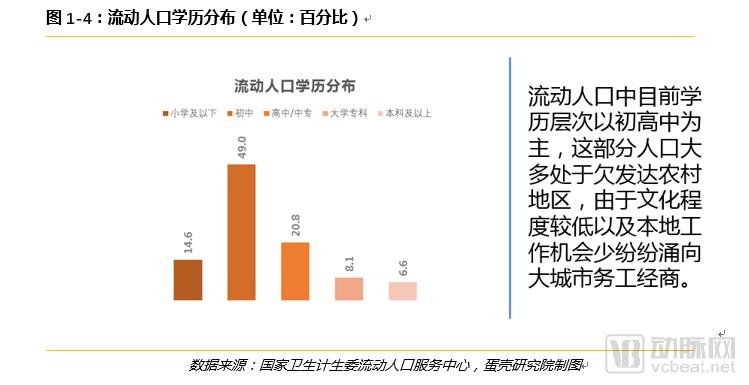
2. The general level of education is relatively low, with the majority having an educational background below high school.
3. The proportion of unmarried individuals is relatively low, with a trend toward family-based overall migration.
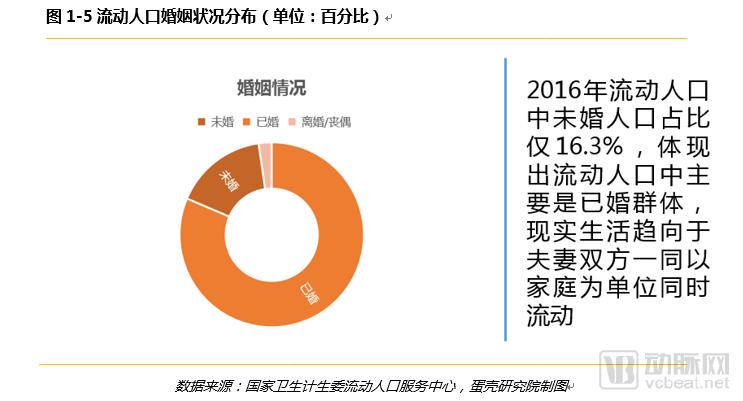
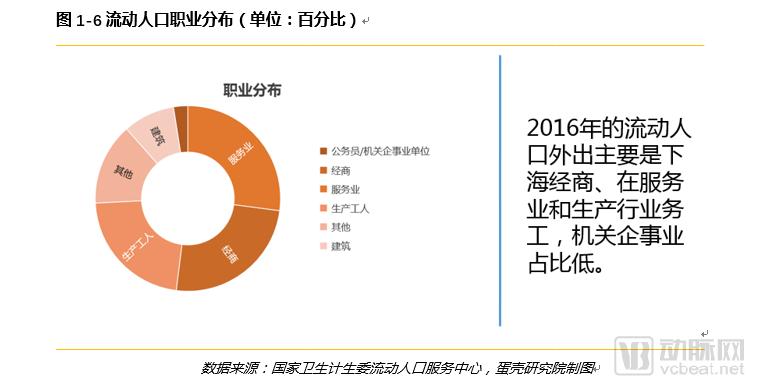
4. Occupationally, the majority are engaged in manual labor and business, with a low proportion employed in government agencies, enterprises, and public institutions.
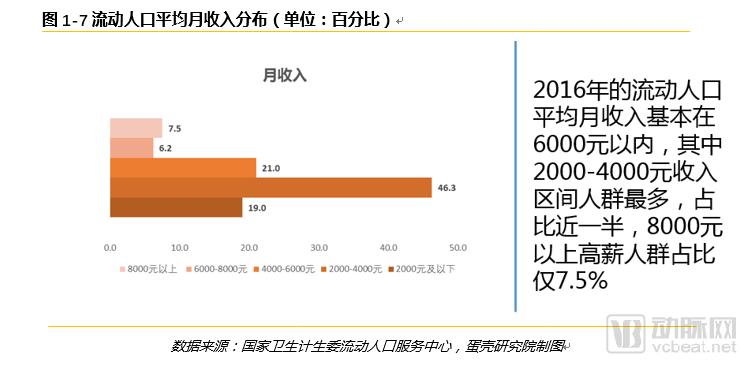
5. Predominantly low- and middle-income, with a small proportion of high-income individuals
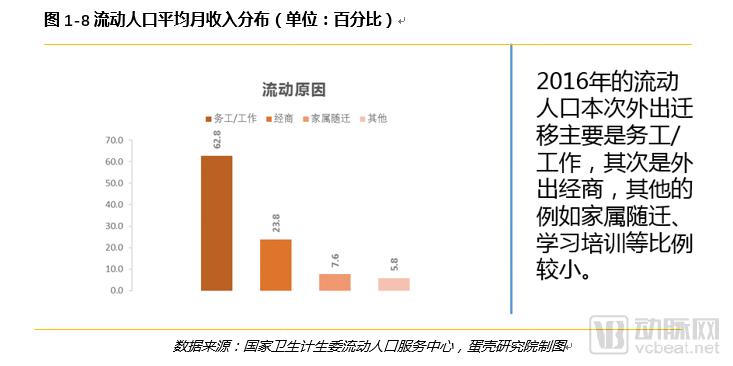
6. The primary reasons for migration are employment and business activities, accounting for over 80% of the total.
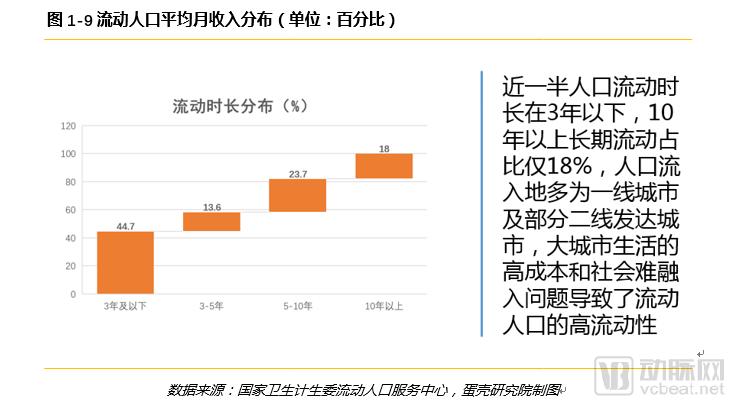
7. Difficulty in Establishing Roots in Major Cities, with Short-Term Mobility Predominating
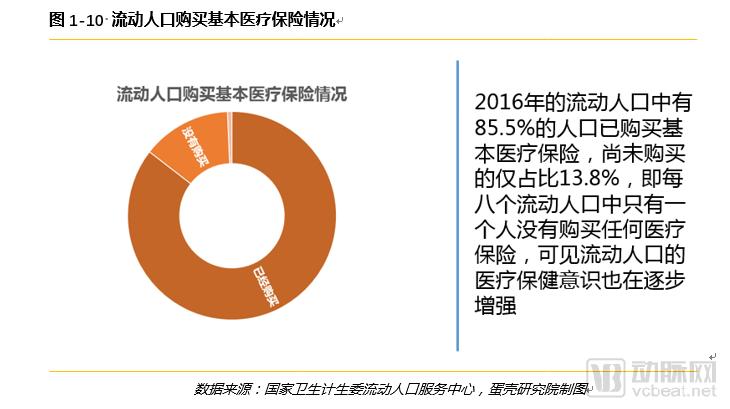
8. Over 80% of the migrant population has purchased basic medical insurance, reflecting strong healthcare awareness
1. Extensive Geographic Mobility: Developed Coastal Regions in the East Become Highly Sought-After Destinations
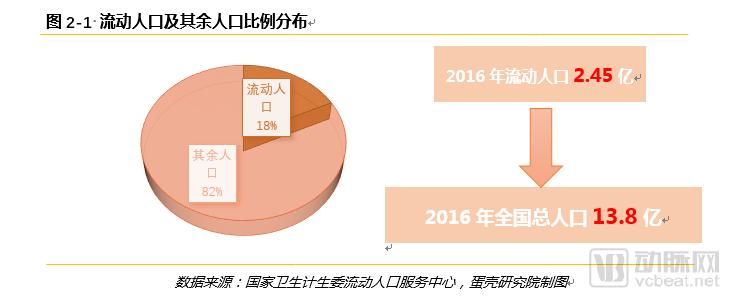
In 2016, China’s floating population totaled 245 million, accounting for 18% of the national population, meaning that one in every six people was part of this mobile demographic. Over the next decade or two, China will remain in a phase of rapid urbanization. According to the National New-Type Urbanization Plan, the country’s floating population is still projected to exceed 200 million by 2020. Therefore, this large population group, which has naturally emerged during China’s urbanization process, should not be overlooked and deserves our attention.
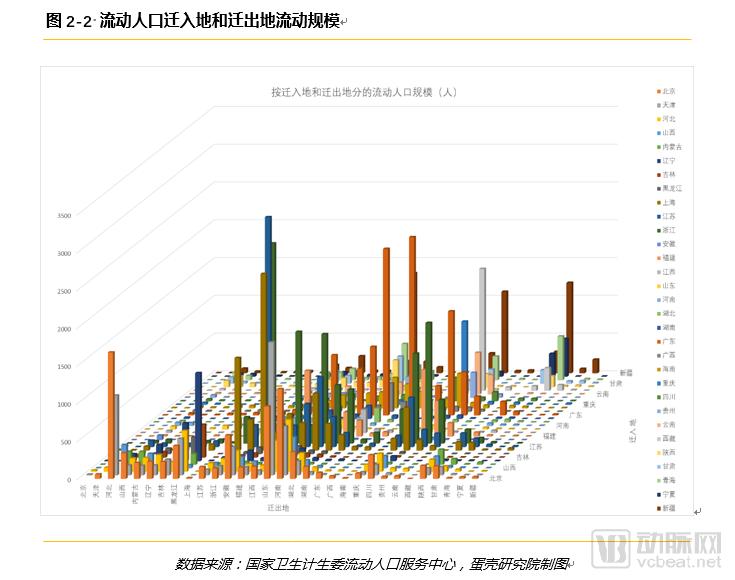
Migrant populations primarily favor first-tier megacities and developed coastal regions. The figure above illustrates the scale of inbound and outbound migrant flows across China in 2016. Developed regions such as Beijing, Shanghai, Jiangsu, Zhejiang, and Guangdong served as major destinations for in-migration, whereas less developed provinces—including Anhui, Henan, Jiangxi, Sichuan, and Hunan—were primary sources of out-migration, experiencing significant population loss. The migrant population consists largely of rural migrant workers with relatively low educational attainment. Due to limited educational qualifications and scarce employment opportunities in their places of household registration (hukou), these individuals have flocked to large cities in search of greater livelihood opportunities.
1. The New Generation Becomes the Main Force, with Average Age Gradually Increasing
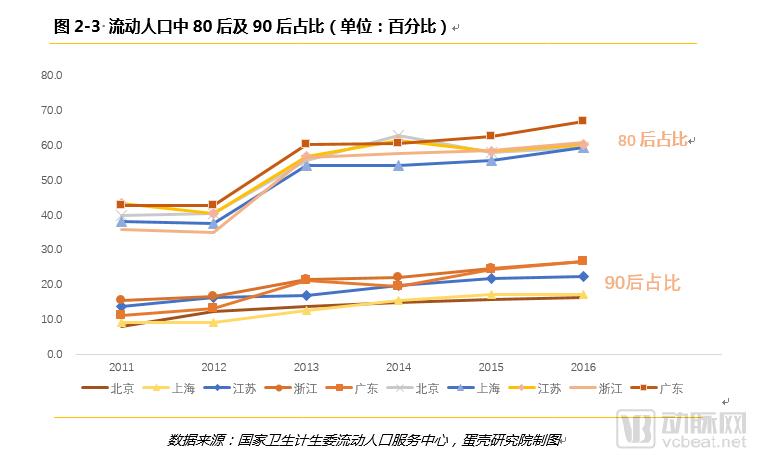
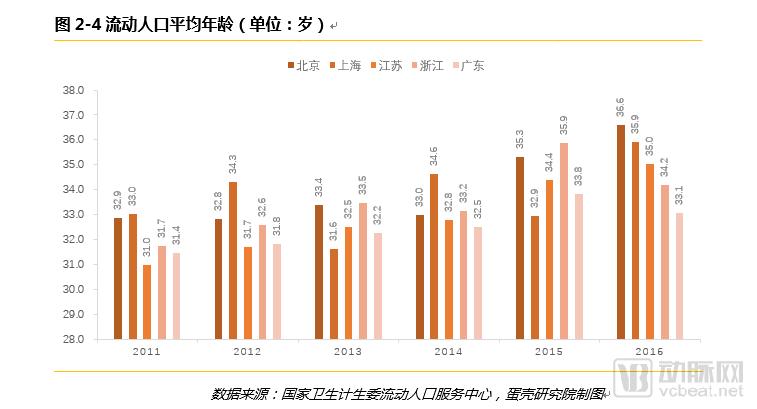
From 2011 to 2016, the proportion of the new generation among the floating population, such as those born in the 1980s and 1990s, continued to rise, highlighting a trend toward a younger demographic. Meanwhile, the average age of the floating population has been gradually increasing. Taking Beijing as an example, the average age rose from 32.9 years in 2011 to 36.5 years in 2016, with similar increases observed to varying degrees in other regions such as Jiangsu, Zhejiang, Shanghai, and Guangdong. This reflects that, in addition to the evident trend of rejuvenation, the proportion of middle-aged and elderly individuals within the floating population is also slowly increasing. This is primarily attributed to the trend of family-based migration. Generally, after young and middle-aged adults secure stable employment in large cities, they tend to relocate their elderly parents and children to their place of work to maintain normal family life. Consequently, the proportion of elderly individuals has shown a gradual and steady increase. Furthermore, the average age of the floating population in Guangdong has remained relatively low. This is mainly because Guangdong has a well-developed manufacturing sector and other low-end labor-intensive industries, creating substantial demand for labor. This has attracted a large number of young migrants from rural areas with lower educational attainment, thereby lowering the average age of the floating population in the region.
3. The unmarried rate is gradually declining, with a pronounced trend toward family formation
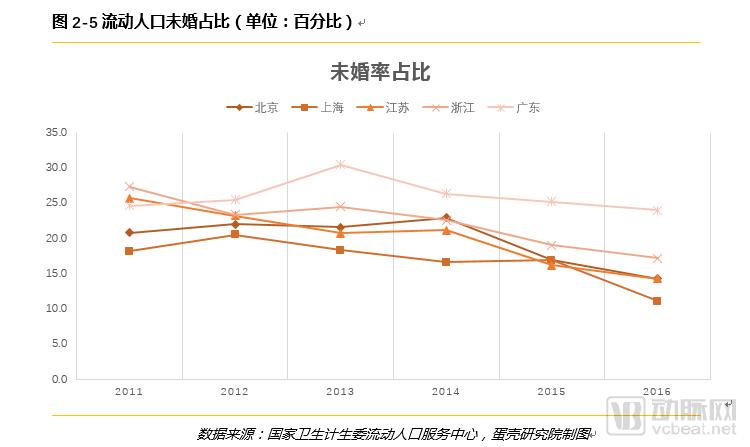
An examination of the marital status of the migrant population in China’s five major destination regions from 2011 to 2016 reveals a consistent, gradual year-on-year decline in the proportion of unmarried individuals. The most significant decrease occurred in Jiangsu Province, where the unmarried rate dropped from 27.2% in 2011 to 14.2% in 2016. Shanghai recorded the lowest unmarried rate, peaking at only 20.5% in recent years. Beijing also maintained a relatively low unmarried rate. In contrast, Guangdong Province exhibited a higher unmarried rate among its migrant population, with relatively minor fluctuations in recent years, stabilizing at approximately 25%. These trends reflect disparities in workforce quality between first-tier cities such as Beijing and Shanghai and other regions. As the forefront of China’s economic development, Beijing and Shanghai boast highly developed knowledge-intensive industries, including finance and services, and are home to numerous prestigious universities. These factors have attracted a large influx of high-caliber talent from across the country. Unlike Guangdong and similar regions, which are dominated by labor-intensive industries such as manufacturing and primarily attract migrant workers with lower educational attainment, Beijing and Shanghai draw in a more highly educated workforce.
4. Educational attainment has steadily improved year by year, with average monthly income rising accordingly
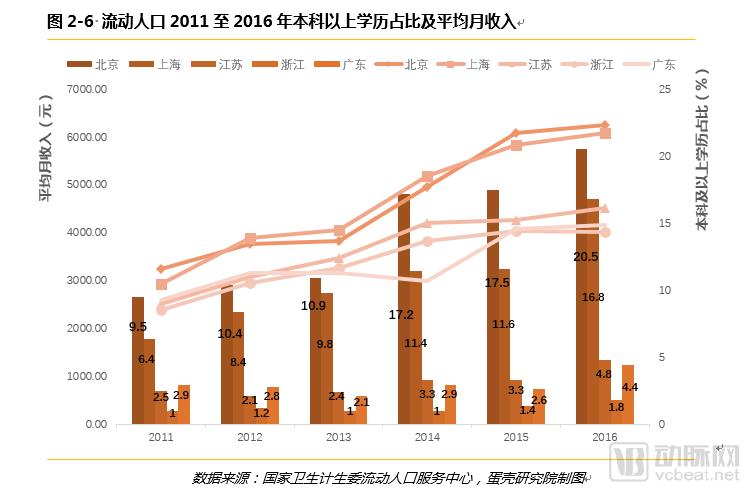
Chart data shows that from 2011 to 2016, the overall educational attainment of the floating population in five major regions steadily improved year by year. Here, the “proportion of individuals with a bachelor’s degree or higher” is used as an indicator of educational level. Among these regions, the floating population in Beijing had a relatively higher educational attainment, with the proportion of bachelor’s degree holders exceeding that in other parts of China. In 2016, this figure reached as high as 20.5%, meaning that more than one-fifth of the floating population in Beijing held a bachelor’s degree or higher. Close behind was Shanghai, where the floating population also ranked high in terms of educational attainment, with the proportion of bachelor’s degree holders rising from 6.4% in 2011 to 16.8% in 2016. Additionally, economically developed provinces such as Jiangsu, Zhejiang, and Guangdong saw slight annual increases in the proportion of bachelor’s degree holders among their floating populations. This reflects an upward trend in the overall educational level of the floating population, which is no longer confined to the stereotype of “migrant workers.” Increasingly, highly educated individuals are choosing to leave their hometowns after graduation to seek employment, pursue career development, and even settle down in large cities with more job opportunities.
With the rising educational attainment of the migrant population and comprehensive socio-economic development, their overall income levels have been steadily increasing year by year. The average monthly incomes in Beijing and Shanghai, two first-tier cities, have consistently led the nation. In 2016, the average monthly income in both cities surpassed the RMB 6,000 threshold, reaching RMB 6,249 in Beijing and RMB 6,087 in Shanghai. In Jiangsu Province, the average monthly income rose from RMB 2,507 in 2011 to RMB 4,523 in 2016; in Zhejiang and Guangdong Provinces, it increased from RMB 2,396 and RMB 2,601 in 2011 to RMB 4,013 and RMB 4,163 in 2016, respectively.
The remainder of Chapter 2 will analyze the employment quality and insurance participation status of the migrant population, with a view to comprehensively portraying their current living conditions from multiple perspectives.
Chapter 3 focuses on applying statistical methods to conduct a correlation analysis between the dimensions of migrant populations’ self-portraits (as independent variables) and their demand for medical services, thereby providing an in-depth exploration of the factors influencing healthcare needs among migrant populations.
The report concludes with a summary and reflection on the aforementioned data analysis, proposes recommendations for improving services to address the current challenges faced by the floating population, and provides certain guidance and reference for seizing development opportunities in related industries.
Below is the complete table of contents for the report, which comprises three chapters and spans 26 pages in total.
I. Profile of the Floating Population
5. Predominantly middle- and low-income groups, with a small proportion of high-income individuals
7. Difficulty in Establishing Roots in Major Cities, with Short-Term Mobility Predominating
II. Trend Analysis of Dimensions Related to the Floating Population
2. The New Generation Becomes the Main Force, with Average Age Gradually Increasing
3. The unmarried rate is gradually declining, with a pronounced trend toward family formation
III. Correlation Analysis of Variables Related to the Medical Needs of the Migrant Population
1. Men Place Greater Emphasis on the Prevention and Control of Chronic Diseases
2. Low Health Insurance Coverage Among the Elderly, Rising Demand for Outpatient and Inpatient Care
3. Rising Educational Attainment and Growing Demand for Chronic Disease Prevention and Control
7. Summary and Recommendations
To read the remaining chapters, please scan the QR code to become a VCBeat member and download the full report, or purchase the report individually in the VCBeat Reports section.