

Berry Genomics Reports 50.26% Net Profit Surge in H1 2018, Accelerates Full-Industry Layout in Big Data, Gene Therapy, and Consumer Genomics
On the evening of August 21, 2018, Berry Genomics, a giant in genetic testing, released its financial results for the first half of 2018.

Image excerpted from Berry Genomics’ 2018 Semi-Annual Report
Berry Genomics is an R&D-focused biotechnology company dedicated to applying high-throughput gene sequencing technologies to provide “non-invasive” comprehensive solutions for clinical disease screening and diagnosis, and it is also an industry leader in translating gene sequencing technologies into clinical practice.
The semi-annual report shows that in the first half of 2018, Berry Genomics achieved sales revenue of approximately RMB 645 million, a year-on-year increase of 23.09%;Net profit attributable to shareholders of the listed company was approximately RMB 146 million, representing a year-on-year increase of 50.26%.
Previously disclosed Q1 financial results showed that in the first quarter of 2018, Berry Genomics generated revenue of approximately RMB 297 million, representing a 32.81% year-on-year increase; net profit attributable to shareholders of the listed company amounted to approximately RMB 65.67 million, up 69.37% year on year.
A comparison of the two datasets indicates that Berry Genomics maintained a consistent and robust growth trajectory in its business operations across both quarters of the first half of the year.
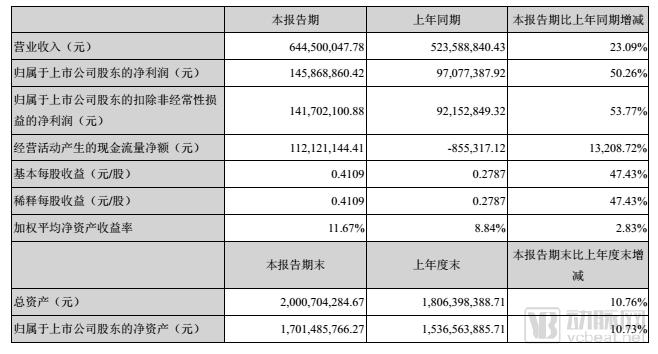
Image excerpted from Berry Genomics' 2018 Semi-Annual Report
Part of the performance growth was driven by overall market expansion, while another part stemmed from technological innovation and user recognition of the company.
In addition to its upstream instruments and consumables business and midstream testing services, Berry Genomics’ big data industrial park has officially commenced construction. Furthermore, VCBeat noted that Berry Genomics quietly invested in a Suzhou-based gene therapy company, Belief BioMed, in June 2018.
This is a biotechnology company primarily engaged in the research, development, and industrialization of gene therapy drugs and their vectors. Undoubtedly, this company has upstream and downstream synergies with Berry Genomics’ core business—genetic testing.
This also marks Berry Genomics’ first foray into the downstream segment of the entire gene sequencing industry chain.
Berry Genomics first disclosed its vision for a comprehensive industry layout to VCBeat in 2016. In retrospect, the so-called “comprehensive industry” encompasses far more than just the sequencing sector.What, then, does this whole-industry layout refer to?, is it the entire industry chain related to gene sequencing, or everything related to genes?How will they plan and strategize step by step? And when did the idea of a full-industry layout first emerge?
“In 2010, when the company was just established, we already had a “whole-industry concept.”’。“Focusing on just one segment is definitely not a viable path,” Zhou Daixing told VCBeat. “As our NIPT business was poised for leapfrog growth, we began to consider what opportunities lay beyond NIPT.”
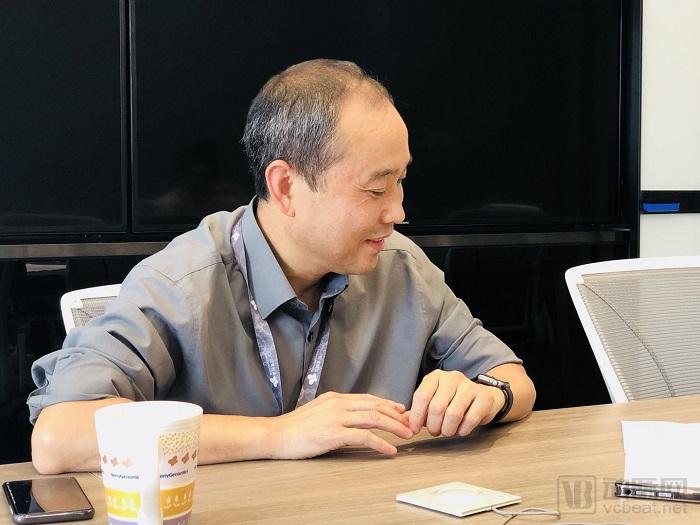
Zhou Daixing, Co-founder of Berry Genomics
With these questions in mind, VCBeat reached out to Dr. Zhou Daixing, co-founder of Berry Genomics. Over the following hour, he outlined to VCBeat the logic behind Berry Genomics’ industry-wide layout, what this comprehensive strategy entails, and how it will be implemented step by step in the future...
In 2015, Berry Genomics and Illumina jointly developed the NextSeq CN500, a next-generation sequencer specifically tailored for clinical applications in China, marking its initial entry into the upstream instrument market. After several years of development, the NextSeq CN500 has been adopted by nearly 100 hospitals across China, capturing a 70% market share in terms of product business model within this sector, making it the sequencing company that serves the largest number of hospital clients globally.
Berry Genomics has also introduced sequencing platforms such as PacBio, Nanopore, and 10X Genomics to continuously strengthen its scientific research services. On one hand, it is upgrading existing testing services; on the other, it is validating broader application possibilities for these sequencing platforms in China.
In the midstream segment, Berry Genomics has currently shifted its focus to tumor and genetic disease testing. Leveraging its nationwide sales network and multiple medical laboratories, Berry Genomics has extended these two business lines to cities across China.
Genetic disease testing services, represented by non-invasive prenatal testing (NIPT), constitute Berry Genomics’ core business, with the corresponding testing services and sales of kits and equipment serving as its current sources of cash flow. After years of dedicated development, the company has established a dominant position in the field of NIPT and became the first globally to conduct large-scale clinical follow-up on over one million cases.
Currently, the scope of NIPT is limited to the detection of chromosomal aneuploidies (T21, T18, and T13). Nevertheless, it is undeniable that expanding to more refined chromosomal structural variations—specifically chromosomal microdeletions and microduplications—is an inevitable trend. As a pioneer in the field of non-invasive prenatal testing, Berry Genomics has been continuously investing in achieving broader detection coverage and more precise results.
At the end of 2015, the application for technical filing of the NIPT Plus project, jointly developed by Berry Genomics and Hunan Jiahui Genetic Specialty Hospital, was approved by the Hunan Provincial Health and Family Planning Commission. This marked the only NIPT Plus product to receive such approval in China. Subsequently, Berry Genomics took the lead in launching Beibian Plus, an NIPT Plus product covering 14 chromosomal disorders, and completed follow-ups on over 100,000 samples within just two years.
In January 2018, after two years of validation, Berry Genomics officially expanded the scope of its NIPT testing to cover 100 chromosomal disorders.
Oncology is another key focus for the company following its non-invasive prenatal testing (NIPT) business, representing the next market poised for explosive growth. Berry Genomics first launched its oncology testing products in 2015, with the market introduction of Onconi, a tumor molecular diagnostics product line built on its core cSMART technology.
However, the initial idea to venture into the oncology business emerged in 2012. Berry Genomics’ technical team started with non-invasive chromosomal disease testing and naturally expanded into non-invasive prenatal testing (NIPT) for monogenic diseases. Shortly after the company’s establishment, it began researching technologies for non-invasive prenatal testing of monogenic diseases, which later became known as cSMART technology.
Subsequent developments have shown that cSMART technology laid the foundation for the growth of Berry Genomics’ oncology business. This technology can detect fetal DNA mutations present at extremely low levels in maternal plasma. By the same token, it can also be applied to the detection of tumor DNA, given that circulating tumor DNA (ctDNA) in the peripheral blood of cancer patients is also present at very low concentrations.
In July 2018, the cSMART liquid biopsy technology, hailed as a “revolutionary breakthrough in molecular diagnostics,” was granted a Chinese patent, further solidifying Berry Genomics’ core competitiveness in the oncology field.
Berry Genomics’ commitment to its oncology business can be traced back to the establishment of its subsidiary, Herui Genomics. In August 2017, Berry Genomics founded Herui Genomics, and in November of the same year, it led a consortium of seven investment institutions, including Legend Capital, in injecting a total of RMB 800 million into Herui Genomics.
Berry Genomics is to Grail as Illumina is to Berry Genomics.However, the slight difference is that Huirui Gene has taken over the parent company’s entire oncology business line.Following the capital increase and share expansion, Berry Genomics retained the right of first refusal to repurchase shares in its subsidiary.
In April 2018, Huirui Gene, in collaboration with the National Center for Liver Cancer/Department of Hepatobiliary Surgery of Eastern Hepatobiliary Surgery Hospital of Naval Medical University and Nanfang Hospital of Southern Medical University, jointly launched a nationwide, multicenter, prospective cohort study involving 10,000 participants to screen for biomarkers enabling ultra-early warning of liver cancer. This initiative marks a groundbreaking shift in China’s liver cancer prevention and control efforts into the stage of ultra-early prevention and clinical validation, holding great promise for significantly improving the diagnostic accuracy of liver cancer, particularly early-stage disease.
“Liver cancer is a ‘major cancer type’ unique to China, and it is also the most highly advocated project in the early diagnosis industry.” When asked why he chose liver cancer screening as the starting point for his early-screening business, Zhou Daixing responded in this way.
Liver cancer is an insidious disease, with patients experiencing virtually no discomfort in the early stages. As a result, the disease is typically diagnosed at an advanced stage, leaving few treatment options. “The five-year survival rate does not exceed 10%,” he added.
Unfortunately, China is also a country with a high burden of liver disease, with over 45 million people at high risk for liver cancer. These individuals are typically patients with cirrhosis or hepatic fibrosis; approximately 1% of them progress to liver cancer each year, an incidence rate that is even higher than that of many genetic disorders.
Therefore, for this subset of patients in China, the optimal solution is to employ reliable technologies to screen for the disease at an early stage, before tumor cells have metastasized. This approach enables effective disease control through interventions such as surgery and chemotherapy, thereby securing the optimal therapeutic window.
“We discussed this initiative extensively with numerous industry experts before making the decision, as it aligns with the direction they have long been pursuing,” stated Zhou Daixing. “Furthermore, we have accumulated substantial technical reserves over an extended period, giving us great confidence in our technological capabilities.”
The upstream and midstream markets are essentially generating data. To make this data accessible and actionable, however, relies on downstream interpretation and analysis. This has been the key strategic focus for Berry Genomics since its IPO.
“Massive amounts of data are generated after testing, and the volume of this data will be staggering in the future,” Zhou Daixing told VCBeat. Genetic testing originated with non-invasive prenatal testing, gained momentum in oncology, and is poised to reach its peak with whole-genome sequencing. If every individual undergoes whole-genome sequencing shortly after birth, the aggregated data will create a substantial big data market. Moreover, the acquisition, management, storage, interpretation, and retrieval of such data will place exceptionally high demands on data processing capabilities.
“This is a market that we believe is emerging.”He added that current genetic big data remains fragmented and has not yet become an integral part of the industry chain. However, he emphasized that, judging from current trends, enhanced data processing and storage capabilities will become essential foundations for the next stage of competition in the industry.
In 2017, Berry Genomics invested in the establishment of a Genomic Data Industrial Park in Fujian Province, making significant investments to position itself in the genomic big data industry. Notably, this industrial park is centered on a big-data repository of pathogenic gene information specific to the Chinese population. By leveraging technologies such as cloud computing, gene sequencing, gene editing, and artificial intelligence, it has built an ecosystem encompassing four key sectors: industry, academia, research, and capital. Its goal is to establish China’s first complete life sciences industrial cluster.
In April 2018, construction officially commenced on Phase I of the Genomic Big Data Center Industrial Park, following seven months of planning.According to the semi-annual report, Phase I of the industrial park primarily comprises R&D projects focused on early diagnosis of cardiovascular diseases, as well as the R&D and industrialization of cell-free DNA protection technologies.
“We have made substantial upfront investments in hardware infrastructure at our industrial park, and the Chinese genetic database has already begun to take shape,” Zhou Daixing revealed to VCBeat. Moreover, Berry Genomics has recruited Professor Shen Yiping from Harvard University to enhance the company’s capabilities in data interpretation and consulting, while also bringing on Professor Yu Fuli from Baylor College of Medicine to lead the development of its entire informatics team, preparing for the big data market.
Of course, the full industry chain envisioned by Berry Genomics extends far beyond this.“What can we do with this data?”In the wake of the industry’s rapid takeoff and development, Zhou Daixing asked himself this question.
Once a disease is diagnosed, the next step is undoubtedly treatment. Starting with genetic disorders, numerous companies have gradually embarked on research into gene therapy-based treatments for various conditions, such as hemophilia, cancer, and thalassemia. Among these, cancer is unquestionably a major focus of research; of the three gene therapies approved by the FDA in 2017, two were related to cancer.
“If the industry is limited to diagnostics alone, its future growth will inevitably be constrained,” he stated. He believes that gene therapy is a rapidly emerging and promising therapeutic modality.
“This aligns perfectly with our big data and genetic testing capabilities, creating a synergistic upstream-downstream relationship,” added Zhou Daixing. He also revealed thatIn the future, Berry Genomics will seek opportunities to collaborate with more outstanding gene therapy companies and may even establish its own gene therapy division.
“At present, we are choosing to start with investment, investing in companies related to gene therapy,” said Zhou Daixing. In June 2018, Berry Genomics, together with Sherpa Partners, initiated a round of financing for Suzhou Belief Medicine, officially taking the first step from diagnosis to treatment.
In addition to treatment, there are also consumer-oriented businesses related to big data.
“In the Chinese market, public awareness of consumer-grade genetic testing remains relatively low, whereas it has been well established in Europe and the United States for many years,” said Zhou Daixing. In addition to ancestry testing represented by 23andMe, consumer-grade genetic testing encompasses a much broader scope. For instance, it can assess individual nutritional metabolism, such as identifying deficiencies in specific enzymes that may impair the absorption of certain vitamins.
“Beyond testing, a systematic service framework can be built around nutrition, leveraging the test results.” He explained.
For example, sports genetic testing services represented by DNAFit analyze genes associated with athletic performance to determine whether users are better suited for high-intensity or low-intensity exercise. These data can help users or their fitness coaches develop more tailored workout plans. Furthermore, during physical activity, the expression levels of DNA in the blood also change; the genetic information reflected by these changes can assist users in adjusting their exercise habits.
“These all fall within the consumer-grade genetics market,” he concluded. Interestingly, consumer-grade genetic testing is also a sector that has long been favored by the industry giant Illumina. In addition to its non-invasive prenatal testing and early cancer screening businesses, the company specifically established Helix, a subsidiary dedicated to consumer-grade genetic testing.
Beyond its core non-invasive prenatal testing (NIPT) business, Berry Genomics’ subsidiary, He Rui Gene, is directly positioned as a counterpart to Grail. Zhou Daixing’s response also underscores the company’s optimism about the consumer-grade genetic testing market. This naturally raises the question: Will another subsidiary emerge within the Berry Genomics group in the future to rival Helix?
“There are no moves in the consumer market for now, but there will definitely be in the future.”He said so.
Upstream instruments and consumables, midstream testing services, and downstream big data, gene therapy, and consumer industries—this is how Zhou Daixing described the entire industry landscape during a one-hour interview. Under the current development trends, the midstream market is undoubtedly the segment receiving the most investment. However, based on the company’s attention to and investment in other segments over the past six months, its downstream layout is being vigorously rolled out.
“The focus is determined by market size. At the current stage, the primary focus is undoubtedly on genetic disease testing,” he stated, “and it also receives the largest investment.”
In the next phase, big data and consumer-grade genetic testing are likely to become the next key focus.
At the current stage, Berry Genomics’ investment in big data remains largely focused on hardware infrastructure and data interpretation capabilities. The big data market has not yet truly emerged, as there is no significant consumer demand for corporate data storage services. However, it is certain that with industry development, the era of big data will inevitably arrive and may become a critical barrier that the genetic testing industry must continuously strive to overcome.
In the consumer sector, it is widely believed within the industry that this will be a massive market. A study by BCC suggests that the consumer-grade testing market has been growing at a rate of over 70% in recent years, with its market share expected to reach $240 billion within a few years.
“We will focus our investments where social needs are greatest, making the most significant commitments at the most critical times and in the most important areas,” he added. “The maturity level of the technology will also have a certain impact.”
Half a month before Berry Genomics released its semi-annual report, Illumina also published its financial results for the second quarter of 2018. The report showed that Illumina’s total revenue in the second quarter of 2018 reached $870 million, representing a 25% year-on-year increase and surpassing analysts’ estimates of $786.6 million.
Among these, sequencing consumables revenue demonstrated strong performance, reaching $455 million and exceeding the company’s forecasts. In addition, overall revenue from the microarray business increased by 25% year-over-year to $140 million. Large-scale population genomics projects and the growing consumer-grade genetic testing market have contributed to the growth of the company’s sequencing and microarray businesses.
However, let’s take another look at Natera’s data. This company, ranked fourth in the U.S. non-invasive prenatal testing sector, reported total revenue of $63.07 million in the second quarter of fiscal year 2018, a year-on-year increase of 21%. Its net loss was $27.2 million, representing a 4.22% decrease compared to the same period last year.
The data from the two companies also appear to corroborate Zhou Daixing’s assertion that “focusing on a single segment is not a viable strategy.” Perhaps aware of this, Berry Genomics demonstrated foresight by diversifying its business portfolio even as its non-invasive prenatal screening (NIPS) business was experiencing rapid growth.
Certainly, in addition to the two companies mentioned above, foreign firms such as Thermo Fisher, Agilent, Qiagen, and PacBio have all experienced varying degrees of profit growth. Gene sequencing technology has advanced both domestically and internationally.
Moreover, 23andMe’s disease risk assessment service has been cleared; the U.S. FDA has successively approved large-panel tests from MSK and Foundation Medicine. These developments signify regulatory trust and recognition of this technology, foreshadowing its increasingly important role in healthcare and health management.
The successive approvals of gene therapies from Novartis, Kite, and Spark Therapeutics mark a leap forward for gene technology, spanning from diagnosis to treatment.
In China, following the approval of NIPT, the National Medical Products Administration (NMPA) successively approved NGS-based tumor medication diagnostic kits (tissue biopsy) from Burning Rock Biotech and Novogene. This represents a significant regulatory breakthrough in the country. “It indicates that regulators have gained sufficient understanding of this industry, which is highly favorable for its development,” said Zhou Daixing.
This also signals the regulatory authorities’ first opening of the market to testing services other than NIPT. In the future, more companies will submit product applications, and an increasing number of products will enter clinical use.
We can envision that as the clinical oncology testing market gradually expands, declining costs and the maturation of both technology and the market are unlocking greater possibilities. This will be followed by successive booms in the consumer health and big data markets. Against this backdrop, companies with independent intellectual property rights and forward-looking strategies, such as Berry Genomics, will encounter increased opportunities.