

Tencent Miying Selected as One of Top 10 'Black Tech' Innovations at Chongqing Smart China Expo
On August 23, the inaugural China International Smart Industry Expo opened in Chongqing. At this expo, Tencent’s first product to apply artificial intelligence technology in the medical field, “Tencent Miying,” was honored as one of the top ten “black tech” innovative products. Meanwhile, the National New Generation Artificial Intelligence Open Innovation Platform for Medical Imaging, constructed by Tencent, made a prominent appearance in the Ministry of Science and Technology’s exhibition area.
At the conference, Qian Tianyi, Director of the Technical Committee of Tencent’s Healthcare Business Unit, delivered a keynote address titled “Tencent’s Exploration and Practice in Medical Artificial Intelligence.” He stated that Tencent has consistently adhered to its positioning as a “digital assistant,” providing healthcare partners with a digital “toolkit” to drive innovation and upgrading within the healthcare industry.
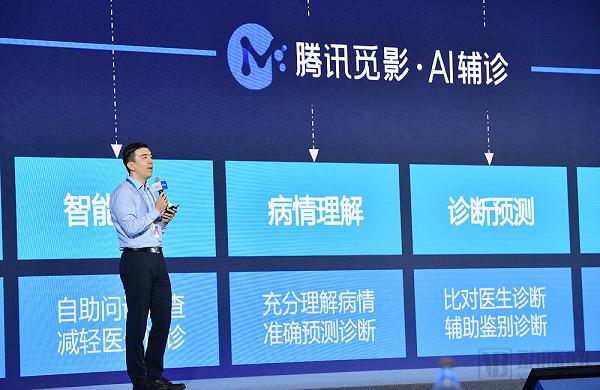
Qian Tianyi, Director of the Technical Committee of Tencent's Healthcare Division, Delivers a Speech
As an emerging technological discipline, artificial intelligence (AI) has become a catalyst for transformation in the healthcare sector. Last August, Tencent launched its first AI-powered medical product, Tencent Miying, which integrates the capabilities of multiple leading AI teams within Tencent, including Tencent AI Lab, Youtu Laboratory, and the Architecture Platform Department. Developed through the cross-disciplinary integration of cutting-edge AI technologies—such as image recognition, big data processing, and deep learning—with medicine, Tencent Miying aims to establish itself as an expert in AI-based medical solutions. According to Qian Tianyi, the product serves as a trustworthy AI assistant for clinicians, helping them improve diagnostic accuracy and efficiency.
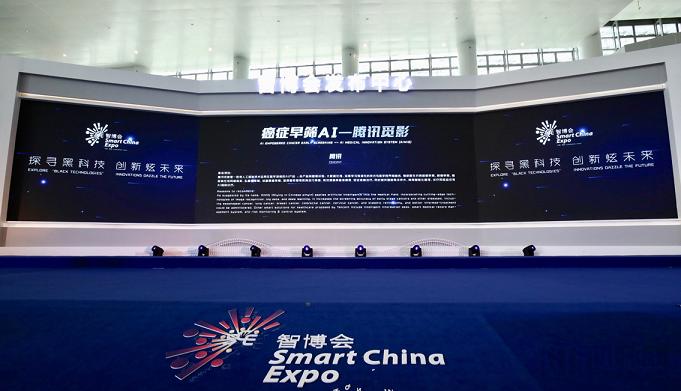
“Tencent Miying” Selected as One of the Top Ten “Black Tech” Innovative Products at the Smart China Expo
Since its launch, Tencent Miying has established two core capabilities: AI-based medical image analysis and AI-assisted diagnosis. Leveraging AI medical image analysis, it assists physicians in screening for diseases such as esophageal cancer, pulmonary nodules, diabetic retinopathy, colorectal tumors, breast cancer, and cervical cancer. As of July 2018, Tencent Miying had assisted physicians in interpreting over 100 million medical images, served more than 900,000 patients, and flagged 130,000 cases of high-risk lesions. Utilizing its AI-assisted diagnosis engine, it helps physicians identify and predict risks for over 700 diseases, having cumulatively assisted in the analysis of 6.5 million outpatient cases and issued 160,000 high-risk alerts.
Currently, Tencent Miying has partnered with over 100 top-tier Grade A tertiary hospitals in China. By jointly establishing AI-medical joint laboratories, it advances the research and application of AI in the healthcare sector, effectively assisting clinicians in improving diagnostic accuracy and efficiency.
In Chongqing, the host city of this Smart China Expo, Tencent Miying has already been deployed in seven Grade A tertiary hospitals, including the First Affiliated Hospital of Chongqing Medical University, Chongqing Fuling Central Hospital, Chongqing No. 4 People’s Hospital, Chongqing Three Gorges Central Hospital, Chongqing No. 9 People’s Hospital, the Third Affiliated Hospital of Chongqing Medical University, and the Second Affiliated Hospital of Army Medical University.
Qian Tianyi stated that Tencent hopes to engage in open collaboration with more experts and partners in the healthcare industry to promote the research and exploration of artificial intelligence technologies in the medical field. The goal is to establish Tencent Miying as a “toolbox” for hospitals and healthcare IT vendors, assisting the healthcare industry in building a “super brain” for next-generation intelligent medical services. Recently, Tencent launched its first open AI-assisted diagnosis platform, creating the Tencent Miying AI-assisted diagnosis engine. This initiative aims to facilitate the intelligent upgrading of hospital HIS systems and internet-based medical services, thereby constructing a smart healthcare ecosystem that covers pre-diagnosis, intra-diagnosis, and post-diagnosis stages. Notably, Tencent Miying’s AI-assisted diagnosis engine has become the first open medical AI engine in China.
At the Chongqing Smart China Expo, the first batch of national next-generation artificial intelligence open innovation platforms designated by the Ministry of Science and Technology, along with related projects, were also showcased. Leveraging the capabilities of Tencent Miying, the Ministry of Science and Technology has officially designated Tencent to establish the National Next-Generation Artificial Intelligence Open Innovation Platform for Medical Imaging. Qian Tianyi emphasized that the platform, undertaken by Tencent, will drive collaboration and innovation across four dimensions: entrepreneurship and innovation, whole-industry-chain cooperation, academic research, and inclusive public welfare initiatives.
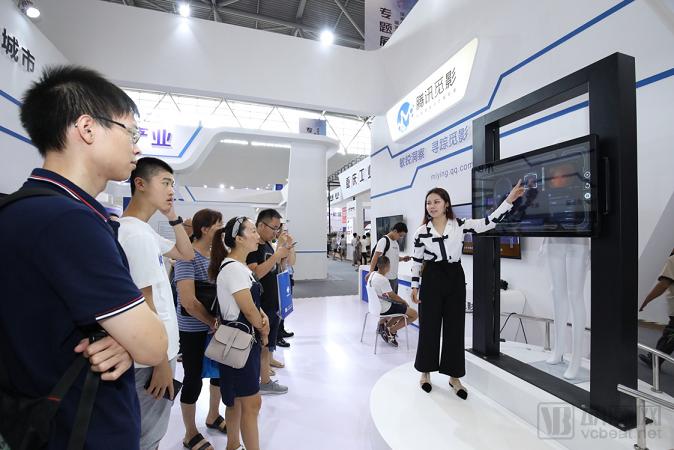
“Tencent Miying” Debuts at the Ministry of Science and Technology’s Exhibition Zone for National New-Generation Artificial Intelligence Open Innovation Platforms
“Tencent’s vision for the development of medical AI can be summarized in one sentence: ensuring that every advancement in ‘Internet + Healthcare’ translates into tangible well-being for people,” Qian Tianyi concluded. Looking ahead, Tencent will further strengthen its research collaboration with academic experts, provide reliable clinical decision-support tools for primary-care hospitals, enhance overall diagnostic and treatment efficiency, promote the balanced distribution of medical resources, and give back to society through public-welfare initiatives, thereby making greater contributions to the “Healthy China” strategy.