

ZhinoVision Advances Tumor Pathology Standardization Through 'Cancer Moonshot' Platform, Paving the Way for Precision Oncology
From August 17 to 19, 2018, the Chinese Conference of Oncology (CCO) was held in Shenyang. As the highest-level academic gathering for the oncology community in China, the conference brought together 32 academicians from China and abroad, 527 hospital presidents, and more than 14,000 leading experts in oncology from home and abroad. Focusing on frontier issues and hot topics in oncology, the conference was themed “Cancer Prevention and Treatment: Winning Through Integration.”
As the highlight of the conference, the Oncologic Pathology Sub-venue attracted dozens of oncologic pathology experts from across China. At this sub-venue, six expert directors, including Director Cong Wenming and Lin Dongmei, respectively analyzed the current status of database construction and future development for liver cancer, lung cancer, gastric cancer, nasopharyngeal carcinoma, soft tissue tumors, and skin cancer. They also engaged in vigorous discussions on the topic of “How Chinese Pathology Can Leverage Big Data Technology to Enhance Pathological Diagnosis.”
The “Cancer Moonshot” — the flagship project of the China Oncology Precision Medicine Big Data Research Collaboration Platform, titled the “Multicenter Study of China’s Oncology Pathology Big Data” — was launched at the conference. Professor Du Xiang from the Department of Pathology at Fudan University Shanghai Cancer Center and Ling Shaoping, CEO of Genome Wisdom Inc., jointly participated in the launch ceremony.
In recent years, the number of cancer patients in China has risen year by year, and the five-year survival rate of patients is lower than the average level of developed countries. In order to narrow the gap with foreign cancer treatment levels, deepen domestic cancer pathology research, and improve diagnosis and treatment effects, the Pathology Professional Committee of the Chinese Anti-Cancer Association initiated and organized the "Multi-center Study on Big Data of Cancer Pathology in China".
This project aims to investigate the patho-epidemiological characteristics of the ten most common malignant tumors in China by reviewing pathological diagnosis reports and histopathological image data from the past five years, assess the current status and standardization level of pathological diagnoses, and establish a robust data foundation for formulating the next-generation pathological diagnostic criteria for these ten major malignancies in China.
Since August 2017, the initiative has successfully launched multicenter research projects on liver cancer and lung cancer, accumulating over 200,000 pathological diagnosis reports from the past five years, contributed by 46 Grade A tertiary hospitals across 19 provinces in China.
As the sole technical support provider for this initiative, Genome Wisdom Inc. leveraged its “Cancer Moonshot” platform to assist the association in completing tasks such as data upload, textual data structuring, standardized preliminary assessment, and epidemiological analysis.
Through the “Anti-Cancer Moonshot” platform, users can participate in multi-center research projects, monitor project progress in real time, and collaborate with other project members. The platform’s data management tools facilitate convenient browsing, management, and sharing of research data. Participants may also propose sub-projects tailored to their specific data characteristics; upon approval, they can collaborate with other institutions to conduct research of interest.
In addition to research collaboration and data management, the “Cancer Moonshot” platform integrates several core technologies from Genome Wisdom Inc., including natural language processing for Chinese pathology reports, bioinformatic analysis of tumor genomics, and artificial intelligence for pathological image analysis. This will provide capabilities for analyzing pathology texts, images, and genomic data for research initiatives, while also offering other project participants standardized tools for analyzing their own data.
In August 2017, the “Multicenter Study on Big Data of Lung Cancer Pathology in China” (abbreviated as BDLC) was officially launched, with member units of the Lung Cancer Group of the Pathology Professional Committee of the China Anti-Cancer Association serving as the main research entities.
The BDLC project aims to evaluate the standard of pathological diagnosis and the degree of normalization for liver cancer nationwide, laying the foundation for formulating the next generation of clinical pathological diagnostic guidelines for lung cancer. By reviewing pathological and related clinical data on lung cancer (including non-small cell lung cancer and pulmonary neuroendocrine tumors) from the past five years, a Chinese lung cancer pathology database has been compiled. This database facilitates research into the epidemiological characteristics of lung cancer incidence and pathological big data in the Chinese population, serving as a basis for subsequent sub-studies conducted by each member unit.
Since its launch over two months ago, the project has collected more than 100,000 case records from 19 Grade A tertiary hospitals across 14 provinces. It is expected that by December 2018, the initial structuring and standardization assessment of all pathological text data, as well as preliminary epidemiological analysis, will be completed.
To gain insight into the operations of the BDLC project, VCBeat interviewed Cong Wenming, Director of the Department of Pathology at the Eastern Hepatobiliary Surgery Hospital of the Second Military Medical University.
Director Cong Wenming participated in the compilation of the "Guidelines for Standardized Pathological Diagnosis of Primary Liver Cancer (2015 Edition)," proposing novel concepts and indicators such as the "7-point baseline sampling" protocol for liver cancer specimens and the pathological grading of microvascular invasion (MVI), thereby providing a foundation for improving the overall level of standardized pathological diagnosis of liver cancer in China.
Director Cong Wenming stated, “As the technology provider for the BDLC project, Genome Wisdom Inc. has delivered the most tangible value by making our data more specialized, organized, scientific, and logical. It transforms a jumble of disordered data into datasets that align with our research objectives, enabling us to rapidly extract data in this specialized field. This was unattainable for us in the past, let alone conducting multicenter studies.”
Meanwhile, Director Cong Wenming stated that Genome Wisdom Inc.’s big data platform, “Anti-Cancer Moonshot,” is not only a tool for researchers to leverage its data for studies—such as identifying the commonalities and differences between non-viral hepatitis-associated hepatocellular carcinoma (HCC) and viral hepatitis-associated HCC, thereby elucidating the pathogenesis of HCC. More importantly, “Anti-Cancer Moonshot” establishes an interactive collaboration platform, enabling more oncology researchers to identify professional partners with access to samples and other clinical resources, as well as expertise in pathology, bioinformatics, and omics technologies, thereby facilitating multi-center studies.
Under current technological conditions, pathological diagnosis is the most accurate method for tumor diagnosis, and only through pathology can the benign or malignant nature of a tumor be reliably determined. For instance, in each breast biopsy, pathologists typically need to review approximately 60 pathological images to determine whether the patient has the disease. Each image contains over 20 megapixels and a vast amount of information, yet only a few images are truly relevant to the diseased area.
Although the digitization of pathological images has been in place for over a decade, healthcare institutions have yet to establish a comprehensive digital diagnostic workflow, making it difficult to effectively utilize these digital images. To obtain valuable results through AI technology, it is essential to first build standardized databases. In this regard, Lin Dongmei, Director of the Department of Pathology at Peking University Cancer Hospital, took the lead at the conference in summarizing the development of specialized lung cancer databases since 2013.
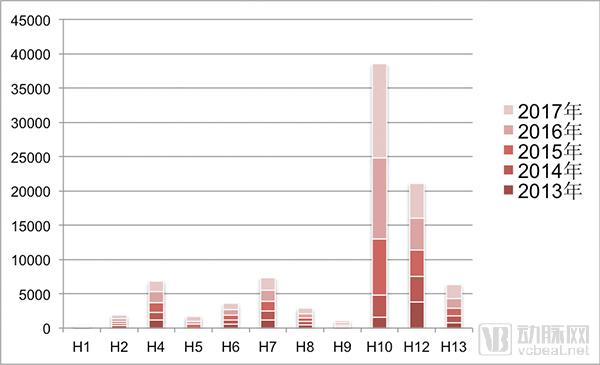
Growth in Case Volume at 13 Grade-A Tertiary Hospitals Currently Participating in the Project and Submitting Data (Unit: Cases)
According to Director Lin Dongmei’s analysis of data from 13 Grade A tertiary hospitals participating in the database construction, there was a significant increase in case volume. The cumulative number of lung cancer pathology reports in the project was less than 10,000 in 2013, and this figure increased by 2.7-fold by 2017.
Currently, an increasing number of hospitals are demonstrating growing support for data standardization and database development. The project has already engaged 19 participating institutions, with 13 of them having submitted data within the first three months. Moreover, more hospitals are eager to enroll in the Lung Cancer Big Data Project.
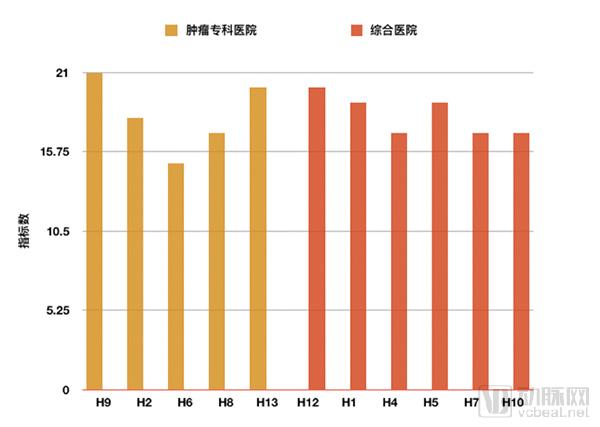
Database Metric Status (Specialized Oncology Hospitals vs. General Hospitals)
Overall, the volume of lung cancer tumor data is rising rapidly, and the indicators displayed in the database are also encouraging. This suggests that physicians have identified more effective metrics for structuring data, thereby enriching the depth of pathological diagnosis. These data hold profound significance for guiding clinical practice.
As Director Cong Wenming stated, a standalone big data platform cannot meet the demands of scientific research; physicians require more specialized, structured, scientific, and logically organized data to support oncology research.
Genome Wisdom Inc.’s big data research collaboration platform, “Anti-Cancer Moonshot,” leverages large-scale analysis of clinical indicators and patient medical records to establish a standardized system for pathological diagnosis and assessment. This system is poised to enhance the accuracy and consistency of lung cancer diagnoses by physicians in the future. Additionally, through the analysis of pathological image data, the platform can identify subtle pathological features that are often overlooked in routine clinical practice.
Furthermore, in processing big data, the platform can leverage artificial intelligence for continuous training and learning to identify certain intrinsic characteristics of diseases, even first establishing correlations among pathological features of different tumors before exploring the origins of these pathological associations.
Following the launch of the flagship project, “Multi-Center Study on Big Data in Tumor Pathology in China,” under the “Cancer Moonshot” platform, pathology department directors from across China engaged in vigorous discussions. They focused on the challenges and opportunities that big data and artificial intelligence will bring to pathology in the future, and shared their expectations for the platform.
The experts' platform demands are roughly as follows:
1. Excellent platform interaction design is required to enable physicians to obtain valid information through simple operations;
2. It is necessary to determine the benign or malignant nature of tumors through big data and AI;
3. More centers need to be involved to overcome geographic sampling bias in the data;
4. Technical support from professional big data enterprises is required to transform data into valuable “gold”;
5. More high-quality annotated pathological image datasets need to be created to form a true “big data” resource.
6. It is necessary to integrate more clinical research, focusing not only on pathological diagnosis but also on clinical treatment.
In response to the demands of pathology experts, Dr. Ling Shaoping, CEO of Genome Wisdom Inc., stated that this aligns precisely with the company’s objectives. As the sole technical support provider for the “China Multi-Center Study on Big Data in Tumor Pathology” initiative, Genome Wisdom Inc.’s “Anti-Cancer Moonshot” platform has laid a solid technical foundation for multi-center research in precision oncology.
Professor Du Xiang, Chairman of the Chinese Anti-Cancer Association, stated that the “Anti-Cancer Moonshot” initiative has already assisted major hospitals in completing the structuring and standardized evaluation of pathology text data, as well as epidemiological analysis. In the future, the Association will leverage the interactive annotation features of the “Anti-Cancer Moonshot” platform to establish a standardized pathology annotation dataset. We anticipate that more types of multi-center tumor studies will be integrated into Genome Wisdom Inc.’s “Anti-Cancer Moonshot” platform, and we are confident that Genome Wisdom Inc. will provide professional technical support and services for a broader range of tumor research initiatives.
“Cancer Moonshot,” within reach.
Cancer Moonshot
On January 28, 2016, President Obama signed a presidential memorandum establishing the “White House Cancer Moonshot Task Force,” led by Vice President Biden, which drew widespread attention from the medical community. The term “Moonshot” refers to the immense challenges involved in curing cancer. The National Institutes of Health (NIH) will allocate $195 million for cancer research this year, and the White House will request that Congress approve $755 million for this purpose in fiscal year 2017. All relevant federal agencies will commit their full efforts to this initiative. Like landing on the moon, this endeavor requires overcoming significant difficulties and sustained long-term commitment, much like the fight against cancer. Just as humanity ultimately succeeded in landing on the moon, this metaphor signifies that humanity will eventually conquer cancer.
“Anti-Cancer Moonshot” (www.0cancer.cn), established by Genome Wisdom Inc., is a big data research collaboration platform for precision oncology in China, aiming to “link data and combat cancer with intelligence.” Integrating Genome Wisdom’s core algorithmic technologies in bioinformatics, image processing, and text analysis, the platform’s flagship initiative is the “Multi-Center Study of Big Data in Chinese Tumor Pathology,” launched in partnership with the China Anti-Cancer Association. Currently focusing on liver and lung cancers, the project has garnered support from 46 Grade A tertiary hospitals across 19 provinces, accumulating over 200,000 uploaded case records.