

Medical AI Moves Beyond Hype: SeedSmed Achieves Full Productization with Clinically Deployed Solutions
For some time, the topic of an AI bubble has drawn significant attention, with no shortage of “AI narratives” circulating over the past few years. Today, however, society and the market seem more concerned with a single question: Can AI be effectively implemented in real-world applications?
The medical field is a hotly contested battleground for AI R&D teams, but so far, no truly legally marketed artificial intelligence medical device has emerged; however, that day may be arriving soon.
The 2018 Annual Conference of the Chinese Society of Digestive Endoscopology concluded in Nanjing on August 26. At this premier annual event in the field of digestive endoscopy, two AI-focused reports were both associated with a medical AI R&D enterprise—Hisi Heterogeneous. Additionally, during the conference, Hisi showcased various medical devices and cloud-based application technologies related to digestive endoscopy imaging that it had developed and manufactured.
Unlike their peers in medical AI research, Xi Shi’s presentations at the conference—both the keynote reports and the applied devices—centered on “clinical application.” This signifies that companies truly capable of outperforming others in the medical AI sector have advanced their R&D outcomes to the stage of mass productization and hardware integration.
VCBeat interviewed Song Jie, founder of Hisi Yigou. “As a company that has been deeply engaged in the medical AI sector for three and a half years, Hisi will not engage in ‘vision-casting or storytelling’ at this stage. What the market accepts are tangible applied technologies—products and devices that are clinically accepted and commercially viable,” said Song.
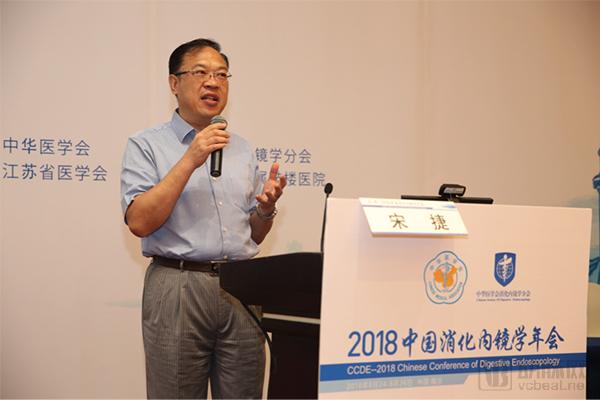
Song Jie Delivers Keynote Address at the 2018 Chinese Digestive Endoscopy Annual Conference
During the conference, reporters learned that Xishi’s R&D achievements in AI for digestive endoscopy now cover the entire gastrointestinal tract, encompassing more than one hundred conditions across multiple categories, including tumors, polyps, atrophic lesions, ulcerative lesions, erosive lesions, and vascular anomalies. Meanwhile, Xishi is set to launch within the next few months an AI-based early cancer detection technology for endoscopy under various light sources. The related application technologies have been demonstrated through a range of medical devices (such as real-time AI image assessment systems for digestive endoscopy and AI-based image analysis and assessment systems for capsule endoscopy) and cloud-based service products, forming a comprehensive, multi-dimensional AI product portfolio in this field.
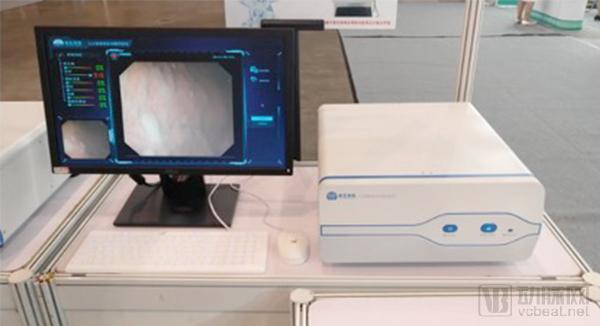
Xi Shi's Displayed Digestive Endoscopy AI Equipment (1) — Real-Time Assessment Device for Digestive Endoscopy AI
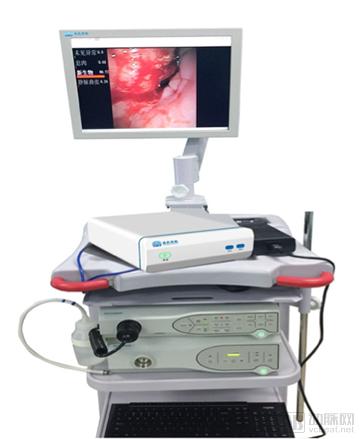
Xi's Digestive Endoscopy AI Products (2) — AI Digestive Endoscopy
Xishi’s achievements in the field of AI-powered digestive endoscopy have garnered significant attention from the industry. In July 2017, its joint R&D outcomes with West China Hospital were extensively covered by major media outlets such as CCTV-1 News and Xinhua News Agency, and were hailed as internationally leading. In November, the launch of the world’s first “AI Digestive Endoscope” achieved ultra-high-speed, lag-free real-time video analysis during digestive endoscopic examinations for the first time, drawing further attention from mainstream media and the industry. The demonstration at this conference was therefore an expected progression; however, prior to this, no details had been disclosed regarding R&D progress in other specialized medical sectors.
According to Song Jie, Xishi has been rolling out application-grade technologies and commercialized products across multiple fields, including CT, ultrasound, and electrocardiography. When asked for details, Song Jie stated that Xishi’s R&D approach in these areas differs from that of most peers, with a greater focus on clinical applicability.
In the first half of the year, Xishi began submitting applications for multiple Class III medical devices, including three products related to digestive endoscopy and three products in other medical specialties. A key highlight is that the associated AI technologies have been integrated into efficient hardware-based medical devices, rather than remaining solely at the level of recognition software.
According to the 2015 cancer statistics published online in CA: A Cancer Journal for Clinicians, China is a country with a high burden of gastrointestinal cancers. Gastric cancer alone accounts for approximately 679,100 new cases and nearly 500,000 deaths annually, representing 17.7% of all cancer-related deaths.
As the most direct diagnostic tool for gastrointestinal diseases, digestive endoscopy has become widely available in China. However, the early diagnosis and treatment of gastrointestinal diseases, particularly malignant tumors, remain unsatisfactory. The reason is simple: there is a shortage of experienced digestive endoscopists.
It takes at least ten years to train an experienced physician, as talent development relies on the accumulation of time. No one can rapidly produce a sufficient number of medical professionals in a short period. Therefore, we should provide AI assistants for senior physicians and AI mentors for junior doctors.
“With our current healthcare system, it is impossible to achieve comprehensive gastrointestinal screening for China’s billion-plus population; however, AI can empower us.” “At this stage, we cannot expect AI to recognize diseases that remain beyond human understanding, but we are clear that AI can multiply our existing capabilities—this is its practical significance!”
“We will not limit our research to a single disease; instead, we aim to develop disease recognition technologies for the entire gastrointestinal tract. We provide comprehensive solutions that include both equipment and services,” said Song Jie, clearly articulating CiiMed’s strategic vision at the Annual Meeting of Chinese Digestive Endoscopy.
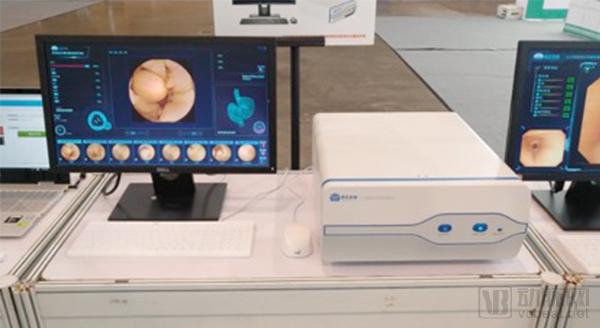
Hisi’s Displayed Digestive Endoscopy AI Devices (3) — Capsule Endoscopy Image AI Analysis and Diagnostic System
While Xishi has been integrating its AI technologies into hardware devices, it has long since completed the development of cloud-based applications. Regarding the progress of such service-oriented products, Song Jie stated, “They will be ready for immediate use upon regulatory approval.”
For primary healthcare institutions and physical examination centers, such products entail very low usage costs and can meet the needs of examinations that do not require high real-time performance.
Currently, Xishi is collaborating with multiple top-tier hospitals to establish quality control systems in various fields, including digestive endoscopy, ultrasound, and CT, to help primary care hospitals improve their diagnostic capabilities and increase business revenue.
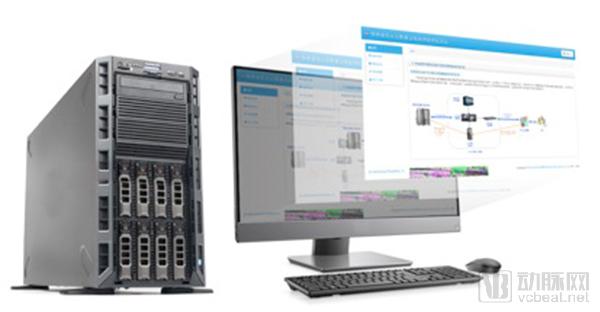
Xi Shi's Exhibited AI Service Product for Digestive Endoscopy — “AI Digestive Cloud”
Regarding the research and development of AI technologies for medical imaging, VCBeat holds the view that this is, first and foremost, a matter of understanding the industry’s developmental trajectory. Without profound insight and foresight into the sector, significant achievements are unattainable. If one fails to clearly grasp the characteristics and application scenarios of various subfields from the outset, and merely proceeds by “accumulating some data and developing for the sake of development,” such an approach is certainly unsustainable.
“For instance, endoscopic and ultrasound examinations address issues that arise during real-time procedures; their application value diminishes significantly without real-time capability. Our development of ECG AI is also grounded in real-time functionality, as real-time technology can be life-saving for high-risk patients, with time being the paramount factor. Furthermore, CT imaging must first ensure image quality while aiming to ‘detect’ a broader range of clinically significant diseases, rather than focusing on identifying a single specific condition. Many such aspects require deep contemplation, which in turn demands extensive industry experience and sound judgment.”
“The R&D of medical imaging AI requires both ‘breadth’ (multiple disease types) and ‘depth’ (rare or specialized diseases); without the support of breadth, depth holds limited value at this stage.”
As a former clinician with over two decades of R&D and management experience in the pharmaceutical industry, Song Jie’s viewpoints are certainly well-founded.
Overall, Hill’s philosophy is built on a profound understanding of the industry, and products developed based on this philosophy may hold greater promise.
Song Jie stated, “Everyone knows that Xishi focuses on AI for digestive endoscopy. However, our scope extends beyond gastroenterology. The reason is simple: Xishi boasts years of R&D experience, collaborative medical resources with numerous top-tier hospitals, and robust computing power. Moreover, the commonalities in AI development for medical imaging across various disciplines outweigh their differences. Given our experience, capabilities, and resources, it is natural for us to expand into more specialized fields. As the saying goes, ‘With every additional cloud, there is a greater chance of rain.’”
It is reported that in addition to establishing the “West China–Ciiis Medical AI R&D Center” with West China Hospital for in-depth multidisciplinary collaboration, Ciiis is also engaged in joint research and development with multiple top-tier hospitals across various fields. Leveraging its robust medical resources, Ciiis further benefits from significant computational power provided by “Shennong-1,” its proprietary AI supercomputer designed by Dr. Wu Ren, a high-performance computing expert, which was unveiled this June.
This supercomputer, based on 64 of NVIDIA’s latest Tesla V100 GPUs and achieving over 90% parallel computing efficiency, is also China’s most powerful supercomputer dedicated to medical imaging.
The key elements of medical AI R&D are as follows: industry background, medical resources, AI technology, computing power, and industrialization capability. From the perspective of Xi Shi, medical AI R&D is both complex and simple.
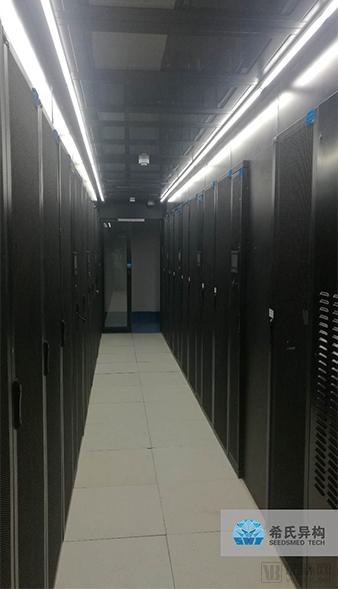
Shennong-1 (SINOSEEDS) Supercomputer Dedicated to Medical Imaging
“As I stated at the outset, Xishi does not need to ‘spin narratives’ at this stage; we simply wish to showcase our tangible products. Nevertheless, we do harbor a broader vision. From my perspective, and from a commercial standpoint, AI is merely a ‘powerful tool’ for tackling the traditional healthcare system. Xishi’s goal is to secure a ‘foothold’ in advance within the emerging healthcare landscape of the future, thereby leading the next generation of medical services.”
“AI is a weapon that can bring opportunities, not just a simple technical product.”
Based on Song Jie’s description, Hisy appears to have broader ambitions.
Indeed, the AI bubble will continue to deflate; the ultimate winners will not be those with compelling “stories,” but rather those offering genuinely usable technologies and tangible, high-quality products.