Infervision Secures Partnerships with Over 100 Hospitals and Hosts Global AI Adoption Summit Ahead of IPO Filing
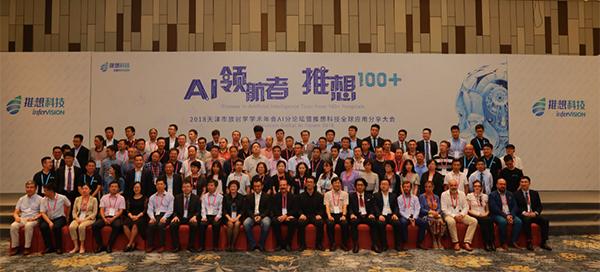
On August 25, Infervision and the Radiology Branch of the Tianjin Medical Association jointly hosted the AI Sub-forum of the 2018 Tianjin Academic Annual Conference on Radiology, as well as the Infervision Global Application Sharing Session themed “AI Navigator: Infervision 100+.” Chen Kuan, founder of Infervision, shared with domestic and international attendees the company’s journey over the past three years, highlighting how its robust AI capabilities and rapid product iteration have enabled the global deployment and application of its products.
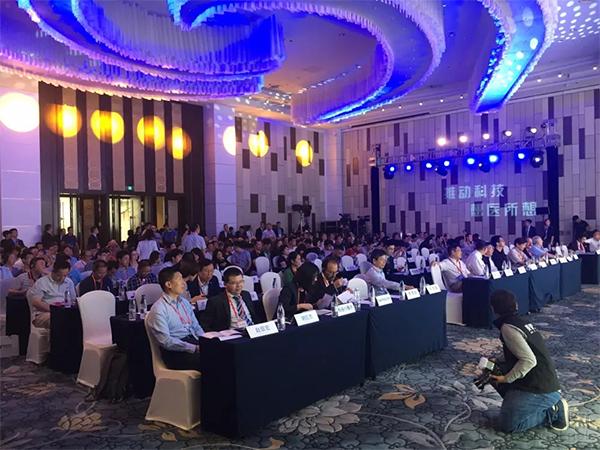
VCBeat (WeChat Official Account: vcbeat) has learned that, as of August this year, Infervision’s AI system performs nearly 20,000 daily assisted screenings for lung cancer. The technology has been deployed in approximately 200 top-tier hospitals worldwide, establishing itself as the AI medical imaging product with the highest physician engagement, best usability, and strongest R&D capabilities. Infervision’s extensive global implementation has also exerted a significant impact on the AI medical imaging industry.
Zhao Zilin, Chairman of the China Association of Medical Equipment; Jin Zhengyu, Chairman of the Chinese Society of Radiology and Director of the Department of Radiology at Peking Union Medical College Hospital; Liu Shiyuan, Chairman-Elect of the Chinese Society of Radiology and Director of the Department of Radiology at Changzheng Hospital Affiliated to the Second Military Medical University; Wang Zhenchang, President of the Chinese Doctor Association’s Radiologist Branch and Vice President of Beijing Friendship Hospital Affiliated to Capital Medical University; Yu Chunshui, Chairman of the Tianjin Society of Radiology and Director of the Department of Radiology at Tianjin Medical University General Hospital; Eliot Siegel, Chair of the Healthcare Imaging Resource Committee of the Radiological Society of North America (RSNA); and Norio Nakada, Member of the Medical AI Review Committee of Japan’s Ministry of Health, Labour and Welfare, delivered speeches and shared their insights. Also in attendance were representatives from over one hundred hospitals that have already deployed Infervision’s solutions, leaders from relevant institutions such as the Health Development Research Center of the National Health and Family Planning Commission, the Beijing Municipal Science & Technology Commission, and Zhongguancun Innovation Street, as well as experts from global fields related to medical radiology and informatics.
Chen Kuan, founder of Infervision, stated, “As the core driving force behind a new round of industrial transformation, artificial intelligence will further unleash the tremendous energy accumulated from previous technological revolutions and industrial changes. In the medical imaging industry, AI can unlock greater productivity and value from physicians, effectively facilitating the decentralization of high-quality medical resources and diagnostic technologies to primary care settings, thereby reaching households everywhere and helping to address the challenges faced by tiered diagnosis and treatment systems in China and around the world.”
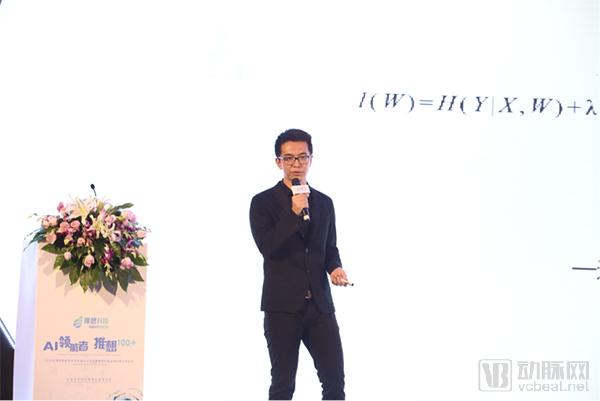
Chen Kuan, Founder of Infervision
China’s medical imaging data is growing at an annual rate of approximately 30%, while the number of physicians capable of interpreting these images is increasing far more slowly. Taking radiologists as an example, their annual growth rate is only 4.1%. Meanwhile, many radiologists in China are required to review tens of thousands of images daily, resulting in a severe imbalance between supply and demand. The application of artificial intelligence in the healthcare industry has offered hope to entrepreneurs. Through deep learning, machines can perform tasks such as image classification, object detection, and recognition, thereby assisting physicians with diagnosis and offloading work from clinicians’ limited capacity to the inexhaustible capabilities of machines.
At the conference, Professor Wang Zhenchang, President of the Radiologists Branch of the Chinese Medical Doctor Association and Vice President of Beijing Friendship Hospital, stated, “The greatest advantages of AI-based image interpretation over manual reading lie in its stability, efficiency, and reproducibility. Machines never tire and excel at repetitive tasks, precisely compensating for the inherent limitations of human labor. By employing AI-assisted screening products for initial triage, physicians’ workloads are significantly reduced. The collaborative synergy between ‘humans and machines’ enhances operational efficiency, gradually transforming physicians’ workflow patterns and positioning them as beneficiaries of AI technology.” Xu Maosheng, Standing Committee Member of the Radiologists Branch of the Chinese Medical Doctor Association, Director of the Imaging Center at Zhejiang Chinese Medical University, and Director of the Department of Radiology at the First Affiliated Hospital, also highly affirmed the outstanding advantages of Infervision’s AI-assisted screening products in terms of speed and sensitivity.
Nowadays, due to the low barrier to entry for AI, a variety of open-source programs and datasets are available online, prompting numerous companies to flock into this space. What constitutes a good AI product? How should a high-quality AI product be defined? Zhao Weiguo, Product Director at Infervision, explains, “Robustness, safety, and ease of use are essential requirements for clinical-grade AI products, reflecting Infervision’s longstanding product philosophy. A good AI product must not only be readily accepted and easy for physicians to use, but also maintain high stability and accuracy across diverse medical settings. With the assistance of Infervision’s InferRead CT Lung, physicians achieve extremely high sensitivity in detecting ground-glass nodules and tiny nodules, virtually eliminating missed diagnoses.”
Zhang Rongguo, Dean of the Infervision Advanced Research Institute and Vice President of Technology, stated, “The five-year survival rate for early-stage lung cancer can reach 90%, and AI will significantly enhance cancer cure rates.” He shared Infervision’s current state-of-the-art research solutions for CT lung imaging, which are based on imaging data with pathological results. By integrating deep learning models of perinodular tissues with fundamental radiomics features, these solutions further optimize clinical scenarios and provide a more comprehensive analysis of detected nodules.
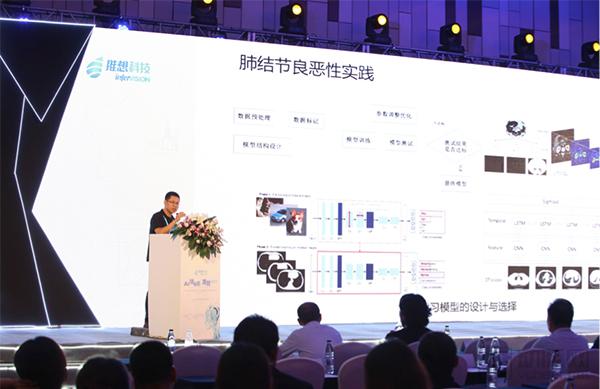
Zhang Rongguo, Dean of the Advanced Research Institute and Vice President of Technology at Infervision
In both developed and developing countries, the mismatch between the supply and demand of high-quality medical resources, as well as the irrational flow of patients, have long been two major global medical challenges. In Japan, there are 52 MRI scanners and 107 CT scanners per million people. Despite the large number of imaging devices, there is a severe shortage of qualified personnel. The introduction of AI has significantly alleviated this tension in Japan, resulting in more comprehensive report quality. Norio Nakada, member of the Medical AI Review Committee under Japan’s Ministry of Health, Labour and Welfare and Director of the Department of Diagnostic Radiology at Jikei University Hospital, praised: “I am greatly surprised by the remarkable achievements made by AI. As early as November 2017, Infervision was invited to join the high-tech sector of Japan’s National Strategic Special Zone, making it the only Chinese AI company selected to date.” Salvador Pedraza Gutierrez, Director of the Girona Institute for Diagnostic Imaging in Spain, stated: “In Europe, where there is no policy for low-dose CT-based early lung cancer screening, Infervision AI offers a rapid and effective solution for early lung cancer detection from conventional chest X-ray images.”
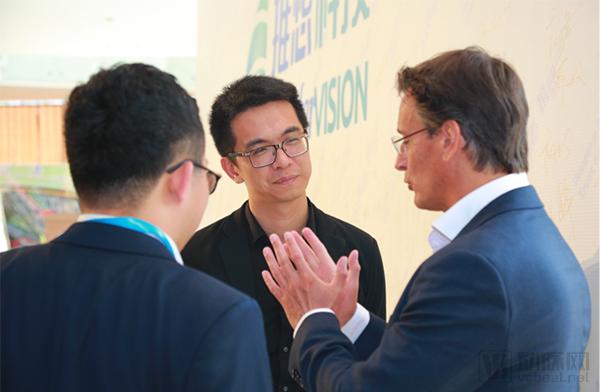
As Eliot Siegel, Chair of the Medical Imaging Resource Committee at the Radiological Society of North America (RSNA), stated: “Over the next decade, the application of AI will drive the true digital transformation of traditional medical imaging, requiring collaborative efforts between AI and humans to meet the challenges brought about by changes in healthcare. In the process of pulmonary nodule screening, Infervision’s products enable physicians to address patient needs efficiently within a short timeframe.”
As pulmonary nodule products become increasingly mature, healthcare professionals and Infervision are contemplating the next direction for AI in medical imaging. Infervision has conducted explorations across multiple disease areas, including fractures and stroke, and has established research collaborations with several hospitals, such as Beijing Tiantan Hospital affiliated to Capital Medical University, Zhongshan Hospital affiliated to Dalian University, Yantai Hospital in Shandong Province, and the Second Affiliated Hospital of Zhejiang University School of Medicine. Representatives from these partner hospitals delivered insightful presentations at the conference, underscoring a shared vision between hospitals and enterprises to leverage multi-product synergies to empower the field of medical imaging.
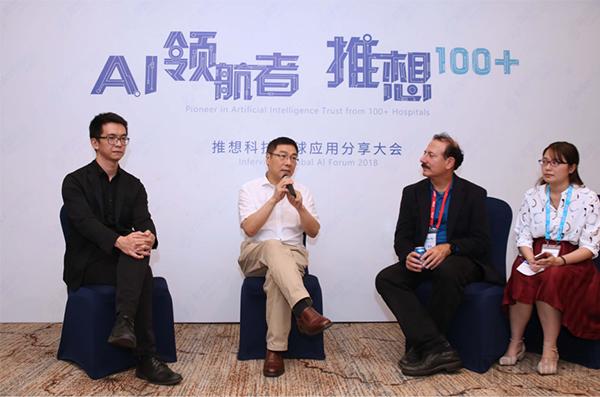
The global artificial intelligence industry is currently flourishing, with both emerging startups and established enterprises striving to capture market share. As one of the earliest innovators in AI-based medical imaging, Infervision has undergone rigorous validation in frontline clinical settings and has emerged as a leader in the field of medical imaging AI. The company remains committed to leveraging cutting-edge AI technologies to address critical public health concerns. This product application sharing conference will also mark a new chapter in AI-driven medical imaging, dedicated to transforming the current landscape of healthcare services.