

Joy Dental CEO Sun Yan: A Company Is 'Born Twice' – Answering These Three Questions Is Key to Long-Term Survival

Legend Capital
Early-stage venture capital and growth-stage private equity investment institutions
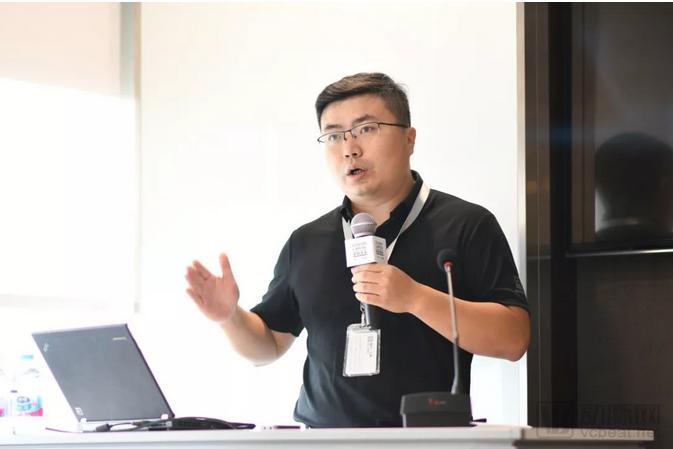
Sun Yan, CEO of Enjoy Dental Group
I have been an entrepreneur for over a decade. When I opened my first outpatient clinic in 2001, I was still pursuing my master’s degree. I continued to manage clinics while studying, opening five locations during that period. After completing my postdoctoral fellowship, I resigned from my position at a public hospital to devote myself entirely to this venture.
Happy Dentistry is a physician-partner enterprise co-founded by myself and five doctors from Peking University School of Stomatology. We happened to catch the release period of a demographic dividend: China’s middle class is gradually taking shape, and people are becoming increasingly concerned about their health. This trend is particularly evident in first-tier cities such as Beijing, Shanghai, Guangzhou, and Shenzhen, as reflected by the growing number of people taking up running. Abroad, attention to dental health emerged earlier, and the level of development of the dental industry can serve as an indicator of people’s quality of life.
Since its first branch opened in 2007, Beijing Enjoy Oral Outpatient Department Co., Ltd. has experienced a period ofThe period of rapid growth was approximately from 2014 to 2015.. At that time, I was traveling on business nearly three times a week, visiting three different cities to select locations for new stores, and completed our layout across ten cities. Now we are primarily based in Beijing, withTwo hospitals and 30 outpatient clinics, and also established its ownTraining Center。

From my personal experience, I am a physician who has remained a lifelong learner. Throughout my entrepreneurial journey, I encountered numerous setbacks, engaged in continuous trial and error, and faced many intractable problems. This was a protracted process; it was only in recent years that I gradually recognized the critical importance of corporate culture to strategy and successfully established a comprehensive value system. By sharing the insights and lessons learned from this journey, I hope to help others avoid the pitfalls I once fell into.
A company’s values are often a reflection of those held by its core founders. I used to ask myself: Do I have clear values? What do I believe is right and wrong? Can I write them down on a single sheet of paper? Have I truly made every decision in accordance with what’s written on that paper? In the early stages of my entrepreneurial journey, I struggled to answer these questions clearly.
The Two Births of a Human Being
In my view, the first company one manages is oneself. “What have I lived my life for?” is an ultimate question that many people ponder.
I believe that people are born twice. The first birth is physical, aimed at acquisition. From the moment an infant takes its first breath, through schooling, marriage, and buying a home, the first half of life is essentially about taking—driven by the logic of securing more social resources. But is this all there is to our lives? If I were to view my own life as a company, what would be the profit I seek? Is it money? It is when grappling with such questions that many people are afforded the opportunity for a second birth, often referred to as “being free from doubts at forty.” Only in this second birth do we truly begin to consider what we wish to pursue throughout our lives.
Living Towards Death
To approach this question, there is a methodology I call “living towards death.” If you had only one year left to live, what would you want to do? Write it down. Then shorten the timeframe to one month and see which items can be crossed off. If only one week remained, cross off more items, until only one day is left. At that point, rearrange the remaining items in order of importance into a pyramid shape, with the most critical item at the top, followed by the others in descending order.
In the end, I realized that the vast majority of items on my list were not about “what I want,” but rather about what more I could do for others. The profit of the company that is my life is happiness, and the essence of happiness lies in giving, not receiving. Happiness is buying your parents a large house, or issuing bonuses to your employees so they can live better lives when they return home—it is not merely about money landing in your bank account.
It was only after I gradually came to understand what truly matters in life that I regained control over my own destiny, for I learned what to let go of and what to hold on to. If one’s vision is clouded by desire, forcing decisions to align solely with mainstream societal values without independent core judgment, confusion will only deepen over time. If I, as the CEO of my own life, can feel lost, how much more so can a large enterprise.
The Two Births of a Company
I believe that companies also experience two births. The first birth of a company is driven by acquisition and desire. When people start businesses, they do not necessarily have lofty ideals; when I first started my venture, my goal was simply to buy a house in Beijing and earn more money, without any particularly grand aspirations. Many entrepreneurs may have been like me at the beginning: clear about their immediate business operations, but uncertain about the long-term direction of their enterprises.
Companies driven by desire cannot go far. After operating for some time, when we sought to reach a higher level, we found that desire alone was no longer sufficient to propel the company forward. Teams initially coalesced through appeals to desire, promises, and storytelling are prone to fragmentation when those promises are not fulfilled in a timely manner.
How can we inspire everyone to spontaneously ignite the fire within? The key is to help people feel that their work is meaningful and capable of bringing about positive change in society. This is precisely what corporate vision, mission, and values aim to address. With these in place, a company experiences its second birth.
From Desire-Driven to Customer Demand-Driven
About four years ago, we were expanding our stores at the fastest pace. Every day, all I thought about was opening new stores and acquisitions, wanting to seize this bonus period. I traveled to provincial capital cities across China, negotiating with clinic leaders, telling stories, and making promises. In the past, I spent three or four days a week on the front lines, able to interact directly with customers, but during that time, I completely stepped away from the front lines, growing increasingly distant from our clients.
At that time, we pursued scale. Why? Because having a large scale brought prestige, and everyone judged success by the number of stores. Meanwhile, several similar dental clinic chains were aggressively expanding. If they were opening new locations and you weren’t, how could you secure market share in the future? However, launching a new store is not that simple. Where do you find dentists? How do you train them once they join? Competent dentists cannot be developed overnight.
Thus, on one hand, I perceived opportunities everywhere and was unwilling to miss any; on the other hand, my performance metrics failed to keep pace with progress. Consequently, during that period, I felt quite indecisive and perpetually uneasy.
About three years ago, after solidifying my convictions, I gradually began to persevere, proactively letting go of certain things and filtering out much of the external noise. More importantly, several of our partners started returning to the front lines, as we believe that customer demand is the core driver of enterprise growth.
Although the dental industry is a traditional sector, customer demands are undergoing dramatic changes on a monthly basis. Failure to keep abreast of these shifting needs can easily lead to erroneous decision-making.
When we focus more on customer needs, we realize that our customer service is inadequate, the quality control system is flawed, information technology infrastructure requires further improvement, and online operations are underperforming. There is a significant amount of work left undone, which remained invisible under the previous operational model. The two perspectives yield entirely different insights.
Our team has shifted from being driven by desire to being guided by vision and mission. We have built a firm belief that the most arduous tasks constitute the core of building competitive advantage. We will neither take shortcuts nor pursue opportunistic paths; instead, we are committed to tackling the most challenging work that most chain outpatient clinics are unwilling to undertake.
Mission, Vision, and Values: Startups may feel these concepts are distant, prioritizing survival above all else. However, through repeated setbacks, they often realize that corporate culture is essential to driving growth.
Mission: What Are We Fighting For?
Mission is about answering the question of why we fight. When we prepare to lead a team into battle, failing to provide a clear answer to this question will inevitably lead to problems. This is especially true in the healthcare services industry: once an organization fights for profit, it is nearing its demise. It is alarming when, upon a patient’s arrival, a doctor sees not a person in need of care, but merely two additional dental implants or twelve porcelain-fused-to-metal crowns, and mentally calculates how much money they can take home that day using a quick formula.
However, to survive, we must also consider profitability; effectively bridging this gap is crucial. A significant number of our physicians come from public hospitals, where they place greater emphasis on the question of “what we are fighting for.” If the discussion focuses solely on money, they will be unwilling to engage. Without clarifying this fundamental issue, nothing can be accomplished.
Vision: A Shared Destination
The second point is vision. A vision means having a shared destination. If you cannot clearly articulate to your team where you are headed, how can they follow you? Many people may not initially share your destination when they join, but after spending some time with the organization, they come to appreciate the destination you have described and decide to join you on the journey. Therefore, what matters most is how we define ourselves.
Values: Compass
Before we have a destination, we often feel confused and lonely, our vision obscured by desires. Yet when we finally set a destination, we may find ourselves unable to believe in it, or forget it altogether after just a couple of days. This is when values serve as a compass, helping us continually clarify our direction.
Through continuous setbacks, we have come to place greater emphasis on our mission, vision, and values, recognizing them as the core elements essential for long-term success. Once these three questions are clearly answered, our focus shifts more toward helping others solve their problems rather than simply extracting money from their pockets.
With our mission, vision, and values clearly defined, we now face three core questions: For whom are we solving problems? What are their needs? What kind of products do they require?
Who Are the Customers: 4S Dealerships and Auto Repair Shops
Initially, we defined our target customers as individuals with dental issues, a segment that the entire industry is currently focusing on. This approach essentially positions our dental clinic as an auto repair shop, where treating toothaches or performing dental implants is akin to replacing tires or bearings. However, competition under this business model has become increasingly fierce, and customer acquisition costs have reached an exceptionally high level.
However, we later discovered that the customers' underlying needs were not as such. The dental industries in Europe, the United States, and Japan are akin to 4S dealerships for automobiles, where vehicles undergo routine maintenance even when no issues are present; indeed, over 90% of their clients have fundamentally healthy teeth.
Once these two customer segments are clearly defined, we find that the outcomes are entirely different. Under the “auto repair shop” model, customer acquisition costs are high, and so is the average transaction value. However, this model relies heavily on marketing-driven customer acquisition, which I consider akin to drinking poison to quench thirst. When every transaction amounts to tens of thousands of yuan, businesses become unwilling to engage in lower-value transactions of just 50 or 100 yuan. This leads to widespread impatience and short-termism among stakeholders. More importantly, such an approach fails to address customers’ true needs. The core need of patients is to prevent dental problems and improve their quality of life. If a company merely inserts a segment focused solely on reactive, repair-style dental services along the journey toward fulfilling this need, it will quickly be eliminated from the market.
We have compiled statistics on the proportion of residents in China’s first-tier cities (Beijing, Shanghai, Guangzhou, and Shenzhen) who undergo regular dental check-ups, finding that the figure is less than one in a thousand. However, I can state with great confidence that within five years, 10% of the population in these cities will be receiving regular dental care. This projection is based on the fact that markets worldwide have undergone this same evolution, indicating that the regular dental care sector in China still has 100-fold growth potential. This example illustrates how the definition of your target customer can influence all business decisions.
What are the core needs of the client?
Customer needs are currently my top priority. Dental care requirements vary drastically among different customers, and accordingly, the products we develop must be entirely different. The closer your understanding of these needs gets to their essence, the greater the future market potential will be. Identifying the most critical unresolved issues in the healthcare industry means uncovering the biggest opportunities within it.
At that time, I listed all the significant issues I could think of in the healthcare industry and ultimately identified what I considered to be the most critical one: from the patient’s perspective, the current stage isThe Issue of Doctor-Patient Conflicts. It is difficult for patients to find a doctor they can fully trust; even if they do, access may be unavailable, and consultations may not be conducted properly. From the physicians’ perspective, the core issue is the inability to increase their income beyond informal or off-the-book earnings, namelyThe Issue of Non-Monetizable Physician Reputation。
Imagine if doctors could operate like Taobao store owners. After a patient returns home following a consultation, they would receive a call from their doctor saying, “Dear customer, are you feeling any better after taking the medication I prescribed today?” In such a scenario, doctor-patient conflicts would cease to exist. So why does no one prioritize this? Because physicians perceive such efforts as meaningless. A Taobao store with five-crown status is undoubtedly far more valuable than one with only a single heart rating; this reputation metric can be monetized. But how can a doctor’s reputation be monetized?
Previously, registration fees were set at 7 yuan for a general practitioner, 9 yuan for an associate professor, and 11 yuan for a full professor. With only a two-yuan difference in perceived value, would people strive so hard for such a marginal gap? Therefore, I believe that the most significant and fundamental issue facing China’s healthcare industry isIt is a matter of trust and credibility.. Even a slight advancement on this issue would generate enormous business opportunities.
What are the core products?
Therefore, we developed our core products based on this theory. In traditional dental clinics, doctors would immediately try to sell products to patients upon their arrival. However, we believe that what our dentists should “sell” is their credibility. When a dentist sees a patient walk in, they should see 32 lives at stake, and we have one opportunity to save these 32 lives—provided that we first establish a strong relationship of trust with their “host.”
A standard household, calculated at seven members, has a total of 244 teeth, with an average transaction value of approximately RMB 200,000. Statistics show that when a patient finds a trustworthy dentist, they will spend one-third of this amount within three months and bring their entire family for consultations, thereby establishing lifelong consumption patterns. Thus, our approach to each client focuses on fostering long-term relationships. In contrast, most current dental clinics aim to secure and maximize revenue from clients during the first two or three visits, fearing that patients will otherwise leave.
The core product we seek is trust, whereas the core product others seek is simply to sell their goods. Decision-making under these two distinct positioning strategies is fundamentally different. Once trust is established, customers will accept our lifelong treatment plans, directing all their lifetime healthcare expenditures to us. Furthermore, we will incur no customer acquisition costs over the next three to five decades, and 20% of these clients will refer new patients, thereby generating new customer acquisitions for us.
Standardization of Core Products
“Trust” is too abstract a concept for this product to be easily understood. We aimed to transform trust into a tangible, accessible product by standardizing it. Only after clearly identifying customer needs could we determine what aspects of the product to standardize. Previously, our daily focus was on standardizing the procedures for dental cleaning, fillings, and dental implants. Later, we realized that these elements were not the most critical.Trust in the product's standardization is paramount.。
For instance, in doctor-patient communication, we require physicians to convey a specified number of key knowledge points within 30 minutes, detailing the depth of explanation for each point, controlling the time allocated per point, determining the number of images to use, and identifying where videos are needed. We assess the level of trust established after each PowerPoint presentation is delivered, and then evaluate whether these steps can be moved online to build trust with patients before they even meet the doctor in person.
Typically, without a referral from an acquaintance, a client’s initial trust level in us stands at -30 points during the first encounter. Most clients walk in clutching their wallets, asking about prices upfront, assuming we will overcharge them. To raise this trust level from -30 to 80 points, we must break down the intermediate steps into meticulous detail. In traditional dental clinics, trust was symbolized by a silk banner; what is the modern equivalent of such a banner? It isDianpingA review on
We then began to consider how to structure these reviews, including factors such as word count, the number of keywords included, whether the doctor’s name was mentioned, and the quantity of photos and videos. If a review garners over 200,000 views and achieves a 1% conversion rate, the impact is substantial; in other words, a single post can bring us hundreds of new patients at zero cost.
Products Beyond the Initial Product: The Marginal Cost of Cross-Regional Expansion
It was extremely difficult for us to generate profits from our outpatient clinics in other regions.Previously, the challenge was considered to be the standardization of healthcare., actually not, it isStandardization of Trust. The marginal cost of the medical service industry cannot be reduced under conditions of rapid cross-regional expansion.
"When we open a new outpatient clinic in a new city, everyone starts by spending 100 yuan to try your services gradually. This process requires the accumulation of trust, as trust is difficult to transplant from one city to another. I have yet to see any successful case of Chinese Grade-A tertiary hospitals replicating their models across cities."
We have found that in Beijing alone, it is possible to open 100 stores. Moreover, the average transaction value, purchasing power, and pricing levels in Beijing are approximately double those in other regions, resulting in higher profit margins. As store density increases, consumer brand awareness will continue to strengthen, and trust propagation within the region will become more efficient. Furthermore, inInformation SystemWith support, doctors can also rotate across clinics, reducing vacancy costs. Therefore, as we rapidly expand within the single city of Beijing, our marginal costs continue to decline.
From this perspective, many of the strategic assumptions made during the rapid nationwide expansion across multiple cities from 2013 to 2014 were flawed. Does this mean we should refrain from entering other cities? Our approach is a “leapfrog” development strategy: after fully saturating one city, we move on to the next. Tianjin may be our next target, as it lies within a half-hour commute radius of Beijing, allowing us to leverage Beijing’s resources for support and further reduce marginal costs—contrary to our earlier consideration of prioritizing Shanghai or Shenzhen. Once we have opened 50 stores in Tianjin, we will leap to the next city, conquering each market one by one.
Below is the Q&A session:
Q1: We are also a healthcare enterprise, but unlike Enjoy Oral Care, our partner team consists of professional managers. How can we earn the trust of doctors when non-clinical professionals are managing physicians?
Sun Yan:I find doctors to be the most difficult group to manage. Among the dentists at Enjoy Oral, many are my mentors—doctoral supervisors and professors—who simply do not take direction from me. From the outset, I clearly recognized that we have two types of customers,One is a patient, and the other is a doctor.When we treat our doctors as customers, we focus not on how to manage them, but on understanding their needs.
What are the needs of physicians? For instance, earning higher incomes, enjoying professional autonomy, avoiding excessive workload, minimizing risk exposure, having a voice in decision-making, and treating their profession as a long-term career. I refer to this series of expectations as “needs.” Customer needs are paramount; my focus is on determining how to best meet them.
On the very first day every doctor joins Enjoy Oral, the first thing I tell them is: “If a young dentist spends five years at Enjoy Oral and we fail to train them into a practitioner capable of opening their own clinic, we consider that a failure on our part.” I want them to view Enjoy Oral as an incubator, with the ultimate goal of launching their own practices. This sets us apart from many competitors, who prohibit doctors from sharing their contact information with patients for fear that they might take clients with them upon departure. In contrast, we clearly outline their career paths rather than maintaining constant defensiveness, which would only make our work significantly more difficult.
Once the doctor enters, there are two options to choose from.The first path is the management track, and the second is the expert track.. Whichever path they choose, I will pull up their five-year training schedule. In the past, doctors often harbored the ambition to eventually branch out on their own once they had gained sufficient experience and independence. Our approach was to support them by providing hands-on learning in financial management, leading small teams, and acquiring clients in the market. We found that 80 out of 100 doctors ultimately abandoned this entrepreneurial path. Those who stepped back were integrated into our expert system, where they could focus diligently on their roles as clinical experts. The remaining 20%, who demonstrated greater potential and resilience, were selected into our leadership pipeline, granted broader development opportunities, and invited to join our management team.
Therefore, my logic is not to manage physicians, but to treat them as customers. By aligning corporate development with the professional lifecycle of physicians and motivating everyone through intrinsic drivers, it becomes far easier than constantly struggling against, confronting, or micromanaging them.
Why do I insist on working on the front lines? It is because I hope to spend time with doctors every day. I want to understand whether their inner needs have changed even slightly; if there is the slightest change, I will make corresponding adjustments accordingly.
Our organizational structure is established as“Dean + Professional Manager”approach. There is no definitive plan for who should serve as the top leader. If the hospital director demonstrates strong management capabilities, we will assign a supportive professional manager to assist them. If the director’s people-management skills are found to be lacking, we will pair them with a more experienced professional manager to provide coaching and guidance. Currently, both models have yielded successful cases. It is likely that there will not be a one-size-fits-all solution, and we are still on the path of exploration.
Q2: We are also a medical enterprise operating under a partnership model. We are currently facing an issue where partners at the clinic level believe that the headquarters creates significantly more value than the clinics themselves, leading them to seek positions at HQ rather than remaining at the grassroots level. How can we resolve this conflict?
Sun Yan:First, it is essential to establish a clear career pathway with defined milestones. Before physicians can join the partnership structure of a branch hospital, they must ascend several steps. After progressing through the branch level, they may then advance within the group. Advancement at the group level requires contributing to the entire organization, which often entails sacrificing personal interests in favor of the group’s overall benefit. For instance, physicians must support the group’s standardized R&D and training initiatives, deliver a specified number of lectures annually, and participate in external review activities in other locations.
Many people discover during this process that they earn the most while working on the front lines. Climbing the corporate ladder within the group requires significant effort, and those unwilling to make such sacrifices choose to remain in frontline roles. However, when an individual’s contributions to the group have met the established thresholds, they should naturally be promoted into the group’s core structure.
Q3: It is often said that “it is easy to invite a deity in, but difficult to send one away.” Once physician partners join, parting ways with them can be extremely challenging. How have you addressed this issue?
Sun Yan:We have also traversed this path. Initially, we believed that experts were paramount, so we recruited top-tier specialists from various hospitals. These individuals commanded exorbitant costs; even annual salaries in the millions failed to attract them, as they insisted on equity stakes. However, after joining, we discovered that these “big names” were not generating tangible results. Once we clarified our vision, our core mission became steadfastly helping patients preserve their natural teeth—a task that does not require an abundance of high-profile experts. Moreover, from a performance perspective, clinics without such star practitioners have actually achieved better results.
The more renowned a physician is, the harder it becomes to shift their values. If such leading experts cannot address patient needs and even find it burdensome to mentor younger physicians, then we should not rely on them. This has been a clearly articulated stance of ours since the beginning of this year.
It took me three years to part ways with the top-tier experts I had previously recruited. Each of them was a valued colleague, mentor, and friend, making this process the most painful one I have experienced. Upon reflection, I have parted ways with approximately two-thirds of my close associates, primarily those who did not share common values and cultural foundations.
We are becoming increasingly cautious regarding equity allocation. Our principle is not to grant shares that require no capital contribution; we do not provide equity solely in exchange for industry status or technology. To acquire equity, one must make a cash investment of at least several million RMB, serving as a demonstration of commitment. Equity participation begins at the individual clinic level, and only those who perform well qualify for elevation to the group level. Regarding exit mechanisms, we maintain an option pool that functions as a trading platform: departing stakeholders can sell their shares here, while newly joined doctors can purchase them.
Q4: The purpose of establishing a chain is to reduce store-opening costs and improve efficiency; however, cross-regional expansion may lead to decreased efficiency, becoming a burden. Has the cross-regional chain operation of Happy Oral Care generated positive returns or become a negative drag? If it is currently a drag, should the company halt expansion, or should it proceed with strategic layout for the next 3–5 years?
Sun Yan:Our initial cross-regional expansion was a negative drag, as our organizational and managerial capabilities were insufficient to support operations in more than ten cities. We devoted significant effort to gradually turning losses at our out-of-town stores into break-even performance. The benefit, however, is that we have established a foothold in these cities, integrated into local physician and customer networks, and gained a deeper understanding of local customer needs.
At the strategic level, we view it as a small seedling planted for future entry into this city, which will make our next expansion into this market much easier. We currently have10 cities can serve as alternatives。
As for which city to expand to after Beijing, it depends on the profitability of the local outpatient clinics. If the results are favorable, we will support replication and further resource investment. Happy Oral Care is inThe headquarters has established many standardized operating procedures., enabling rapid replication in other cities and reducing expansion costs. However, if a store in a given city is only barely breaking even, we will maintain its current operations and refrain from further expansion for the time being. We avoid simultaneous expansion across multiple cities, as this presents significant challenges. Ultimately, the core principle is to reduce marginal costs; if the cost structure does not add up, we will not open new stores.
Reprinted with permission from Legend Capital CEOClub.