

DXY Announces Two Major Strategic Partnerships to Advance Digital Health and AI-Driven Dermatology Solutions
Recently, DXY has successively entered into strategic partnerships with multiple institutions.
On August 24, DXY and the Chinese Society of Microcirculation officially entered into a strategic partnership.
Two days later, the Dermatology AI Development Alliance (hereinafter referred to as the “Alliance”) and the Huaxia Dermatoscopic AI Collaboration Group (hereinafter referred to as the “Collaboration Group”) formally established a strategic partnership. The two parties will collaborate to develop an integrated AI-assisted diagnosis and treatment platform for dermatological conditions, jointly promoting the application and development of artificial intelligence in the field of dermatology.
So, what are DXY’s next steps following these two collaborations, and what is their significance?
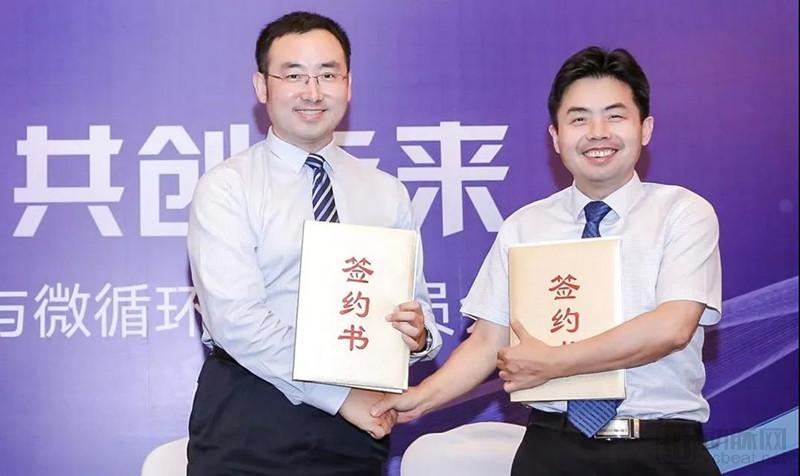
Zhang Wei, Vice President of DXY and Head of the Corporate Cooperation Division, stated that both parties announced they would join hands to carry out integrated doctor-patient cooperation related to microcirculation diseases, uniting medical and nursing staff at all levels, disease control and prevention personnel, and other health sector professionals to jointly build an implementable and more dynamic pathway for basic medical and health services.
The collaboration with the Diabetes and Microcirculation Professional Committee of the Chinese Society for Microcirculation (hereinafter referred to as the “Diabetes and Microcirculation Committee”), led by Professor Sun Zilin, was by no means accidental. As early as June 9 this year, the College of Diabetes Microvascular Disease (CDMVD), jointly established by the Diabetes and Microcirculation Committee and DXY, was officially launched, with its opening ceremony held in Yinchuan.
At that time, Professor Sun Zilin stated in a media interview that he hoped the establishment of the Online Academy for Diabetic Microvascular Disease would standardize and enhance the diagnostic and therapeutic capabilities of healthcare professionals at all levels, thereby achieving diabetes tiered management centered on diabetic complications.
To date, the online academy has facilitated over 1,000 hours of online learning and interaction for nearly 10,000 physician participants. With the smooth progress of the collaboration, both parties intend to pursue deeper strategic cooperation.
Under this strategic cooperation, DXY and the Microvascular Complications of Diabetes Committee will pool their superior resources to jointly build the “Integrated Management Platform for Diabetic Microvascular Disease.”
Dingxiang Yuan leverages its technical and organizational capabilities, communication and promotion strengths, and commercial operational expertise in the integrated patient-physician management platform to oversee the platform’s operations and development. Meanwhile, the Diabetes Microvascular Complications Committee complements Dingxiang Yuan through synergy, drawing on its extensive medical resources, professional academic capabilities, and standardized diagnosis and treatment protocols in the fields of diabetes and diabetic microvascular disease.
Professor Sun Zilin expressed the hope that this collaboration would take primary care education on diabetic microvascular disease as its entry point for development, establishing a comprehensive educational system for physicians and an integrated doctor-patient management platform. Ultimately, the successful experiences gained in the fields of diabetes and microcirculatory disorders are expected to be extended to other disease management areas, fostering cross-sectoral synergy and mutual support.
Professor Sun Zilin stated that this collaboration is divided into three phases:
Phase I, which integrated the resources of academic societies and experts to build an innovative digital teaching platform, has been basically achieved with the smooth advancement of the “Online Academy for Diabetic Microvascular Diseases.”
Phase II will refine the online academy and professional education system, creating an “online + offline” teaching service with integrated “teaching, learning, and assessment” functionalities, and establishing a physician-patient integrated management system centered on the online academy;
Phase III will evolve into an integrated management platform for diabetes complications, bringing together patients and healthcare providers. By incorporating professional content, innovative service models, and cutting-edge technologies such as artificial intelligence, it aims to establish a sustainable, win-win management model that benefits both parties within and outside hospital settings.
At the same time, responding to the national “Belt and Road” initiative, high-quality educational resources are prioritized for allocation to the western regions.
Furthermore, on August 26, the Dermatology AI Development Alliance (hereinafter referred to as the “Alliance”) and the Huaxia Dermatological Imaging AI Collaborative Group (hereinafter referred to as the “Collaborative Group”) officially entered into a strategic partnership.The two parties will collaborate to develop an integrated AI-assisted diagnosis and treatment platform for dermatology, jointly promoting the application and development of artificial intelligence in the field of dermatology.
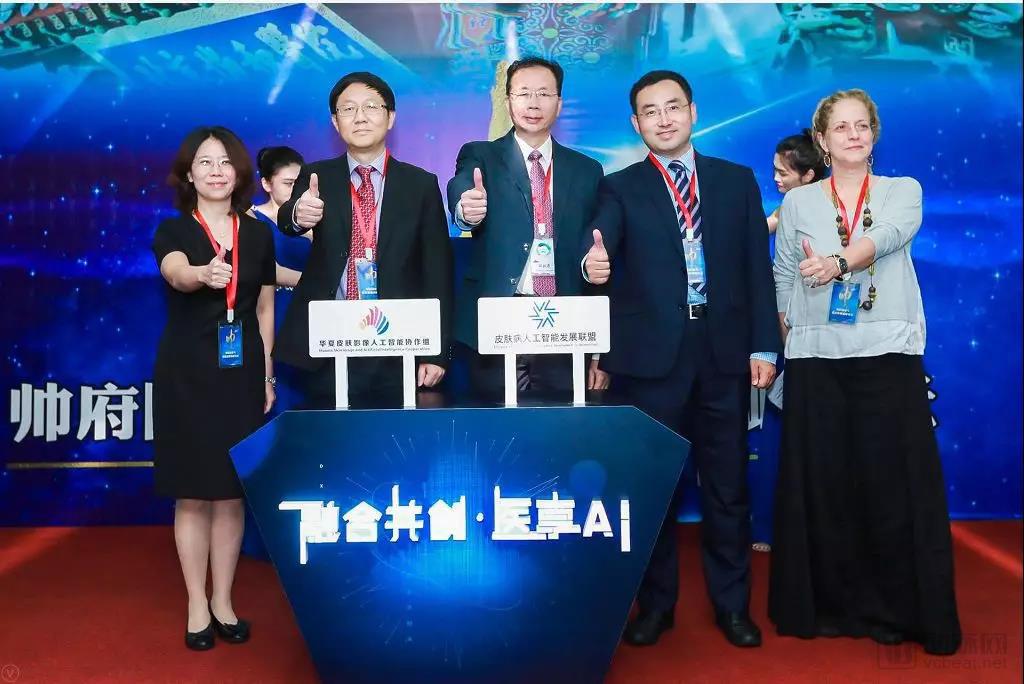
From left to right: Professor Liu Jie, Secretary-General and Deputy Head of the Collaborative Group, Department of Dermatology, Peking Union Medical College Hospital; Professor Jin Hongzhong, Chairman of the Dermatology Branch of the China International Exchange and Promotive Association for Medical and Health Care, Head of the Collaborative Group, and Director of the Department of Dermatology, Peking Union Medical College Hospital; Professor Lu Qianjin, Chairman of the Chinese Society of Dermatology and Venereology under the Chinese Medical Association, Chairman of the Alliance, and Director of the Department of Dermatology, The Second Xiangya Hospital of Central South University.
Mr. Zhang Wei, Secretary-General of the Alliance and Vice President of DXY; Professor Paola Pasquali, President of the International Society for Teledermatology
The theme of this strategic launch event was “Integration and Co-creation · Medical AI Sharing,” aiming to leverage collaborative efforts and integrate resources from both parties to jointly build a precise, efficient, open, and user-friendly comprehensive AI-assisted diagnosis and treatment platform for dermatology. Professor Lu Qianjin, Chairman of the Dermatology and Venereology Branch of the Chinese Medical Association, Chairman of the Alliance, and Director of the Department of Dermatology at the Second Xiangya Hospital of Central South University; Professor Jin Hongzhong, Chairman of the Dermatology Branch of the China International Exchange and Promotive Association for Medical and Health Care, Leader of the Collaborative Group, and Director of the Department of Dermatology at Peking Union Medical College Hospital; Mr. Zhang Wei, Secretary-General of the Alliance and Vice President of DXY.cn; and Professor Liu Jie, Secretary-General and Deputy Leader of the Collaborative Group and physician in the Department of Dermatology at Peking Union Medical College Hospital, attended the strategic cooperation launch event. Professor Paola Pasquali, President of the International Society for Teledermatology, witnessed the strong alliance between the two leading domestic dermatology institutions.
On April 27, 2018, “Smart Skin,” China’s first AI-assisted comprehensive platform for dermatology diagnosis and treatment, jointly launched by the Second Xiangya Hospital of Central South University, DXY, and Ruiqi Software, was officially made available to clinicians. Concurrently, the Dermatology Artificial Intelligence Development Alliance was established, with Professor Lu Qianjin, Chairman of the 15th Committee of the Chinese Society of Dermatology and Venereology under the Chinese Medical Association, serving as its Chair.
At the press conference, Professor Lu Qianjin, Chairman of the Alliance, stated that as China’s population ages and medical demands rise year by year, artificial intelligence can effectively alleviate the shortage of medical resources in the country. AI demonstrates significant advantages in medical imaging, where big data and artificial intelligence technologies can be leveraged to create effective solutions. The “Intelligent Skin” system, led by the Alliance, currently achieves an overall recognition accuracy of 86% for 85 types of skin diseases, ranking first in the industry in terms of both the number of identifiable conditions and accuracy. It was officially opened free of charge to clinicians on April 27, 2018. After doctors upload images of skin lesions via the WeChat official account, the system can rapidly identify the disease type and name within seconds, while also providing smart medical services such as medication inquiries and medical record management.
According to Professor Jin Hongzhong, head of the collaborative group, the China Dermatology Imaging AI Consortium comprises medical experts and scientists from more than 60 medical institutions, universities, and research institutes both in China and abroad. Led by the Department of Dermatology at Peking Union Medical College Hospital, which established the first dermatology imaging diagnostic center in China, the consortium has accumulated extensive clinical data and academic achievements in this field, particularly holding a distinct first-mover advantage in dermoscopic imaging. This collaboration will fully leverage the complementary resources of both parties to accelerate the translation and implementation of the consortium’s research findings.
Both parties remain committed to a science-based approach and an open, collaborative mindset. By partnering with industry stakeholders to leverage complementary strengths, they aim to jointly develop an advanced AI-assisted diagnostic and therapeutic system for dermatological conditions. In alignment with the in-depth implementation of national health development strategies, this initiative seeks to enhance the comprehensive clinical diagnosis and treatment capabilities of healthcare professionals in China for skin-related diseases, ultimately benefiting the general public.
Regarding the specific content and planning of the bilateral cooperation, Professor Liu Jie, Secretary-General of the Collaborative Group, stated that this partnership with the Alliance will rapidly establish infrastructure to support diseases characterized by dermoscopic features and initiate clinical application practices. Moving forward, both parties will continue to accumulate and explore the value of the Collaborative Group’s data, establish an industry-wide system for continuous knowledge sharing, and advance the development of AI-driven clinical application systems for a broader range of diseases with dermoscopic characteristics. Meanwhile, they aim to create a sustainable international collaborative model for dermatology AI, ensuring the continued development and application of the “dermatology + artificial intelligence” paradigm.
Mr. Zhang Wei, Secretary-General of the Alliance, stated that the strategic collaboration with the Consortium will comprehensively expand the Alliance’s capabilities, close the loop in the value chain of the AI-assisted diagnosis and treatment platform for dermatological diseases, and significantly enhance capabilities in assisted diagnosis, specialist education, and patient services. Currently, both parties have achieved functional integration on the “Smart Skin” platform by incorporating “dermoscopy” application scenarios, enabling physicians to obtain diagnostic recommendations from images of skin lesions captured via standard smartphone cameras or dermoscopic imaging. Furthermore, leveraging their expertise in dermoscopic disease management, the two parties will jointly develop a specialized dermoscopy curriculum system, an assisted diagnosis framework, and nationwide diagnostic and therapeutic support services.
Furthermore, Mr. Zhang Wei noted that since its launch, the “Smart Skin” platform has been adopted by over 4,000 certified physicians, who have delivered more than 900,000 instances of professional content services. As part of the further development plan for this strategic partnership, the Alliance will collaborate with the Consortium to upgrade service models tailored to the needs of primary care physicians and grassroots medical institutions. It will also bring together more like-minded partners to foster collaborative efforts, further empowering physicians, extending reach into grassroots communities, and serving the general public.