

White Rabbit Dental Reports H1 2018 Revenue of RMB 84.99 Million with 16 Clinics, Focused on Expanding in Northwest China
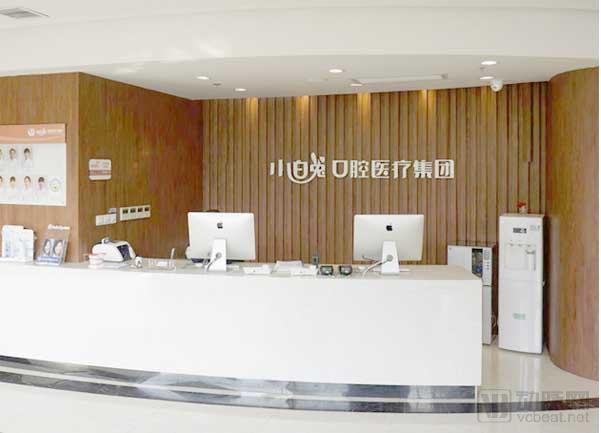
Little White Rabbit Dental Establishes Its Foothold in the Northwest China Market (Image Source: Official Company Website)
VCBeat (WeChat ID: vcbeat) has learned that Little White Rabbit Dental Care (871521), a company listed on the National Equities Exchange and Quotations (NEE), recently released its semi-annual report for 2018. During the reporting period, the company achieved an operating revenue of RMB 84.99 million, an increase of RMB 24.44 million or 40.36% year-on-year; operating costs amounted to RMB 38.06 million, up by RMB 12.86 million or 51.06% from the same period last year; net profit reached RMB 6.57 million, representing a decrease of RMB 2.62 million or 28.50% compared with the same period last year.
Key Reasons for the Increase in Operating Revenue in the First Half of the Year: From January to June, five new branches and subsidiaries were added compared to the same period last year, located in Gaoxin Road, Urumqi, Xianning, Longshou, and Keji Road. These five branches and subsidiaries generated RMB 22.52 million in revenue from January to June. The primary reason for the decline in net profit was that nine branches and subsidiaries had not yet commenced operations during the reporting period, incurring losses of RMB 2.92 million, with minimal profit contribution or even negative returns.
According to records, Xiaobaitu Stomatology was founded in Ankang, Shaanxi Province, in 2003. In 2007, it was upgraded to Xiaobaitu Stomatological Hospital, becoming the first private stomatological hospital in Ankang City and the first private stomatological hospital in Shaanxi Province. Xi’an Xiaobaitu Stomatological Hospital was established in 2009; the Xianyang Branch and Gaoxin Yi Road Branch were opened in 2014; the Weiyang Branch, Weinan Branch, and Fengcheng Branch were launched in 2015; the Wulukou Branch, Tongguan Branch, Ankang Gaoxin Branch, Baoji Branch, and Urumqi Branch were established in 2016; and the Xiaobaitu Gaoxin Road Branch was founded in 2017. On April 26 of the same year, the company was listed on the National Equities Exchange and Quotations (NEEQ) in Beijing. Currently, the total number ofOwns more than 16 dental hospitals and clinics。
The company is rooted in the dental healthcare industry, addressing customer needs related to oral diseases, prevention and wellness, and cosmetic dentistry. It provides comprehensive dental services, including preventive care and wellness, oral and maxillofacial medical imaging diagnostics, treatment of oral diseases, prosthodontics and cosmetic dentistry, dental implants, orthodontics, and pediatric dentistry.
The company has established an operational system for its proprietary branded chain service institutions through a group-based business model. Leveraging Shaanxi Province as its base, it is expanding into major cities across the “Greater Northwest” region, with a development model outlined as follows:
Development Model Centered on “Direct Operations”
The company’s chain operations adopt a development model primarily based on direct ownership, continuously strengthening brand influence to achieve market scale and synergies. Under the direct-ownership model, the Group’s Business Development Department selects sites and determines the locations for new branch hospitals; subsequently, local core teams are established, or operational and medical teams are dispatched by the Group to manage the branches’ operations.
“1+N” Layout Model
The development of a new city adopts a “1+N” layout. The “1” refers to establishing one flagship hospital in each city, covering various departments, with a scale of 20-30 dental chairs, serving as a brand demonstration.
“N” refers to outpatient clinics that are slightly smaller in scale than flagship hospitals, primarily serving communities within a 3–5 km radius and providing regional dental services. A “1+N” layout is adopted to implement a two-tier healthcare delivery model, wherein the outpatient clinics address routine dental prevention and treatment needs within a 3-km range, while the dental hospital, in addition to providing dental medical services to its own patients, also participates in consultations for complex cases and referrals from its subordinate outpatient clinics.
Chain Service Model
The company adopts a chain operation model based on group-level management, achieving the “Six Unifications” by establishing training centers, professional committees, centralized procurement channels, and information systems tailored to the needs of chain operations. These unifications include: unified training in core dental technologies to ensure clinicians’ professional competence; unified medical operational standards to guarantee treatment outcomes for patients; unified material procurement to ensure the quality of treatment services; unified service standards to provide patients with worry-free post-visit care; unified medical record documentation to support long-term patient care; and unified multidisciplinary consultation for complex cases along with centralized management of multi-location patient visits.
Chain Business Model
A chain business model characterized by the integration of online and offline markets, budget-driven operations as the foundation, professional expertise as the core, and customer service as the orientation. Based on this chain development model, the company’s subsidiary branches tailor market promotion channels and publicity methods for different service categories, including dental implants, orthodontics, prosthodontics, pediatric dentistry, and oral prevention. Market promotion efforts are strengthened through free clinic activities, advertising campaigns, thematic lectures, and cross-industry collaborations, with revenue ultimately generated from clinical service fees.